

Pork, fresh, loin, top loin (roasts), boneless, separable lean and fat, raw
Whole food · Pork Products

Photo: Wikipedia
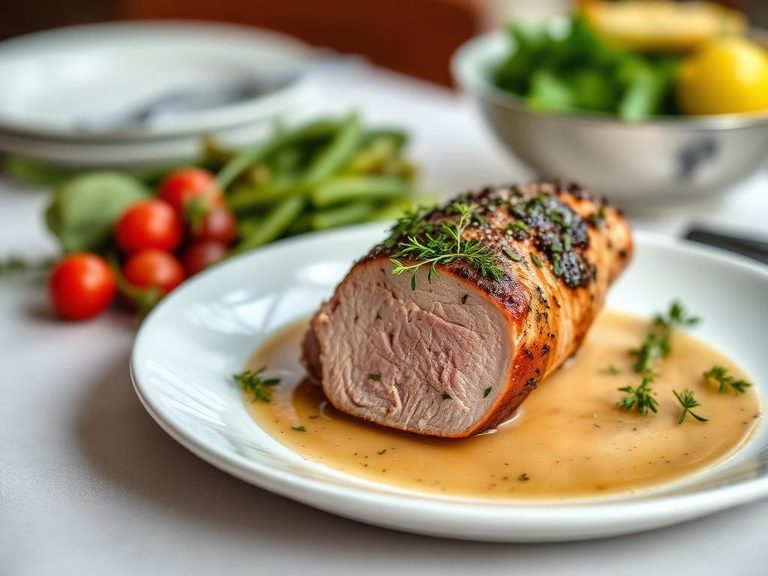
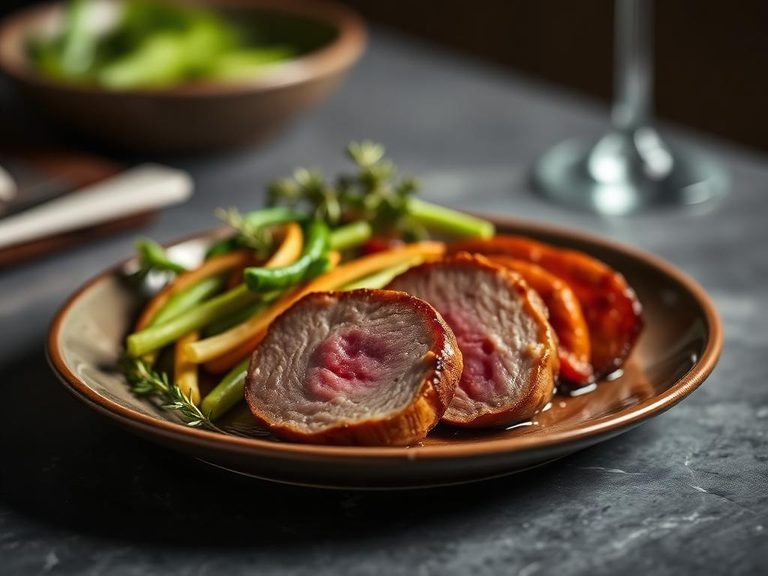
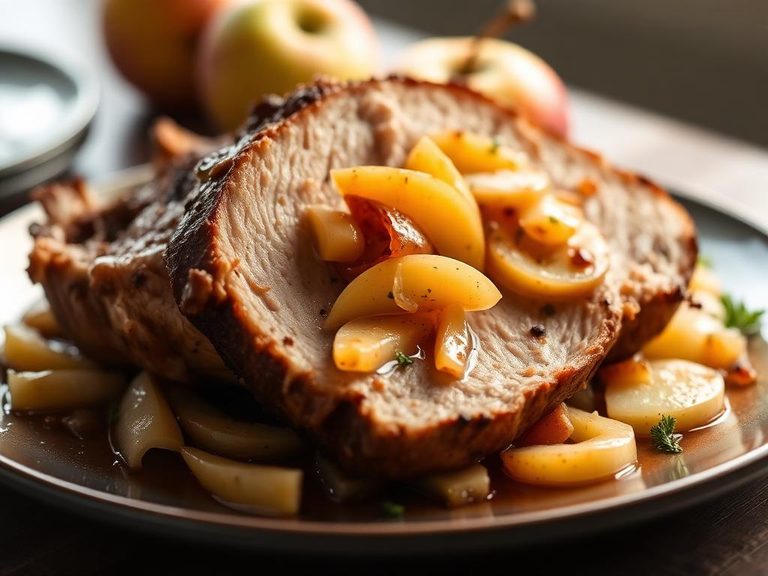
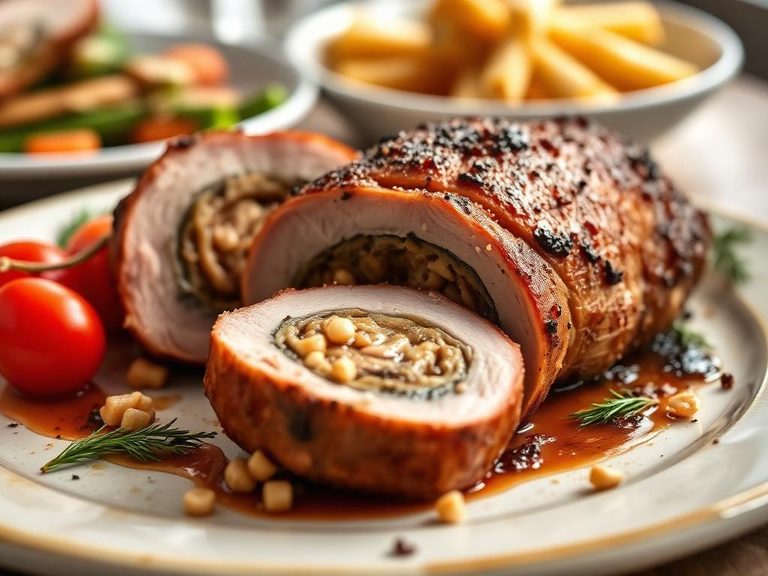
This is a lean, boneless cut from the top of the pork loin, prized for its mild, subtly sweet flavor and fine-grained, tender texture when cooked properly. With an impressive 21.34g of protein per 100g and minimal fat, it's a powerhouse for muscle maintenance and a versatile canvas for a wide range of seasonings and cooking methods. Its clean, non-gamey taste makes it a favorite for both simple roasts and elaborate dishes.
Calorie split: 53% protein · 0% carbs · 47% fat
↓ Full nutrition💚 Why it's loved
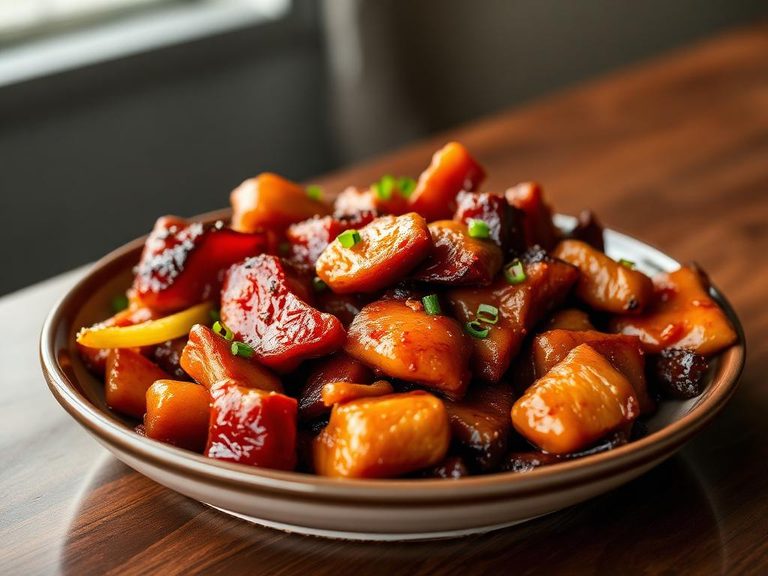
People love it for its incredibly mild, sweet flavor that doesn't overpower other ingredients, making it a perfect base for everything from herb-crusted roasts to stir-fries. Its consistent, lean texture also makes it a reliable choice for weeknight meals and holiday feasts alike.
⚠️ Watch-outs & how to enjoy it better
Its low fat content means it can dry out quickly if overcooked, leading to a tough, chewy texture. To counteract this, use a meat thermometer to avoid overcooking, brine the meat before cooking to retain moisture, or pair it with a flavorful sauce or gravy. Those monitoring sodium should be mindful of cured versions or marinades.
Key benefits
- High-quality protein source for muscle repair and satiety
- Low in carbohydrates, suitable for low-carb and keto diets
- Rich in B vitamins, especially thiamine (B1) and niacin (B3)
- Good source of minerals like selenium and phosphorus
- Lean cut with moderate fat content compared to other pork roasts
🍽️ Popular dishes
🌍 Where it's eaten
💡 Did you know?
The 'top loin' is sometimes called the 'New York strip' of pork, and in some regions, it's the cut used for the classic 'pork chop' when cut into steaks.
Full nutrition (USDA data · scales with serving)
| Water | 70.1 g |
| Energy | 166 kcal |
| Energy | 696 kj |
| Protein | 21.3 g |
| Total lipid (fat) | 8.3 g |
| Ash | 0.97 g |
| Carbohydrate, by difference | 0.00 g |
| Fiber, total dietary | 0.00 g |
| Total Sugars | 0.00 g |
| Calcium, Ca | 7.0 mg |
| Iron, Fe | 0.53 mg |
| Magnesium, Mg | 24.0 mg |
| Phosphorus, P | 216 mg |
| Potassium, K | 358 mg |
| Sodium, Na | 47.0 mg |
| Zinc, Zn | 1.7 mg |
| Copper, Cu | 0.06 mg |
| Manganese, Mn | 0.01 mg |
| Selenium, Se | 26.5 ug |
| Vitamin C, total ascorbic acid | 0.00 mg |
| Thiamin | 0.43 mg |
| Riboflavin | 0.18 mg |
| Niacin | 5.6 mg |
| Pantothenic acid | 0.72 mg |
| Vitamin B-6 | 0.72 mg |
| Folate, total | 0.00 ug |
| Folic acid | 0.00 ug |
| Folate, food | 0.00 ug |
| Folate, DFE | 0.00 ug |
| Choline, total | 57.3 mg |
| Betaine | 3.1 mg |
| Vitamin B-12 | 0.54 ug |
| Vitamin B-12, added | 0.00 ug |
| Vitamin A, RAE | 2.0 ug |
| Retinol | 2.0 ug |
| Carotene, beta | 0.00 ug |
| Carotene, alpha | 0.00 ug |
| Cryptoxanthin, beta | 0.00 ug |
| Vitamin A, IU | 5.0 iu |
| Lycopene | 0.00 ug |
| Lutein + zeaxanthin | 0.00 ug |
| Vitamin E (alpha-tocopherol) | 0.12 mg |
| Vitamin E, added | 0.00 mg |
| Tocopherol, beta | 0.00 mg |
| Tocopherol, gamma | 0.00 mg |
| Tocopherol, delta | 0.00 mg |
| Tocotrienol, alpha | 0.00 mg |
| Tocotrienol, beta | 0.00 mg |
| Tocotrienol, gamma | 0.00 mg |
| Tocotrienol, delta | 0.00 mg |
| Vitamin D (D2 + D3), International Units | 21.0 iu |
| Vitamin D (D2 + D3) | 0.50 ug |
| Vitamin D3 (cholecalciferol) | 0.50 ug |
| Vitamin K (phylloquinone) | 0.00 ug |
| Vitamin K (Dihydrophylloquinone) | 0.00 ug |
| Alcohol, ethyl | 0.00 g |
| Caffeine | 0.00 mg |
| Theobromine | 0.00 mg |
Fat & fatty acid profile (per 100g)
| Fatty acids, total saturated | 2.8 g |
| SFA 4:0 | 0.00 g |
| SFA 6:0 | 0.00 g |
| SFA 8:0 | 0.00 g |
| SFA 10:0 | 0.00 g |
| SFA 12:0 | 0.00 g |
| SFA 14:0 | 0.10 g |
| SFA 15:0 | 0.00 g |
| SFA 16:0 | 1.7 g |
| SFA 17:0 | 0.02 g |
| SFA 18:0 | 0.92 g |
| SFA 20:0 | 0.01 g |
| SFA 22:0 | 0.00 g |
| Fatty acids, total monounsaturated | 6.5 g |
| MUFA 14:1 | 0.00 g |
| MUFA 15:1 | 0.00 g |
| MUFA 16:1 | 0.17 g |
| MUFA 17:1 | 0.00 g |
| MUFA 18:1 | 3.1 g |
| MUFA 18:1 c | 3.1 g |
| MUFA 20:1 | 0.05 g |
| MUFA 22:1 | 0.00 g |
| Fatty acids, total polyunsaturated | 2.0 g |
| PUFA 18:2 | 0.91 g |
| PUFA 18:2 n-6 c,c | 0.89 g |
| PUFA 18:3 | 0.04 g |
| PUFA 18:3 n-3 c,c,c (ALA) | 0.04 g |
| PUFA 18:3 n-6 c,c,c | 0.00 g |
| PUFA 18:4 | 0.00 g |
| PUFA 20:2 n-6 c,c | 0.03 g |
| PUFA 20:3 | 0.00 g |
| PUFA 20:4 | 0.04 g |
| PUFA 20:5 n-3 (EPA) | 0.00 g |
| PUFA 22:5 n-3 (DPA) | 0.00 g |
| PUFA 22:6 n-3 (DHA) | 0.00 g |
| Fatty acids, total trans | 0.08 g |
| Fatty acids, total trans-monoenoic | 0.05 g |
| TFA 18:1 t | 0.05 g |
| TFA 18:2 t,t | 0.03 g |
| Fatty acids, total trans-polyenoic | 0.03 g |
| Cholesterol | 64.0 mg |
Amino acid profile (per 100g)
| Tryptophan | 0.23 g |
| Threonine | 0.96 g |
| Isoleucine | 1.1 g |
| Leucine | 1.8 g |
| Lysine | 2.0 g |
| Methionine | 0.59 g |
| Cystine | 0.25 g |
| Phenylalanine | 0.90 g |
| Tyrosine | 0.81 g |
| Valine | 1.1 g |
| Arginine | 1.4 g |
| Histidine | 0.92 g |
| Alanine | 1.3 g |
| Aspartic acid | 2.1 g |
| Glutamic acid | 3.4 g |
| Glycine | 0.96 g |
| Proline | 0.86 g |
| Serine | 0.92 g |
| Hydroxyproline | 0.06 g |
FAQ
What's the difference between pork loin and pork tenderloin?
Pork loin is a larger, wider cut from the back, while tenderloin is a smaller, more tender muscle from the belly area. Loin is better for roasting, while tenderloin cooks quickly and is ideal for grilling or pan-searing.
How do I keep pork loin from drying out?
Use a meat thermometer to cook it to an internal temperature of 145°F (63°C), then let it rest for 10 minutes before slicing. Brining or marinating the meat beforehand also helps lock in moisture.
Is this cut suitable for slow cooking?
While it can be slow-cooked, its lean nature means it's better suited for methods that retain moisture, like braising or roasting with liquid. For slow cooking, consider a fattier cut like pork shoulder for better results.
Nutrient density (calculated · NRF9.3)
Nutrient Rich Foods index: beneficial nutrients (protein, fiber, vitamins, minerals) minus saturated fat, added sugar & sodium, per 100 kcal.
NRF9.3 index — Fulgoni, Keast & Drewnowski, 2009. Computed from USDA nutrients.
Weight-loss friendliness (composite index)
Energy density 1.66 kcal/g · 51% calories from protein · 0.0 g fiber · 0.0 g sugar per 100 g.
Composite of energy density (Rolls et al., 1999), protein & fiber satiety, minus sugar. A calculated heuristic — ranks satiety-per-calorie, not a clinical measure.
Dietary load (calculated from USDA values)
Potential renal acid load. Positive = acid-forming, negative = alkaline-forming.
Sodium-to-potassium ratio: 0.13 (lower is better — aim for ≤ 1)
Sodium:potassium per WHO potassium guidance. Computed from USDA nutrients.