

Pancakes, gluten-free, frozen, ready-to-heat
Whole food · Baked Products

Photo: Wikipedia
These are pre-made, gluten-free pancakes, frozen for convenience and ready in minutes. They offer a tender, slightly spongy texture with a mild, sweet corn or rice flour base flavor. Nutritionally, they are a moderate-carb option, providing about 40g of carbohydrates per 100g serving.
Calorie split: 6% protein · 75% carbs · 19% fat
↓ Full nutrition💚 Why it's loved
People love them for the nostalgic comfort of a warm pancake breakfast without the gluten-related worry. Their mild flavor makes them a perfect blank canvas for both sweet and savory toppings.
⚠️ Watch-outs & how to enjoy it better
The lower protein and fiber content can lead to faster blood sugar spikes compared to whole-grain versions. To counteract this, always pair them with a protein source (like eggs or Greek yogurt) and healthy fat (like nut butter or avocado) to slow digestion and increase satiety. Be mindful of portion size, as it's easy to overeat.
Key benefits
- Gluten-free, safe for celiac disease or gluten sensitivity
- Convenient, quick-to-prepare breakfast or snack
- Lower in protein and fat than traditional wheat pancakes
- Provides a quick source of energy from carbohydrates
🍽️ Popular dishes

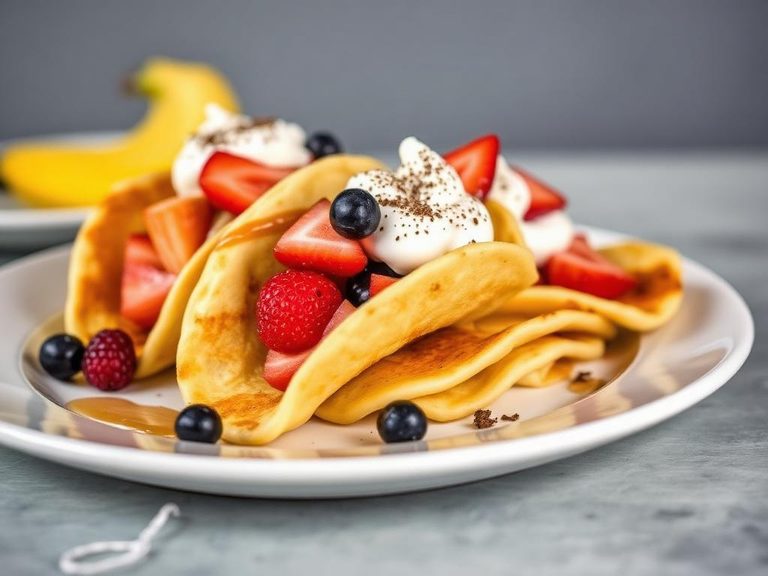

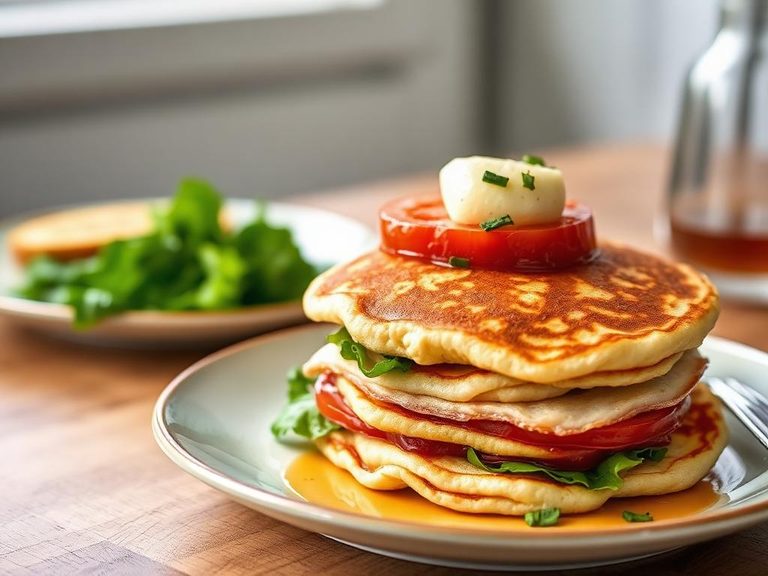
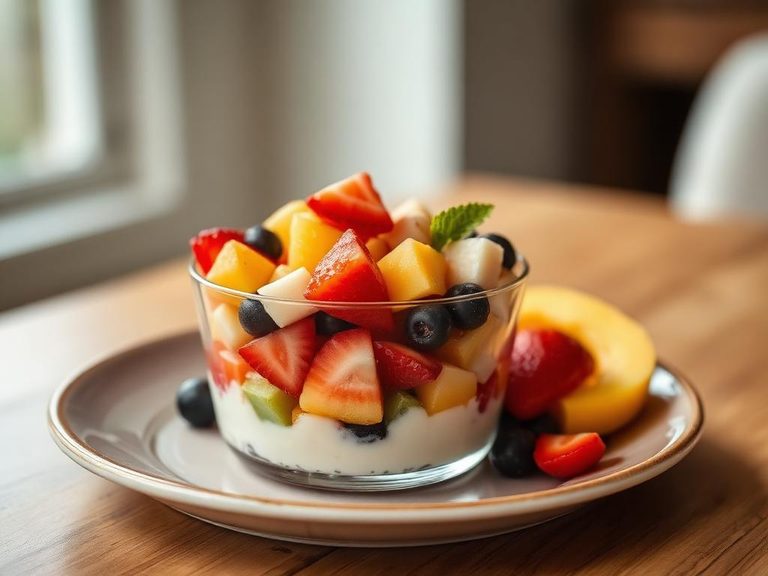

🌍 Where it's eaten
💡 Did you know?
The gluten-free pancake market has seen explosive growth, with some brands reporting sales increases of over 200% in recent years as more households adopt gluten-free diets for both medical and lifestyle reasons.
Full nutrition (USDA data · scales with serving)
| Water | 50.2 g |
| Energy | 215 kcal |
| Energy | 902 kj |
| Protein | 3.3 g |
| Total lipid (fat) | 4.5 g |
| Ash | 1.6 g |
| Carbohydrate, by difference | 40.3 g |
| Fiber, total dietary | 1.5 g |
| Total Sugars | 4.1 g |
| Sucrose | 3.3 g |
| Glucose | 0.34 g |
| Fructose | 0.43 g |
| Lactose | 0.00 g |
| Maltose | 0.00 g |
| Galactose | 0.00 g |
| Starch | 36.9 g |
| Calcium, Ca | 39.0 mg |
| Iron, Fe | 0.70 mg |
| Magnesium, Mg | 34.0 mg |
| Phosphorus, P | 306 mg |
| Potassium, K | 127 mg |
| Sodium, Na | 331 mg |
| Zinc, Zn | 0.55 mg |
| Copper, Cu | 0.11 mg |
| Manganese, Mn | 0.93 mg |
| Selenium, Se | 0.40 ug |
| Vitamin C, total ascorbic acid | 0.30 mg |
| Thiamin | 0.07 mg |
| Riboflavin | 0.04 mg |
| Niacin | 1.6 mg |
| Vitamin B-6 | 0.07 mg |
| Folate, total | 9.0 ug |
| Folic acid | 0.00 ug |
| Folate, food | 9.0 ug |
| Folate, DFE | 9.0 ug |
| Choline, total | 14.7 mg |
| Vitamin B-12 | 2.8 ug |
| Vitamin B-12, added | 0.00 ug |
| Vitamin A, RAE | 0.00 ug |
| Retinol | 0.00 ug |
| Carotene, beta | 1.0 ug |
| Carotene, alpha | 0.00 ug |
| Cryptoxanthin, beta | 0.00 ug |
| Vitamin A, IU | 1.0 iu |
| Lycopene | 0.00 ug |
| Lutein + zeaxanthin | 39.0 ug |
| Vitamin E (alpha-tocopherol) | 0.42 mg |
| Vitamin E, added | 0.00 mg |
| Vitamin D (D2 + D3), International Units | 0.00 iu |
| Vitamin D (D2 + D3) | 0.00 ug |
| Vitamin K (phylloquinone) | 4.3 ug |
| Alcohol, ethyl | 0.00 g |
| Caffeine | 0.00 mg |
| Theobromine | 0.00 mg |
Fat & fatty acid profile (per 100g)
| Fatty acids, total saturated | 0.48 g |
| SFA 4:0 | 0.00 g |
| SFA 6:0 | 0.01 g |
| SFA 8:0 | 0.00 g |
| SFA 10:0 | 0.01 g |
| SFA 12:0 | 0.00 g |
| SFA 14:0 | 0.01 g |
| SFA 15:0 | 0.00 g |
| SFA 16:0 | 0.32 g |
| SFA 17:0 | 0.00 g |
| SFA 18:0 | 0.09 g |
| SFA 20:0 | 0.02 g |
| SFA 22:0 | 0.01 g |
| SFA 24:0 | 0.01 g |
| Fatty acids, total monounsaturated | 2.4 g |
| MUFA 14:1 | 0.00 g |
| MUFA 15:1 | 0.00 g |
| MUFA 16:1 | 0.01 g |
| MUFA 16:1 c | 0.01 g |
| MUFA 17:1 | 0.01 g |
| MUFA 18:1 | 2.3 g |
| MUFA 18:1 c | 2.3 g |
| MUFA 20:1 | 0.05 g |
| MUFA 22:1 | 0.00 g |
| MUFA 22:1 c | 0.00 g |
| MUFA 24:1 c | 0.01 g |
| Fatty acids, total polyunsaturated | 1.2 g |
| PUFA 18:2 | 0.94 g |
| PUFA 18:2 n-6 c,c | 0.93 g |
| PUFA 18:2 CLAs | 0.00 g |
| PUFA 18:3 | 0.29 g |
| PUFA 18:3 n-3 c,c,c (ALA) | 0.28 g |
| PUFA 18:3 n-6 c,c,c | 0.01 g |
| PUFA 18:3i | 0.00 g |
| PUFA 18:4 | 0.00 g |
| PUFA 20:2 n-6 c,c | 0.00 g |
| PUFA 20:3 | 0.00 g |
| PUFA 20:3 n-3 | 0.00 g |
| PUFA 20:3 n-6 | 0.00 g |
| PUFA 20:4 | 0.00 g |
| PUFA 20:5 n-3 (EPA) | 0.00 g |
| PUFA 22:4 | 0.00 g |
| PUFA 22:5 n-3 (DPA) | 0.00 g |
| PUFA 22:6 n-3 (DHA) | 0.00 g |
| Fatty acids, total trans | 0.01 g |
| Fatty acids, total trans-monoenoic | 0.01 g |
| TFA 16:1 t | 0.00 g |
| TFA 18:1 t | 0.01 g |
| TFA 22:1 t | 0.00 g |
| TFA 18:2 t not further defined | 0.00 g |
| Fatty acids, total trans-polyenoic | 0.00 g |
| Cholesterol | 12.0 mg |
Amino acid profile (per 100g)
Estimated from Pancakes, buttermilk, prepared from recipe — USDA does not publish this profile for Pancakes.
| Tryptophan | 0.08 g |
| Threonine | 0.25 g |
| Isoleucine | 0.32 g |
| Leucine | 0.55 g |
| Lysine | 0.35 g |
| Methionine | 0.15 g |
| Cystine | 0.12 g |
| Phenylalanine | 0.34 g |
| Tyrosine | 0.25 g |
| Valine | 0.36 g |
| Arginine | 0.29 g |
| Histidine | 0.16 g |
| Alanine | 0.26 g |
| Aspartic acid | 0.45 g |
| Glutamic acid | 1.6 g |
| Glycine | 0.21 g |
| Proline | 0.61 g |
| Serine | 0.38 g |
FAQ
How do I cook frozen gluten-free pancakes for the best texture?
For best results, use a toaster on a low-medium setting. This crisps the exterior while keeping the interior tender. A skillet with a little butter or oil also works well. Avoid the microwave, as it can make them rubbery.
Are these pancakes suitable for a low-carb diet?
No. With over 40g of carbohydrates per 100g, they are a significant source of carbs. They are better suited for a standard or gluten-free diet rather than a low-carb or ketogenic diet.
Can I make these from scratch at home?
Yes. A simple recipe uses a gluten-free flour blend (like rice flour or a commercial mix), eggs, milk (dairy or plant-based), a little sugar, and baking powder. The key is to not overmix the batter to avoid a gummy texture.
Nutrient density (calculated · NRF9.3)
Nutrient Rich Foods index: beneficial nutrients (protein, fiber, vitamins, minerals) minus saturated fat, added sugar & sodium, per 100 kcal.
NRF9.3 index — Fulgoni, Keast & Drewnowski, 2009. Computed from USDA nutrients.
Weight-loss friendliness (composite index)
Energy density 2.15 kcal/g · 6% calories from protein · 1.5 g fiber · 4.1 g sugar per 100 g.
Composite of energy density (Rolls et al., 1999), protein & fiber satiety, minus sugar. A calculated heuristic — ranks satiety-per-calorie, not a clinical measure.
Dietary load (calculated from USDA values)
Potential renal acid load. Positive = acid-forming, negative = alkaline-forming.
Sodium-to-potassium ratio: 2.61 (lower is better — aim for ≤ 1)
Sodium:potassium per WHO potassium guidance. Computed from USDA nutrients.