

Kiwifruit, ZESPRI SunGold, raw
Whole food · Fruits and Fruit Juices

Photo: Wikipedia
Zespri SunGold Kiwifruit is a golden-fleshed variety with a smooth, hairless skin and a creamy, tropical flavor reminiscent of mango and pineapple. Its texture is exceptionally soft and juicy, offering a sweet, low-acid taste that is less tart than green kiwifruit. Nutritionally, it is a powerhouse of Vitamin C and Vitamin K, with a notable fiber content for its size.
Calorie split: 6% protein · 91% carbs · 4% fat
↓ Full nutrition💚 Why it's loved
People love its intensely sweet, tropical flavor and the convenience of eating it with a spoon right from the skin. It is prized for its versatility in both sweet and savory dishes, and its smooth texture makes it a favorite for children and those who dislike the fuzz of green kiwifruit.
⚠️ Watch-outs & how to enjoy it better
The high natural sugar content (12.3g per 100g) can cause blood sugar spikes if consumed in large quantities. To mitigate this, pair it with a source of protein or healthy fat (like Greek yogurt or nuts) to slow sugar absorption. Those with a latex allergy should also exercise caution, as kiwifruit contains similar proteins.
Key benefits
- High in Vitamin C (over 100% DV per 100g)
- Good source of Vitamin K for bone health
- Contains actinidin enzyme to aid protein digestion
- Provides dietary fiber for gut health
- Rich in antioxidants like lutein and zeaxanthin
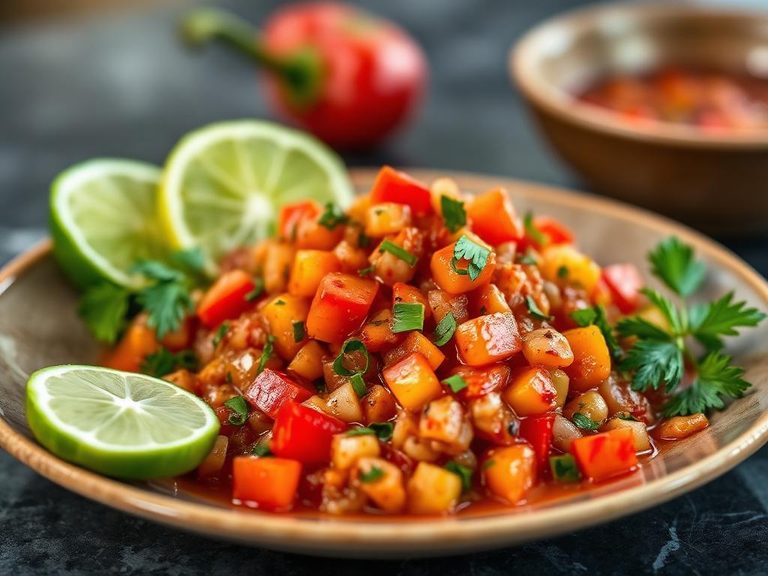
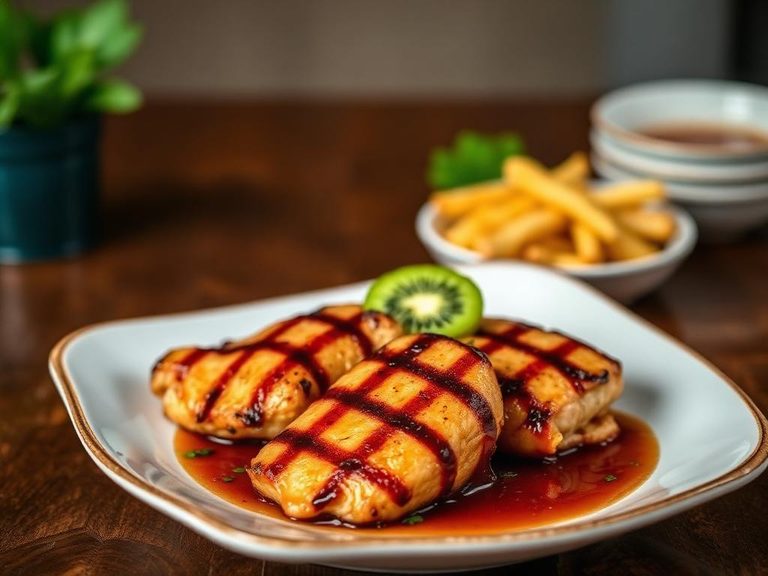
🍽️ Popular dishes
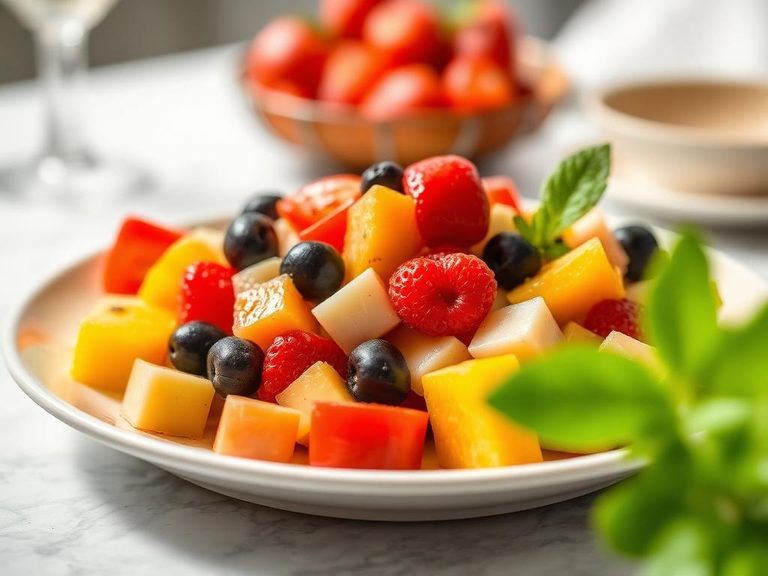
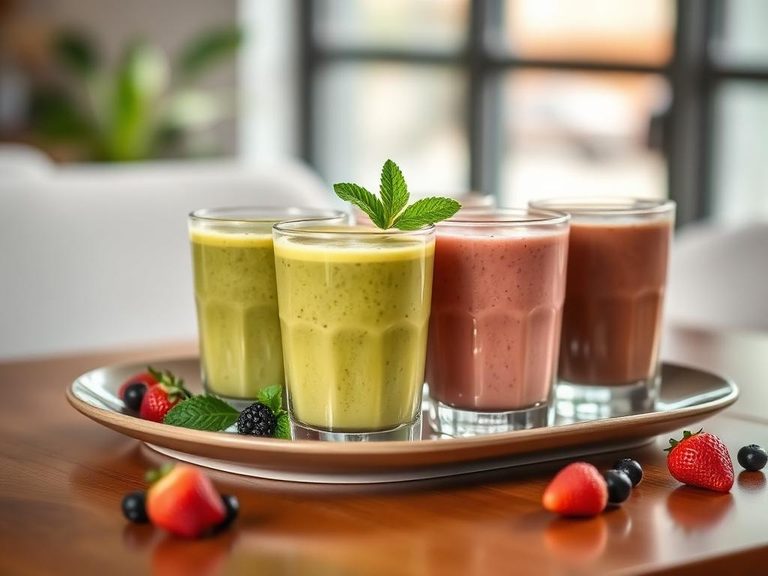
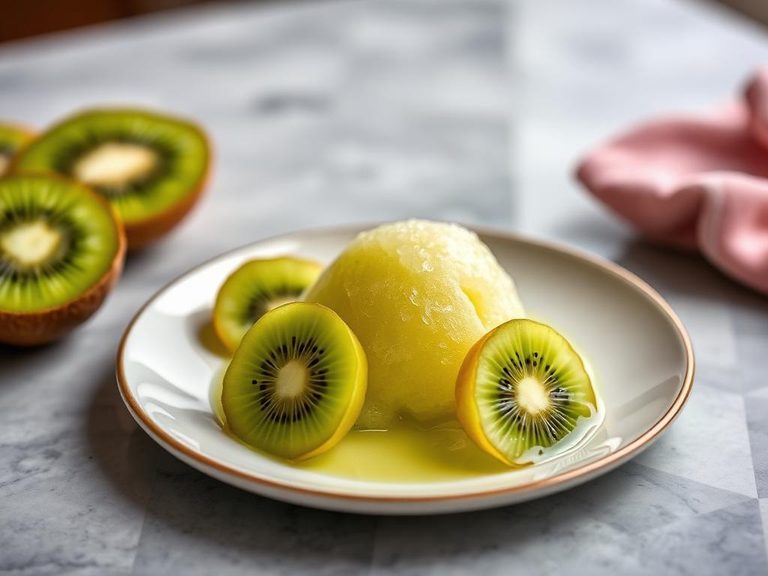
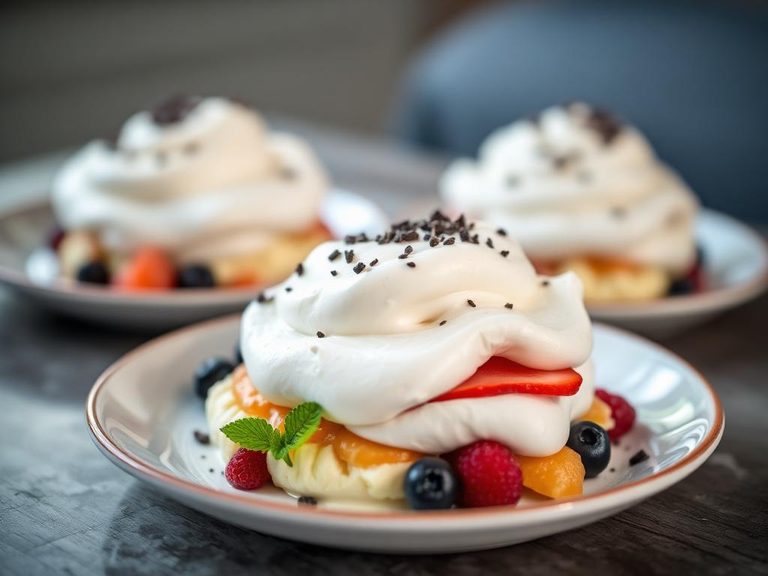
🌍 Where it's eaten
💡 Did you know?
Zespri SunGold Kiwifruit is a patented variety (G3) developed in New Zealand, and it is the world's first kiwifruit to be bred specifically for its high Vitamin C content and sweet, non-acidic taste.
Full nutrition (USDA data · scales with serving)
| Water | 82.4 g |
| Energy | 63.0 kcal |
| Energy | 262 kj |
| Protein | 1.0 g |
| Total lipid (fat) | 0.28 g |
| Ash | 0.47 g |
| Carbohydrate, by difference | 15.8 g |
| Fiber, total dietary | 1.4 g |
| Total Sugars | 12.3 g |
| Sucrose | 1.2 g |
| Glucose | 5.3 g |
| Fructose | 5.8 g |
| Lactose | 0.00 g |
| Maltose | 0.00 g |
| Galactose | 0.00 g |
| Starch | 0.12 g |
| Calcium, Ca | 17.0 mg |
| Iron, Fe | 0.21 mg |
| Magnesium, Mg | 12.0 mg |
| Phosphorus, P | 25.0 mg |
| Potassium, K | 315 mg |
| Sodium, Na | 3.0 mg |
| Zinc, Zn | 0.08 mg |
| Copper, Cu | 0.15 mg |
| Manganese, Mn | 0.05 mg |
| Selenium, Se | 0.40 ug |
| Fluoride, F | 0.00 ug |
| Vitamin C, total ascorbic acid | 161 mg |
| Thiamin | 0.00 mg |
| Riboflavin | 0.07 mg |
| Niacin | 0.23 mg |
| Pantothenic acid | 0.12 mg |
| Vitamin B-6 | 0.08 mg |
| Folate, total | 31.0 ug |
| Folic acid | 0.00 ug |
| Folate, food | 31.0 ug |
| Folate, DFE | 31.0 ug |
| Choline, total | 1.9 mg |
| Vitamin B-12 | 0.08 ug |
| Vitamin A, RAE | 1.0 ug |
| Retinol | 0.00 ug |
| Carotene, beta | 14.0 ug |
| Carotene, alpha | 0.00 ug |
| Vitamin A, IU | 23.0 iu |
| Lycopene | 0.00 ug |
| Lutein + zeaxanthin | 24.0 ug |
| Vitamin E (alpha-tocopherol) | 1.4 mg |
| Tocopherol, beta | 0.04 mg |
| Tocopherol, gamma | 0.07 mg |
| Tocopherol, delta | 0.00 mg |
| Vitamin D (D2 + D3), International Units | 0.00 iu |
| Vitamin D (D2 + D3) | 0.00 ug |
| Vitamin D3 (cholecalciferol) | 0.00 ug |
| Vitamin K (phylloquinone) | 6.1 ug |
| Alcohol, ethyl | 0.00 g |
| Caffeine | 0.00 mg |
| Theobromine | 0.00 mg |
Fat & fatty acid profile (per 100g)
| Fatty acids, total saturated | 0.07 g |
| SFA 4:0 | 0.00 g |
| SFA 6:0 | 0.00 g |
| SFA 8:0 | 0.00 g |
| SFA 10:0 | 0.00 g |
| SFA 12:0 | 0.00 g |
| SFA 14:0 | 0.00 g |
| SFA 15:0 | 0.00 g |
| SFA 16:0 | 0.05 g |
| SFA 17:0 | 0.00 g |
| SFA 18:0 | 0.01 g |
| SFA 20:0 | 0.00 g |
| SFA 22:0 | 0.00 g |
| SFA 24:0 | 0.00 g |
| Fatty acids, total monounsaturated | 0.02 g |
| MUFA 14:1 | 0.01 g |
| MUFA 15:1 | 0.00 g |
| MUFA 16:1 | 0.00 g |
| MUFA 16:1 c | 0.00 g |
| MUFA 17:1 | 0.00 g |
| MUFA 18:1 | 0.01 g |
| MUFA 18:1 c | 0.01 g |
| MUFA 20:1 | 0.00 g |
| MUFA 22:1 | 0.00 g |
| MUFA 24:1 c | 0.00 g |
| Fatty acids, total polyunsaturated | 0.11 g |
| PUFA 18:2 | 0.06 g |
| PUFA 18:2 n-6 c,c | 0.06 g |
| PUFA 18:2 CLAs | 0.00 g |
| PUFA 18:3 | 0.04 g |
| PUFA 18:3 n-3 c,c,c (ALA) | 0.04 g |
| PUFA 18:3 n-6 c,c,c | 0.00 g |
| PUFA 18:4 | 0.00 g |
| PUFA 20:3 | 0.01 g |
| PUFA 20:3 n-3 | 0.01 g |
| PUFA 20:3 n-6 | 0.00 g |
| PUFA 20:4 | 0.00 g |
| PUFA 20:4 n-6 | 0.00 g |
| PUFA 20:5 n-3 (EPA) | 0.00 g |
| PUFA 21:5 | 0.00 g |
| PUFA 22:4 | 0.00 g |
| PUFA 22:5 n-3 (DPA) | 0.00 g |
| PUFA 22:6 n-3 (DHA) | 0.00 g |
| Cholesterol | 0.00 mg |
Amino acid profile (per 100g)
Estimated from Kiwifruit, green, raw — USDA does not publish this profile for Kiwifruit.
| Tryptophan | 0.01 g |
| Threonine | 0.05 g |
| Isoleucine | 0.05 g |
| Leucine | 0.07 g |
| Lysine | 0.06 g |
| Methionine | 0.02 g |
| Cystine | 0.03 g |
| Phenylalanine | 0.04 g |
| Tyrosine | 0.03 g |
| Valine | 0.06 g |
| Arginine | 0.08 g |
| Histidine | 0.03 g |
| Alanine | 0.05 g |
| Aspartic acid | 0.13 g |
| Glutamic acid | 0.18 g |
| Glycine | 0.06 g |
| Proline | 0.04 g |
| Serine | 0.05 g |
FAQ
Is SunGold kiwifruit different from green kiwifruit?
Yes, SunGold has golden flesh, smooth skin, and a sweeter, less acidic flavor with higher Vitamin C content compared to the tart, fuzzy green variety.
Can I eat the skin of SunGold kiwifruit?
Yes, the skin is smooth and edible, and eating it increases fiber intake. However, many people prefer to scoop out the flesh with a spoon.
How should I store SunGold kiwifruit?
Store unripe kiwifruit at room temperature until soft, then refrigerate to slow ripening. They can last up to 4 weeks in the fridge when ripe.
Is SunGold kiwifruit safe for people with latex allergies?
Some people with latex allergies may have a cross-reaction to kiwifruit due to similar proteins. It's best to consult a doctor if you have a known latex allergy.
Nutrient density (calculated · NRF9.3)
Nutrient Rich Foods index: beneficial nutrients (protein, fiber, vitamins, minerals) minus saturated fat, added sugar & sodium, per 100 kcal.
NRF9.3 index — Fulgoni, Keast & Drewnowski, 2009. Computed from USDA nutrients.
Weight-loss friendliness (composite index)
Energy density 0.63 kcal/g · 6% calories from protein · 1.4 g fiber · 12.3 g sugar per 100 g.
Composite of energy density (Rolls et al., 1999), protein & fiber satiety, minus sugar. A calculated heuristic — ranks satiety-per-calorie, not a clinical measure.
Dietary load (calculated from USDA values)
Potential renal acid load. Positive = acid-forming, negative = alkaline-forming.
Sodium-to-potassium ratio: 0.01 (lower is better — aim for ≤ 1)
Sodium:potassium per WHO potassium guidance. Computed from USDA nutrients.