

Pavlova topping
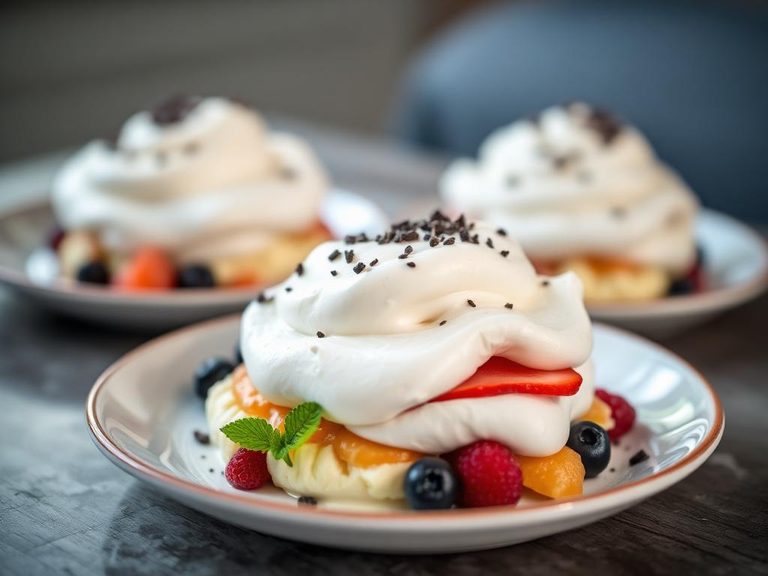
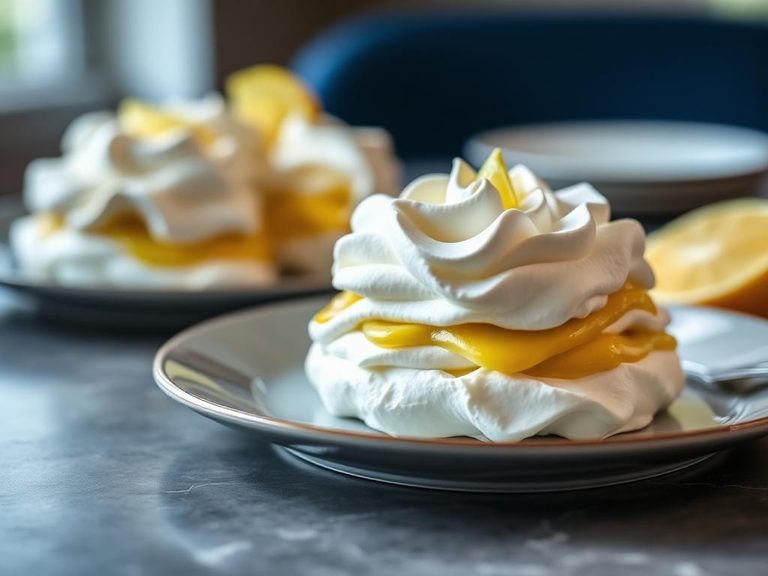
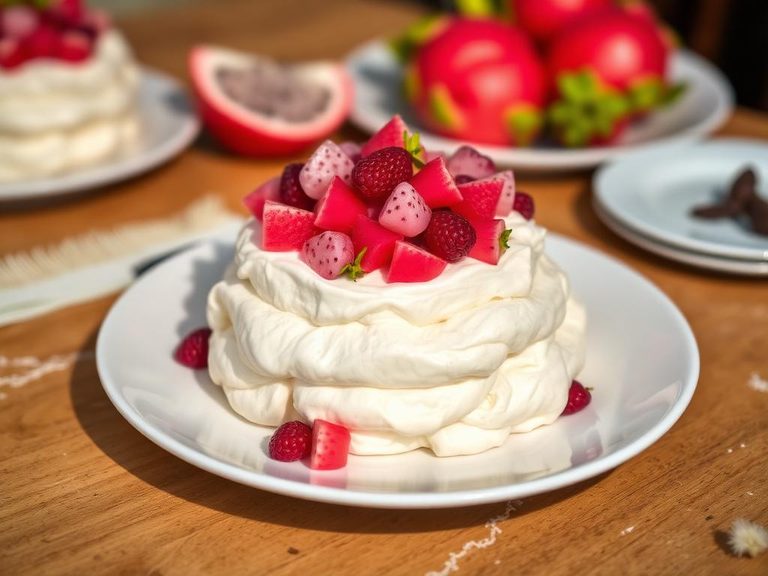
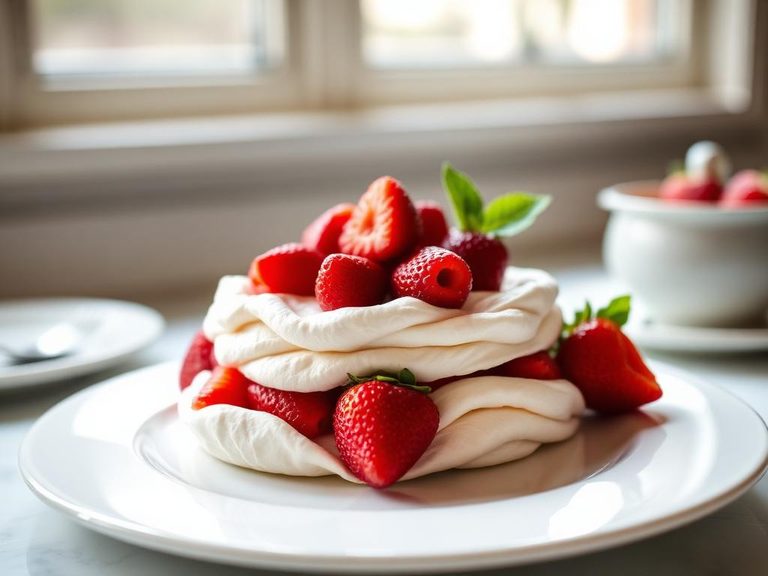
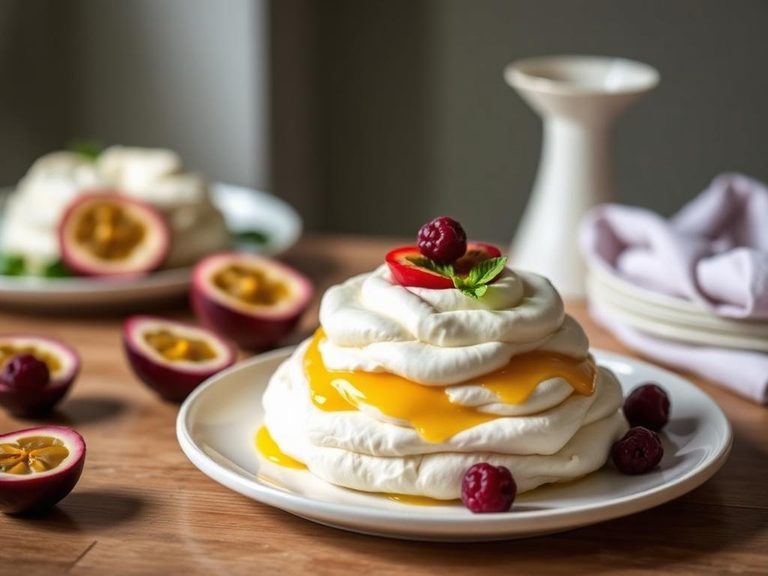
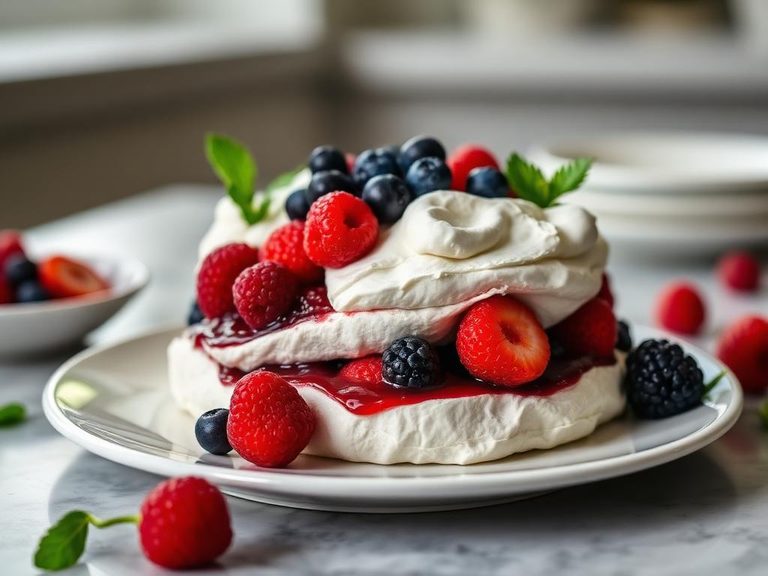
Pavlova topping refers to the fresh, vibrant fruit and cream layer that adorns the classic Pavlova dessert, a meringue-based cake with a crisp crust and soft, marshmallow-like interior. It typically features a base of whipped cream or a light frosting, generously piled with colorful fresh fruits like strawberries, kiwifruit, passionfruit, and sometimes berries or mango. This dessert originated in either Australia or New Zealand, with both countries claiming its invention, and is a beloved centerpiece for celebratory meals.
🍳 View the full Pavlova topping recipe →
🍽️ Nutrition at a glance
The topping itself is high in carbohydrates from the fruit's natural sugars and added sugar in the cream, and moderate in fat from the whipped cream. It provides key nutrients like vitamin C and antioxidants from the fruit, along with some calcium from the dairy. A typical serving with a generous amount of cream and fruit can range from 250 to 400 calories, depending on portion size and sweetness.
Nutrition breakdown
| Calories | 150 kcal |
| Protein | 2 g |
| Carbs | 30 g |
| Fat | 3 g |
| Fiber | 2 g |
| Sugar | 25 g |
| Sodium | 10 mg |
| Vitamin C | 45 mg |
| Vitamin A | 120 mcg RAE |
| Potassium | 280 mg |
| Manganese | 0.3 mg |
| Folate | 35 mcg |
| Vitamin K | 12 mcg |
| Calcium | 25 mg |
| Iron | 0.5 mg |
Per 1/2 cup (120 g) · estimated, varies by recipe
💡 What's interesting
Culturally, the fierce yet friendly rivalry between Australia and New Zealand over the Pavlova's origin is a famous culinary debate, often humorously settled by simply enjoying the dessert. Nutritionally, the topping creates a delightful contrast, pairing the light, airy sweetness of the meringue with the fresh, tart, and juicy burst of fruit, making it a refreshing finale to a rich meal.
🍽️ Related dishes
AI estimate may be inaccurate · Terms