

Kiwifruit, green, raw
Whole food · Fruits and Fruit Juices
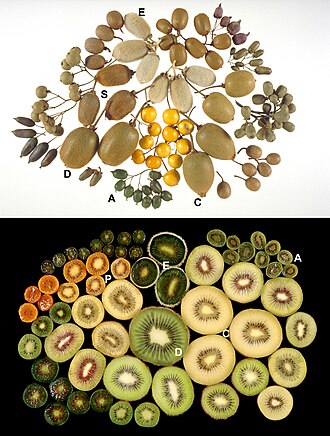
Photo: Wikipedia
The green kiwifruit is a fuzzy, emerald-fleshed berry with a vibrant, tangy-sweet flavor and a juicy, slightly crunchy texture from its tiny black seeds. It is a nutritional powerhouse, offering a remarkable amount of vitamin C and a good dose of dietary fiber in a low-calorie package. Its distinctive sweet-tart profile makes it a refreshing standalone snack or a versatile ingredient in both sweet and savory dishes.
Calorie split: 7% protein · 86% carbs · 7% fat
↓ Full nutrition💚 Why it's loved
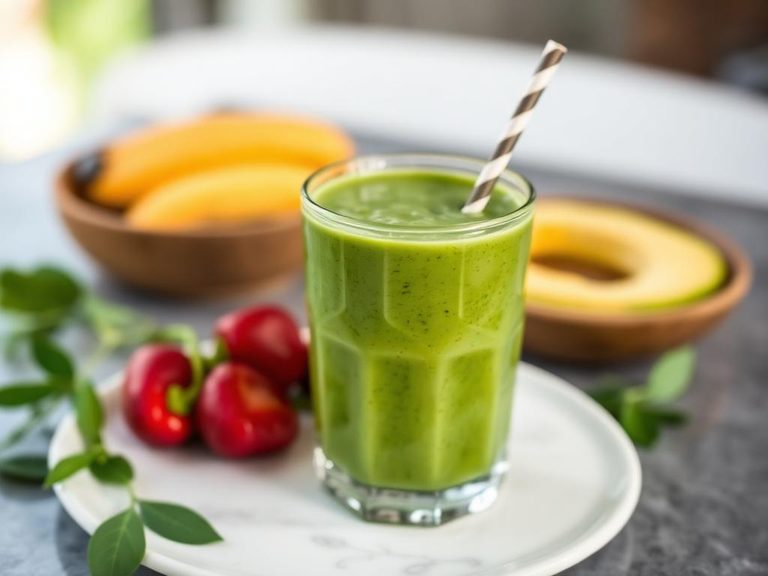
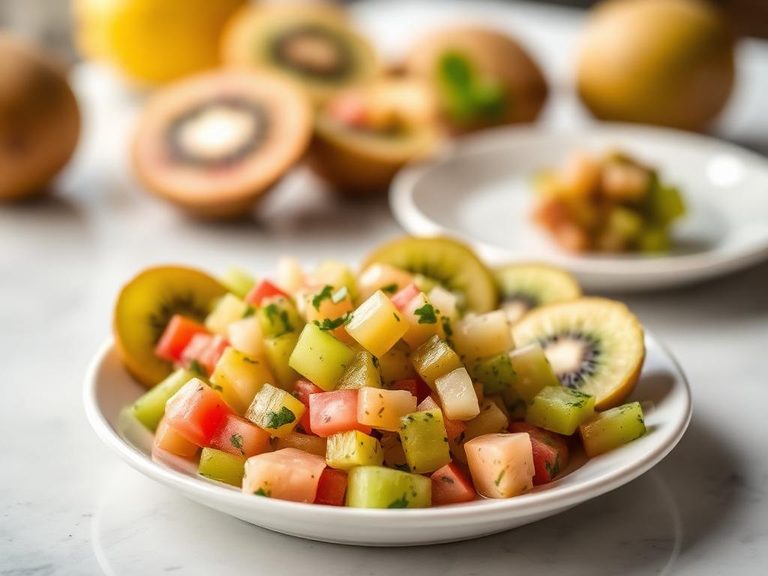
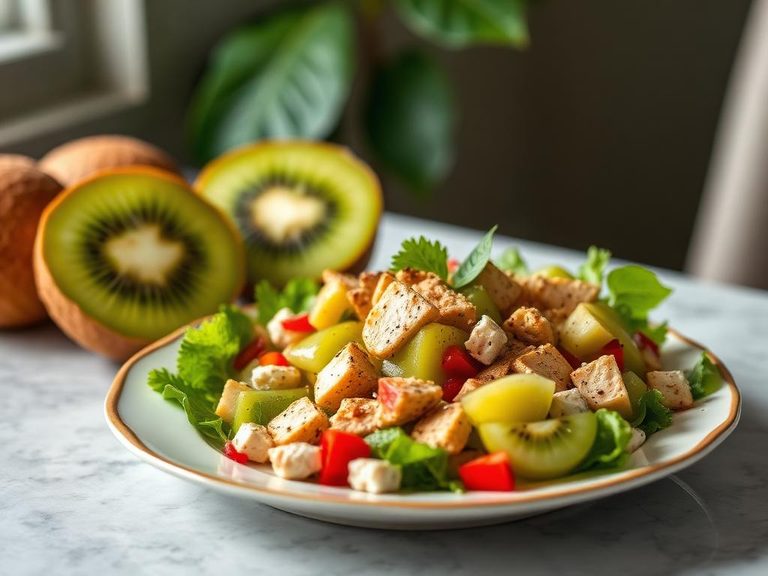
People love kiwifruit for its uniquely bright, zesty flavor that balances sweetness with a pleasant tartness, and its refreshing, juicy texture. It is cherished for its versatility, easily adding a pop of color and flavor to fruit salads, smoothies, yogurt bowls, and even meat dishes as a tenderizing marinade.
⚠️ Watch-outs & how to enjoy it better
Some individuals may experience oral allergy syndrome or digestive discomfort due to the actinidin enzyme, especially if consumed in large quantities. To mitigate potential stomach upset, consume it in moderation and pair it with a protein or fat source like yogurt or nuts. For those with a latex allergy, kiwifruit can trigger a cross-reaction, so caution is advised.
Key benefits
- Excellent source of vitamin C, supporting immune function and skin health.
- Rich in dietary fiber, promoting digestive regularity and satiety.
- Contains actinidin, a natural enzyme that aids protein digestion.
- Provides a good source of potassium, important for heart and muscle function.
- Low in calories and fat, making it a nutrient-dense snack choice.
🍽️ Popular dishes
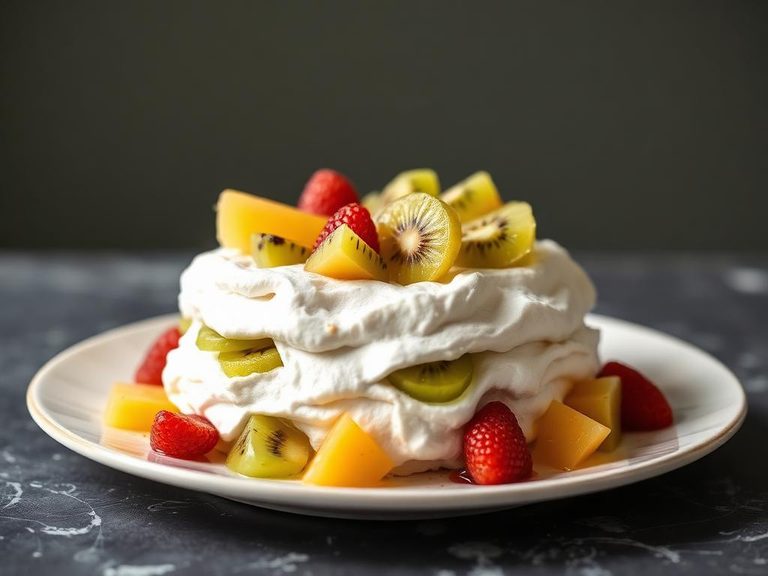
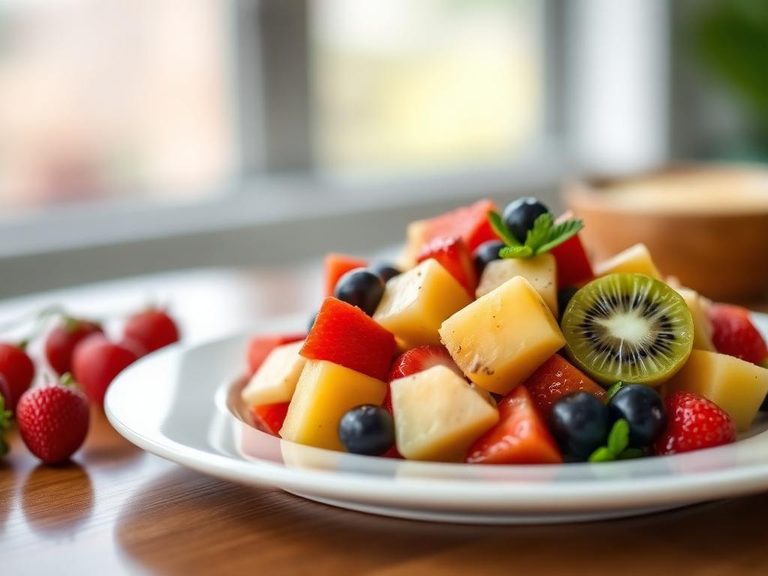
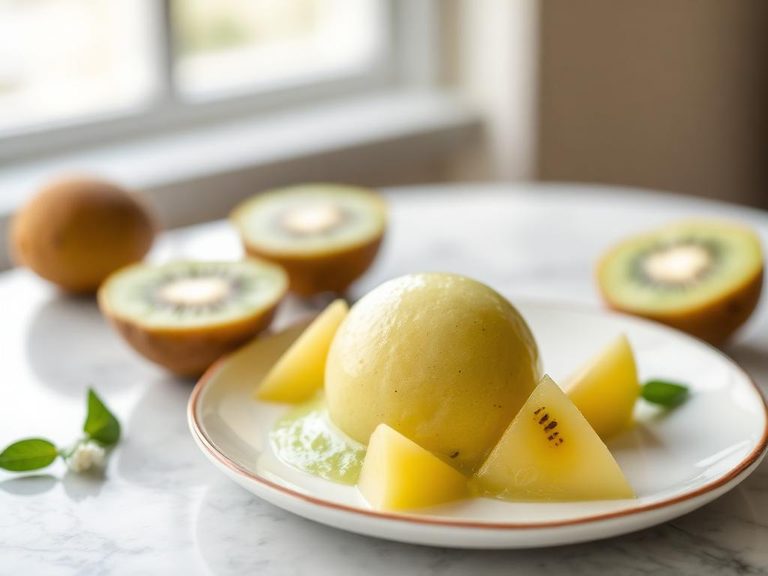
🌍 Where it's eaten
💡 Did you know?
The fuzzy brown skin of a kiwifruit is entirely edible and packed with fiber and vitamin C, though many people prefer to peel it.
Full nutrition (USDA data · scales with serving)
| Water | 83.1 g |
| Energy | 61.0 kcal |
| Energy | 255 kj |
| Protein | 1.1 g |
| Total lipid (fat) | 0.52 g |
| Ash | 0.61 g |
| Carbohydrate, by difference | 14.7 g |
| Fiber, total dietary | 3.0 g |
| Total Sugars | 9.0 g |
| Sucrose | 0.15 g |
| Glucose | 4.1 g |
| Fructose | 4.3 g |
| Lactose | 0.00 g |
| Maltose | 0.19 g |
| Galactose | 0.17 g |
| Starch | 0.00 g |
| Calcium, Ca | 34.0 mg |
| Iron, Fe | 0.31 mg |
| Magnesium, Mg | 17.0 mg |
| Phosphorus, P | 34.0 mg |
| Potassium, K | 312 mg |
| Sodium, Na | 3.0 mg |
| Zinc, Zn | 0.14 mg |
| Copper, Cu | 0.13 mg |
| Manganese, Mn | 0.10 mg |
| Selenium, Se | 0.20 ug |
| Vitamin C, total ascorbic acid | 92.7 mg |
| Thiamin | 0.03 mg |
| Riboflavin | 0.03 mg |
| Niacin | 0.34 mg |
| Pantothenic acid | 0.18 mg |
| Vitamin B-6 | 0.06 mg |
| Folate, total | 25.0 ug |
| Folic acid | 0.00 ug |
| Folate, food | 25.0 ug |
| Folate, DFE | 25.0 ug |
| Choline, total | 7.8 mg |
| Betaine | 0.50 mg |
| Vitamin B-12 | 0.00 ug |
| Vitamin B-12, added | 0.00 ug |
| Vitamin A, RAE | 4.0 ug |
| Retinol | 0.00 ug |
| Carotene, beta | 52.0 ug |
| Carotene, alpha | 0.00 ug |
| Cryptoxanthin, beta | 0.00 ug |
| Vitamin A, IU | 87.0 iu |
| Lycopene | 0.00 ug |
| Lutein + zeaxanthin | 122 ug |
| Vitamin E (alpha-tocopherol) | 1.5 mg |
| Vitamin E, added | 0.00 mg |
| Tocopherol, beta | 0.00 mg |
| Tocopherol, gamma | 0.03 mg |
| Tocopherol, delta | 0.00 mg |
| Tocotrienol, alpha | 0.00 mg |
| Tocotrienol, beta | 0.00 mg |
| Tocotrienol, gamma | 0.10 mg |
| Tocotrienol, delta | 0.00 mg |
| Vitamin D (D2 + D3), International Units | 0.00 iu |
| Vitamin D (D2 + D3) | 0.00 ug |
| Vitamin K (phylloquinone) | 40.3 ug |
| Vitamin K (Dihydrophylloquinone) | 0.00 ug |
| Alcohol, ethyl | 0.00 g |
| Caffeine | 0.00 mg |
| Theobromine | 0.00 mg |
Fat & fatty acid profile (per 100g)
| Fatty acids, total saturated | 0.03 g |
| SFA 4:0 | 0.00 g |
| SFA 6:0 | 0.00 g |
| SFA 8:0 | 0.00 g |
| SFA 10:0 | 0.00 g |
| SFA 12:0 | 0.00 g |
| SFA 14:0 | 0.00 g |
| SFA 16:0 | 0.02 g |
| SFA 18:0 | 0.01 g |
| Fatty acids, total monounsaturated | 0.05 g |
| MUFA 16:1 | 0.00 g |
| MUFA 18:1 | 0.05 g |
| MUFA 20:1 | 0.00 g |
| MUFA 22:1 | 0.00 g |
| Fatty acids, total polyunsaturated | 0.29 g |
| PUFA 18:2 | 0.25 g |
| PUFA 18:3 | 0.04 g |
| PUFA 18:4 | 0.00 g |
| PUFA 20:4 | 0.00 g |
| PUFA 20:5 n-3 (EPA) | 0.00 g |
| PUFA 22:5 n-3 (DPA) | 0.00 g |
| PUFA 22:6 n-3 (DHA) | 0.00 g |
| Fatty acids, total trans | 0.00 g |
| Cholesterol | 0.00 mg |
Amino acid profile (per 100g)
| Tryptophan | 0.01 g |
| Threonine | 0.05 g |
| Isoleucine | 0.05 g |
| Leucine | 0.07 g |
| Lysine | 0.06 g |
| Methionine | 0.02 g |
| Cystine | 0.03 g |
| Phenylalanine | 0.04 g |
| Tyrosine | 0.03 g |
| Valine | 0.06 g |
| Arginine | 0.08 g |
| Histidine | 0.03 g |
| Alanine | 0.05 g |
| Aspartic acid | 0.13 g |
| Glutamic acid | 0.18 g |
| Glycine | 0.06 g |
| Proline | 0.04 g |
| Serine | 0.05 g |
FAQ
Is the skin of a kiwifruit edible?
Yes, the fuzzy skin is edible and nutritious, containing fiber and vitamin C. However, many people find the texture unappealing and prefer to peel it.
How do I ripen a kiwifruit?
To ripen a hard kiwifruit, place it in a paper bag with an apple or banana at room temperature for a few days. The ethylene gas from the other fruit will speed up the ripening process.
Can I eat kiwifruit if I have a latex allergy?
Kiwifruit contains a protein similar to latex, which can cause a cross-reaction in some individuals with a latex allergy. It's best to consult a doctor and proceed with caution.
Nutrient density (calculated · NRF9.3)
Nutrient Rich Foods index: beneficial nutrients (protein, fiber, vitamins, minerals) minus saturated fat, added sugar & sodium, per 100 kcal.
NRF9.3 index — Fulgoni, Keast & Drewnowski, 2009. Computed from USDA nutrients.
Weight-loss friendliness (composite index)
Energy density 0.61 kcal/g · 7% calories from protein · 3.0 g fiber · 9.0 g sugar per 100 g.
Composite of energy density (Rolls et al., 1999), protein & fiber satiety, minus sugar. A calculated heuristic — ranks satiety-per-calorie, not a clinical measure.
Dietary load (calculated from USDA values)
Potential renal acid load. Positive = acid-forming, negative = alkaline-forming.
Sodium-to-potassium ratio: 0.01 (lower is better — aim for ≤ 1)
Sodium:potassium per WHO potassium guidance. Computed from USDA nutrients.