

Fish, salmon, sockeye, cooked, dry heat
Whole food · Finfish and Shellfish Products

Photo: Wikipedia
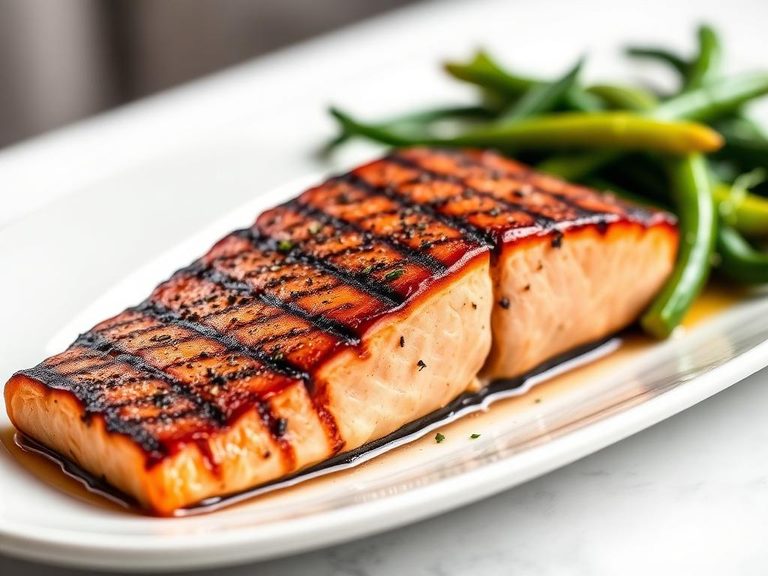
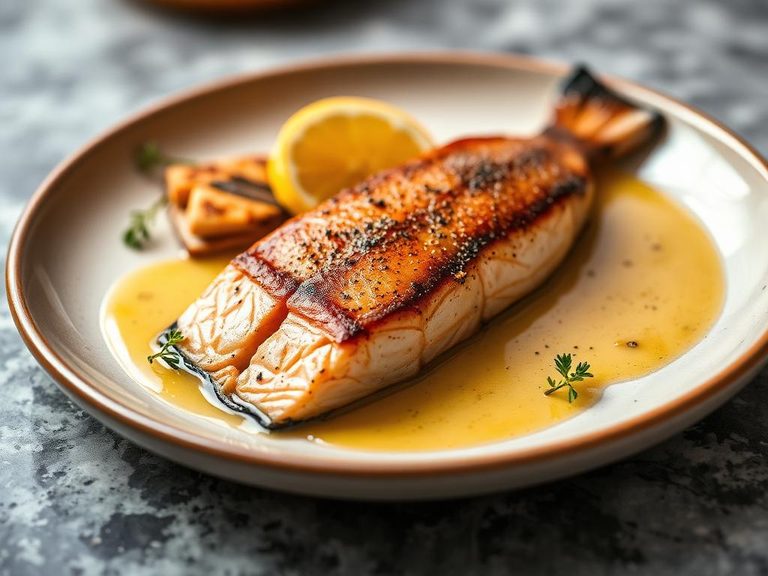
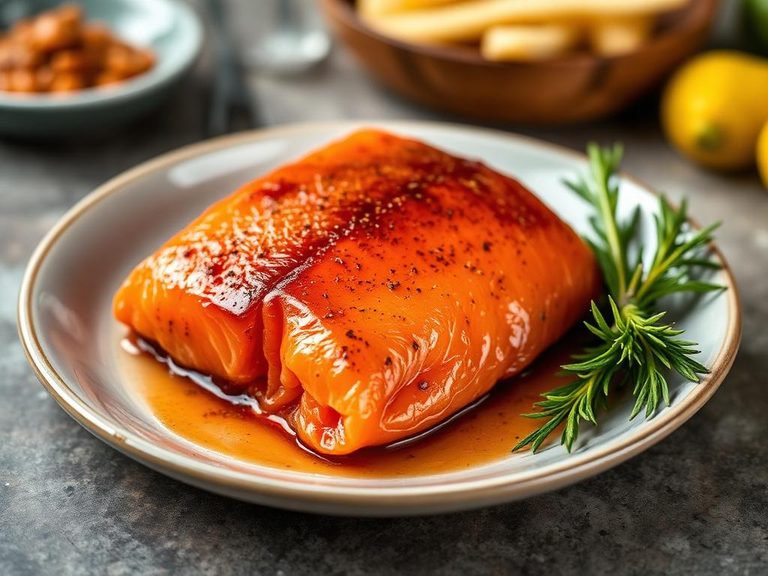
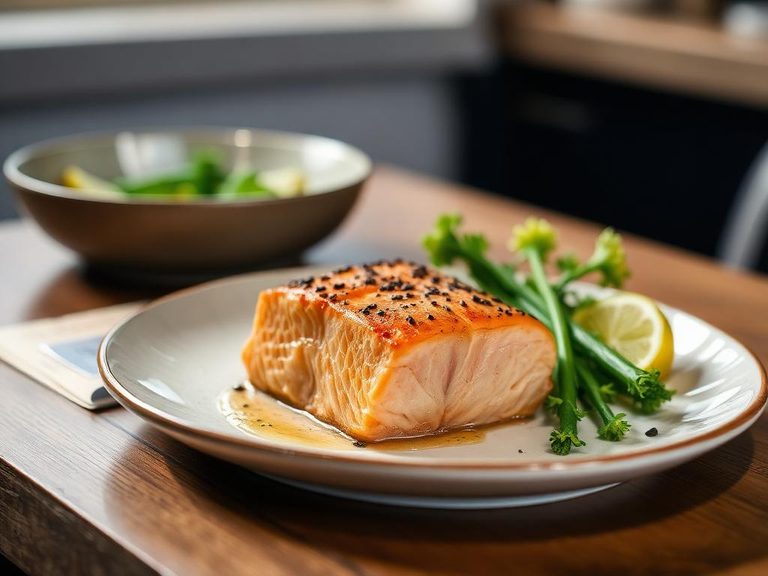
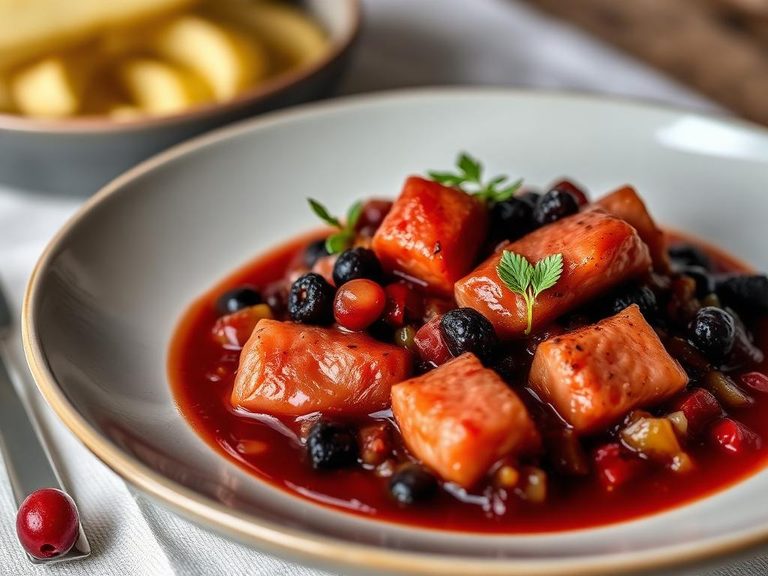
Sockeye salmon, cooked with dry heat, is a deep, ruby-red fish with a firm, meaty texture and a rich, robust flavor that's distinctly more intense than other salmon varieties. Its vibrant color comes from a powerful antioxidant called astaxanthin, which it accumulates from its diet of krill and shrimp. This preparation method yields an incredibly lean, high-protein meal with virtually no carbohydrates.
Calorie split: 68% protein · 0% carbs · 32% fat
↓ Full nutrition💚 Why it's loved
People love sockeye for its deep, complex flavor that stands up to bold seasonings and grilling, and its firm texture that holds together beautifully in a variety of dishes. It's a cultural staple in the Pacific Northwest, Alaska, and among Indigenous communities, often celebrated in seasonal feasts and traditional preservation methods.
⚠️ Watch-outs & how to enjoy it better
As a top-tier predator, sockeye can accumulate higher levels of mercury and other contaminants than smaller fish; those who are pregnant or nursing should consult dietary guidelines for low-mercury fish. Its strong flavor can be overpowering for those who prefer milder fish, and it can dry out if overcooked. To counteract this, use a meat thermometer to pull it at 125°F (52°C) for medium, and pair it with a bright, acidic sauce like a lemon-dill yogurt or a mango salsa to balance its richness.
Key benefits
- Excellent source of complete, high-quality protein for muscle repair and satiety.
- Rich in omega-3 fatty acids, particularly EPA and DHA, for heart and brain health.
- Naturally free of carbohydrates, making it ideal for low-carb and ketogenic diets.
- High in astaxanthin, a potent antioxidant linked to skin and eye health.
- Provides significant amounts of B vitamins, especially B12 and niacin.
🍽️ Popular dishes

🌍 Where it's eaten
💡 Did you know?
The intense red color of sockeye salmon flesh is not from its genetics alone, but from the astaxanthin in the tiny crustaceans it eats; farmed sockeye must be given synthetic astaxanthin in their feed to achieve a similar hue.
Full nutrition (USDA data · scales with serving)
| Water | 67.3 g |
| Energy | 156 kcal |
| Energy | 653 kj |
| Protein | 26.5 g |
| Total lipid (fat) | 5.6 g |
| Ash | 1.5 g |
| Carbohydrate, by difference | 0.00 g |
| Fiber, total dietary | 0.00 g |
| Total Sugars | 0.00 g |
| Sucrose | 0.00 g |
| Glucose | 0.00 g |
| Fructose | 0.00 g |
| Lactose | 0.00 g |
| Maltose | 0.00 g |
| Galactose | 0.00 g |
| Starch | 0.00 g |
| Calcium, Ca | 11.0 mg |
| Iron, Fe | 0.52 mg |
| Magnesium, Mg | 36.0 mg |
| Phosphorus, P | 305 mg |
| Potassium, K | 436 mg |
| Sodium, Na | 92.0 mg |
| Zinc, Zn | 0.55 mg |
| Copper, Cu | 0.08 mg |
| Manganese, Mn | 0.01 mg |
| Selenium, Se | 35.5 ug |
| Vitamin C, total ascorbic acid | 0.00 mg |
| Thiamin | 0.16 mg |
| Riboflavin | 0.25 mg |
| Niacin | 10.1 mg |
| Pantothenic acid | 1.3 mg |
| Vitamin B-6 | 0.83 mg |
| Folate, total | 7.0 ug |
| Folic acid | 0.00 ug |
| Folate, food | 7.0 ug |
| Folate, DFE | 7.0 ug |
| Choline, total | 113 mg |
| Vitamin B-12 | 4.5 ug |
| Vitamin B-12, added | 0.00 ug |
| Vitamin A, RAE | 58.0 ug |
| Retinol | 58.0 ug |
| Carotene, beta | 0.00 ug |
| Carotene, alpha | 0.00 ug |
| Cryptoxanthin, beta | 0.00 ug |
| Vitamin A, IU | 193 iu |
| Lycopene | 0.00 ug |
| Lutein + zeaxanthin | 0.00 ug |
| Vitamin E (alpha-tocopherol) | 0.99 mg |
| Vitamin E, added | 0.00 mg |
| Tocopherol, beta | 0.01 mg |
| Tocopherol, gamma | 0.19 mg |
| Tocopherol, delta | 0.22 mg |
| Tocotrienol, alpha | 0.00 mg |
| Tocotrienol, beta | 0.00 mg |
| Tocotrienol, gamma | 0.00 mg |
| Tocotrienol, delta | 0.00 mg |
| Vitamin D (D2 + D3), International Units | 670 iu |
| Vitamin D (D2 + D3) | 16.7 ug |
| Vitamin D3 (cholecalciferol) | 16.7 ug |
| Vitamin K (phylloquinone) | 0.10 ug |
| Vitamin K (Dihydrophylloquinone) | 0.00 ug |
| Vitamin K (Menaquinone-4) | 0.40 ug |
| Alcohol, ethyl | 0.00 g |
| Caffeine | 0.00 mg |
| Theobromine | 0.00 mg |
Fat & fatty acid profile (per 100g)
| Fatty acids, total saturated | 0.97 g |
| SFA 4:0 | 0.00 g |
| SFA 6:0 | 0.00 g |
| SFA 8:0 | 0.00 g |
| SFA 10:0 | 0.00 g |
| SFA 12:0 | 0.00 g |
| SFA 14:0 | 0.15 g |
| SFA 15:0 | 0.02 g |
| SFA 16:0 | 0.65 g |
| SFA 17:0 | 0.01 g |
| SFA 18:0 | 0.12 g |
| SFA 20:0 | 0.01 g |
| SFA 22:0 | 0.00 g |
| SFA 24:0 | 0.00 g |
| Fatty acids, total monounsaturated | 1.9 g |
| MUFA 14:1 | 0.00 g |
| MUFA 15:1 | 0.00 g |
| MUFA 16:1 | 0.16 g |
| MUFA 17:1 | 0.01 g |
| MUFA 18:1 | 0.84 g |
| MUFA 20:1 | 0.45 g |
| MUFA 22:1 | 0.37 g |
| MUFA 24:1 c | 0.02 g |
| Fatty acids, total polyunsaturated | 1.3 g |
| PUFA 18:2 | 0.19 g |
| PUFA 18:3 | 0.06 g |
| PUFA 18:4 | 0.06 g |
| PUFA 20:2 n-6 c,c | 0.02 g |
| PUFA 20:3 | 0.02 g |
| PUFA 20:4 | 0.02 g |
| PUFA 20:5 n-3 (EPA) | 0.30 g |
| PUFA 22:4 | 0.00 g |
| PUFA 22:5 n-3 (DPA) | 0.09 g |
| PUFA 22:6 n-3 (DHA) | 0.56 g |
| Fatty acids, total trans | 0.02 g |
| Cholesterol | 61.0 mg |
Amino acid profile (per 100g)
| Tryptophan | 0.34 g |
| Threonine | 1.2 g |
| Isoleucine | 1.3 g |
| Leucine | 2.2 g |
| Lysine | 2.6 g |
| Methionine | 0.86 g |
| Cystine | 0.29 g |
| Phenylalanine | 1.1 g |
| Tyrosine | 1.2 g |
| Valine | 1.5 g |
| Arginine | 1.7 g |
| Histidine | 0.71 g |
| Alanine | 1.6 g |
| Aspartic acid | 2.7 g |
| Glutamic acid | 3.9 g |
| Glycine | 1.3 g |
| Proline | 0.98 g |
| Serine | 1.1 g |
FAQ
How do I know when sockeye salmon is done cooking?
The most reliable method is using an instant-read thermometer. For moist, tender flesh, remove it from heat when the internal temperature reaches 125°F (52°C) for medium. The fish will continue to cook from residual heat. It should be opaque and flake easily with a fork.
Why is sockeye salmon more expensive than other salmon?
Sockeye is wild-caught, has a shorter fishing season, and is prized for its superior flavor and deep red color. Its strict sustainability management in places like Alaska also contributes to its premium price point.
Is sockeye salmon safe to eat every day?
While it's very nutritious, the FDA and EPA recommend eating fish, especially larger predator fish like salmon, 2-3 times per week to minimize potential exposure to environmental contaminants like mercury. This frequency provides excellent health benefits while managing risk.
Nutrient density (calculated · NRF9.3)
Nutrient Rich Foods index: beneficial nutrients (protein, fiber, vitamins, minerals) minus saturated fat, added sugar & sodium, per 100 kcal.
NRF9.3 index — Fulgoni, Keast & Drewnowski, 2009. Computed from USDA nutrients.
Weight-loss friendliness (composite index)
Energy density 1.56 kcal/g · 68% calories from protein · 0.0 g fiber · 0.0 g sugar per 100 g.
Composite of energy density (Rolls et al., 1999), protein & fiber satiety, minus sugar. A calculated heuristic — ranks satiety-per-calorie, not a clinical measure.
Dietary load (calculated from USDA values)
Potential renal acid load. Positive = acid-forming, negative = alkaline-forming.
Sodium-to-potassium ratio: 0.21 (lower is better — aim for ≤ 1)
Sodium:potassium per WHO potassium guidance. Computed from USDA nutrients.