

Fish, halibut, Atlantic and Pacific, cooked, dry heat
Whole food · Finfish and Shellfish Products

Photo: Wikipedia
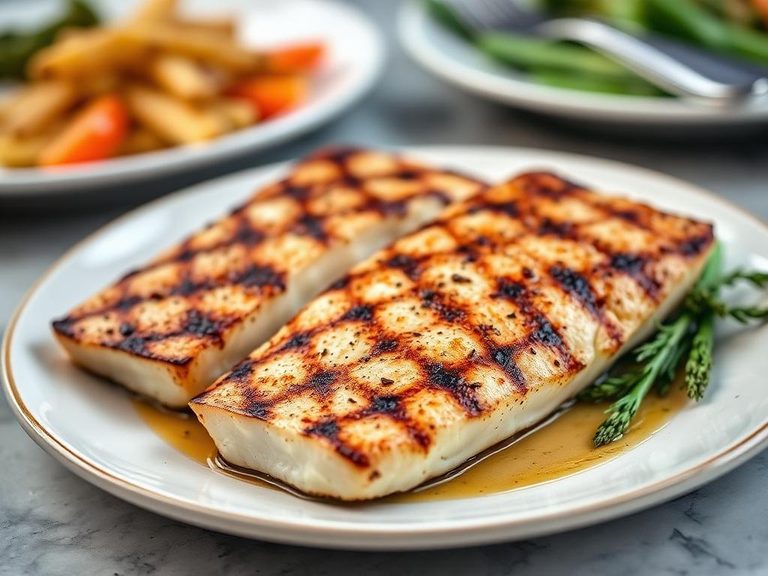
Halibut is a large, lean flatfish prized for its firm, meaty texture and mild, sweet flavor that flakes into clean, substantial pieces. When cooked with dry heat, it develops a beautiful, lightly golden exterior while remaining moist and tender inside. It is a nutritional powerhouse, delivering an impressive 22.5 grams of complete protein with virtually no fat or carbohydrates per 100-gram serving.
Calorie split: 86% protein · 0% carbs · 14% fat
↓ Full nutrition💚 Why it's loved
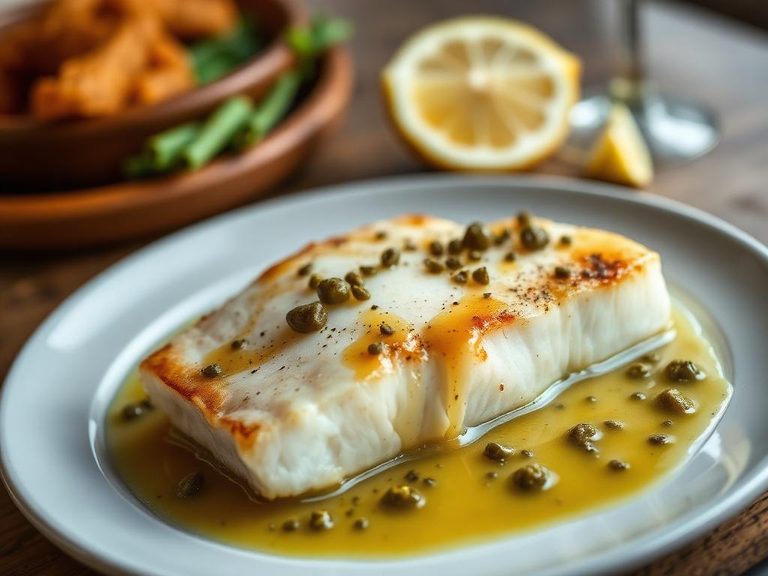
People adore halibut for its versatile, crowd-pleasing mildness that acts as a perfect canvas for a wide range of seasonings and sauces, from simple lemon-butter to complex herb crusts. Its satisfying, steak-like texture makes it a favorite centerpiece for special meals and a reliable choice for those who prefer fish without a strong 'fishy' taste.
⚠️ Watch-outs & how to enjoy it better
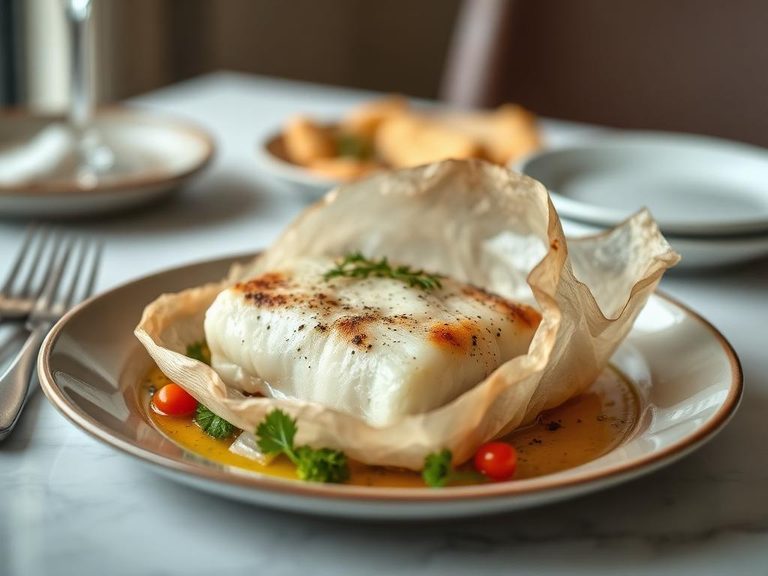
Halibut is a common fish allergen, and its high protein density can be challenging for individuals with certain kidney conditions. To counteract potential dryness from overcooking, use a meat thermometer to pull it at 130°F (54°C) internal temperature, or try en papillote (parchment packet) cooking to lock in moisture. For those watching sodium, season with herbs and citrus instead of salt.
Key benefits
- Excellent source of lean, complete protein
- Very low in fat and calories
- Naturally carb-free and sugar-free
- Rich in essential nutrients like selenium and niacin
- Provides omega-3 fatty acids for heart health
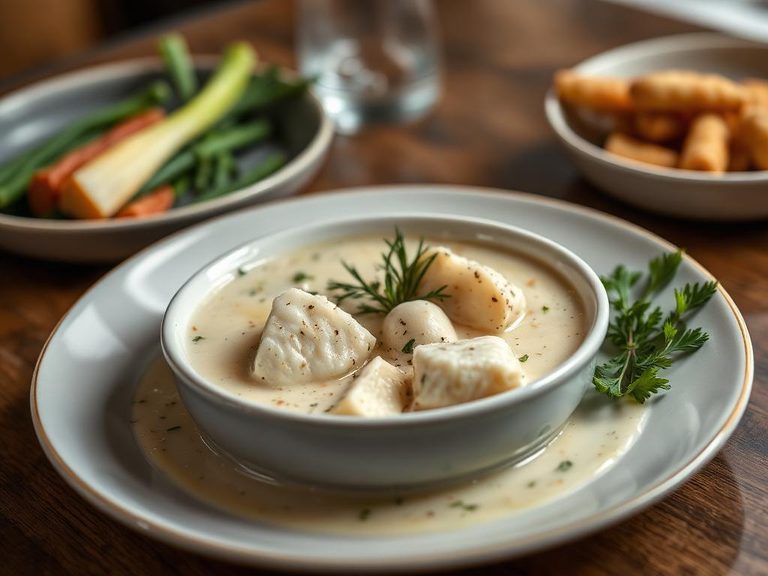
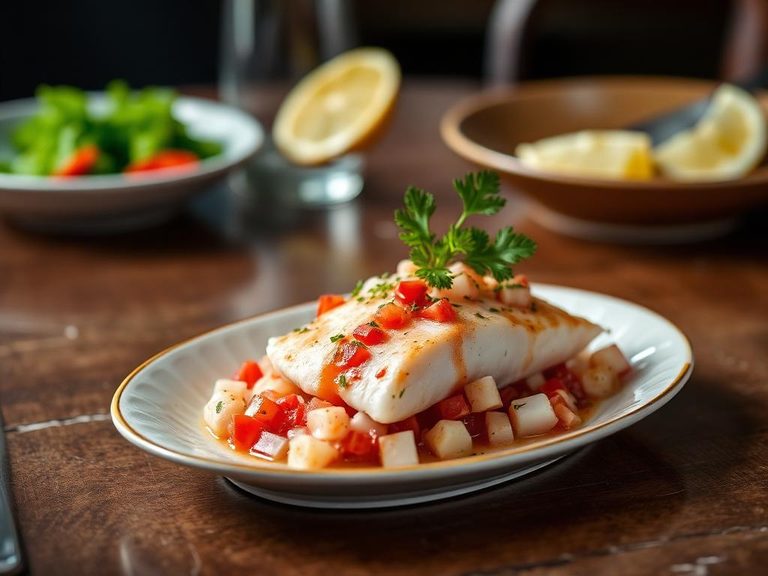
🍽️ Popular dishes
🌍 Where it's eaten
💡 Did you know?
Halibut is the largest flatfish in the world, with the Pacific halibut capable of reaching lengths over 8 feet and weights exceeding 500 pounds, though most commercially caught fish are much smaller.
Full nutrition (USDA data · scales with serving)
| Water | 76.1 g |
| Energy | 111 kcal |
| Energy | 464 kj |
| Protein | 22.5 g |
| Total lipid (fat) | 1.6 g |
| Ash | 1.6 g |
| Carbohydrate, by difference | 0.00 g |
| Fiber, total dietary | 0.00 g |
| Total Sugars | 0.00 g |
| Fructose | 0.00 g |
| Lactose | 0.00 g |
| Maltose | 0.00 g |
| Galactose | 0.00 g |
| Starch | 0.00 g |
| Calcium, Ca | 9.0 mg |
| Iron, Fe | 0.20 mg |
| Magnesium, Mg | 28.0 mg |
| Phosphorus, P | 287 mg |
| Potassium, K | 528 mg |
| Sodium, Na | 82.0 mg |
| Zinc, Zn | 0.43 mg |
| Copper, Cu | 0.03 mg |
| Manganese, Mn | 0.01 mg |
| Selenium, Se | 55.4 ug |
| Vitamin C, total ascorbic acid | 0.00 mg |
| Thiamin | 0.06 mg |
| Riboflavin | 0.04 mg |
| Niacin | 7.9 mg |
| Pantothenic acid | 0.42 mg |
| Vitamin B-6 | 0.63 mg |
| Folate, total | 14.0 ug |
| Folic acid | 0.00 ug |
| Folate, food | 14.0 ug |
| Folate, DFE | 14.0 ug |
| Choline, total | 75.1 mg |
| Vitamin B-12 | 1.3 ug |
| Vitamin B-12, added | 0.00 ug |
| Vitamin A, RAE | 24.0 ug |
| Retinol | 24.0 ug |
| Carotene, beta | 0.00 ug |
| Carotene, alpha | 0.00 ug |
| Cryptoxanthin, beta | 0.00 ug |
| Vitamin A, IU | 73.0 iu |
| Lycopene | 0.00 ug |
| Lutein + zeaxanthin | 0.00 ug |
| Vitamin E (alpha-tocopherol) | 0.74 mg |
| Vitamin E, added | 0.00 mg |
| Tocopherol, beta | 0.00 mg |
| Tocopherol, gamma | 0.00 mg |
| Tocopherol, delta | 0.00 mg |
| Tocotrienol, alpha | 0.00 mg |
| Tocotrienol, beta | 0.00 mg |
| Tocotrienol, gamma | 0.00 mg |
| Tocotrienol, delta | 0.00 mg |
| Vitamin D (D2 + D3), International Units | 231 iu |
| Vitamin D (D2 + D3) | 5.8 ug |
| Vitamin D3 (cholecalciferol) | 5.8 ug |
| Vitamin K (phylloquinone) | 0.00 ug |
| Vitamin K (Dihydrophylloquinone) | 0.00 ug |
| Vitamin K (Menaquinone-4) | 0.00 ug |
| Alcohol, ethyl | 0.00 g |
| Caffeine | 0.00 mg |
| Theobromine | 0.00 mg |
Fat & fatty acid profile (per 100g)
| Fatty acids, total saturated | 0.35 g |
| SFA 4:0 | 0.00 g |
| SFA 6:0 | 0.00 g |
| SFA 8:0 | 0.00 g |
| SFA 10:0 | 0.00 g |
| SFA 12:0 | 0.01 g |
| SFA 14:0 | 0.06 g |
| SFA 15:0 | 0.01 g |
| SFA 16:0 | 0.21 g |
| SFA 17:0 | 0.00 g |
| SFA 18:0 | 0.07 g |
| SFA 20:0 | 0.00 g |
| SFA 22:0 | 0.00 g |
| SFA 24:0 | 0.00 g |
| Fatty acids, total monounsaturated | 0.57 g |
| MUFA 14:1 | 0.00 g |
| MUFA 15:1 | 0.00 g |
| MUFA 16:1 | 0.08 g |
| MUFA 17:1 | 0.01 g |
| MUFA 18:1 | 0.28 g |
| MUFA 20:1 | 0.16 g |
| MUFA 22:1 | 0.02 g |
| MUFA 24:1 c | 0.02 g |
| Fatty acids, total polyunsaturated | 0.35 g |
| PUFA 18:2 | 0.04 g |
| PUFA 18:3 | 0.01 g |
| PUFA 18:4 | 0.01 g |
| PUFA 20:2 n-6 c,c | 0.01 g |
| PUFA 20:3 | 0.01 g |
| PUFA 20:4 | 0.02 g |
| PUFA 20:5 n-3 (EPA) | 0.08 g |
| PUFA 22:4 | 0.00 g |
| PUFA 22:5 n-3 (DPA) | 0.02 g |
| PUFA 22:6 n-3 (DHA) | 0.15 g |
| Fatty acids, total trans | 0.03 g |
| Cholesterol | 60.0 mg |
Amino acid profile (per 100g)
| Tryptophan | 0.28 g |
| Threonine | 1.1 g |
| Isoleucine | 1.2 g |
| Leucine | 2.1 g |
| Lysine | 2.3 g |
| Methionine | 0.75 g |
| Cystine | 0.27 g |
| Phenylalanine | 0.99 g |
| Tyrosine | 0.85 g |
| Valine | 1.3 g |
| Arginine | 1.5 g |
| Histidine | 0.74 g |
| Alanine | 1.5 g |
| Aspartic acid | 2.6 g |
| Glutamic acid | 3.8 g |
| Glycine | 1.2 g |
| Proline | 0.89 g |
| Serine | 1.0 g |
FAQ
How do I know when halibut is done?
The most reliable method is using an instant-read thermometer inserted into the thickest part; it's done at 130°F (54°C). The flesh should be opaque and flake easily with a fork, but be careful not to overcook it as it can become dry.
What's the difference between Atlantic and Pacific halibut?
They are distinct species from different oceans. Pacific halibut is generally more abundant and sustainable in modern fisheries, while Atlantic halibut populations were historically overfished and are now carefully managed. Both have similar taste and texture when cooked.
Is halibut high in mercury?
As a large, long-lived predatory fish, halibut does contain moderate levels of mercury. It is generally safe for most adults to eat 2-3 servings per week, but pregnant women, nursing mothers, and young children should follow specific FDA/EPA guidelines for fish consumption.
Nutrient density (calculated · NRF9.3)
Nutrient Rich Foods index: beneficial nutrients (protein, fiber, vitamins, minerals) minus saturated fat, added sugar & sodium, per 100 kcal.
NRF9.3 index — Fulgoni, Keast & Drewnowski, 2009. Computed from USDA nutrients.
Weight-loss friendliness (composite index)
Energy density 1.11 kcal/g · 81% calories from protein · 0.0 g fiber · 0.0 g sugar per 100 g.
Composite of energy density (Rolls et al., 1999), protein & fiber satiety, minus sugar. A calculated heuristic — ranks satiety-per-calorie, not a clinical measure.
Dietary load (calculated from USDA values)
Potential renal acid load. Positive = acid-forming, negative = alkaline-forming.
Sodium-to-potassium ratio: 0.16 (lower is better — aim for ≤ 1)
Sodium:potassium per WHO potassium guidance. Computed from USDA nutrients.