

Chocolate, dark, 70-85% cacao solids
Whole food · Sweets

Photo: Wikipedia
Dark chocolate with 70-85% cacao solids is a dense, intensely flavored confection with a deep, complex taste profile that balances robust bitterness with subtle fruity or nutty notes. Its texture is firm and snappy, melting smoothly on the tongue due to the high cocoa butter content. Nutritionally, it is a calorie-dense food that provides significant fiber, healthy fats, and a notable amount of plant-based protein.
Calorie split: 5% protein · 31% carbs · 64% fat
↓ Full nutrition💚 Why it's loved
People love it for its profound, layered flavor that evolves from bitter to sweet, offering a sophisticated and satisfying sensory experience. Its versatility shines in both sweet and savory applications, from baking to pairings with wine or cheese.
⚠️ Watch-outs & how to enjoy it better
Its high calorie and fat content can be a concern for those monitoring energy intake. The significant natural sugar (23.99g per 100g) can still impact blood sugar levels if consumed in large quantities. To counteract this, practice strict portion control (e.g., a 15-20g square) and pair it with a source of protein or fat, like a handful of almonds or a piece of cheese, to slow sugar absorption.
Key benefits
- Rich in antioxidants, particularly flavanols from cacao.
- Good source of dietary fiber (10.9g per 100g).
- Provides minerals like iron, magnesium, and copper.
- Contains plant-based protein (7.79g per 100g).
- May support heart health as part of a balanced diet.
🍽️ Popular dishes
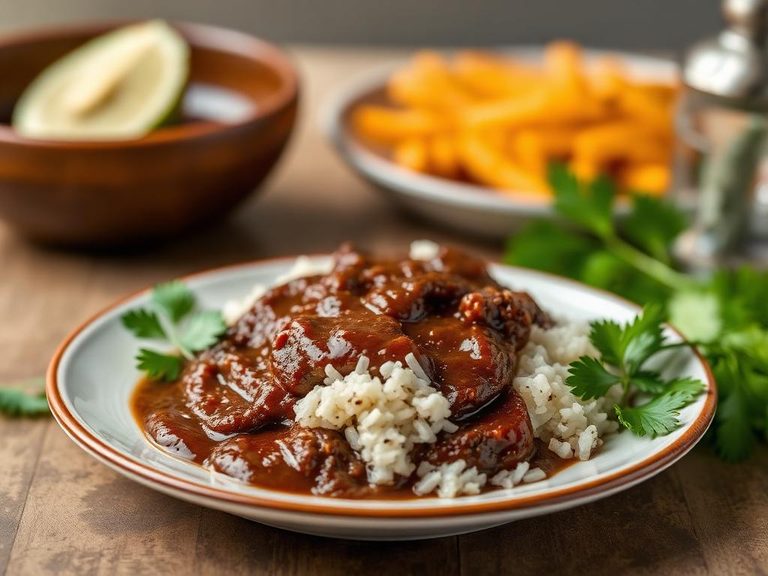


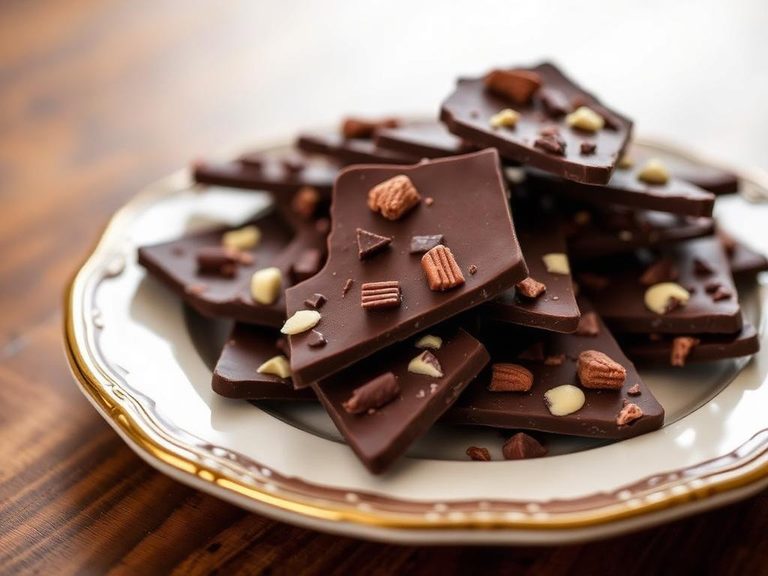


🌍 Where it's eaten
💡 Did you know?
The 'snap' sound when you break a well-tempered piece of dark chocolate is a key quality indicator, signaling a stable cocoa butter crystal structure.
Full nutrition (USDA data · scales with serving)
| Water | 1.4 g |
| Energy | 598 kcal |
| Energy | 2504 kj |
| Protein | 7.8 g |
| Total lipid (fat) | 42.6 g |
| Ash | 2.3 g |
| Carbohydrate, by difference | 45.9 g |
| Fiber, total dietary | 10.9 g |
| Total Sugars | 24.0 g |
| Sucrose | 24.0 g |
| Glucose | 0.00 g |
| Fructose | 0.00 g |
| Lactose | 0.00 g |
| Maltose | 0.00 g |
| Galactose | 0.00 g |
| Calcium, Ca | 73.0 mg |
| Iron, Fe | 11.9 mg |
| Magnesium, Mg | 228 mg |
| Phosphorus, P | 308 mg |
| Potassium, K | 715 mg |
| Sodium, Na | 20.0 mg |
| Zinc, Zn | 3.3 mg |
| Copper, Cu | 1.8 mg |
| Manganese, Mn | 1.9 mg |
| Selenium, Se | 6.8 ug |
| Thiamin | 0.03 mg |
| Riboflavin | 0.08 mg |
| Niacin | 1.1 mg |
| Pantothenic acid | 0.42 mg |
| Vitamin B-6 | 0.04 mg |
| Vitamin B-12 | 0.28 ug |
| Vitamin A, RAE | 2.0 ug |
| Carotene, beta | 19.0 ug |
| Carotene, alpha | 7.0 ug |
| Cryptoxanthin, beta | 1.0 ug |
| Vitamin A, IU | 39.0 iu |
| Lycopene | 0.00 ug |
| Lutein + zeaxanthin | 27.0 ug |
| Vitamin E (alpha-tocopherol) | 0.59 mg |
| Tocopherol, beta | 0.01 mg |
| Tocopherol, gamma | 9.2 mg |
| Tocopherol, delta | 0.29 mg |
| Tocotrienol, alpha | 0.00 mg |
| Tocotrienol, beta | 0.00 mg |
| Tocotrienol, gamma | 0.14 mg |
| Tocotrienol, delta | 0.00 mg |
| Vitamin K (phylloquinone) | 7.3 ug |
| Vitamin K (Dihydrophylloquinone) | 0.00 ug |
| Vitamin K (Menaquinone-4) | 0.00 ug |
| Caffeine | 80.0 mg |
| Theobromine | 802 mg |
Fat & fatty acid profile (per 100g)
| Fatty acids, total saturated | 24.5 g |
| SFA 4:0 | 0.01 g |
| SFA 6:0 | 0.01 g |
| SFA 8:0 | 0.01 g |
| SFA 10:0 | 0.04 g |
| SFA 12:0 | 0.02 g |
| SFA 14:0 | 0.08 g |
| SFA 15:0 | 0.02 g |
| SFA 16:0 | 10.1 g |
| SFA 17:0 | 0.09 g |
| SFA 18:0 | 13.6 g |
| SFA 20:0 | 0.41 g |
| SFA 22:0 | 0.07 g |
| SFA 24:0 | 0.04 g |
| Fatty acids, total monounsaturated | 12.8 g |
| MUFA 14:1 | 0.00 g |
| MUFA 15:1 | 0.00 g |
| MUFA 16:1 | 0.11 g |
| MUFA 16:1 c | 0.10 g |
| MUFA 17:1 | 0.00 g |
| MUFA 18:1 | 12.7 g |
| MUFA 18:1 c | 12.6 g |
| MUFA 20:1 | 0.02 g |
| MUFA 22:1 | 0.00 g |
| MUFA 22:1 c | 0.00 g |
| MUFA 24:1 c | 0.00 g |
| Fatty acids, total polyunsaturated | 1.3 g |
| PUFA 18:2 | 1.2 g |
| PUFA 18:2 n-6 c,c | 1.2 g |
| PUFA 18:2 CLAs | 0.00 g |
| PUFA 18:3 | 0.03 g |
| PUFA 18:3 n-3 c,c,c (ALA) | 0.03 g |
| PUFA 18:3 n-6 c,c,c | 0.00 g |
| PUFA 18:4 | 0.00 g |
| PUFA 20:2 n-6 c,c | 0.00 g |
| PUFA 20:3 | 0.00 g |
| PUFA 20:3 n-3 | 0.00 g |
| PUFA 20:3 n-6 | 0.00 g |
| PUFA 20:4 | 0.00 g |
| PUFA 20:5 n-3 (EPA) | 0.00 g |
| PUFA 22:4 | 0.00 g |
| PUFA 22:5 n-3 (DPA) | 0.00 g |
| PUFA 22:6 n-3 (DHA) | 0.00 g |
| Fatty acids, total trans | 0.03 g |
| Fatty acids, total trans-monoenoic | 0.03 g |
| TFA 16:1 t | 0.00 g |
| TFA 18:1 t | 0.02 g |
| TFA 22:1 t | 0.00 g |
| TFA 18:2 t not further defined | 0.01 g |
| Fatty acids, total trans-polyenoic | 0.01 g |
| Cholesterol | 3.0 mg |
| Stigmasterol | 31.0 mg |
| Campesterol | 12.0 mg |
| Beta-sitosterol | 86.0 mg |
Amino acid profile (per 100g)
Estimated from Syrups, chocolate, HERSHEY'S Sugar free, Genuine Chocolate Flavored, Lite Syrup — USDA does not publish this profile for Chocolate.
| Tryptophan | 0.04 g |
| Threonine | 0.11 g |
| Isoleucine | 0.11 g |
| Leucine | 0.17 g |
| Lysine | 0.14 g |
| Methionine | 0.03 g |
| Cystine | 0.03 g |
| Phenylalanine | 0.13 g |
| Tyrosine | 0.10 g |
| Valine | 0.17 g |
| Arginine | 0.16 g |
| Histidine | 0.05 g |
| Alanine | 0.13 g |
| Aspartic acid | 0.28 g |
| Glutamic acid | 0.42 g |
| Glycine | 0.13 g |
| Proline | 0.12 g |
| Serine | 0.12 g |
FAQ
Is dark chocolate with high cacao content healthier than milk chocolate?
Generally, yes. It typically contains less sugar, more fiber, and a higher concentration of antioxidants and minerals from the cacao solids compared to milk chocolate, which has added milk solids and more sugar.
Why does high-percentage dark chocolate taste bitter?
The bitterness comes from naturally occurring compounds called flavanols in the cacao solids. The higher the percentage of cacao, the more of these compounds are present, and the less sugar there is to balance the bitterness.
How should I store dark chocolate to preserve its quality?
Store it in a cool, dry place (15-18°C or 59-64°F) away from strong odors, as it can absorb them. Avoid the refrigerator, as temperature fluctuations can cause 'sugar bloom' (a white, gritty coating).
Nutrient density (calculated · NRF9.3)
Nutrient Rich Foods index: beneficial nutrients (protein, fiber, vitamins, minerals) minus saturated fat, added sugar & sodium, per 100 kcal.
NRF9.3 index — Fulgoni, Keast & Drewnowski, 2009. Computed from USDA nutrients.
Weight-loss friendliness (composite index)
Energy density 5.98 kcal/g · 5% calories from protein · 10.9 g fiber · 24.0 g sugar per 100 g.
Composite of energy density (Rolls et al., 1999), protein & fiber satiety, minus sugar. A calculated heuristic — ranks satiety-per-calorie, not a clinical measure.
Dietary load (calculated from USDA values)
Potential renal acid load. Positive = acid-forming, negative = alkaline-forming.
Sodium-to-potassium ratio: 0.03 (lower is better — aim for ≤ 1)
Sodium:potassium per WHO potassium guidance. Computed from USDA nutrients.