

Baking chocolate, unsweetened, squares
Whole food · Sweets

Photo: Wikipedia
Baking chocolate, unsweetened, squares are dense, intensely bitter blocks of pure cacao solids and cocoa butter, with a dry, crumbly texture that melts into a rich, velvety base for recipes. Nutritionally, it's a powerhouse of healthy fats and fiber, with a significant protein content for a plant-based ingredient, but virtually no sugar.
Calorie split: 9% protein · 18% carbs · 73% fat
↓ Full nutrition💚 Why it's loved
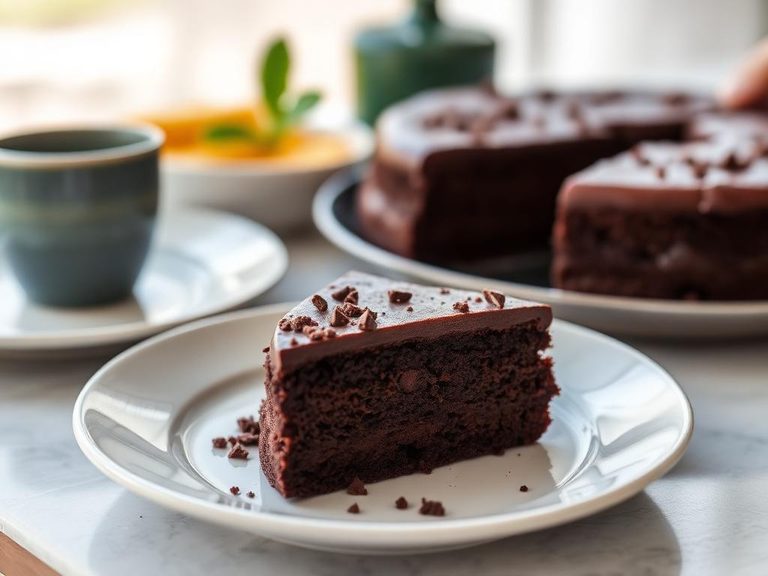
It's the secret weapon for achieving deep, complex chocolate flavor in baking, offering a pure, unadulterated cacao taste that sweetened chocolate can't match. Its versatility allows bakers to control sweetness and texture precisely, making it essential for classic desserts like flourless chocolate cake and rich ganache.
⚠️ Watch-outs & how to enjoy it better
Its intense bitterness and lack of sugar make it inedible on its own for most people, and its high fat content means it's very calorie-dense. Those monitoring saturated fat intake or with cocoa allergies should use it sparingly; pairing it with a small amount of sweetener or using it as an ingredient in a balanced dish can mitigate its intensity.
Key benefits
- High in heart-healthy monounsaturated fats from cocoa butter
- Excellent source of dietary fiber (16.6g per 100g)
- Provides plant-based protein (14.32g per 100g)
- Rich in antioxidants like flavonoids from cacao
- Contains essential minerals like magnesium and iron
🍽️ Popular dishes


🌍 Where it's eaten
💡 Did you know?
Unsweetened baking chocolate is essentially 100% cacao liquor, which is what cocoa beans become after being fermented, roasted, and ground into a paste—meaning it's the pure, unprocessed heart of chocolate before any sugar or extra cocoa butter is added.
Full nutrition (USDA data · scales with serving)
| Water | 1.3 g |
| Energy | 642 kcal |
| Energy | 2685 kj |
| Protein | 14.3 g |
| Total lipid (fat) | 52.3 g |
| Ash | 3.6 g |
| Carbohydrate, by difference | 28.4 g |
| Fiber, total dietary | 16.6 g |
| Total Sugars | 0.91 g |
| Sucrose | 0.91 g |
| Glucose | 0.00 g |
| Fructose | 0.00 g |
| Lactose | 0.00 g |
| Maltose | 0.00 g |
| Galactose | 0.00 g |
| Calcium, Ca | 101 mg |
| Iron, Fe | 17.4 mg |
| Magnesium, Mg | 327 mg |
| Phosphorus, P | 400 mg |
| Potassium, K | 830 mg |
| Sodium, Na | 24.0 mg |
| Zinc, Zn | 9.6 mg |
| Copper, Cu | 3.2 mg |
| Manganese, Mn | 4.2 mg |
| Selenium, Se | 8.1 ug |
| Vitamin C, total ascorbic acid | 0.00 mg |
| Thiamin | 0.15 mg |
| Riboflavin | 0.10 mg |
| Niacin | 1.4 mg |
| Pantothenic acid | 0.17 mg |
| Vitamin B-6 | 0.03 mg |
| Folate, total | 28.0 ug |
| Folic acid | 0.00 ug |
| Folate, food | 28.0 ug |
| Folate, DFE | 28.0 ug |
| Choline, total | 45.7 mg |
| Betaine | 2.6 mg |
| Vitamin B-12 | 0.00 ug |
| Vitamin B-12, added | 0.00 ug |
| Vitamin A, RAE | 0.00 ug |
| Retinol | 0.00 ug |
| Carotene, beta | 0.00 ug |
| Carotene, alpha | 0.00 ug |
| Cryptoxanthin, beta | 0.00 ug |
| Vitamin A, IU | 0.00 iu |
| Lycopene | 0.00 ug |
| Lutein + zeaxanthin | 38.0 ug |
| Vitamin E (alpha-tocopherol) | 0.40 mg |
| Vitamin E, added | 0.00 mg |
| Tocopherol, beta | 0.00 mg |
| Tocopherol, gamma | 5.8 mg |
| Tocopherol, delta | 0.00 mg |
| Tocotrienol, alpha | 0.00 mg |
| Tocotrienol, beta | 0.00 mg |
| Tocotrienol, gamma | 0.00 mg |
| Tocotrienol, delta | 0.00 mg |
| Vitamin D (D2 + D3), International Units | 0.00 iu |
| Vitamin D (D2 + D3) | 0.00 ug |
| Vitamin K (phylloquinone) | 9.7 ug |
| Vitamin K (Dihydrophylloquinone) | 0.00 ug |
| Alcohol, ethyl | 0.00 g |
| Caffeine | 80.0 mg |
| Theobromine | 1297 mg |
Fat & fatty acid profile (per 100g)
| Fatty acids, total saturated | 32.3 g |
| SFA 4:0 | 0.00 g |
| SFA 6:0 | 0.00 g |
| SFA 8:0 | 0.00 g |
| SFA 10:0 | 0.00 g |
| SFA 12:0 | 0.00 g |
| SFA 13:0 | 0.00 g |
| SFA 14:0 | 0.03 g |
| SFA 15:0 | 0.00 g |
| SFA 16:0 | 13.3 g |
| SFA 17:0 | 0.10 g |
| SFA 18:0 | 18.2 g |
| SFA 20:0 | 0.55 g |
| SFA 22:0 | 0.05 g |
| SFA 24:0 | 0.00 g |
| Fatty acids, total monounsaturated | 16.1 g |
| MUFA 14:1 | 0.00 g |
| MUFA 15:1 | 0.00 g |
| MUFA 16:1 | 0.10 g |
| MUFA 17:1 | 0.00 g |
| MUFA 18:1 | 16.0 g |
| MUFA 18:1 c | 16.0 g |
| MUFA 20:1 | 0.00 g |
| MUFA 22:1 | 0.00 g |
| MUFA 24:1 c | 0.00 g |
| Fatty acids, total polyunsaturated | 1.6 g |
| PUFA 18:2 | 1.4 g |
| PUFA 18:3 | 0.12 g |
| PUFA 18:3 n-3 c,c,c (ALA) | 0.12 g |
| PUFA 18:3 n-6 c,c,c | 0.00 g |
| PUFA 18:4 | 0.00 g |
| PUFA 20:2 n-6 c,c | 0.00 g |
| PUFA 20:3 | 0.00 g |
| PUFA 20:4 | 0.00 g |
| PUFA 20:5 n-3 (EPA) | 0.00 g |
| PUFA 22:5 n-3 (DPA) | 0.00 g |
| PUFA 22:6 n-3 (DHA) | 0.00 g |
| Fatty acids, total trans | 0.00 g |
| Fatty acids, total trans-monoenoic | 0.00 g |
| TFA 18:1 t | 0.00 g |
| Cholesterol | 2.0 mg |
| Stigmasterol | 38.0 mg |
| Campesterol | 13.0 mg |
| Beta-sitosterol | 85.0 mg |
Amino acid profile (per 100g)
| Tryptophan | 0.13 g |
| Threonine | 0.37 g |
| Isoleucine | 0.41 g |
| Leucine | 0.69 g |
| Lysine | 0.47 g |
| Methionine | 0.14 g |
| Cystine | 0.23 g |
| Phenylalanine | 0.53 g |
| Tyrosine | 0.42 g |
| Valine | 0.66 g |
| Arginine | 0.81 g |
| Histidine | 0.21 g |
| Alanine | 0.47 g |
| Aspartic acid | 1.3 g |
| Glutamic acid | 1.9 g |
| Glycine | 0.51 g |
| Proline | 0.88 g |
| Serine | 0.53 g |
| Hydroxyproline | 0.00 g |
FAQ
What's the difference between baking chocolate and unsweetened chocolate?
They are the same thing. 'Unsweetened chocolate' is the technical name for 100% cacao liquor, which is sold as 'baking chocolate' for culinary use.
Can I eat baking chocolate straight from the package?
While safe to eat, its extremely bitter and astringent flavor makes it unpleasant for most people. It's designed as an ingredient, not a standalone treat.
How do I substitute baking chocolate in a recipe?
You can substitute 1 ounce of unsweetened baking chocolate with 3 tablespoons of unsweetened cocoa powder plus 1 tablespoon of a neutral oil or melted butter, though the texture may vary slightly.
Nutrient density (calculated · NRF9.3)
Nutrient Rich Foods index: beneficial nutrients (protein, fiber, vitamins, minerals) minus saturated fat, added sugar & sodium, per 100 kcal.
NRF9.3 index — Fulgoni, Keast & Drewnowski, 2009. Computed from USDA nutrients.
Weight-loss friendliness (composite index)
Energy density 6.42 kcal/g · 9% calories from protein · 16.6 g fiber · 0.9 g sugar per 100 g.
Composite of energy density (Rolls et al., 1999), protein & fiber satiety, minus sugar. A calculated heuristic — ranks satiety-per-calorie, not a clinical measure.
Dietary load (calculated from USDA values)
Potential renal acid load. Positive = acid-forming, negative = alkaline-forming.
Sodium-to-potassium ratio: 0.03 (lower is better — aim for ≤ 1)
Sodium:potassium per WHO potassium guidance. Computed from USDA nutrients.