

Bacon, turkey, microwaved
Whole food · Sausages and Luncheon Meats

Photo: Wikipedia
Microwaved turkey bacon is a lean, pre-cooked pork alternative that crisps up quickly in the microwave, offering a satisfying, salty-smoky chew with a slightly rubbery texture compared to traditional bacon. It packs a significant protein punch (nearly 30g per 100g) with a fraction of the fat found in pork bacon, making it a popular high-protein, lower-fat breakfast staple. The convenience of a 2-3 minute cook time makes it a go-to for busy mornings.
Calorie split: 32% protein · 5% carbs · 63% fat
↓ Full nutrition💚 Why it's loved
People love it for delivering a familiar, savory, smoky bacon flavor and satisfying crunch in a fraction of the time, with a cleaner, less greasy finish. Its versatility makes it a quick protein boost for salads, sandwiches, and breakfast plates without the mess of frying.
⚠️ Watch-outs & how to enjoy it better
The texture can be rubbery or chewy compared to pan-fried pork bacon, and it is often high in sodium, which can be a concern for those monitoring salt intake. To counteract, pair it with potassium-rich foods like avocado or spinach, and use it as a flavor accent rather than the main protein portion.
Key benefits
- High-quality protein source (29.5g per 100g)
- Significantly lower in fat than pork bacon
- Very quick and convenient preparation
- No cholesterol (plant-based or turkey versions)
- Consistent portion control for meal planning
🍽️ Popular dishes
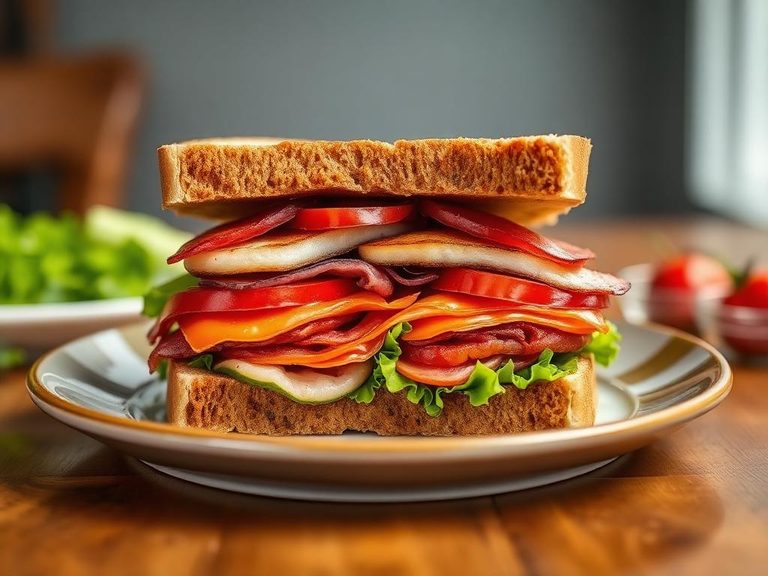
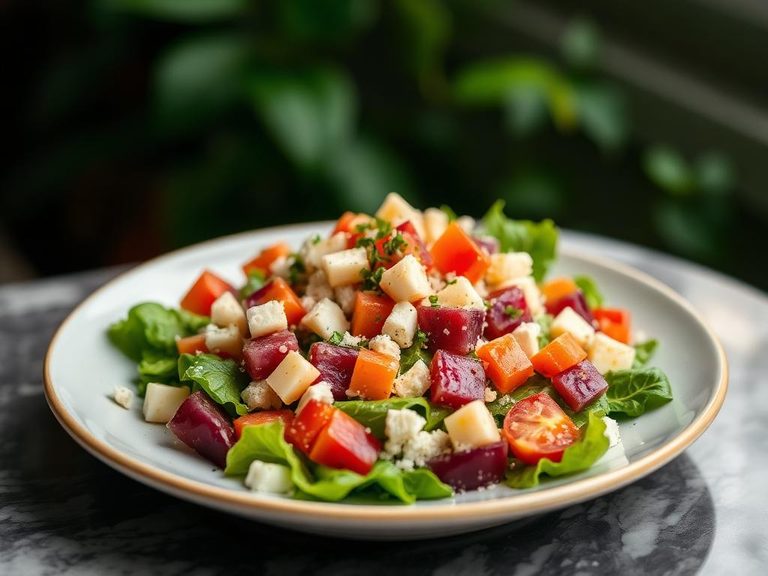
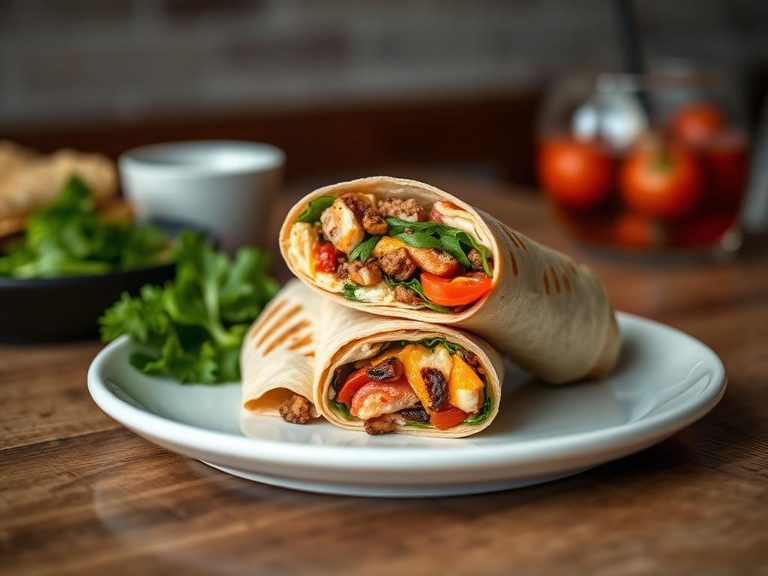
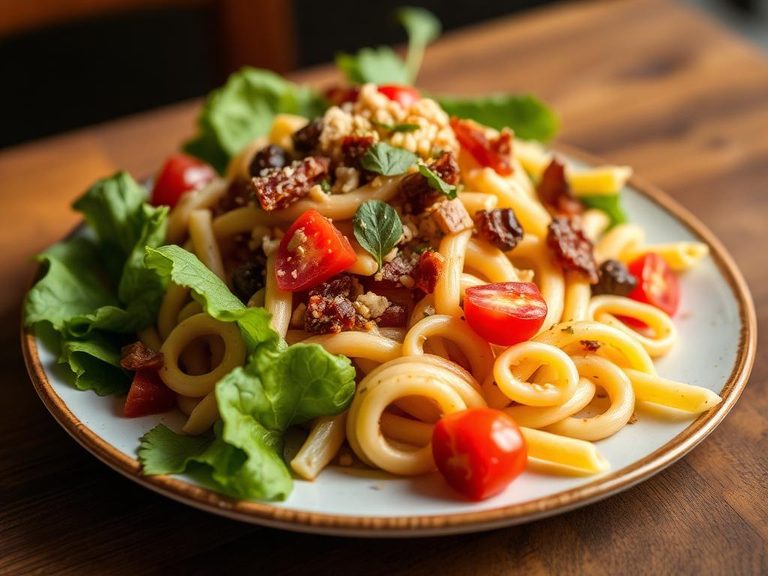

🌍 Where it's eaten
💡 Did you know?
The first turkey bacon was developed in the 1980s as a direct response to consumer demand for a lower-fat, heart-healthier alternative to traditional pork bacon.
Full nutrition (USDA data · scales with serving)
| Water | 34.5 g |
| Energy | 368 kcal |
| Energy | 1539 kj |
| Protein | 29.5 g |
| Total lipid (fat) | 25.9 g |
| Ash | 6.8 g |
| Carbohydrate, by difference | 4.2 g |
| Fiber, total dietary | 0.00 g |
| Total Sugars | 4.2 g |
| Sucrose | 3.9 g |
| Glucose | 0.10 g |
| Fructose | 0.20 g |
| Calcium, Ca | 163 mg |
| Iron, Fe | 2.6 mg |
| Magnesium, Mg | 30.0 mg |
| Phosphorus, P | 416 mg |
| Potassium, K | 666 mg |
| Sodium, Na | 2021 mg |
| Zinc, Zn | 4.7 mg |
| Copper, Cu | 0.12 mg |
| Manganese, Mn | 0.03 mg |
| Selenium, Se | 28.5 ug |
| Vitamin C, total ascorbic acid | 0.00 mg |
| Thiamin | 0.05 mg |
| Riboflavin | 0.40 mg |
| Niacin | 8.1 mg |
| Pantothenic acid | 0.99 mg |
| Vitamin B-6 | 0.37 mg |
| Folate, total | 15.0 ug |
| Folic acid | 0.00 ug |
| Folate, food | 15.0 ug |
| Folate, DFE | 15.0 ug |
| Choline, total | 87.9 mg |
| Betaine | 4.8 mg |
| Vitamin B-12 | 1.9 ug |
| Vitamin B-12, added | 0.00 ug |
| Vitamin A, RAE | 19.0 ug |
| Retinol | 19.0 ug |
| Carotene, beta | 0.00 ug |
| Carotene, alpha | 0.00 ug |
| Cryptoxanthin, beta | 0.00 ug |
| Vitamin A, IU | 63.0 iu |
| Lycopene | 0.00 ug |
| Lutein + zeaxanthin | 0.00 ug |
| Vitamin E (alpha-tocopherol) | 0.14 mg |
| Vitamin E, added | 0.00 mg |
| Vitamin D (D2 + D3), International Units | 50.0 iu |
| Vitamin D (D2 + D3) | 1.2 ug |
| Vitamin D3 (cholecalciferol) | 1.2 ug |
| Vitamin K (phylloquinone) | 0.00 ug |
| Alcohol, ethyl | 0.00 g |
| Caffeine | 0.00 mg |
| Theobromine | 0.00 mg |
Fat & fatty acid profile (per 100g)
| Fatty acids, total saturated | 6.9 g |
| SFA 4:0 | 0.00 g |
| SFA 6:0 | 0.01 g |
| SFA 8:0 | 0.00 g |
| SFA 10:0 | 0.01 g |
| SFA 12:0 | 0.04 g |
| SFA 14:0 | 0.22 g |
| SFA 15:0 | 0.04 g |
| SFA 16:0 | 4.7 g |
| SFA 17:0 | 0.06 g |
| SFA 18:0 | 1.8 g |
| SFA 20:0 | 0.03 g |
| SFA 22:0 | 0.01 g |
| SFA 24:0 | 0.01 g |
| Fatty acids, total monounsaturated | 9.4 g |
| MUFA 14:1 | 0.03 g |
| MUFA 15:1 | 0.00 g |
| MUFA 16:1 | 0.75 g |
| MUFA 16:1 c | 0.73 g |
| MUFA 17:1 | 0.04 g |
| MUFA 18:1 | 8.4 g |
| MUFA 18:1 c | 8.2 g |
| MUFA 20:1 | 0.13 g |
| MUFA 22:1 | 0.01 g |
| MUFA 22:1 c | 0.01 g |
| MUFA 24:1 c | 0.00 g |
| Fatty acids, total polyunsaturated | 6.9 g |
| PUFA 18:2 | 6.2 g |
| PUFA 18:2 n-6 c,c | 6.1 g |
| PUFA 18:2 CLAs | 0.03 g |
| PUFA 18:3 | 0.35 g |
| PUFA 18:3 n-3 c,c,c (ALA) | 0.34 g |
| PUFA 18:3 n-6 c,c,c | 0.01 g |
| PUFA 18:3i | 0.00 g |
| PUFA 18:4 | 0.00 g |
| PUFA 20:2 n-6 c,c | 0.04 g |
| PUFA 20:3 | 0.03 g |
| PUFA 20:3 n-3 | 0.01 g |
| PUFA 20:3 n-6 | 0.02 g |
| PUFA 20:4 | 0.17 g |
| PUFA 20:5 n-3 (EPA) | 0.02 g |
| PUFA 22:4 | 0.03 g |
| PUFA 22:5 n-3 (DPA) | 0.02 g |
| PUFA 22:6 n-3 (DHA) | 0.01 g |
| Fatty acids, total trans | 0.29 g |
| Fatty acids, total trans-monoenoic | 0.23 g |
| TFA 16:1 t | 0.02 g |
| TFA 18:1 t | 0.21 g |
| TFA 22:1 t | 0.00 g |
| TFA 18:2 t not further defined | 0.06 g |
| Fatty acids, total trans-polyenoic | 0.06 g |
| Cholesterol | 153 mg |
Amino acid profile (per 100g)
Estimated from Bacon and beef sticks — USDA does not publish this profile for Bacon.
| Tryptophan | 0.21 g |
| Threonine | 0.96 g |
| Isoleucine | 0.97 g |
| Leucine | 1.7 g |
| Lysine | 1.8 g |
| Methionine | 0.59 g |
| Cystine | 0.26 g |
| Phenylalanine | 0.87 g |
| Tyrosine | 0.71 g |
| Valine | 1.1 g |
| Arginine | 1.5 g |
| Histidine | 0.70 g |
| Alanine | 1.5 g |
| Aspartic acid | 2.1 g |
| Glutamic acid | 3.4 g |
| Glycine | 1.6 g |
| Proline | 1.2 g |
| Serine | 0.94 g |
FAQ
Is turkey bacon healthier than pork bacon?
Generally, yes. It is significantly lower in fat and calories while providing comparable protein. However, it can be similarly high in sodium, so it's not a free pass.
How do I get it crispy in the microwave?
Place slices on a microwave-safe plate lined with a paper towel. Microwave on high for 1-2 minutes per slice, checking frequently. Let it rest for 30 seconds, as it will crisp up more as it cools.
What is turkey bacon actually made of?
It's typically made from chopped or ground turkey thigh meat, seasoned with salt, sugar, smoke flavor, and preservatives like sodium nitrite, then formed into strips.
Nutrient density (calculated · NRF9.3)
Nutrient Rich Foods index: beneficial nutrients (protein, fiber, vitamins, minerals) minus saturated fat, added sugar & sodium, per 100 kcal.
NRF9.3 index — Fulgoni, Keast & Drewnowski, 2009. Computed from USDA nutrients.
Weight-loss friendliness (composite index)
Energy density 3.68 kcal/g · 32% calories from protein · 0.0 g fiber · 4.2 g sugar per 100 g.
Composite of energy density (Rolls et al., 1999), protein & fiber satiety, minus sugar. A calculated heuristic — ranks satiety-per-calorie, not a clinical measure.
Dietary load (calculated from USDA values)
Potential renal acid load. Positive = acid-forming, negative = alkaline-forming.
Sodium-to-potassium ratio: 3.03 (lower is better — aim for ≤ 1)
Sodium:potassium per WHO potassium guidance. Computed from USDA nutrients.