

Avocados, raw, all commercial varieties
Whole food · Fruits and Fruit Juices
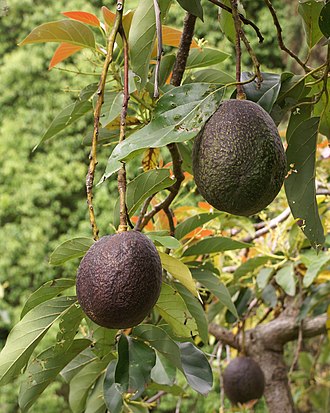
Photo: Wikipedia
The avocado is a creamy, pear-shaped fruit with a rich, buttery flesh that ranges from pale yellow to vibrant green. Its texture is uniquely smooth and dense, making it a luxurious addition to both savory and sweet dishes. Nutritionally, it stands out for its high content of heart-healthy monounsaturated fats and impressive fiber, which together promote satiety and nutrient absorption.
Calorie split: 5% protein · 20% carbs · 76% fat
↓ Full nutrition💚 Why it's loved
People adore avocados for their unparalleled creamy texture and mild, nutty flavor that acts as a blank canvas for seasonings. Their incredible versatility allows them to be used in everything from smoothies and desserts to main courses, making them a staple in many global cuisines.
⚠️ Watch-outs & how to enjoy it better
Avocados are calorie-dense and high in fat, which can be a concern for those monitoring calorie intake. They also contain a small amount of oxalates, which may be relevant for individuals prone to certain types of kidney stones. To manage portions, use one-quarter to one-half of an avocado as a garnish or spread rather than the whole fruit, and pair it with lean protein like eggs or chicken to create a balanced meal.
Key benefits
- Rich in monounsaturated fats, which support heart health.
- Excellent source of dietary fiber for digestive regularity.
- Contains potassium, which helps regulate blood pressure.
- Provides fat-soluble vitamins like K and E.
- Enhances absorption of fat-soluble nutrients from other foods.
🍽️ Popular dishes
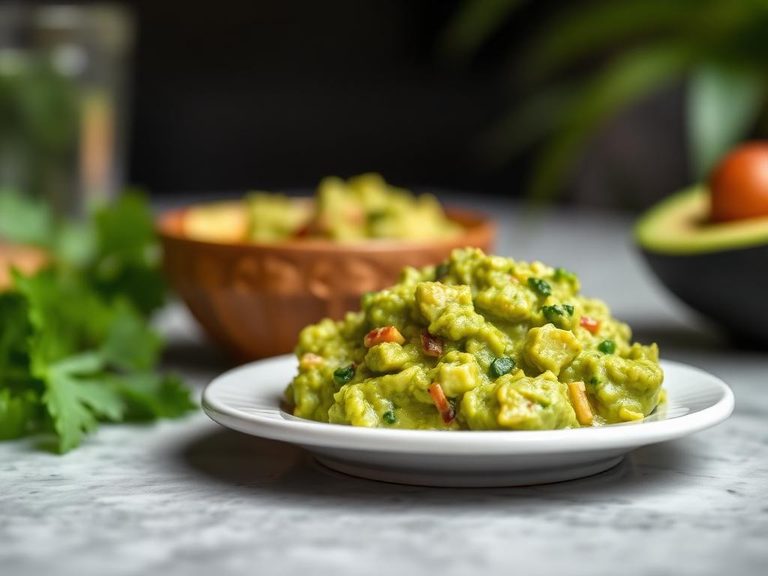
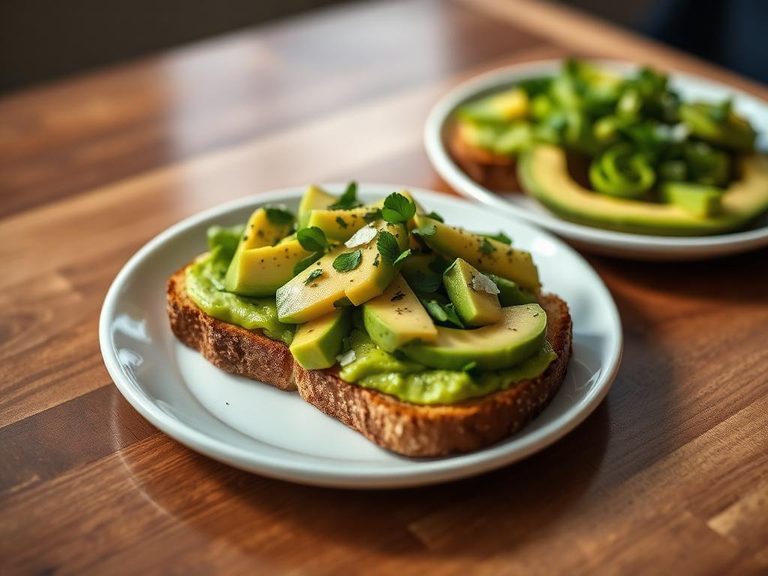
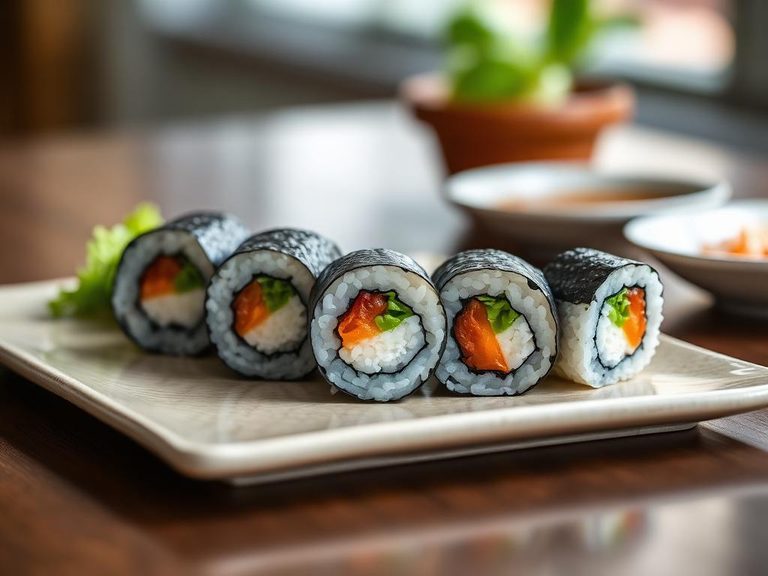
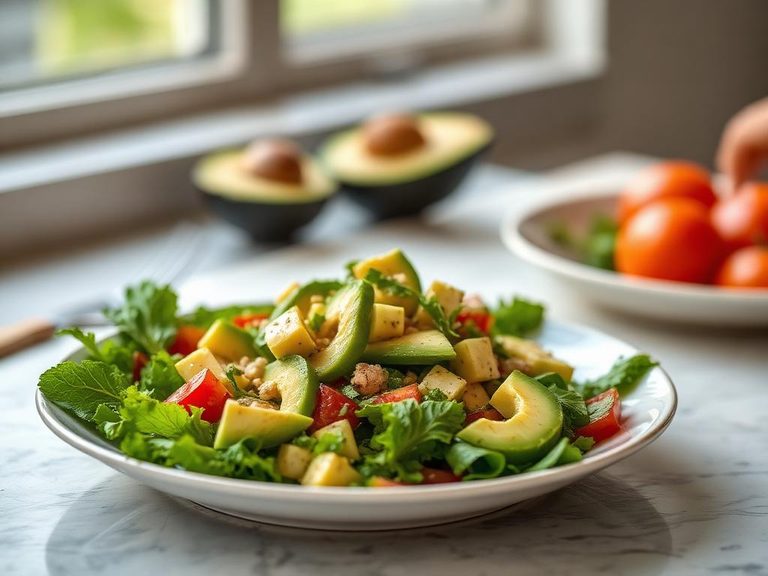
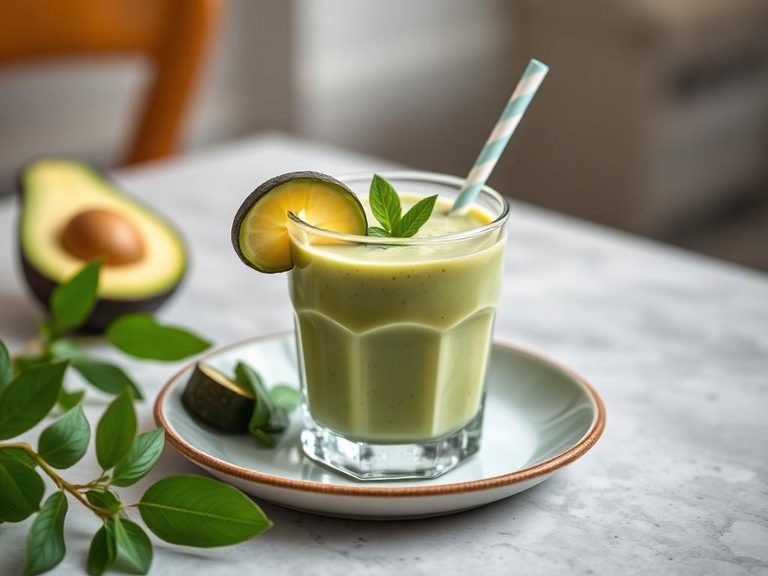
🌍 Where it's eaten
💡 Did you know?
The name 'avocado' comes from the Nahuatl word 'āhuacatl,' which also meant 'testicle,' likely referring to the fruit's shape and tendency to grow in pairs.
Full nutrition (USDA data · scales with serving)
| Water | 73.2 g |
| Energy | 160 kcal |
| Energy | 670 kj |
| Protein | 2.0 g |
| Total lipid (fat) | 14.7 g |
| Ash | 1.6 g |
| Carbohydrate, by difference | 8.5 g |
| Fiber, total dietary | 6.7 g |
| Total Sugars | 0.66 g |
| Sucrose | 0.06 g |
| Glucose | 0.37 g |
| Fructose | 0.12 g |
| Lactose | 0.00 g |
| Maltose | 0.00 g |
| Galactose | 0.10 g |
| Starch | 0.11 g |
| Calcium, Ca | 12.0 mg |
| Iron, Fe | 0.55 mg |
| Magnesium, Mg | 29.0 mg |
| Phosphorus, P | 52.0 mg |
| Potassium, K | 485 mg |
| Sodium, Na | 7.0 mg |
| Zinc, Zn | 0.64 mg |
| Copper, Cu | 0.19 mg |
| Manganese, Mn | 0.14 mg |
| Selenium, Se | 0.40 ug |
| Fluoride, F | 7.0 ug |
| Vitamin C, total ascorbic acid | 10.0 mg |
| Thiamin | 0.07 mg |
| Riboflavin | 0.13 mg |
| Niacin | 1.7 mg |
| Pantothenic acid | 1.4 mg |
| Vitamin B-6 | 0.26 mg |
| Folate, total | 81.0 ug |
| Folic acid | 0.00 ug |
| Folate, food | 81.0 ug |
| Folate, DFE | 81.0 ug |
| Choline, total | 14.2 mg |
| Betaine | 0.70 mg |
| Vitamin B-12 | 0.00 ug |
| Vitamin B-12, added | 0.00 ug |
| Vitamin A, RAE | 7.0 ug |
| Retinol | 0.00 ug |
| Carotene, beta | 62.0 ug |
| Carotene, alpha | 24.0 ug |
| Cryptoxanthin, beta | 28.0 ug |
| Vitamin A, IU | 146 iu |
| Lycopene | 0.00 ug |
| Lutein + zeaxanthin | 271 ug |
| Vitamin E (alpha-tocopherol) | 2.1 mg |
| Vitamin E, added | 0.00 mg |
| Tocopherol, beta | 0.05 mg |
| Tocopherol, gamma | 0.33 mg |
| Tocopherol, delta | 0.02 mg |
| Tocotrienol, alpha | 0.01 mg |
| Tocotrienol, beta | 0.00 mg |
| Tocotrienol, gamma | 0.00 mg |
| Tocotrienol, delta | 0.00 mg |
| Vitamin D (D2 + D3), International Units | 0.00 iu |
| Vitamin D (D2 + D3) | 0.00 ug |
| Vitamin K (phylloquinone) | 21.0 ug |
| Vitamin K (Dihydrophylloquinone) | 0.00 ug |
| Alcohol, ethyl | 0.00 g |
| Caffeine | 0.00 mg |
| Theobromine | 0.00 mg |
Fat & fatty acid profile (per 100g)
| Fatty acids, total saturated | 2.1 g |
| SFA 4:0 | 0.00 g |
| SFA 6:0 | 0.00 g |
| SFA 8:0 | 0.00 g |
| SFA 10:0 | 0.00 g |
| SFA 12:0 | 0.00 g |
| SFA 14:0 | 0.00 g |
| SFA 15:0 | 0.00 g |
| SFA 16:0 | 2.1 g |
| SFA 17:0 | 0.00 g |
| SFA 18:0 | 0.05 g |
| SFA 20:0 | 0.00 g |
| SFA 22:0 | 0.00 g |
| SFA 24:0 | 0.00 g |
| Fatty acids, total monounsaturated | 9.8 g |
| MUFA 14:1 | 0.00 g |
| MUFA 15:1 | 0.00 g |
| MUFA 16:1 | 0.70 g |
| MUFA 17:1 | 0.01 g |
| MUFA 18:1 | 9.1 g |
| MUFA 20:1 | 0.03 g |
| MUFA 22:1 | 0.00 g |
| Fatty acids, total polyunsaturated | 1.8 g |
| PUFA 18:2 | 1.7 g |
| PUFA 18:3 | 0.13 g |
| PUFA 18:3 n-3 c,c,c (ALA) | 0.11 g |
| PUFA 18:3 n-6 c,c,c | 0.01 g |
| PUFA 18:4 | 0.00 g |
| PUFA 20:2 n-6 c,c | 0.00 g |
| PUFA 20:3 | 0.02 g |
| PUFA 20:4 | 0.00 g |
| PUFA 20:5 n-3 (EPA) | 0.00 g |
| PUFA 22:5 n-3 (DPA) | 0.00 g |
| PUFA 22:6 n-3 (DHA) | 0.00 g |
| Fatty acids, total trans | 0.00 g |
| Cholesterol | 0.00 mg |
| Stigmasterol | 2.0 mg |
| Campesterol | 5.0 mg |
| Beta-sitosterol | 76.0 mg |
Amino acid profile (per 100g)
| Tryptophan | 0.03 g |
| Threonine | 0.07 g |
| Isoleucine | 0.08 g |
| Leucine | 0.14 g |
| Lysine | 0.13 g |
| Methionine | 0.04 g |
| Cystine | 0.03 g |
| Phenylalanine | 0.10 g |
| Tyrosine | 0.05 g |
| Valine | 0.11 g |
| Arginine | 0.09 g |
| Histidine | 0.05 g |
| Alanine | 0.11 g |
| Aspartic acid | 0.24 g |
| Glutamic acid | 0.29 g |
| Glycine | 0.10 g |
| Proline | 0.10 g |
| Serine | 0.11 g |
FAQ
How do I pick a ripe avocado?
Gently squeeze the avocado; it should yield to firm, gentle pressure. The skin should be dark green to nearly black and slightly pebbly for Hass avocados. Avoid ones with deep indentations or mushy spots.
Why does my avocado turn brown so quickly?
Avocado flesh oxidizes when exposed to air. To slow browning, squeeze lemon or lime juice over the exposed surface, press plastic wrap directly onto the flesh, or store the pit in the unused half.
Are avocado pits edible?
While sometimes used in blended smoothies, avocado pits are very hard and not commonly eaten. They contain compounds that are not well-studied for safety in humans, and there's a risk of choking or damaging a blender.
Nutrient density (calculated · NRF9.3)
Nutrient Rich Foods index: beneficial nutrients (protein, fiber, vitamins, minerals) minus saturated fat, added sugar & sodium, per 100 kcal.
NRF9.3 index — Fulgoni, Keast & Drewnowski, 2009. Computed from USDA nutrients.
Weight-loss friendliness (composite index)
Energy density 1.60 kcal/g · 5% calories from protein · 6.7 g fiber · 0.7 g sugar per 100 g.
Composite of energy density (Rolls et al., 1999), protein & fiber satiety, minus sugar. A calculated heuristic — ranks satiety-per-calorie, not a clinical measure.
Dietary load (calculated from USDA values)
Potential renal acid load. Positive = acid-forming, negative = alkaline-forming.
Sodium-to-potassium ratio: 0.01 (lower is better — aim for ≤ 1)
Sodium:potassium per WHO potassium guidance. Computed from USDA nutrients.