

Turkey, retail parts, wing, meat only, cooked, roasted
Whole food · Poultry Products
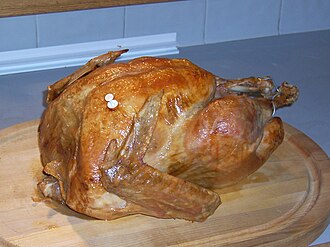
Photo: Wikipedia
Roasted turkey wing meat is a lean, savory protein powerhouse with a robust, slightly gamey flavor and a firm, satisfying texture. Its impressive protein-to-fat ratio makes it a standout choice for health-conscious eaters seeking a hearty, low-carb meal. This cut offers a deep, satisfying umami that intensifies with roasting, making it a staple for both everyday dinners and festive occasions.
Calorie split: 71% protein · 0% carbs · 29% fat
↓ Full nutrition💚 Why it's loved
People love turkey wing meat for its deep, savory flavor that stands up well to bold seasonings and slow cooking. Its versatility allows it to shine in everything from simple roasted dishes to complex stews and barbecues, making it a beloved choice across many culinary traditions.
⚠️ Watch-outs & how to enjoy it better
The meat can be dry if overcooked due to its low fat content, and some may find its flavor too strong or gamey compared to milder poultry. To counteract dryness, use a meat thermometer to avoid overcooking, and marinate or braise the meat to add moisture and tenderness. For those sensitive to strong flavors, pairing with acidic ingredients like lemon or vinegar can balance the taste.
Key benefits
- High in complete protein for muscle repair and satiety
- Naturally zero carbohydrates, ideal for low-carb diets
- Rich in B vitamins, especially niacin and B6 for energy metabolism
- Contains selenium, an antioxidant that supports thyroid function
- Low in saturated fat compared to many other animal proteins
🍽️ Popular dishes
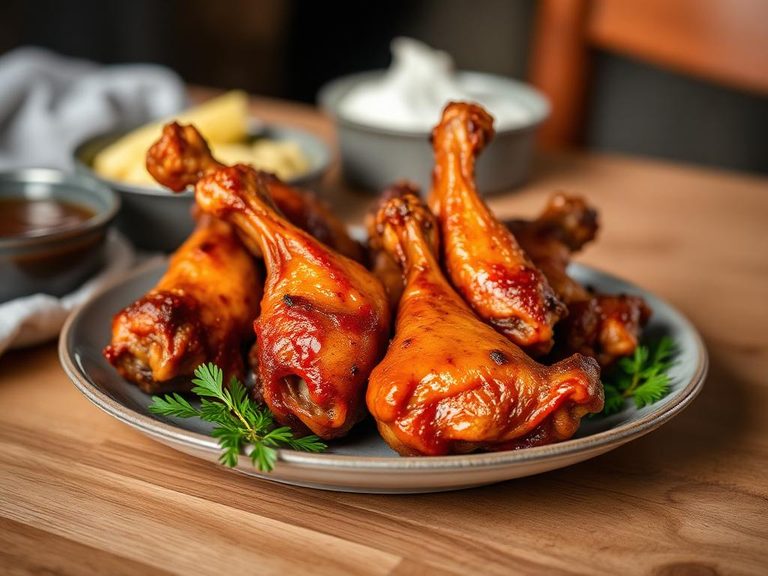


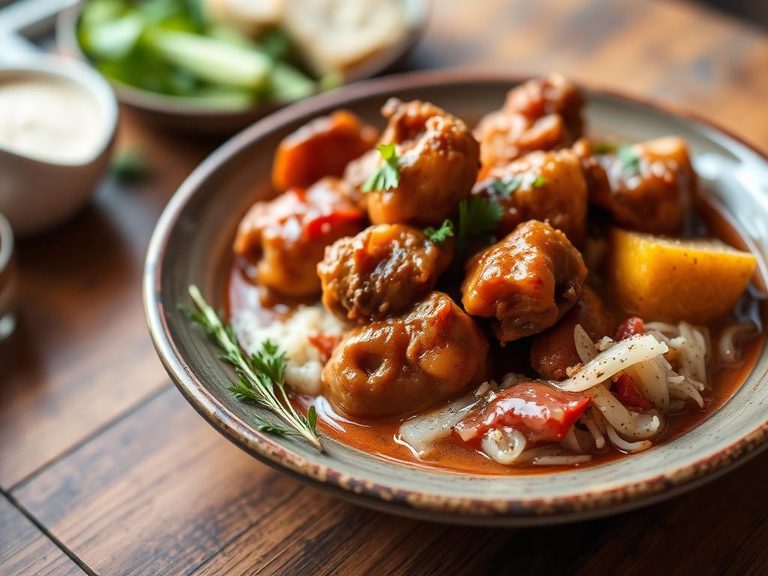
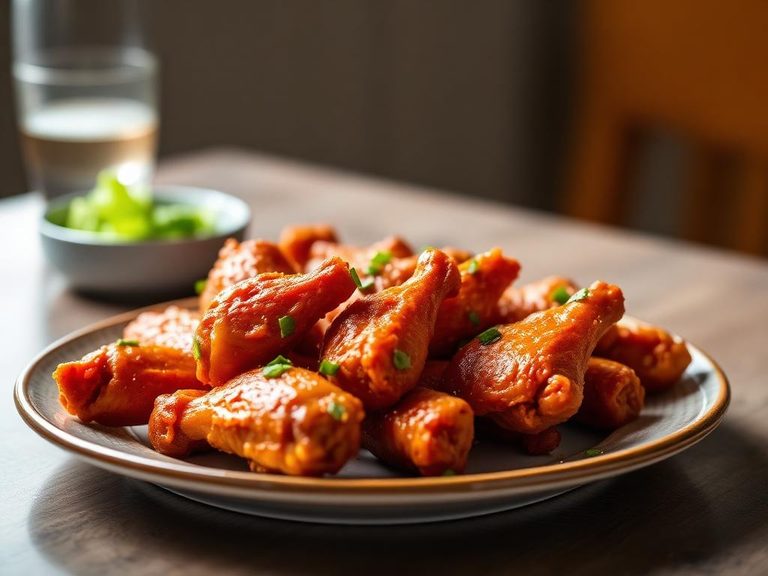
🌍 Where it's eaten
💡 Did you know?
A single turkey wing can weigh up to 1.5 pounds, making it one of the largest poultry wings, and it's often used in stock-making for its rich, gelatinous collagen content.
Full nutrition (USDA data · scales with serving)
| Water | 64.0 g |
| Energy | 170 kcal |
| Energy | 713 kj |
| Protein | 30.2 g |
| Total lipid (fat) | 5.5 g |
| Ash | 1.1 g |
| Carbohydrate, by difference | 0.00 g |
| Fiber, total dietary | 0.00 g |
| Total Sugars | 0.00 g |
| Calcium, Ca | 12.0 mg |
| Iron, Fe | 0.82 mg |
| Magnesium, Mg | 21.0 mg |
| Phosphorus, P | 180 mg |
| Potassium, K | 207 mg |
| Sodium, Na | 103 mg |
| Zinc, Zn | 3.2 mg |
| Copper, Cu | 0.06 mg |
| Manganese, Mn | 0.00 mg |
| Selenium, Se | 30.6 ug |
| Vitamin C, total ascorbic acid | 0.00 mg |
| Thiamin | 0.04 mg |
| Riboflavin | 0.18 mg |
| Niacin | 8.5 mg |
| Pantothenic acid | 0.73 mg |
| Vitamin B-6 | 0.65 mg |
| Folate, total | 10.0 ug |
| Folic acid | 0.00 ug |
| Folate, food | 10.0 ug |
| Folate, DFE | 10.0 ug |
| Choline, total | 78.1 mg |
| Betaine | 3.3 mg |
| Vitamin B-12 | 1.3 ug |
| Vitamin B-12, added | 0.00 ug |
| Vitamin A, RAE | 8.0 ug |
| Retinol | 8.0 ug |
| Carotene, beta | 0.00 ug |
| Carotene, alpha | 0.00 ug |
| Cryptoxanthin, beta | 0.00 ug |
| Vitamin A, IU | 25.0 iu |
| Lycopene | 0.00 ug |
| Lutein + zeaxanthin | 0.00 ug |
| Vitamin E (alpha-tocopherol) | 0.17 mg |
| Vitamin E, added | 0.00 mg |
| Vitamin D (D2 + D3), International Units | 28.0 iu |
| Vitamin D (D2 + D3) | 0.70 ug |
| Vitamin D3 (cholecalciferol) | 0.70 ug |
| Vitamin K (phylloquinone) | 0.00 ug |
| Alcohol, ethyl | 0.00 g |
| Caffeine | 0.00 mg |
| Theobromine | 0.00 mg |
Fat & fatty acid profile (per 100g)
| Fatty acids, total saturated | 1.4 g |
| SFA 4:0 | 0.00 g |
| SFA 6:0 | 0.00 g |
| SFA 8:0 | 0.00 g |
| SFA 10:0 | 0.01 g |
| SFA 12:0 | 0.01 g |
| SFA 14:0 | 0.04 g |
| SFA 15:0 | 0.01 g |
| SFA 16:0 | 0.90 g |
| SFA 17:0 | 0.01 g |
| SFA 18:0 | 0.36 g |
| SFA 20:0 | 0.01 g |
| SFA 22:0 | 0.01 g |
| SFA 24:0 | 0.00 g |
| Fatty acids, total monounsaturated | 1.7 g |
| MUFA 14:1 | 0.01 g |
| MUFA 15:1 | 0.00 g |
| MUFA 16:1 | 0.20 g |
| MUFA 16:1 c | 0.19 g |
| MUFA 17:1 | 0.01 g |
| MUFA 18:1 | 1.4 g |
| MUFA 18:1 c | 1.4 g |
| MUFA 20:1 | 0.02 g |
| MUFA 22:1 | 0.01 g |
| MUFA 22:1 c | 0.00 g |
| MUFA 24:1 c | 0.00 g |
| Fatty acids, total polyunsaturated | 1.4 g |
| PUFA 18:2 | 1.2 g |
| PUFA 18:2 n-6 c,c | 1.2 g |
| PUFA 18:2 CLAs | 0.01 g |
| PUFA 18:3 | 0.07 g |
| PUFA 18:3 n-3 c,c,c (ALA) | 0.07 g |
| PUFA 18:3 n-6 c,c,c | 0.00 g |
| PUFA 18:4 | 0.00 g |
| PUFA 20:2 n-6 c,c | 0.01 g |
| PUFA 20:3 | 0.01 g |
| PUFA 20:3 n-3 | 0.00 g |
| PUFA 20:3 n-6 | 0.01 g |
| PUFA 20:4 | 0.09 g |
| PUFA 20:5 n-3 (EPA) | 0.00 g |
| PUFA 22:4 | 0.02 g |
| PUFA 22:5 n-3 (DPA) | 0.01 g |
| PUFA 22:6 n-3 (DHA) | 0.01 g |
| Fatty acids, total trans | 0.06 g |
| Fatty acids, total trans-monoenoic | 0.05 g |
| TFA 16:1 t | 0.00 g |
| TFA 18:1 t | 0.04 g |
| TFA 22:1 t | 0.01 g |
| TFA 18:2 t not further defined | 0.01 g |
| Fatty acids, total trans-polyenoic | 0.01 g |
| Cholesterol | 97.0 mg |
Amino acid profile (per 100g)
| Tryptophan | 0.37 g |
| Threonine | 1.3 g |
| Isoleucine | 1.1 g |
| Leucine | 2.5 g |
| Lysine | 3.1 g |
| Methionine | 0.84 g |
| Cystine | 0.29 g |
| Phenylalanine | 1.1 g |
| Tyrosine | 1.0 g |
| Valine | 1.1 g |
| Arginine | 1.9 g |
| Histidine | 0.93 g |
| Alanine | 1.8 g |
| Aspartic acid | 2.8 g |
| Glutamic acid | 4.6 g |
| Glycine | 1.4 g |
| Proline | 1.5 g |
| Serine | 1.3 g |
FAQ
How does roasted turkey wing meat compare nutritionally to chicken wing meat?
Roasted turkey wing meat is leaner, with about 5.5g fat per 100g compared to chicken wing meat's 11g, and offers more protein per calorie, making it a better choice for low-fat, high-protein diets.
Is turkey wing meat suitable for people with diabetes?
Yes, it's an excellent choice because it has zero carbohydrates and a low glycemic impact, helping to maintain stable blood sugar levels when paired with non-starchy vegetables.
What's the best way to cook turkey wing meat to keep it moist?
Slow roasting at a low temperature (around 325°F) or braising in liquid helps retain moisture; using a meat thermometer to ensure it reaches 165°F internal temperature prevents overcooking.
Can I freeze cooked turkey wing meat?
Yes, cooked turkey wing meat freezes well for up to 3 months; store it in airtight containers or freezer bags to prevent freezer burn and maintain quality.
Nutrient density (calculated · NRF9.3)
Nutrient Rich Foods index: beneficial nutrients (protein, fiber, vitamins, minerals) minus saturated fat, added sugar & sodium, per 100 kcal.
NRF9.3 index — Fulgoni, Keast & Drewnowski, 2009. Computed from USDA nutrients.
Weight-loss friendliness (composite index)
Energy density 1.70 kcal/g · 71% calories from protein · 0.0 g fiber · 0.0 g sugar per 100 g.
Composite of energy density (Rolls et al., 1999), protein & fiber satiety, minus sugar. A calculated heuristic — ranks satiety-per-calorie, not a clinical measure.
Dietary load (calculated from USDA values)
Potential renal acid load. Positive = acid-forming, negative = alkaline-forming.
Sodium-to-potassium ratio: 0.50 (lower is better — aim for ≤ 1)
Sodium:potassium per WHO potassium guidance. Computed from USDA nutrients.