

SUBWAY, oven roasted chicken sub on white bread with lettuce and tomato
Whole food · Fast Foods

Photo: Wikipedia
A lean, protein-forward fast-food staple, this sub pairs tender, savory oven-roasted chicken breast with crisp lettuce and juicy tomato on soft white bread. At roughly 157 kcal per 100g, it's a surprisingly light option for a sandwich, offering a satisfying texture contrast between the pillowy bread and fresh vegetables. The nutrition profile leans heavily on protein (10.84g per 100g) while keeping fat low, making it a go-to for those seeking a quick, balanced meal.
Calorie split: 28% protein · 54% carbs · 18% fat
↓ Full nutrition💚 Why it's loved
People love it for its convenience and familiar, comforting flavor profile—soft bread, savory chicken, and fresh crunch in every bite. It's a versatile, no-fuss option that fits into busy lifestyles while still feeling like a proper, satisfying meal.
⚠️ Watch-outs & how to enjoy it better
The white bread and added sugars (2.99g/100g) can cause blood-sugar spikes, especially for those with insulin resistance or diabetes. To counteract, pair with a side of avocado or nuts for healthy fats, or opt for whole-grain bread if available. Also, watch sodium levels common in deli meats—balance with potassium-rich foods like bananas or sweet potatoes later in the day.
Key benefits
- High protein-to-calorie ratio supports muscle maintenance
- Low fat content (3.15g/100g) aids weight management
- Quick, portable meal with minimal prep time
- Fresh vegetables add fiber and micronutrients
- Customizable with additional veggies or sauces
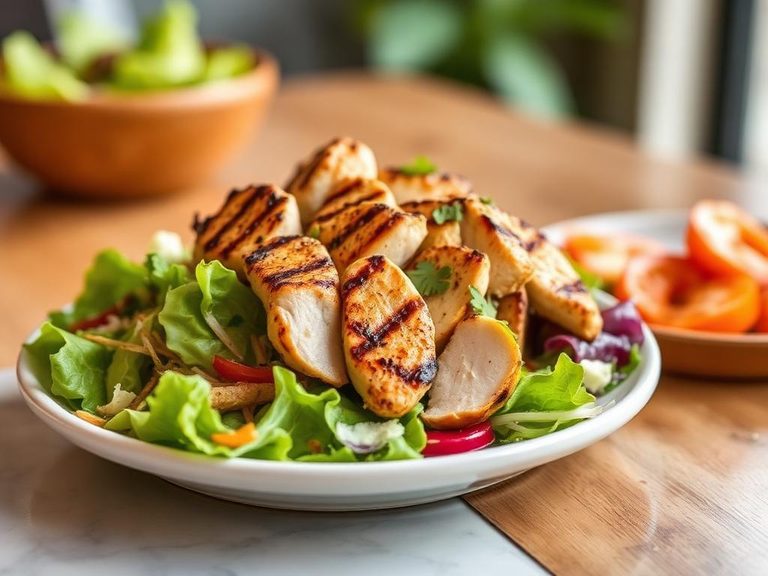
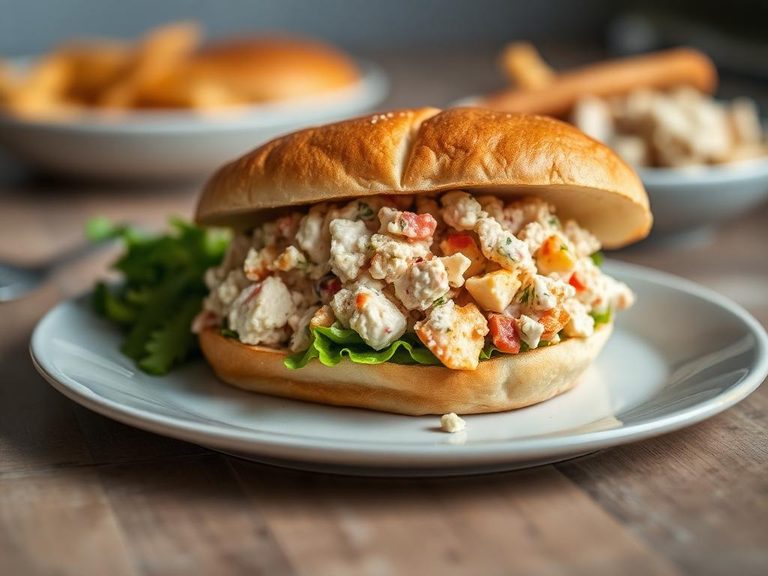
🍽️ Popular dishes




🌍 Where it's eaten
💡 Did you know?
The oven-roasted chicken breast used in Subway subs is typically pre-cooked and then reheated, which helps maintain its juicy texture while keeping fat content low compared to fried chicken options.
Full nutrition (USDA data · scales with serving)
| Water | 63.1 g |
| Energy | 157 kcal |
| Energy | 657 kj |
| Protein | 10.8 g |
| Total lipid (fat) | 3.1 g |
| Ash | 1.5 g |
| Carbohydrate, by difference | 21.4 g |
| Fiber, total dietary | 1.2 g |
| Total Sugars | 3.0 g |
| Sucrose | 0.00 g |
| Glucose | 0.97 g |
| Fructose | 1.3 g |
| Lactose | 0.00 g |
| Maltose | 0.72 g |
| Galactose | 0.00 g |
| Starch | 16.0 g |
| Calcium, Ca | 154 mg |
| Iron, Fe | 1.7 mg |
| Magnesium, Mg | 22.0 mg |
| Phosphorus, P | 145 mg |
| Potassium, K | 198 mg |
| Sodium, Na | 268 mg |
| Zinc, Zn | 0.66 mg |
| Copper, Cu | 0.08 mg |
| Manganese, Mn | 0.28 mg |
| Selenium, Se | 16.8 ug |
| Vitamin C, total ascorbic acid | 1.2 mg |
| Thiamin | 1.2 mg |
| Riboflavin | 0.23 mg |
| Niacin | 5.2 mg |
| Pantothenic acid | 0.65 mg |
| Vitamin B-6 | 0.26 mg |
| Folate, total | 68.0 ug |
| Vitamin B-12 | 0.08 ug |
| Vitamin A, RAE | 5.0 ug |
| Retinol | 2.0 ug |
| Carotene, beta | 34.0 ug |
| Carotene, alpha | 0.00 ug |
| Cryptoxanthin, beta | 0.00 ug |
| Vitamin A, IU | 64.0 iu |
| Lycopene | 224 ug |
| Lutein + zeaxanthin | 75.0 ug |
| Vitamin E (alpha-tocopherol) | 0.42 mg |
| Tocopherol, beta | 0.07 mg |
| Tocopherol, gamma | 0.39 mg |
| Tocopherol, delta | 0.13 mg |
| Tocotrienol, alpha | 0.02 mg |
| Tocotrienol, beta | 0.31 mg |
| Tocotrienol, gamma | 0.00 mg |
| Tocotrienol, delta | 0.00 mg |
Fat & fatty acid profile (per 100g)
| Fatty acids, total saturated | 0.72 g |
| SFA 4:0 | 0.00 g |
| SFA 6:0 | 0.00 g |
| SFA 8:0 | 0.00 g |
| SFA 10:0 | 0.00 g |
| SFA 12:0 | 0.00 g |
| SFA 14:0 | 0.01 g |
| SFA 15:0 | 0.00 g |
| SFA 16:0 | 0.55 g |
| SFA 17:0 | 0.00 g |
| SFA 18:0 | 0.14 g |
| SFA 20:0 | 0.01 g |
| SFA 22:0 | 0.01 g |
| SFA 24:0 | 0.00 g |
| Fatty acids, total monounsaturated | 0.93 g |
| MUFA 14:1 | 0.00 g |
| MUFA 15:1 | 0.00 g |
| MUFA 16:1 | 0.09 g |
| MUFA 16:1 c | 0.09 g |
| MUFA 17:1 | 0.00 g |
| MUFA 18:1 | 0.82 g |
| MUFA 18:1 c | 0.81 g |
| MUFA 20:1 | 0.02 g |
| MUFA 22:1 | 0.00 g |
| MUFA 22:1 c | 0.00 g |
| MUFA 24:1 c | 0.00 g |
| Fatty acids, total polyunsaturated | 0.95 g |
| PUFA 18:2 | 0.84 g |
| PUFA 18:2 n-6 c,c | 0.83 g |
| PUFA 18:2 CLAs | 0.00 g |
| PUFA 18:3 | 0.07 g |
| PUFA 18:3 n-3 c,c,c (ALA) | 0.07 g |
| PUFA 18:3 n-6 c,c,c | 0.00 g |
| PUFA 18:3i | 0.00 g |
| PUFA 18:4 | 0.00 g |
| PUFA 20:2 n-6 c,c | 0.00 g |
| PUFA 20:3 | 0.01 g |
| PUFA 20:3 n-3 | 0.00 g |
| PUFA 20:3 n-6 | 0.01 g |
| PUFA 20:4 | 0.02 g |
| PUFA 20:5 n-3 (EPA) | 0.00 g |
| PUFA 22:4 | 0.01 g |
| PUFA 22:5 n-3 (DPA) | 0.00 g |
| PUFA 22:6 n-3 (DHA) | 0.00 g |
| Fatty acids, total trans | 0.01 g |
| Fatty acids, total trans-monoenoic | 0.01 g |
| TFA 16:1 t | 0.00 g |
| TFA 18:1 t | 0.01 g |
| TFA 22:1 t | 0.00 g |
| TFA 18:2 t not further defined | 0.01 g |
| Fatty acids, total trans-polyenoic | 0.01 g |
| Cholesterol | 23.0 mg |
Amino acid profile (per 100g)
Estimated from SUBWAY, cold cut sub on white bread with lettuce and tomato — USDA does not publish this profile for SUBWAY.
| Tryptophan | 0.10 g |
| Threonine | 0.33 g |
| Isoleucine | 0.43 g |
| Leucine | 0.75 g |
| Lysine | 0.49 g |
| Methionine | 0.21 g |
| Phenylalanine | 0.43 g |
| Tyrosine | 0.26 g |
| Valine | 0.50 g |
| Arginine | 0.50 g |
| Histidine | 0.30 g |
| Alanine | 0.48 g |
| Aspartic acid | 0.74 g |
| Glutamic acid | 2.5 g |
| Glycine | 0.45 g |
| Proline | 1.0 g |
| Serine | 0.41 g |
| Hydroxyproline | 0.07 g |
FAQ
Is this sub suitable for a low-carb diet?
Not really—white bread contributes significantly to the carb count (21.35g/100g). Consider a lettuce wrap or open-faced option to reduce carbs.
How does the protein content compare to other fast-food sandwiches?
At 10.84g per 100g, it's higher in protein than many bread-heavy sandwiches, but lower than some premium options with double meat or cheese.
Can I make this at home to control ingredients?
Absolutely—use whole-grain bread, lean chicken breast, and fresh veggies. You can reduce sodium by using homemade seasonings and avoid added sugars in sauces.
Is the fiber content sufficient for daily needs?
At 1.2g per 100g, it's low in fiber. Add extra veggies like spinach, cucumbers, or peppers to boost fiber intake.
Nutrient density (calculated · NRF9.3)
Nutrient Rich Foods index: beneficial nutrients (protein, fiber, vitamins, minerals) minus saturated fat, added sugar & sodium, per 100 kcal.
NRF9.3 index — Fulgoni, Keast & Drewnowski, 2009. Computed from USDA nutrients.
Weight-loss friendliness (composite index)
Energy density 1.57 kcal/g · 28% calories from protein · 1.2 g fiber · 3.0 g sugar per 100 g.
Composite of energy density (Rolls et al., 1999), protein & fiber satiety, minus sugar. A calculated heuristic — ranks satiety-per-calorie, not a clinical measure.
Dietary load (calculated from USDA values)
Potential renal acid load. Positive = acid-forming, negative = alkaline-forming.
Sodium-to-potassium ratio: 1.35 (lower is better — aim for ≤ 1)
Sodium:potassium per WHO potassium guidance. Computed from USDA nutrients.