

Sauce, pesto, ready-to-serve, shelf stable
Whole food · Soups, Sauces, and Gravies

Photo: Wikipedia
This is a ready-to-use, shelf-stable version of classic Italian pesto, typically a vibrant green paste made from crushed basil, pine nuts, Parmesan cheese, garlic, and olive oil. It delivers a rich, herbaceous, and savory flavor with a slightly gritty, oily texture. Its nutrition profile is dominated by healthy monounsaturated fats from the olive oil base, providing significant calories in small servings.
Calorie split: 5% protein · 6% carbs · 90% fat
↓ Full nutrition💚 Why it's loved
People adore pesto for its explosive, fresh flavor that can transform pasta, sandwiches, and grilled meats in seconds. It represents a beloved staple of Italian cuisine, offering a taste of Ligurian tradition in a convenient jar.
⚠️ Watch-outs & how to enjoy it better
Its high fat and calorie density means portions should be measured carefully, especially for those managing weight. The significant olive oil content can also be a downside for those following very low-fat diets. To enjoy it healthfully, use it as a flavoring agent (1-2 tablespoons) rather than a sauce, and pair it with a large portion of vegetables or lean protein to create a balanced meal.
Key benefits
- Rich in heart-healthy monounsaturated fats from olive oil
- Contains antioxidants from fresh basil and garlic
- Provides a quick, intense flavor boost to simple dishes
- Source of plant-based protein from nuts and cheese
- Shelf-stable format offers convenience without preservatives
🍽️ Popular dishes
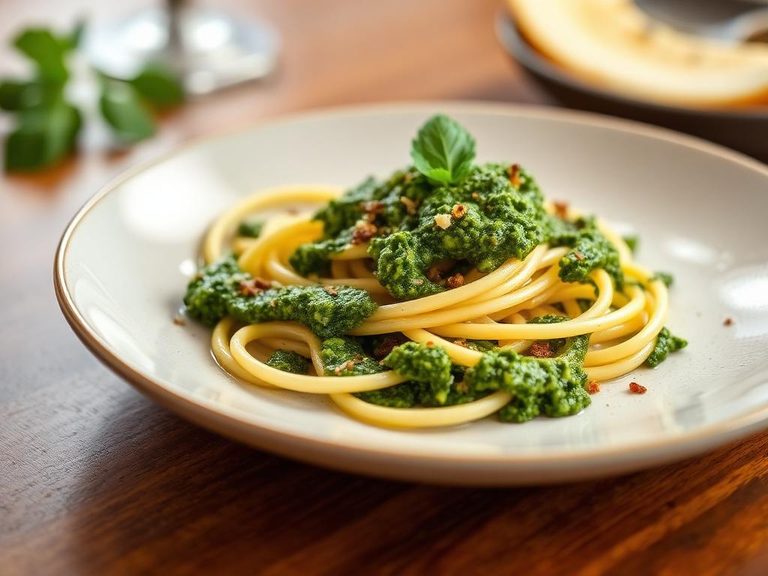
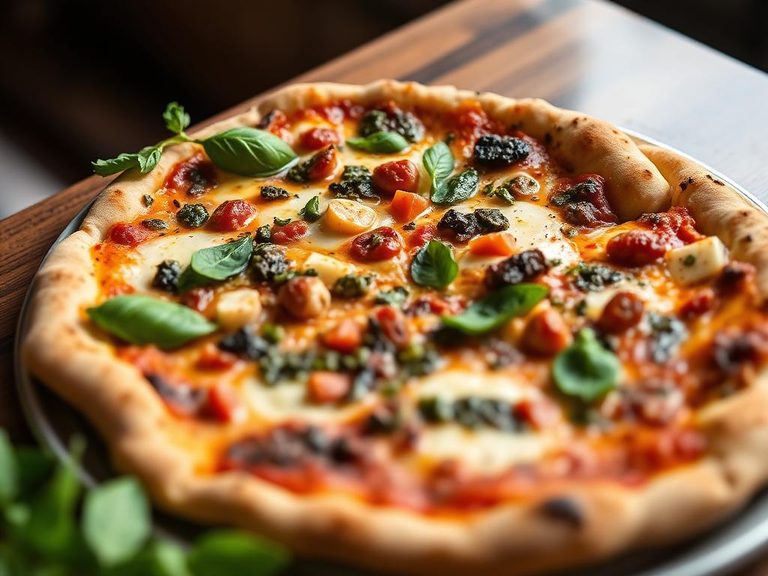
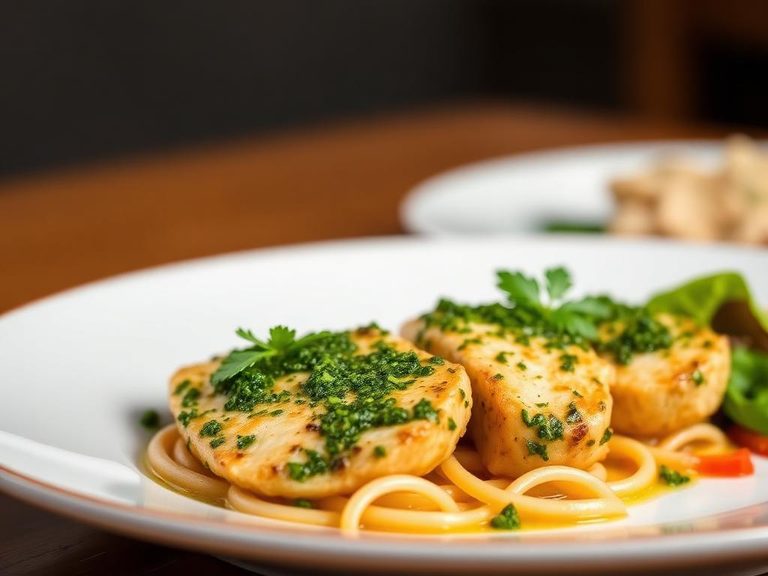
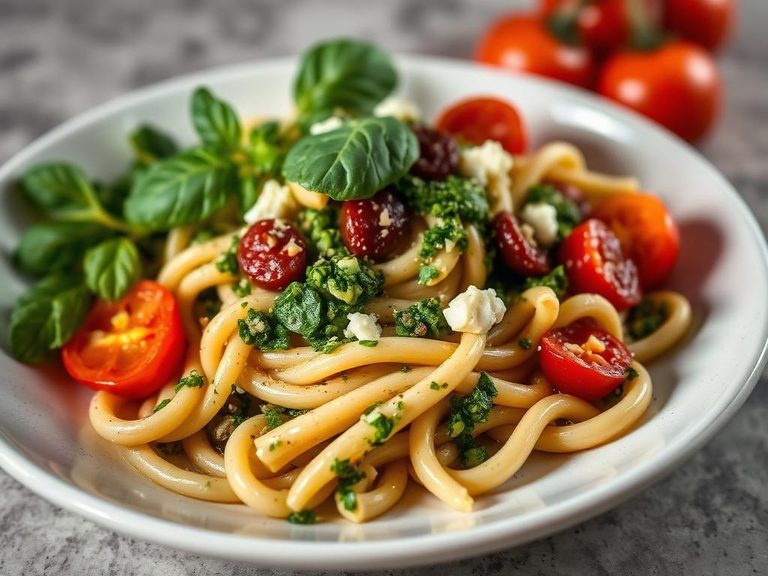
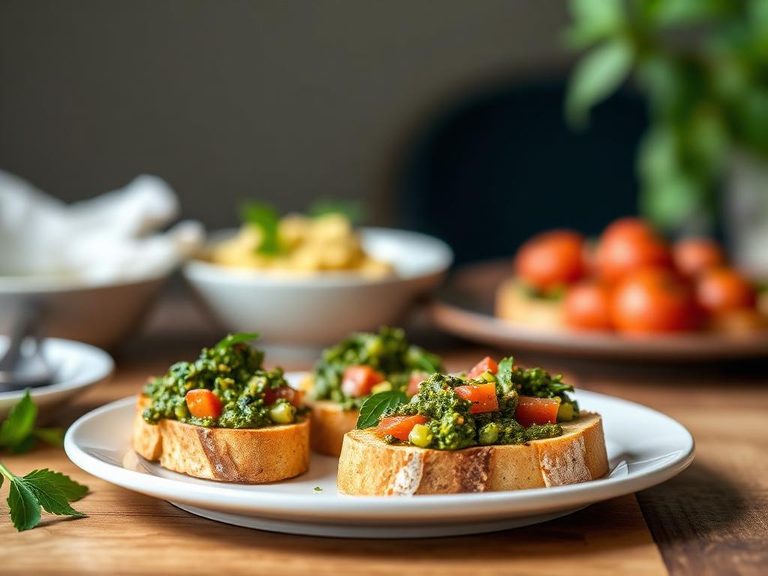
🌍 Where it's eaten
💡 Did you know?
Traditional pesto is made with a mortar and pestle (the tool), which gently crushes the basil leaves to release their essential oils without generating heat, preserving their bright color and flavor—a technique modern blenders struggle to replicate perfectly.
Full nutrition (USDA data · scales with serving)
| Water | 43.1 g |
| Energy | 426 kcal |
| Energy | 1784 kj |
| Protein | 5.0 g |
| Total lipid (fat) | 42.4 g |
| Ash | 3.4 g |
| Carbohydrate, by difference | 6.1 g |
| Fiber, total dietary | 1.7 g |
| Total Sugars | 1.9 g |
| Sucrose | 0.00 g |
| Glucose | 0.47 g |
| Fructose | 1.4 g |
| Lactose | 0.00 g |
| Maltose | 0.00 g |
| Galactose | 0.00 g |
| Starch | 0.24 g |
| Calcium, Ca | 173 mg |
| Iron, Fe | 0.88 mg |
| Magnesium, Mg | 45.0 mg |
| Phosphorus, P | 132 mg |
| Potassium, K | 205 mg |
| Sodium, Na | 998 mg |
| Zinc, Zn | 0.88 mg |
| Copper, Cu | 0.14 mg |
| Manganese, Mn | 0.63 mg |
| Selenium, Se | 5.5 ug |
| Vitamin C, total ascorbic acid | 0.10 mg |
| Thiamin | 0.09 mg |
| Riboflavin | 0.31 mg |
| Niacin | 0.74 mg |
| Pantothenic acid | 0.26 mg |
| Vitamin B-6 | 0.18 mg |
| Folate, total | 27.0 ug |
| Folate, food | 27.0 ug |
| Choline, total | 13.7 mg |
| Betaine | 0.60 mg |
| Vitamin A, RAE | 90.0 ug |
| Carotene, beta | 1075 ug |
| Carotene, alpha | 0.00 ug |
| Cryptoxanthin, beta | 12.0 ug |
| Vitamin A, IU | 1802 iu |
| Lycopene | 0.00 ug |
| Lutein + zeaxanthin | 917 ug |
| Vitamin E (alpha-tocopherol) | 8.9 mg |
| Tocopherol, beta | 0.00 mg |
| Tocopherol, gamma | 15.8 mg |
| Tocopherol, delta | 5.2 mg |
| Tocotrienol, alpha | 0.00 mg |
| Tocotrienol, beta | 0.00 mg |
| Tocotrienol, gamma | 0.00 mg |
| Tocotrienol, delta | 0.00 mg |
| Vitamin K (phylloquinone) | 194 ug |
| Vitamin K (Dihydrophylloquinone) | 0.00 ug |
| Vitamin K (Menaquinone-4) | 0.00 ug |
Fat & fatty acid profile (per 100g)
| Fatty acids, total saturated | 7.4 g |
| SFA 4:0 | 0.05 g |
| SFA 6:0 | 0.04 g |
| SFA 8:0 | 0.03 g |
| SFA 10:0 | 0.07 g |
| SFA 12:0 | 0.07 g |
| SFA 14:0 | 0.26 g |
| SFA 15:0 | 0.03 g |
| SFA 16:0 | 5.1 g |
| SFA 17:0 | 0.04 g |
| SFA 18:0 | 1.4 g |
| SFA 20:0 | 0.16 g |
| SFA 22:0 | 0.08 g |
| SFA 24:0 | 0.04 g |
| Fatty acids, total monounsaturated | 19.4 g |
| MUFA 14:1 | 0.03 g |
| MUFA 15:1 | 0.00 g |
| MUFA 16:1 | 0.33 g |
| MUFA 16:1 c | 0.32 g |
| MUFA 17:1 | 0.04 g |
| MUFA 18:1 | 18.7 g |
| MUFA 18:1 c | 18.7 g |
| MUFA 20:1 | 0.21 g |
| MUFA 22:1 | 0.01 g |
| MUFA 22:1 c | 0.01 g |
| MUFA 24:1 c | 0.01 g |
| Fatty acids, total polyunsaturated | 13.7 g |
| PUFA 18:2 | 11.8 g |
| PUFA 18:2 n-6 c,c | 11.7 g |
| PUFA 18:2 CLAs | 0.03 g |
| PUFA 18:3 | 1.9 g |
| PUFA 18:3 n-3 c,c,c (ALA) | 1.7 g |
| PUFA 18:3 n-6 c,c,c | 0.07 g |
| PUFA 18:3i | 0.05 g |
| PUFA 18:4 | 0.00 g |
| PUFA 20:2 n-6 c,c | 0.01 g |
| PUFA 20:3 | 0.00 g |
| PUFA 20:3 n-3 | 0.00 g |
| PUFA 20:3 n-6 | 0.00 g |
| PUFA 20:4 | 0.05 g |
| PUFA 20:5 n-3 (EPA) | 0.00 g |
| PUFA 22:4 | 0.00 g |
| PUFA 22:5 n-3 (DPA) | 0.00 g |
| PUFA 22:6 n-3 (DHA) | 0.00 g |
| Fatty acids, total trans | 0.19 g |
| Fatty acids, total trans-monoenoic | 0.09 g |
| TFA 16:1 t | 0.01 g |
| TFA 18:1 t | 0.08 g |
| TFA 22:1 t | 0.00 g |
| TFA 18:2 t not further defined | 0.05 g |
| Fatty acids, total trans-polyenoic | 0.11 g |
Amino acid profile (per 100g)
Estimated from Sauce, homemade, white, medium — USDA does not publish this profile for Sauce.
| Tryptophan | 0.04 g |
| Threonine | 0.14 g |
| Isoleucine | 0.19 g |
| Leucine | 0.30 g |
| Lysine | 0.24 g |
| Methionine | 0.08 g |
| Cystine | 0.03 g |
| Phenylalanine | 0.15 g |
| Tyrosine | 0.15 g |
| Valine | 0.20 g |
| Arginine | 0.11 g |
| Histidine | 0.08 g |
| Alanine | 0.10 g |
| Aspartic acid | 0.23 g |
| Glutamic acid | 0.64 g |
| Glycine | 0.07 g |
| Proline | 0.30 g |
| Serine | 0.17 g |
FAQ
Why is shelf-stable pesto different from fresh?
Shelf-stable pesto is heat-treated (pasteurized) and often contains more oil and sometimes preservatives or acidifiers to prevent spoilage at room temperature. This can slightly alter the fresh, bright flavor and color compared to refrigerated, fresh-made pesto.
Can I use this pesto for cooking?
Yes, but it's best added at the end of cooking or stirred into hot pasta off the heat. Prolonged high heat can cause the olive oil to separate and the basil flavor to become muted and slightly bitter.
Is it gluten-free?
The core ingredients (basil, oil, nuts, cheese) are naturally gluten-free. However, always check the label for potential cross-contamination or added thickeners if you have celiac disease or severe gluten sensitivity.
Nutrient density (calculated · NRF9.3)
Nutrient Rich Foods index: beneficial nutrients (protein, fiber, vitamins, minerals) minus saturated fat, added sugar & sodium, per 100 kcal.
NRF9.3 index — Fulgoni, Keast & Drewnowski, 2009. Computed from USDA nutrients.
Weight-loss friendliness (composite index)
Energy density 4.26 kcal/g · 5% calories from protein · 1.7 g fiber · 1.9 g sugar per 100 g.
Composite of energy density (Rolls et al., 1999), protein & fiber satiety, minus sugar. A calculated heuristic — ranks satiety-per-calorie, not a clinical measure.
Dietary load (calculated from USDA values)
Potential renal acid load. Positive = acid-forming, negative = alkaline-forming.
Sodium-to-potassium ratio: 4.87 (lower is better — aim for ≤ 1)
Sodium:potassium per WHO potassium guidance. Computed from USDA nutrients.