

Restaurant, Latino, arepa (unleavened cornmeal bread)
Whole food · Restaurant Foods

Photo: Wikipedia
An arepa is a savory, unleavened cornmeal bread, a staple of Venezuelan and Colombian cuisine. It has a crisp, golden-brown crust and a soft, moist, and slightly chewy interior with a sweet, earthy corn flavor. Nutritionally, it's a solid source of complex carbohydrates and fiber, providing steady energy.
Calorie split: 10% protein · 68% carbs · 22% fat
↓ Full nutrition💚 Why it's loved
People love arepas for their comforting, satisfying corn flavor and incredible versatility—they are a blank canvas for fillings like cheese, beans, shredded meat, or avocado. They are deeply tied to cultural identity and home cooking in Venezuela and Colombia, often enjoyed at any meal.
⚠️ Watch-outs & how to enjoy it better
A plain arepa can cause a blood-sugar spike due to its high carbohydrate content, and commercial versions may be high in sodium. To counteract this, pair it with protein (like black beans or eggs) and healthy fats (like avocado or cheese) to slow digestion. Opt for homemade versions to control salt, and be mindful of portion size.
Key benefits
- Good source of complex carbohydrates for sustained energy
- Contains dietary fiber, aiding digestion
- Naturally gluten-free, suitable for celiac or gluten-sensitive diets
- Provides plant-based protein from corn
- Versatile base for both savory and sweet fillings
🍽️ Popular dishes
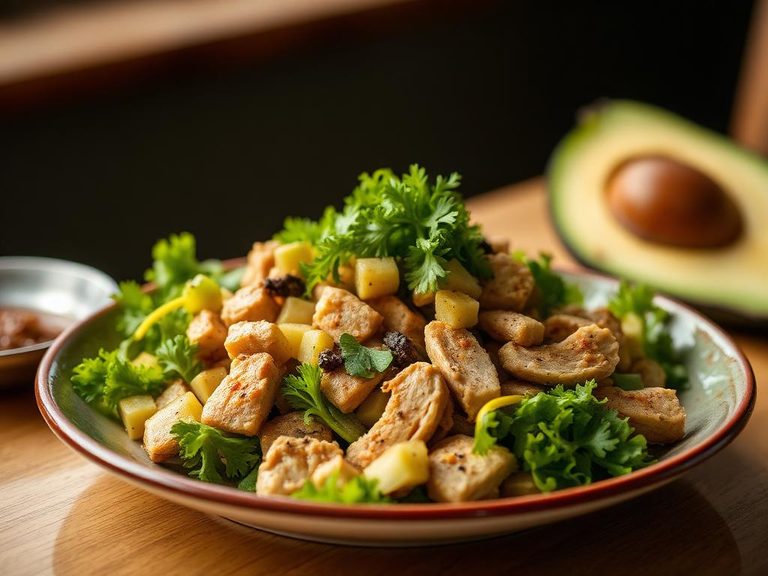 Reina Pepiada (Venezuelan, with avocado-chicken salad)
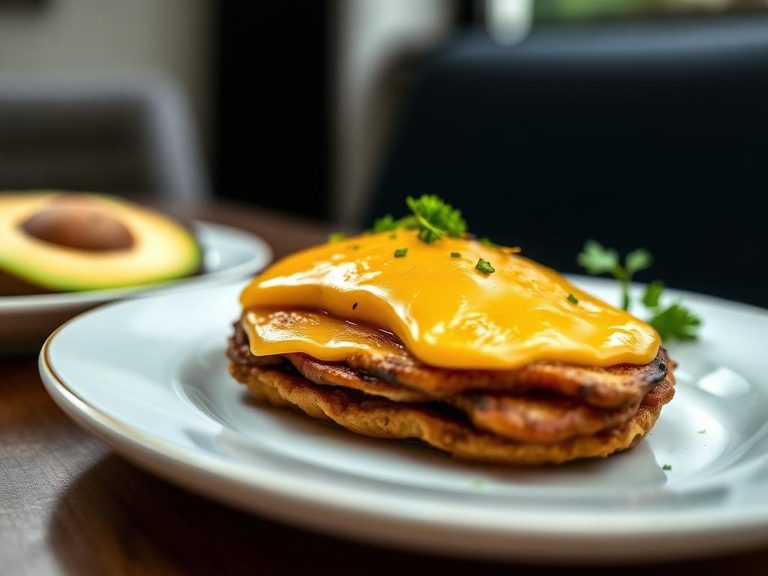 Arepa con Queso (grilled with melted cheese)
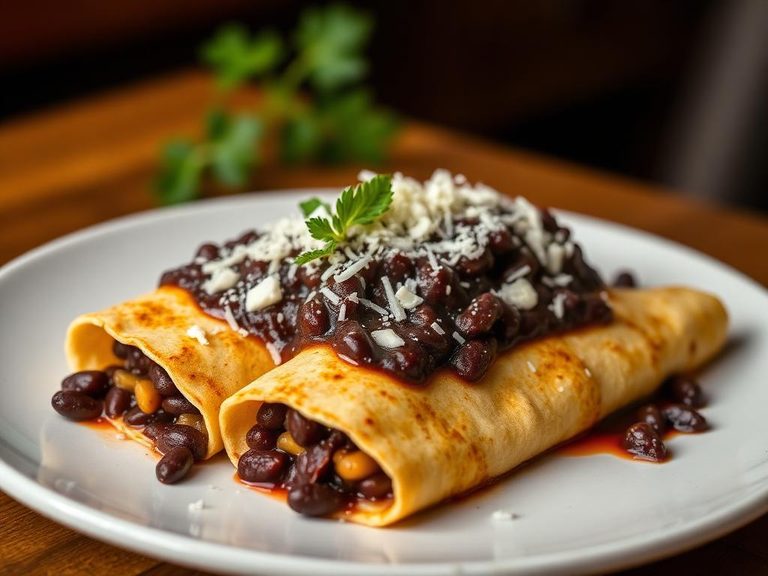 Domino (Venezuelan, with black beans and white cheese)
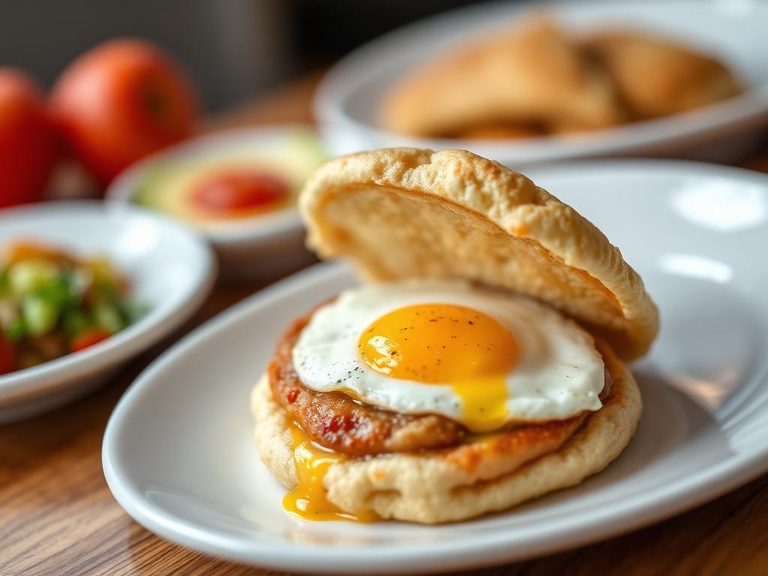 Arepa Huevo (Colombian, deep-fried and stuffed with egg)
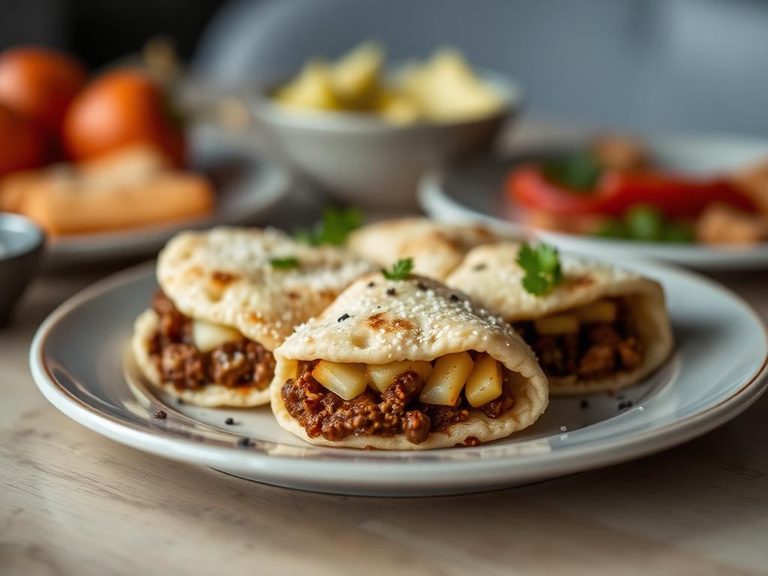 Arepa Boyacense (Colombian, stuffed with cheese and hogao)
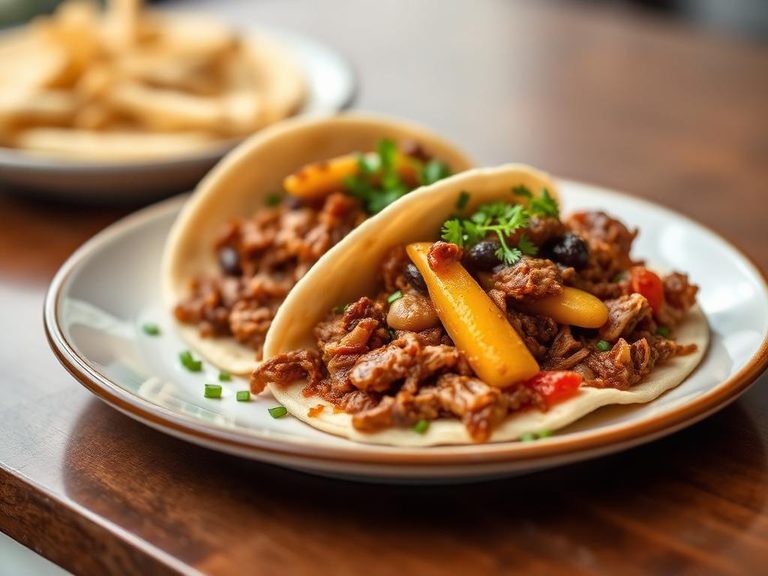 Pabellón Arepa (Venezuelan, filled with shredded beef, beans, and plantain)
🌍 Where it's eaten
💡 Did you know?
The pre-Columbian indigenous peoples of the region that is now Venezuela and Colombia made arepas long before European contact, making them one of the oldest continuously consumed foods in the Americas.
Full nutrition (USDA data · scales with serving)
| Water | 50.8 g |
| Energy | 219 kcal |
| Energy | 916 kj |
| Protein | 5.5 g |
| Total lipid (fat) | 5.4 g |
| Ash | 1.2 g |
| Carbohydrate, by difference | 37.1 g |
| Fiber, total dietary | 2.6 g |
| Total Sugars | 0.87 g |
| Sucrose | 0.33 g |
| Glucose | 0.00 g |
| Fructose | 0.00 g |
| Lactose | 0.00 g |
| Maltose | 0.41 g |
| Galactose | 0.00 g |
| Calcium, Ca | 89.0 mg |
| Iron, Fe | 1.0 mg |
| Magnesium, Mg | 27.0 mg |
| Phosphorus, P | 117 mg |
| Potassium, K | 88.0 mg |
| Sodium, Na | 270 mg |
| Zinc, Zn | 0.80 mg |
| Copper, Cu | 0.03 mg |
| Manganese, Mn | 0.12 mg |
| Selenium, Se | 6.1 ug |
| Thiamin | 0.07 mg |
| Riboflavin | 0.04 mg |
| Niacin | 0.89 mg |
| Pantothenic acid | 0.20 mg |
| Vitamin B-6 | 0.11 mg |
| Choline, total | 4.4 mg |
| Betaine | 0.20 mg |
| Vitamin B-12 | 0.00 ug |
| Vitamin A, RAE | 61.0 ug |
| Retinol | 60.0 ug |
| Carotene, beta | 7.0 ug |
| Carotene, alpha | 0.00 ug |
| Cryptoxanthin, beta | 0.00 ug |
| Vitamin A, IU | 213 iu |
| Lycopene | 0.00 ug |
| Lutein + zeaxanthin | 4.0 ug |
| Vitamin E (alpha-tocopherol) | 0.29 mg |
| Tocopherol, beta | 0.86 mg |
| Tocopherol, gamma | 0.63 mg |
| Tocopherol, delta | 0.37 mg |
| Tocotrienol, alpha | 0.15 mg |
| Tocotrienol, beta | 0.08 mg |
| Tocotrienol, gamma | 0.37 mg |
| Tocotrienol, delta | 0.05 mg |
| Vitamin K (phylloquinone) | 3.5 ug |
| Vitamin K (Menaquinone-4) | 1.0 ug |
Fat & fatty acid profile (per 100g)
| Fatty acids, total saturated | 2.9 g |
| SFA 4:0 | 0.10 g |
| SFA 6:0 | 0.08 g |
| SFA 8:0 | 0.05 g |
| SFA 10:0 | 0.11 g |
| SFA 12:0 | 0.12 g |
| SFA 14:0 | 0.40 g |
| SFA 15:0 | 0.04 g |
| SFA 16:0 | 1.5 g |
| SFA 17:0 | 0.03 g |
| SFA 18:0 | 0.48 g |
| SFA 20:0 | 0.01 g |
| SFA 22:0 | 0.01 g |
| SFA 24:0 | 0.00 g |
| Fatty acids, total monounsaturated | 1.5 g |
| MUFA 14:1 | 0.03 g |
| MUFA 15:1 | 0.00 g |
| MUFA 16:1 | 0.08 g |
| MUFA 16:1 c | 0.07 g |
| MUFA 17:1 | 0.01 g |
| MUFA 18:1 | 1.4 g |
| MUFA 18:1 c | 1.3 g |
| MUFA 20:1 | 0.02 g |
| MUFA 22:1 | 0.00 g |
| MUFA 22:1 c | 0.00 g |
| MUFA 24:1 c | 0.00 g |
| Fatty acids, total polyunsaturated | 0.99 g |
| PUFA 18:2 | 0.90 g |
| PUFA 18:2 n-6 c,c | 0.82 g |
| PUFA 18:2 CLAs | 0.03 g |
| PUFA 18:3 | 0.07 g |
| PUFA 18:3 n-3 c,c,c (ALA) | 0.07 g |
| PUFA 18:3 n-6 c,c,c | 0.00 g |
| PUFA 18:4 | 0.00 g |
| PUFA 20:2 n-6 c,c | 0.00 g |
| PUFA 20:3 | 0.01 g |
| PUFA 20:3 n-3 | 0.00 g |
| PUFA 20:3 n-6 | 0.01 g |
| PUFA 20:4 | 0.01 g |
| PUFA 20:5 n-3 (EPA) | 0.00 g |
| PUFA 22:4 | 0.00 g |
| PUFA 22:5 n-3 (DPA) | 0.00 g |
| PUFA 22:6 n-3 (DHA) | 0.00 g |
| Fatty acids, total trans | 0.16 g |
| Fatty acids, total trans-monoenoic | 0.11 g |
| TFA 16:1 t | 0.01 g |
| TFA 18:1 t | 0.10 g |
| TFA 22:1 t | 0.00 g |
| TFA 18:2 t not further defined | 0.05 g |
| Fatty acids, total trans-polyenoic | 0.05 g |
| Cholesterol | 5.0 mg |
Amino acid profile (per 100g)
| Tryptophan | 0.05 g |
| Threonine | 0.19 g |
| Isoleucine | 0.21 g |
| Leucine | 0.67 g |
| Lysine | 0.23 g |
| Methionine | 0.13 g |
| Cystine | 0.10 g |
| Phenylalanine | 0.28 g |
| Tyrosine | 0.15 g |
| Valine | 0.28 g |
| Arginine | 0.21 g |
| Histidine | 0.17 g |
| Alanine | 0.34 g |
| Aspartic acid | 0.36 g |
| Glutamic acid | 1.1 g |
| Glycine | 0.17 g |
| Proline | 0.51 g |
| Serine | 0.29 g |
FAQ
What is the difference between Venezuelan and Colombian arepas?
Venezuelan arepas are typically thicker, made with pre-cooked cornmeal (harina P.A.N.), and often split and stuffed. Colombian arepas vary more by region; many are thinner, made from fresh ground corn (masarepa), and often grilled or fried without being split.
Are arepas gluten-free?
Yes, traditional arepas made solely from cornmeal and water are naturally gluten-free, making them a safe and delicious staple for those with celiac disease or gluten intolerance.
How do you get the best texture when cooking an arepa?
For a perfect crust and soft interior, cook on a preheated griddle (budare) or skillet over medium heat until a golden-brown shell forms on each side, then finish in a 350°F (175°C) oven for about 10 minutes to ensure the inside is fully cooked and fluffy.
Nutrient density (calculated · NRF9.3)
Nutrient Rich Foods index: beneficial nutrients (protein, fiber, vitamins, minerals) minus saturated fat, added sugar & sodium, per 100 kcal.
NRF9.3 index — Fulgoni, Keast & Drewnowski, 2009. Computed from USDA nutrients.
Weight-loss friendliness (composite index)
Energy density 2.19 kcal/g · 10% calories from protein · 2.6 g fiber · 0.9 g sugar per 100 g.
Composite of energy density (Rolls et al., 1999), protein & fiber satiety, minus sugar. A calculated heuristic — ranks satiety-per-calorie, not a clinical measure.
Dietary load (calculated from USDA values)
Potential renal acid load. Positive = acid-forming, negative = alkaline-forming.
Sodium-to-potassium ratio: 3.07 (lower is better — aim for ≤ 1)
Sodium:potassium per WHO potassium guidance. Computed from USDA nutrients.