

PIZZA HUT 14" Cheese Pizza, Pan Crust
Whole food · Fast Foods

Photo: Wikipedia
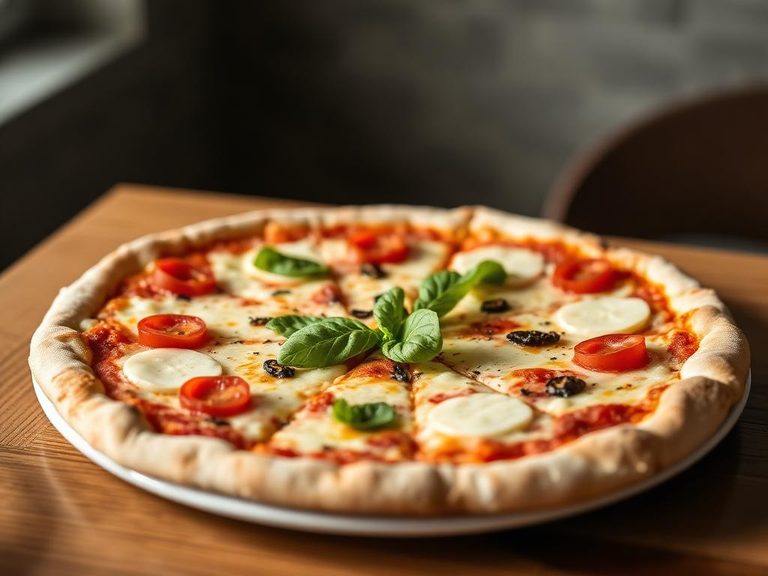
This is a classic, indulgent slice of American-style pan pizza, featuring a thick, golden, and chewy crust with a soft, bread-like interior. It's generously topped with a rich tomato sauce and a blanket of melted, slightly browned mozzarella cheese, creating a satisfying balance of savory, tangy, and rich flavors. Nutritionally, it's a calorie-dense food, with a significant portion of its energy coming from carbohydrates and fats.
Calorie split: 16% protein · 48% carbs · 37% fat
↓ Full nutrition💚 Why it's loved
People love it for the ultimate comfort food experience: the crispy-yet-chewy pan crust, the gooey, stretchy cheese, and the savory tomato sauce create a universally appealing and nostalgic flavor profile. It's also incredibly versatile, serving as a canvas for countless toppings and a staple for casual gatherings, movie nights, and quick family dinners.
⚠️ Watch-outs & how to enjoy it better
The high carbohydrate and fat content can lead to blood sugar spikes and is a concern for those monitoring calorie intake or managing diabetes. It's also typically high in sodium and contains common allergens like wheat (gluten) and dairy. To counteract, pair a single slice with a large side salad or steamed vegetables to increase fiber and fullness, and drink water instead of sugary soda to help manage overall intake.
Key benefits
- Provides a quick and substantial source of energy from carbohydrates and fats.
- Contains a moderate amount of protein from the cheese and wheat crust.
- Offers some dietary fiber, especially from the enriched wheat flour in the crust.
- Can be a satisfying comfort food that supports social and family meals.
- The tomato sauce provides a small amount of lycopene, an antioxidant.
🍽️ Popular dishes
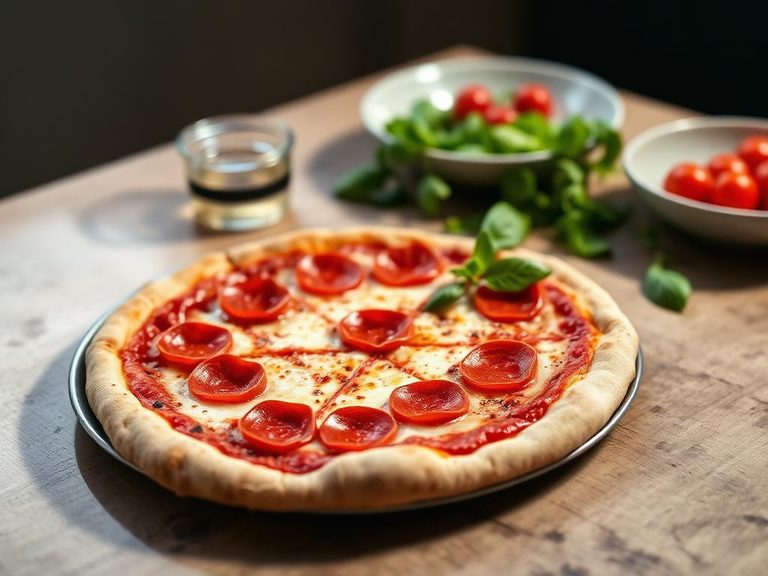

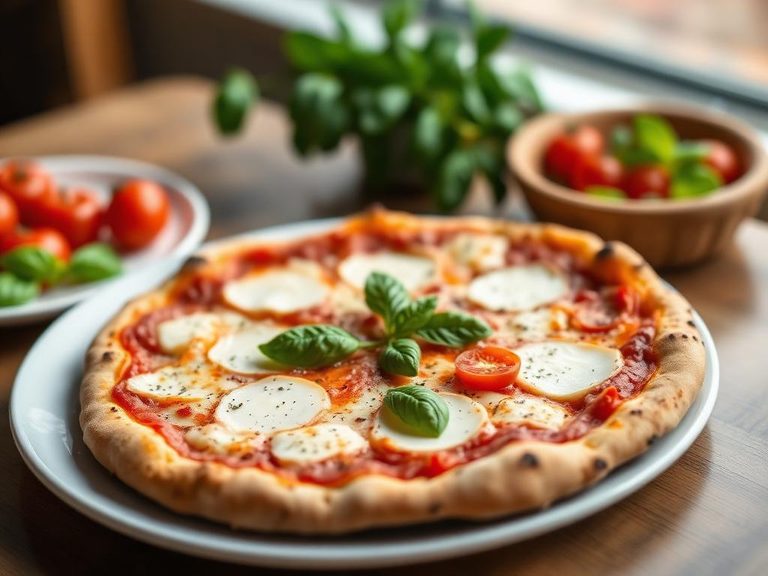
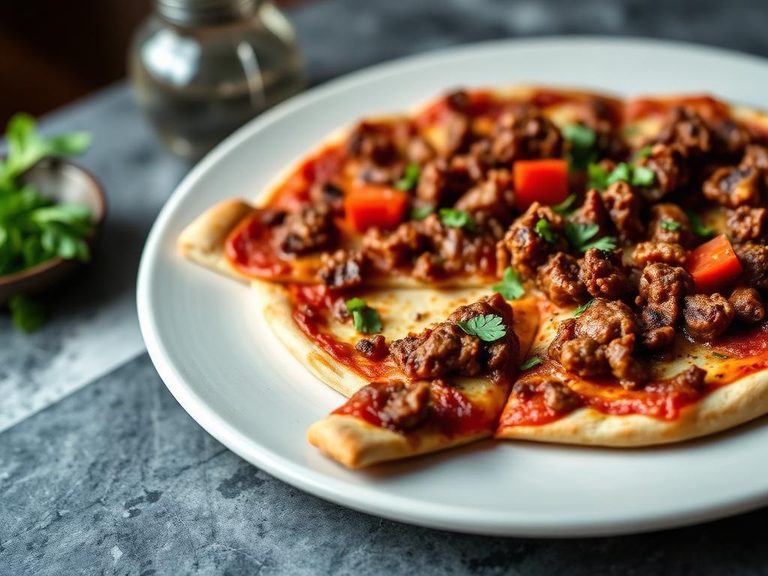
🌍 Where it's eaten
💡 Did you know?
The 'pan' in pan pizza refers to the deep, oiled pan it's baked in, which essentially fries the bottom of the dough, creating its signature thick, crispy, and golden-brown crust.
Full nutrition (USDA data · scales with serving)
| Water | 42.7 g |
| Energy | 276 kcal |
| Energy | 1155 kj |
| Protein | 10.8 g |
| Total lipid (fat) | 11.3 g |
| Ash | 2.4 g |
| Carbohydrate, by difference | 32.9 g |
| Fiber, total dietary | 2.1 g |
| Total Sugars | 2.5 g |
| Sucrose | 0.00 g |
| Glucose | 0.40 g |
| Fructose | 0.47 g |
| Lactose | 0.40 g |
| Maltose | 1.1 g |
| Galactose | 0.13 g |
| Starch | 25.0 g |
| Calcium, Ca | 192 mg |
| Iron, Fe | 2.5 mg |
| Magnesium, Mg | 21.0 mg |
| Phosphorus, P | 216 mg |
| Potassium, K | 170 mg |
| Sodium, Na | 580 mg |
| Zinc, Zn | 1.3 mg |
| Copper, Cu | 0.10 mg |
| Manganese, Mn | 0.40 mg |
| Selenium, Se | 16.0 ug |
| Vitamin C, total ascorbic acid | 1.9 mg |
| Thiamin | 0.39 mg |
| Riboflavin | 0.22 mg |
| Niacin | 3.5 mg |
| Pantothenic acid | 0.23 mg |
| Vitamin B-6 | 0.08 mg |
| Folate, total | 106 ug |
| Folic acid | 66.0 ug |
| Folate, food | 40.0 ug |
| Folate, DFE | 152 ug |
| Vitamin B-12 | 0.33 ug |
| Vitamin E (alpha-tocopherol) | 0.74 mg |
| Tocopherol, beta | 0.05 mg |
| Tocopherol, gamma | 2.7 mg |
| Tocopherol, delta | 0.79 mg |
| Tocotrienol, alpha | 0.03 mg |
| Tocotrienol, beta | 0.00 mg |
| Tocotrienol, gamma | 0.01 mg |
| Tocotrienol, delta | 0.00 mg |
| Vitamin D (D2 + D3), International Units | 0.00 iu |
| Vitamin D (D2 + D3) | 0.00 ug |
| Vitamin K (phylloquinone) | 17.0 ug |
| Vitamin K (Dihydrophylloquinone) | 0.00 ug |
| Vitamin K (Menaquinone-4) | 1.1 ug |
Fat & fatty acid profile (per 100g)
| Fatty acids, total saturated | 4.4 g |
| SFA 4:0 | 0.10 g |
| SFA 6:0 | 0.08 g |
| SFA 8:0 | 0.06 g |
| SFA 10:0 | 0.14 g |
| SFA 12:0 | 0.17 g |
| SFA 14:0 | 0.59 g |
| SFA 15:0 | 0.06 g |
| SFA 16:0 | 2.2 g |
| SFA 17:0 | 0.04 g |
| SFA 18:0 | 0.87 g |
| SFA 20:0 | 0.02 g |
| SFA 22:0 | 0.02 g |
| SFA 24:0 | 0.01 g |
| Fatty acids, total monounsaturated | 2.8 g |
| MUFA 14:1 | 0.05 g |
| MUFA 15:1 | 0.00 g |
| MUFA 16:1 | 0.12 g |
| MUFA 16:1 c | 0.10 g |
| MUFA 17:1 | 0.02 g |
| MUFA 18:1 | 2.5 g |
| MUFA 18:1 c | 2.3 g |
| MUFA 20:1 | 0.05 g |
| MUFA 22:1 | 0.00 g |
| MUFA 22:1 c | 0.00 g |
| MUFA 24:1 c | 0.00 g |
| Fatty acids, total polyunsaturated | 3.1 g |
| PUFA 18:2 | 2.7 g |
| PUFA 18:2 n-6 c,c | 2.6 g |
| PUFA 18:2 CLAs | 0.04 g |
| PUFA 18:3 | 0.35 g |
| PUFA 18:3 n-3 c,c,c (ALA) | 0.35 g |
| PUFA 18:3 n-6 c,c,c | 0.00 g |
| PUFA 18:4 | 0.00 g |
| PUFA 20:2 n-6 c,c | 0.00 g |
| PUFA 20:3 | 0.01 g |
| PUFA 20:3 n-3 | 0.00 g |
| PUFA 20:3 n-6 | 0.01 g |
| PUFA 20:4 | 0.01 g |
| PUFA 20:5 n-3 (EPA) | 0.00 g |
| PUFA 22:4 | 0.01 g |
| PUFA 22:5 n-3 (DPA) | 0.00 g |
| PUFA 22:6 n-3 (DHA) | 0.00 g |
| Fatty acids, total trans | 0.26 g |
| Fatty acids, total trans-monoenoic | 0.20 g |
| TFA 16:1 t | 0.02 g |
| TFA 18:1 t | 0.18 g |
| TFA 22:1 t | 0.00 g |
| TFA 18:2 t not further defined | 0.06 g |
| Fatty acids, total trans-polyenoic | 0.06 g |
| Cholesterol | 18.0 mg |
Amino acid profile (per 100g)
Estimated from PIZZA HUT 12" Super Supreme Pizza, Hand-Tossed Crust — USDA does not publish this profile for PIZZA HUT 14" Cheese Pizza.
| Tryptophan | 0.10 g |
| Threonine | 0.38 g |
| Isoleucine | 0.48 g |
| Leucine | 0.93 g |
| Lysine | 0.71 g |
| Methionine | 0.21 g |
| Cystine | 0.15 g |
| Phenylalanine | 0.55 g |
| Tyrosine | 0.42 g |
| Valine | 0.60 g |
| Arginine | 0.53 g |
| Histidine | 0.32 g |
| Alanine | 0.48 g |
| Aspartic acid | 0.83 g |
| Glutamic acid | 2.8 g |
| Glycine | 0.44 g |
| Proline | 1.0 g |
| Serine | 0.58 g |
FAQ
Is pizza a good source of protein?
A cheese pizza like this provides a moderate amount of protein, primarily from the cheese and wheat gluten in the crust. However, it's not considered a high-protein food compared to lean meats, legumes, or dairy like Greek yogurt.
Why is pan pizza crust so thick and soft?
The dough is allowed to rise directly in a deep, oiled pan before baking. The oil fries the bottom and sides to a crisp, while the enclosed space steams the interior, resulting in a thick, fluffy, and bread-like texture.
How can I make a pizza meal more balanced?
Balance a slice or two of pizza with a large portion of non-starchy vegetables, like a leafy green salad or roasted broccoli. This adds fiber, volume, and nutrients, helping you feel full and satisfied with fewer slices.
Nutrient density (calculated · NRF9.3)
Nutrient Rich Foods index: beneficial nutrients (protein, fiber, vitamins, minerals) minus saturated fat, added sugar & sodium, per 100 kcal.
NRF9.3 index — Fulgoni, Keast & Drewnowski, 2009. Computed from USDA nutrients.
Weight-loss friendliness (composite index)
Energy density 2.76 kcal/g · 16% calories from protein · 2.1 g fiber · 2.5 g sugar per 100 g.
Composite of energy density (Rolls et al., 1999), protein & fiber satiety, minus sugar. A calculated heuristic — ranks satiety-per-calorie, not a clinical measure.
Dietary load (calculated from USDA values)
Potential renal acid load. Positive = acid-forming, negative = alkaline-forming.
Sodium-to-potassium ratio: 3.41 (lower is better — aim for ≤ 1)
Sodium:potassium per WHO potassium guidance. Computed from USDA nutrients.