

Pasta, whole-wheat, dry (Includes foods for USDA's Food Distribution Program)
Whole food · Cereal Grains and Pasta

Photo: Wikipedia
Whole-wheat pasta is a hearty, nutty-tasting alternative to refined pasta, made from durum wheat flour that retains the bran and germ. It has a denser, chewier texture and a deeper, earthier flavor than its white counterpart. Nutritionally, it's a powerhouse of fiber and plant-based protein, providing sustained energy.
Calorie split: 15% protein · 78% carbs · 7% fat
↓ Full nutrition💚 Why it's loved
People love it for its robust, nutty flavor that stands up to bold sauces like pesto or hearty meat ragùs. It's a versatile pantry staple that forms the backbone of countless comforting, satisfying meals across cultures.
⚠️ Watch-outs & how to enjoy it better
Its dense, chewy texture can be less appealing to those used to refined pasta, and its high fiber content may cause digestive discomfort if not introduced gradually. For those monitoring blood sugar, pairing it with protein (like chicken or beans) and healthy fats (like olive oil) can help moderate the glycemic response.
Key benefits
- High in dietary fiber (9.2g per 100g dry) for digestive health.
- Excellent source of plant-based protein (13.87g per 100g dry).
- Rich in complex carbohydrates for sustained energy release.
- Contains more vitamins and minerals than refined pasta, like B vitamins and iron.
🍽️ Popular dishes
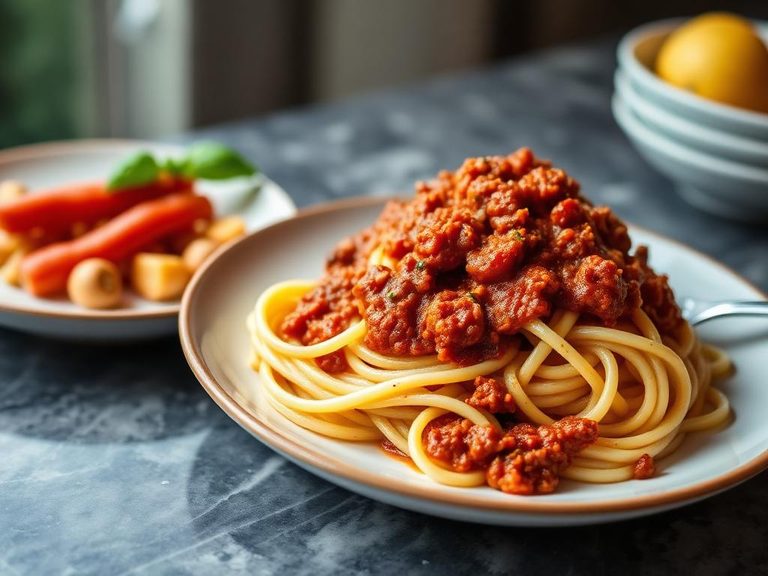
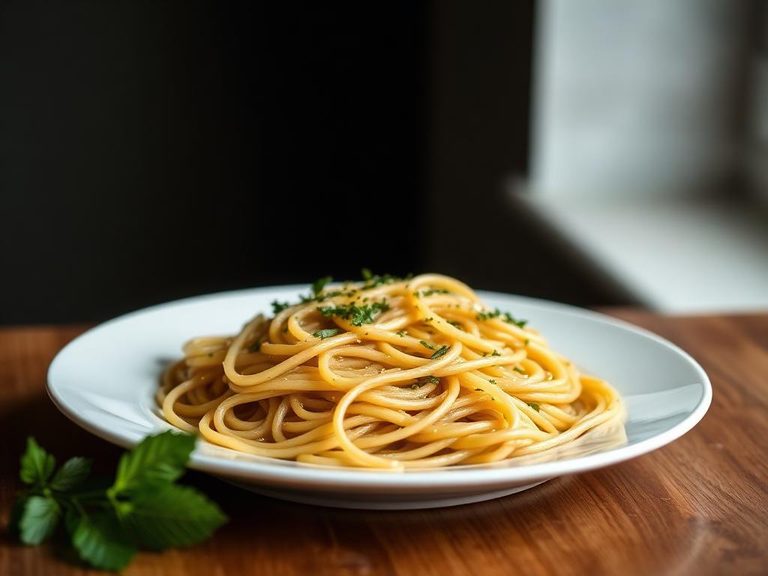
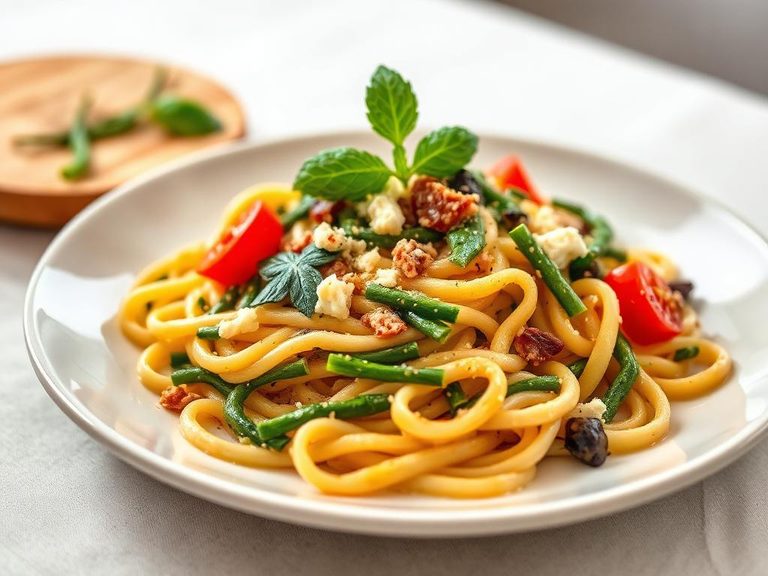
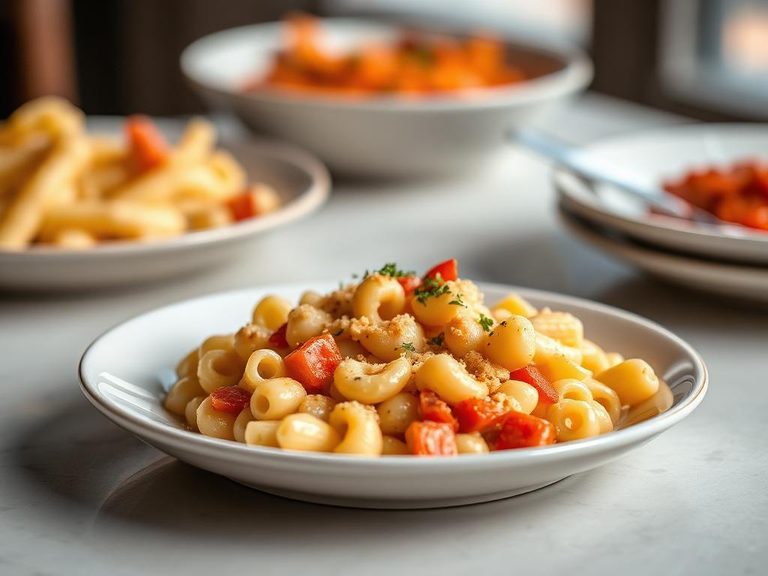
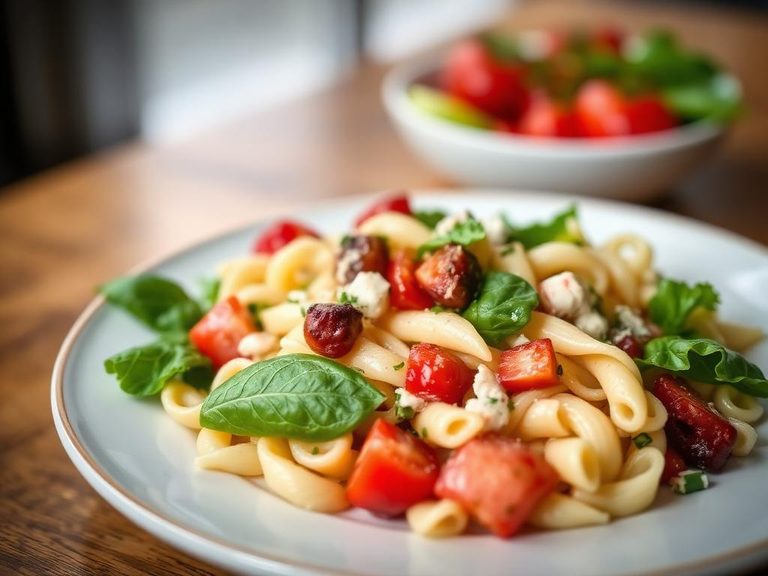
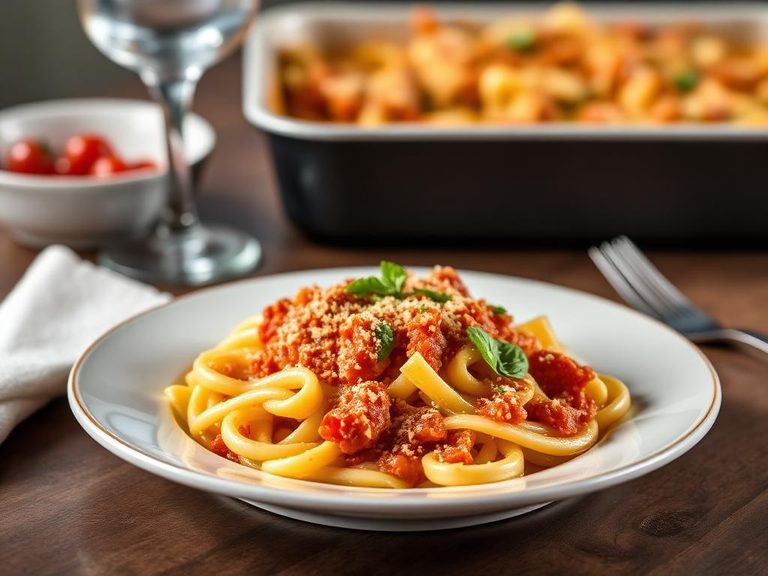
🌍 Where it's eaten
💡 Did you know?
The USDA's Food Distribution Program, which includes this item, provides food to schools, food banks, and other institutions, meaning this specific whole-wheat pasta is a common ingredient in institutional meals across the United States.
Full nutrition (USDA data · scales with serving)
| Water | 8.2 g |
| Energy | 352 kcal |
| Energy | 1471 kj |
| Protein | 13.9 g |
| Total lipid (fat) | 2.9 g |
| Ash | 1.6 g |
| Carbohydrate, by difference | 73.4 g |
| Fiber, total dietary | 9.2 g |
| Total Sugars | 2.7 g |
| Sucrose | 0.68 g |
| Glucose | 0.24 g |
| Fructose | 0.30 g |
| Lactose | 0.00 g |
| Maltose | 1.5 g |
| Galactose | 0.00 g |
| Starch | 56.8 g |
| Calcium, Ca | 29.0 mg |
| Iron, Fe | 3.6 mg |
| Magnesium, Mg | 128 mg |
| Phosphorus, P | 343 mg |
| Potassium, K | 434 mg |
| Sodium, Na | 6.0 mg |
| Zinc, Zn | 3.0 mg |
| Copper, Cu | 0.50 mg |
| Manganese, Mn | 3.0 mg |
| Selenium, Se | 77.6 ug |
| Thiamin | 0.41 mg |
| Riboflavin | 0.22 mg |
| Niacin | 8.7 mg |
| Pantothenic acid | 0.87 mg |
| Vitamin B-6 | 0.28 mg |
| Folate, total | 69.0 ug |
| Folic acid | 0.00 ug |
| Folate, food | 69.0 ug |
| Folate, DFE | 69.0 ug |
| Vitamin B-12 | 0.00 ug |
| Retinol | 0.00 ug |
| Vitamin E (alpha-tocopherol) | 0.46 mg |
| Tocopherol, beta | 0.22 mg |
| Tocopherol, gamma | 0.87 mg |
| Tocopherol, delta | 0.00 mg |
| Tocotrienol, alpha | 0.40 mg |
| Tocotrienol, beta | 2.8 mg |
| Tocotrienol, gamma | 0.00 mg |
| Tocotrienol, delta | 0.00 mg |
| Vitamin D (D2 + D3), International Units | 0.00 iu |
| Vitamin D (D2 + D3) | 0.00 ug |
| Vitamin K (phylloquinone) | 1.4 ug |
| Vitamin K (Dihydrophylloquinone) | 0.00 ug |
| Vitamin K (Menaquinone-4) | 0.00 ug |
Fat & fatty acid profile (per 100g)
| Fatty acids, total saturated | 0.43 g |
| SFA 4:0 | 0.00 g |
| SFA 6:0 | 0.00 g |
| SFA 8:0 | 0.00 g |
| SFA 10:0 | 0.00 g |
| SFA 12:0 | 0.00 g |
| SFA 14:0 | 0.01 g |
| SFA 15:0 | 0.00 g |
| SFA 16:0 | 0.37 g |
| SFA 17:0 | 0.00 g |
| SFA 18:0 | 0.03 g |
| SFA 20:0 | 0.00 g |
| SFA 22:0 | 0.00 g |
| SFA 24:0 | 0.00 g |
| Fatty acids, total monounsaturated | 0.36 g |
| MUFA 14:1 | 0.00 g |
| MUFA 15:1 | 0.00 g |
| MUFA 16:1 | 0.00 g |
| MUFA 16:1 c | 0.00 g |
| MUFA 17:1 | 0.00 g |
| MUFA 18:1 | 0.34 g |
| MUFA 18:1 c | 0.34 g |
| MUFA 20:1 | 0.01 g |
| MUFA 22:1 | 0.00 g |
| MUFA 22:1 c | 0.00 g |
| MUFA 24:1 c | 0.00 g |
| Fatty acids, total polyunsaturated | 1.1 g |
| PUFA 18:2 | 1.1 g |
| PUFA 18:2 n-6 c,c | 1.1 g |
| PUFA 18:2 CLAs | 0.00 g |
| PUFA 18:3 | 0.07 g |
| PUFA 18:3 n-3 c,c,c (ALA) | 0.07 g |
| PUFA 18:3 n-6 c,c,c | 0.00 g |
| PUFA 18:3i | 0.00 g |
| PUFA 18:4 | 0.00 g |
| PUFA 20:2 n-6 c,c | 0.00 g |
| PUFA 20:3 | 0.00 g |
| PUFA 20:3 n-3 | 0.00 g |
| PUFA 20:3 n-6 | 0.00 g |
| PUFA 20:4 | 0.00 g |
| PUFA 20:5 n-3 (EPA) | 0.00 g |
| PUFA 22:4 | 0.00 g |
| PUFA 22:5 n-3 (DPA) | 0.00 g |
| PUFA 22:6 n-3 (DHA) | 0.00 g |
| Fatty acids, total trans | 0.00 g |
| Fatty acids, total trans-monoenoic | 0.00 g |
| TFA 16:1 t | 0.00 g |
| TFA 18:1 t | 0.00 g |
| TFA 22:1 t | 0.00 g |
| TFA 18:2 t not further defined | 0.00 g |
| Fatty acids, total trans-polyenoic | 0.00 g |
| Cholesterol | 0.00 mg |
Amino acid profile (per 100g)
Estimated from Pasta, gluten-free, corn, dry — USDA does not publish this profile for Pasta.
| Tryptophan | 0.05 g |
| Threonine | 0.28 g |
| Isoleucine | 0.27 g |
| Leucine | 0.92 g |
| Lysine | 0.21 g |
| Methionine | 0.16 g |
| Cystine | 0.13 g |
| Phenylalanine | 0.37 g |
| Tyrosine | 0.30 g |
| Valine | 0.38 g |
| Arginine | 0.37 g |
| Histidine | 0.23 g |
| Alanine | 0.56 g |
| Aspartic acid | 0.52 g |
| Glutamic acid | 1.4 g |
| Glycine | 0.31 g |
| Proline | 0.65 g |
| Serine | 0.35 g |
FAQ
Does whole-wheat pasta taste very different from regular pasta?
Yes, it has a distinctly nuttier, earthier flavor and a denser, chewier texture. Many people grow to prefer its heartier taste.
How do I cook it so it's not too tough?
Cook it in plenty of well-salted boiling water, stirring occasionally. Check the package time, but test it a minute early for an al dente (firm to the bite) texture. Do not rinse after cooking.
Is it suitable for a gluten-free diet?
No. Whole-wheat pasta is made from wheat and contains gluten. For a gluten-free alternative, look for pasta made from rice, corn, quinoa, or legumes.
Nutrient density (calculated · NRF9.3)
Nutrient Rich Foods index: beneficial nutrients (protein, fiber, vitamins, minerals) minus saturated fat, added sugar & sodium, per 100 kcal.
NRF9.3 index — Fulgoni, Keast & Drewnowski, 2009. Computed from USDA nutrients.
Weight-loss friendliness (composite index)
Energy density 3.52 kcal/g · 16% calories from protein · 9.2 g fiber · 2.7 g sugar per 100 g.
Composite of energy density (Rolls et al., 1999), protein & fiber satiety, minus sugar. A calculated heuristic — ranks satiety-per-calorie, not a clinical measure.
Dietary load (calculated from USDA values)
Potential renal acid load. Positive = acid-forming, negative = alkaline-forming.
Sodium-to-potassium ratio: 0.01 (lower is better — aim for ≤ 1)
Sodium:potassium per WHO potassium guidance. Computed from USDA nutrients.