

Pasta, cooked, unenriched, without added salt
Whole food · Cereal Grains and Pasta
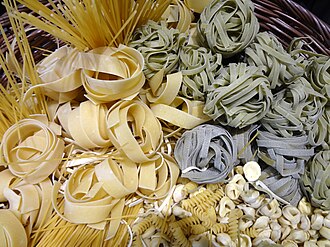
Photo: Wikipedia
Cooked pasta is the simple, comforting foundation of countless meals, offering a tender yet satisfyingly firm 'al dente' bite and a mild, starchy flavor that acts as a perfect canvas for sauces. Nutritionally, it's primarily a source of quick-release carbohydrates for energy, with a modest amount of plant-based protein.
Calorie split: 15% protein · 80% carbs · 5% fat
↓ Full nutrition💚 Why it's loved
People love it for its incredible versatility and comforting texture—it's a blank slate that can be dressed up with a simple drizzle of olive oil or become the hearty base for a complex ragù. It's deeply woven into culinary traditions, representing home cooking and celebration across many cultures.
⚠️ Watch-outs & how to enjoy it better
Its high glycemic index can lead to rapid blood-sugar spikes, which is a concern for some. It's also a common gluten-containing wheat product, making it unsuitable for those with celiac disease or gluten sensitivity. To counteract blood-sugar impacts, pair it with protein (like chicken or beans) and healthy fats (like olive oil or nuts), and consider choosing whole-wheat pasta for added fiber.
Key benefits
- Excellent source of energy-dense complex carbohydrates
- Low in fat and naturally cholesterol-free
- Provides a modest amount of plant-based protein
- Versatile base for nutrient-dense additions like vegetables and legumes
- Easy to digest and gentle on the stomach
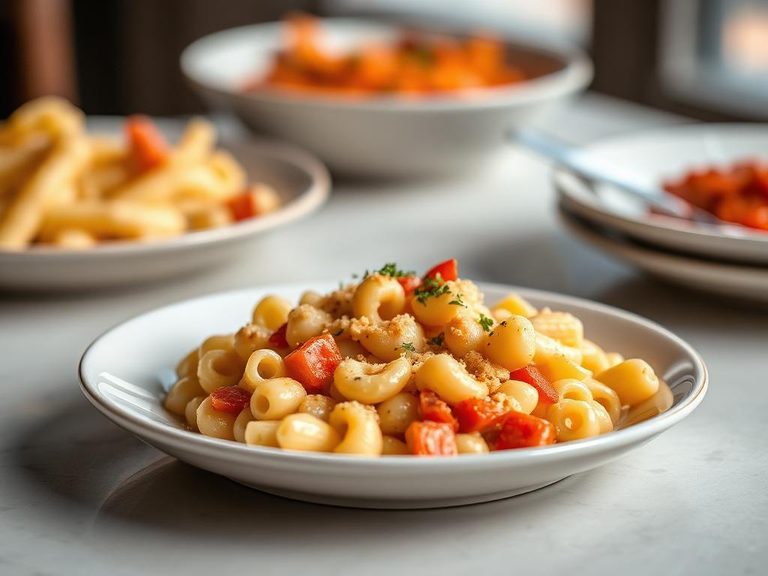
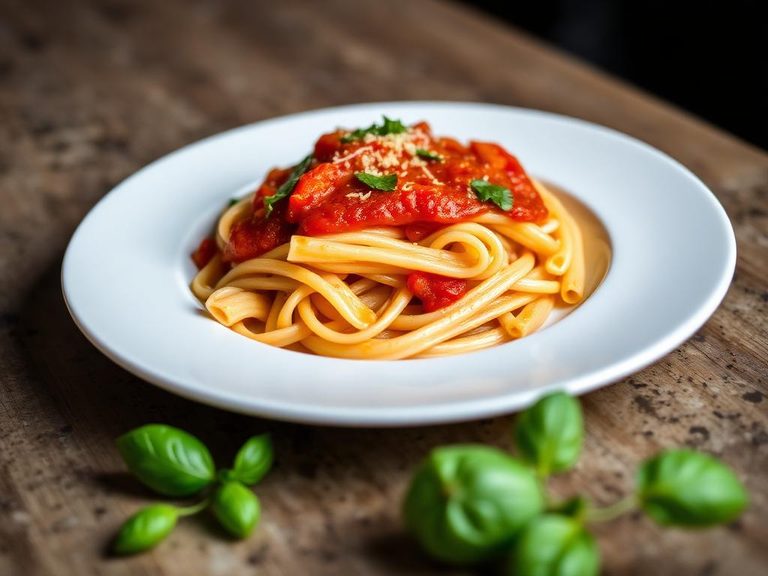
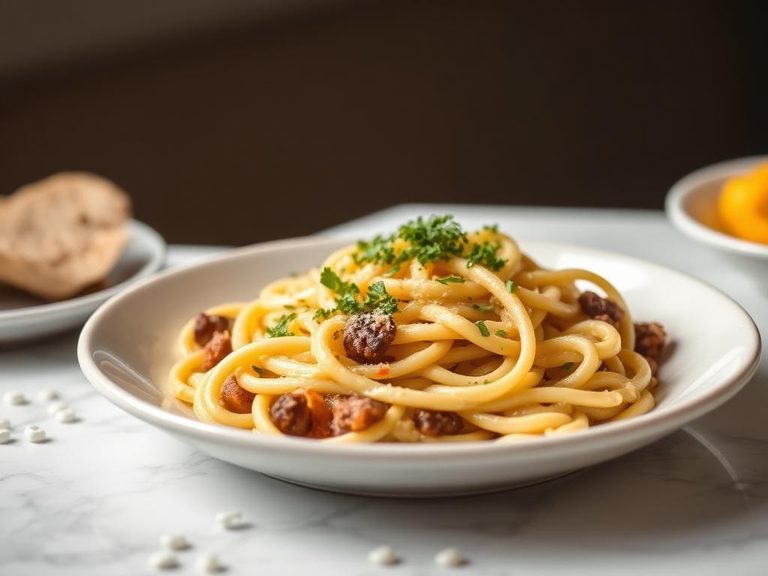
🍽️ Popular dishes
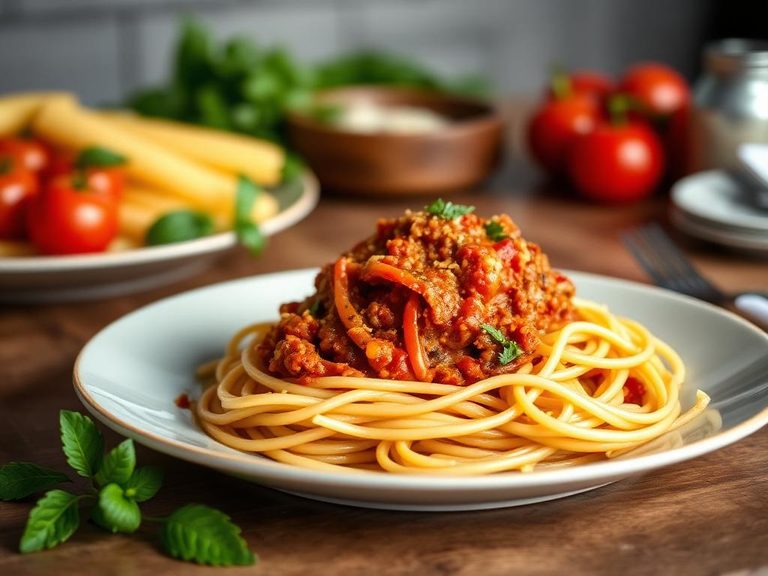
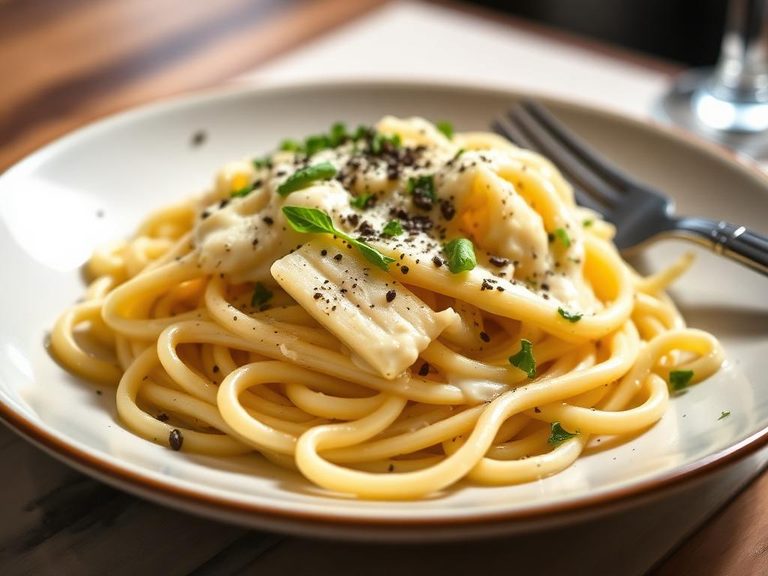
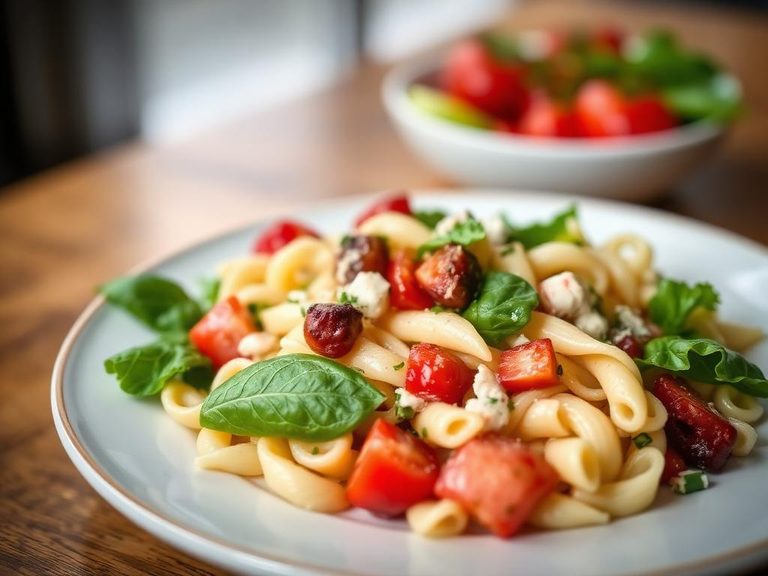
🌍 Where it's eaten
💡 Did you know?
The world's longest pasta, a single unbroken strand of spaghetti, measured over 3,780 meters (12,400 feet) and was created by a Italian chef in 2006.
Full nutrition (USDA data · scales with serving)
| Water | 62.1 g |
| Energy | 158 kcal |
| Energy | 660 kj |
| Protein | 5.8 g |
| Total lipid (fat) | 0.93 g |
| Ash | 0.27 g |
| Carbohydrate, by difference | 30.9 g |
| Fiber, total dietary | 1.8 g |
| Total Sugars | 0.56 g |
| Sucrose | 0.09 g |
| Glucose | 0.04 g |
| Fructose | 0.03 g |
| Lactose | 0.00 g |
| Maltose | 0.40 g |
| Galactose | 0.00 g |
| Starch | 26.0 g |
| Calcium, Ca | 7.0 mg |
| Iron, Fe | 0.50 mg |
| Magnesium, Mg | 18.0 mg |
| Phosphorus, P | 58.0 mg |
| Potassium, K | 44.0 mg |
| Sodium, Na | 1.0 mg |
| Zinc, Zn | 0.51 mg |
| Copper, Cu | 0.10 mg |
| Manganese, Mn | 0.32 mg |
| Selenium, Se | 26.4 ug |
| Vitamin C, total ascorbic acid | 0.00 mg |
| Thiamin | 0.02 mg |
| Riboflavin | 0.02 mg |
| Niacin | 0.40 mg |
| Pantothenic acid | 0.11 mg |
| Vitamin B-6 | 0.05 mg |
| Folate, total | 7.0 ug |
| Folic acid | 0.00 ug |
| Folate, food | 7.0 ug |
| Folate, DFE | 7.0 ug |
| Choline, total | 6.4 mg |
| Betaine | 68.0 mg |
| Vitamin B-12 | 0.00 ug |
| Vitamin B-12, added | 0.00 ug |
| Vitamin A, RAE | 0.00 ug |
| Retinol | 0.00 ug |
| Carotene, beta | 0.00 ug |
| Carotene, alpha | 0.00 ug |
| Cryptoxanthin, beta | 0.00 ug |
| Vitamin A, IU | 0.00 iu |
| Lycopene | 0.00 ug |
| Lutein + zeaxanthin | 7.0 ug |
| Vitamin E (alpha-tocopherol) | 0.06 mg |
| Vitamin E, added | 0.00 mg |
| Tocopherol, beta | 0.03 mg |
| Tocopherol, gamma | 0.50 mg |
| Tocopherol, delta | 0.00 mg |
| Tocotrienol, alpha | 0.05 mg |
| Tocotrienol, beta | 0.00 mg |
| Tocotrienol, gamma | 0.00 mg |
| Tocotrienol, delta | 0.00 mg |
| Vitamin D (D2 + D3), International Units | 0.00 iu |
| Vitamin D (D2 + D3) | 0.00 ug |
| Vitamin K (phylloquinone) | 0.00 ug |
| Vitamin K (Dihydrophylloquinone) | 0.50 ug |
| Alcohol, ethyl | 0.00 g |
| Caffeine | 0.00 mg |
| Theobromine | 0.00 mg |
Fat & fatty acid profile (per 100g)
| Fatty acids, total saturated | 0.18 g |
| SFA 4:0 | 0.00 g |
| SFA 6:0 | 0.00 g |
| SFA 8:0 | 0.00 g |
| SFA 10:0 | 0.00 g |
| SFA 12:0 | 0.01 g |
| SFA 13:0 | 0.00 g |
| SFA 14:0 | 0.01 g |
| SFA 15:0 | 0.00 g |
| SFA 16:0 | 0.15 g |
| SFA 17:0 | 0.00 g |
| SFA 18:0 | 0.01 g |
| SFA 20:0 | 0.00 g |
| SFA 22:0 | 0.00 g |
| SFA 24:0 | 0.00 g |
| Fatty acids, total monounsaturated | 0.13 g |
| MUFA 14:1 | 0.00 g |
| MUFA 15:1 | 0.00 g |
| MUFA 16:1 | 0.00 g |
| MUFA 17:1 | 0.00 g |
| MUFA 18:1 | 0.13 g |
| MUFA 18:1 c | 0.13 g |
| MUFA 20:1 | 0.00 g |
| MUFA 22:1 | 0.00 g |
| MUFA 24:1 c | 0.00 g |
| Fatty acids, total polyunsaturated | 0.33 g |
| PUFA 18:2 | 0.29 g |
| PUFA 18:3 | 0.02 g |
| PUFA 18:3 n-3 c,c,c (ALA) | 0.02 g |
| PUFA 18:3 n-6 c,c,c | 0.00 g |
| PUFA 18:4 | 0.00 g |
| PUFA 20:2 n-6 c,c | 0.00 g |
| PUFA 20:3 | 0.00 g |
| PUFA 20:4 | 0.00 g |
| PUFA 20:5 n-3 (EPA) | 0.00 g |
| PUFA 22:5 n-3 (DPA) | 0.00 g |
| PUFA 22:6 n-3 (DHA) | 0.00 g |
| Fatty acids, total trans | 0.00 g |
| Fatty acids, total trans-monoenoic | 0.00 g |
| TFA 18:1 t | 0.00 g |
| Cholesterol | 0.00 mg |
Amino acid profile (per 100g)
| Tryptophan | 0.08 g |
| Threonine | 0.21 g |
| Isoleucine | 0.23 g |
| Leucine | 0.44 g |
| Lysine | 0.13 g |
| Methionine | 0.07 g |
| Cystine | 0.11 g |
| Phenylalanine | 0.30 g |
| Tyrosine | 0.11 g |
| Valine | 0.26 g |
| Arginine | 0.21 g |
| Histidine | 0.13 g |
| Alanine | 0.20 g |
| Aspartic acid | 0.28 g |
| Glutamic acid | 2.0 g |
| Glycine | 0.20 g |
| Proline | 0.70 g |
| Serine | 0.28 g |
| Hydroxyproline | 0.00 g |
FAQ
Is pasta a good source of protein?
While it contains some protein (about 5-6g per 100g cooked), it's not a complete protein on its own. It's best paired with other protein sources like meat, fish, eggs, or legumes for a balanced meal.
How can I make plain pasta more nutritious?
Toss it with a variety of vegetables (like spinach, tomatoes, or zucchini), a lean protein, and a healthy fat like olive oil or avocado. Using whole-wheat pasta also significantly boosts the fiber and nutrient content.
Why does my pasta sometimes turn out mushy?
Overcooking is the primary cause. Follow package instructions, taste it a minute or two before the suggested time, and aim for 'al dente' (firm to the bite). Also, avoid rinsing cooked pasta if you're serving it with sauce, as the starch helps the sauce adhere.
Nutrient density (calculated · NRF9.3)
Nutrient Rich Foods index: beneficial nutrients (protein, fiber, vitamins, minerals) minus saturated fat, added sugar & sodium, per 100 kcal.
NRF9.3 index — Fulgoni, Keast & Drewnowski, 2009. Computed from USDA nutrients.
Weight-loss friendliness (composite index)
Energy density 1.58 kcal/g · 15% calories from protein · 1.8 g fiber · 0.6 g sugar per 100 g.
Composite of energy density (Rolls et al., 1999), protein & fiber satiety, minus sugar. A calculated heuristic — ranks satiety-per-calorie, not a clinical measure.
Dietary load (calculated from USDA values)
Potential renal acid load. Positive = acid-forming, negative = alkaline-forming.
Sodium-to-potassium ratio: 0.02 (lower is better — aim for ≤ 1)
Sodium:potassium per WHO potassium guidance. Computed from USDA nutrients.