

Mollusks, scallop, (bay and sea), cooked, steamed
Whole food · Finfish and Shellfish Products

Photo: Wikipedia
Steamed scallops are the tender, sweet adductor muscles of bivalve mollusks, prized for their delicate, buttery texture and clean, briny flavor that tastes of the ocean. Nutritionally, they are a powerhouse of lean protein, delivering over 20 grams per 100 grams with virtually no fat, making them one of the purest sources of marine protein available. The steaming method preserves their natural sweetness and ensures a soft, succulent bite without added fats.
Calorie split: 74% protein · 19% carbs · 7% fat
↓ Full nutrition💚 Why it's loved
People adore scallops for their luxurious, melt-in-the-mouth texture and sweet, oceanic flavor that pairs beautifully with simple preparations. Their versatility allows them to shine in everything from elegant seared dishes to hearty chowders, making them a favorite in both fine dining and home kitchens.
⚠️ Watch-outs & how to enjoy it better
Scallops are a common shellfish allergen, so individuals with mollusk allergies must avoid them. They can also be high in sodium, which may concern those monitoring blood pressure, so pairing them with potassium-rich vegetables like asparagus or spinach can help balance intake. For those watching cholesterol, note that while scallops are low in fat, they contain some dietary cholesterol, so portion control is wise if advised by a healthcare provider.
Key benefits
- Excellent source of lean, high-quality protein for muscle maintenance
- Very low in fat and calories, ideal for weight management
- Rich in vitamin B12, essential for nerve function and red blood cell formation
- Contains zinc and selenium, minerals that support immune health
- Provides omega-3 fatty acids in a low-fat package
🍽️ Popular dishes
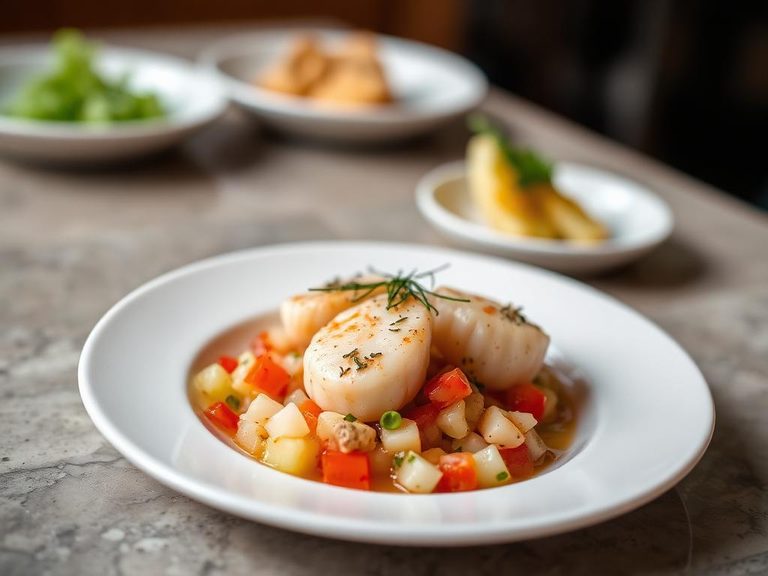
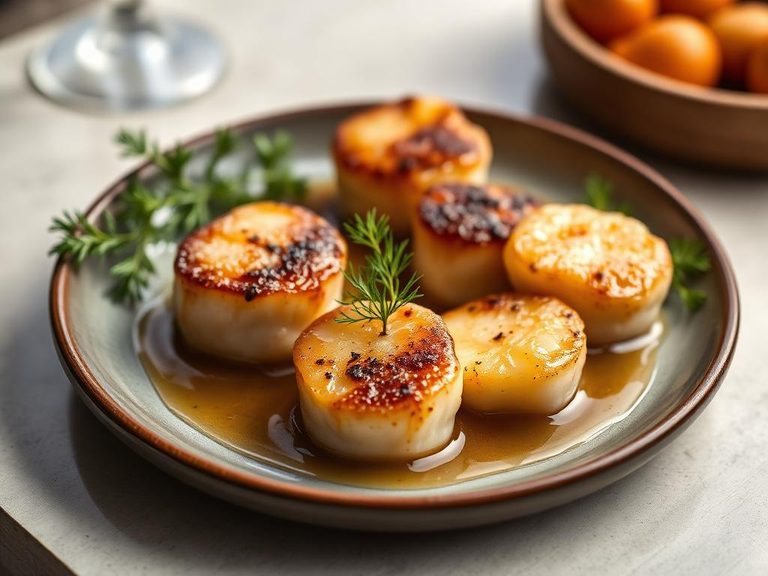
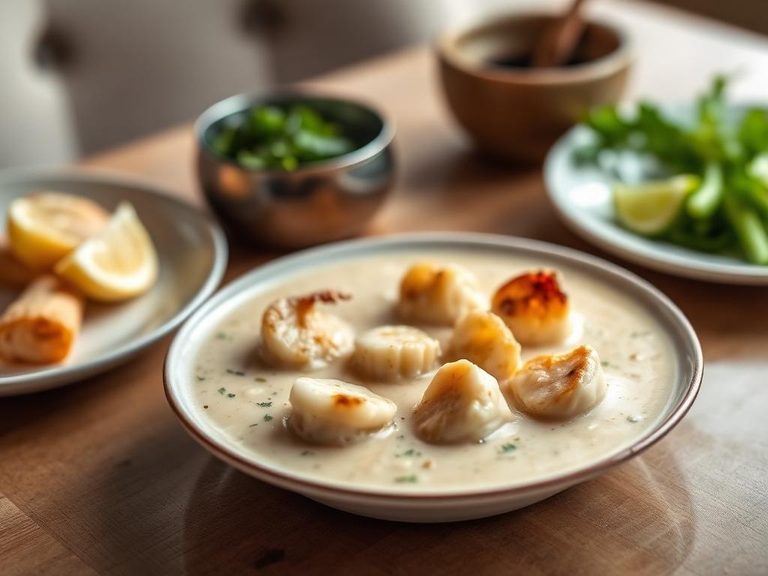
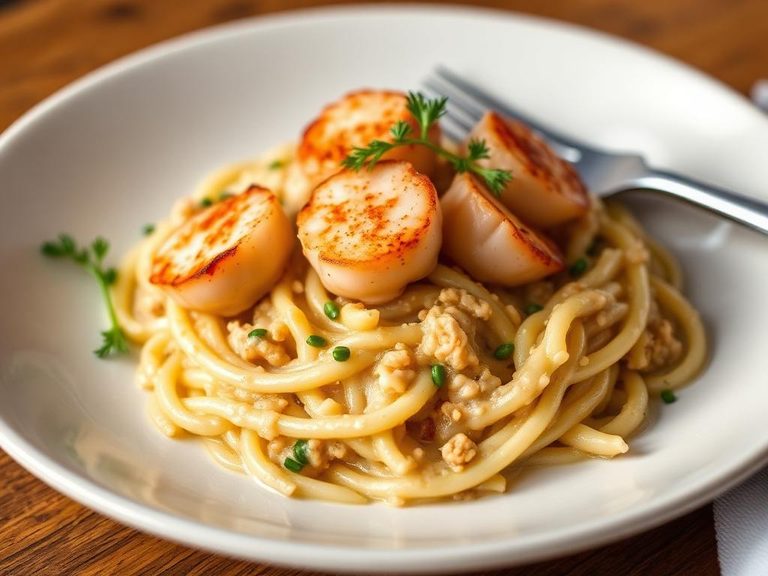
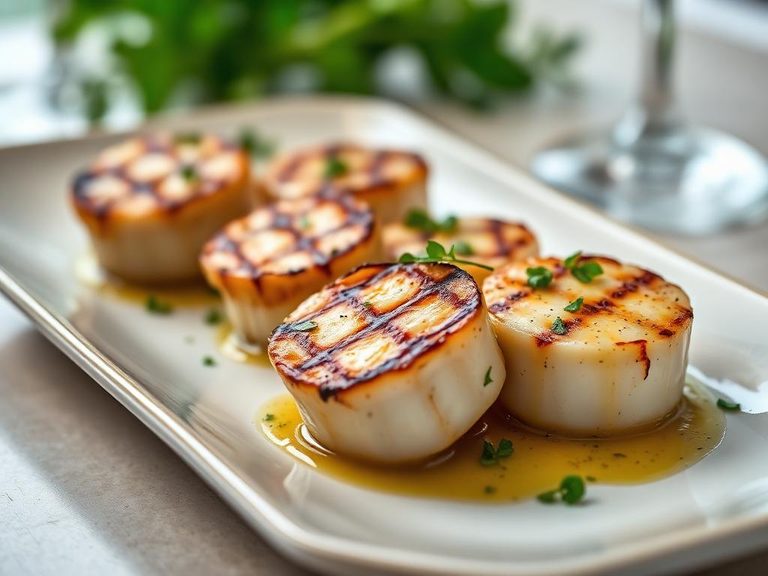
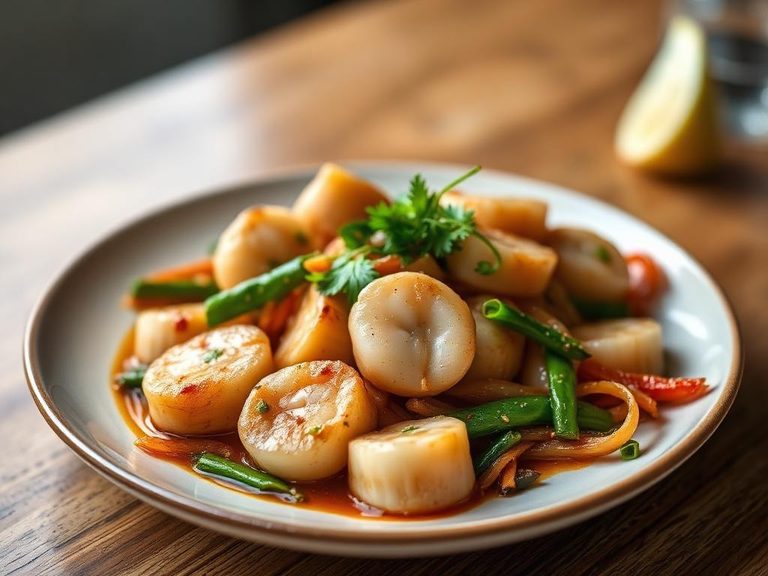
🌍 Where it's eaten
💡 Did you know?
Scallops can live for over 20 years, and some species can 'swim' by rapidly clapping their shells together to escape predators.
Full nutrition (USDA data · scales with serving)
| Water | 70.3 g |
| Energy | 111 kcal |
| Energy | 466 kj |
| Protein | 20.5 g |
| Total lipid (fat) | 0.84 g |
| Ash | 3.0 g |
| Carbohydrate, by difference | 5.4 g |
| Fiber, total dietary | 0.00 g |
| Total Sugars | 0.00 g |
| Sucrose | 0.00 g |
| Glucose | 0.00 g |
| Fructose | 0.00 g |
| Lactose | 0.00 g |
| Maltose | 0.00 g |
| Galactose | 0.00 g |
| Starch | 3.7 g |
| Calcium, Ca | 10.0 mg |
| Iron, Fe | 0.58 mg |
| Magnesium, Mg | 37.0 mg |
| Phosphorus, P | 426 mg |
| Potassium, K | 314 mg |
| Sodium, Na | 667 mg |
| Zinc, Zn | 1.6 mg |
| Copper, Cu | 0.03 mg |
| Manganese, Mn | 0.03 mg |
| Selenium, Se | 21.7 ug |
| Vitamin C, total ascorbic acid | 0.00 mg |
| Thiamin | 0.01 mg |
| Riboflavin | 0.02 mg |
| Niacin | 1.1 mg |
| Pantothenic acid | 0.37 mg |
| Vitamin B-6 | 0.11 mg |
| Folate, total | 20.0 ug |
| Folic acid | 0.00 ug |
| Folate, food | 20.0 ug |
| Folate, DFE | 20.0 ug |
| Choline, total | 111 mg |
| Vitamin B-12 | 2.1 ug |
| Vitamin B-12, added | 0.00 ug |
| Vitamin A, RAE | 2.0 ug |
| Retinol | 2.0 ug |
| Carotene, beta | 0.00 ug |
| Carotene, alpha | 0.00 ug |
| Cryptoxanthin, beta | 0.00 ug |
| Vitamin A, IU | 5.0 iu |
| Lycopene | 0.00 ug |
| Lutein + zeaxanthin | 0.00 ug |
| Vitamin E (alpha-tocopherol) | 0.00 mg |
| Vitamin E, added | 0.00 mg |
| Tocopherol, beta | 0.00 mg |
| Tocopherol, gamma | 0.00 mg |
| Tocopherol, delta | 0.00 mg |
| Tocotrienol, alpha | 0.00 mg |
| Tocotrienol, beta | 0.00 mg |
| Tocotrienol, gamma | 0.00 mg |
| Tocotrienol, delta | 0.00 mg |
| Vitamin D (D2 + D3), International Units | 2.0 iu |
| Vitamin D (D2 + D3) | 0.00 ug |
| Vitamin D3 (cholecalciferol) | 0.00 ug |
| Vitamin K (phylloquinone) | 0.00 ug |
| Vitamin K (Dihydrophylloquinone) | 0.00 ug |
| Vitamin K (Menaquinone-4) | 0.00 ug |
| Alcohol, ethyl | 0.00 g |
| Caffeine | 0.00 mg |
| Theobromine | 0.00 mg |
Fat & fatty acid profile (per 100g)
| Fatty acids, total saturated | 0.22 g |
| SFA 4:0 | 0.00 g |
| SFA 6:0 | 0.00 g |
| SFA 8:0 | 0.00 g |
| SFA 10:0 | 0.00 g |
| SFA 12:0 | 0.00 g |
| SFA 14:0 | 0.01 g |
| SFA 15:0 | 0.01 g |
| SFA 16:0 | 0.14 g |
| SFA 17:0 | 0.01 g |
| SFA 18:0 | 0.05 g |
| SFA 20:0 | 0.00 g |
| SFA 22:0 | 0.00 g |
| SFA 24:0 | 0.00 g |
| Fatty acids, total monounsaturated | 0.08 g |
| MUFA 14:1 | 0.00 g |
| MUFA 15:1 | 0.00 g |
| MUFA 16:1 | 0.01 g |
| MUFA 17:1 | 0.00 g |
| MUFA 18:1 | 0.05 g |
| MUFA 20:1 | 0.01 g |
| MUFA 22:1 | 0.00 g |
| MUFA 24:1 c | 0.00 g |
| Fatty acids, total polyunsaturated | 0.22 g |
| PUFA 18:2 | 0.01 g |
| PUFA 18:3 | 0.01 g |
| PUFA 18:4 | 0.01 g |
| PUFA 20:2 n-6 c,c | 0.00 g |
| PUFA 20:3 | 0.00 g |
| PUFA 20:4 | 0.01 g |
| PUFA 20:5 n-3 (EPA) | 0.07 g |
| PUFA 22:4 | 0.00 g |
| PUFA 22:5 n-3 (DPA) | 0.01 g |
| PUFA 22:6 n-3 (DHA) | 0.10 g |
| Fatty acids, total trans | 0.01 g |
| Cholesterol | 41.0 mg |
Amino acid profile (per 100g)
| Tryptophan | 0.17 g |
| Threonine | 0.63 g |
| Isoleucine | 0.69 g |
| Leucine | 1.2 g |
| Lysine | 1.3 g |
| Methionine | 0.49 g |
| Cystine | 0.20 g |
| Phenylalanine | 0.60 g |
| Tyrosine | 0.50 g |
| Valine | 0.65 g |
| Arginine | 1.1 g |
| Histidine | 0.31 g |
| Alanine | 0.91 g |
| Aspartic acid | 1.6 g |
| Glutamic acid | 2.4 g |
| Glycine | 1.8 g |
| Proline | 0.49 g |
| Serine | 0.61 g |
FAQ
Are steamed scallops healthy?
Yes, they are very healthy, being high in protein, low in fat, and rich in vitamins and minerals like B12 and zinc.
How do I cook scallops without making them rubbery?
Avoid overcooking; steam or sear them quickly over high heat until just opaque in the center, which usually takes 2-3 minutes per side.
Can I eat scallops if I have a shellfish allergy?
No, scallops are shellfish and can cause severe allergic reactions in sensitive individuals.
What is the best way to store scallops?
Keep them refrigerated at 32-38°F (0-3°C) and use within 1-2 days, or freeze them for up to 3 months.
Nutrient density (calculated · NRF9.3)
Nutrient Rich Foods index: beneficial nutrients (protein, fiber, vitamins, minerals) minus saturated fat, added sugar & sodium, per 100 kcal.
NRF9.3 index — Fulgoni, Keast & Drewnowski, 2009. Computed from USDA nutrients.
Weight-loss friendliness (composite index)
Energy density 1.11 kcal/g · 74% calories from protein · 0.0 g fiber · 0.0 g sugar per 100 g.
Composite of energy density (Rolls et al., 1999), protein & fiber satiety, minus sugar. A calculated heuristic — ranks satiety-per-calorie, not a clinical measure.
Dietary load (calculated from USDA values)
Potential renal acid load. Positive = acid-forming, negative = alkaline-forming.
Sodium-to-potassium ratio: 2.12 (lower is better — aim for ≤ 1)
Sodium:potassium per WHO potassium guidance. Computed from USDA nutrients.