

Frankfurter, turkey
Whole food · Sausages and Luncheon Meats

Photo: Wikipedia
A lean, pre-cooked sausage made from ground turkey, offering a milder, less fatty alternative to traditional pork franks. Its texture is typically smooth and fine-grained, with a subtle, savory flavor that readily absorbs condiments and smoky notes. Nutritionally, it provides a solid protein punch with significantly less fat than its beef or pork counterparts.
Calorie split: 22% protein · 7% carbs · 71% fat
↓ Full nutrition💚 Why it's loved
People love turkey franks for their familiar, comforting hot dog experience with a lighter nutritional footprint, making them a popular choice for health-conscious families and grill nights. Their mild flavor is a perfect canvas for everything from classic yellow mustard to gourmet relishes and spicy slaws.
⚠️ Watch-outs & how to enjoy it better
They can be high in sodium, which is a concern for those monitoring blood pressure, and may contain fillers or binders. To counteract sodium, pair with potassium-rich foods like a side of fresh fruit or a salad, and always check labels for lower-sodium options. As a processed meat, moderation is key.
Key benefits
- Good source of lean protein for muscle maintenance.
- Lower in saturated fat than traditional pork or beef hot dogs.
- Convenient, pre-cooked protein for quick meals.
- Versatile base for various cuisines and flavor profiles.
- Often contains less cholesterol than red meat sausages.
🍽️ Popular dishes

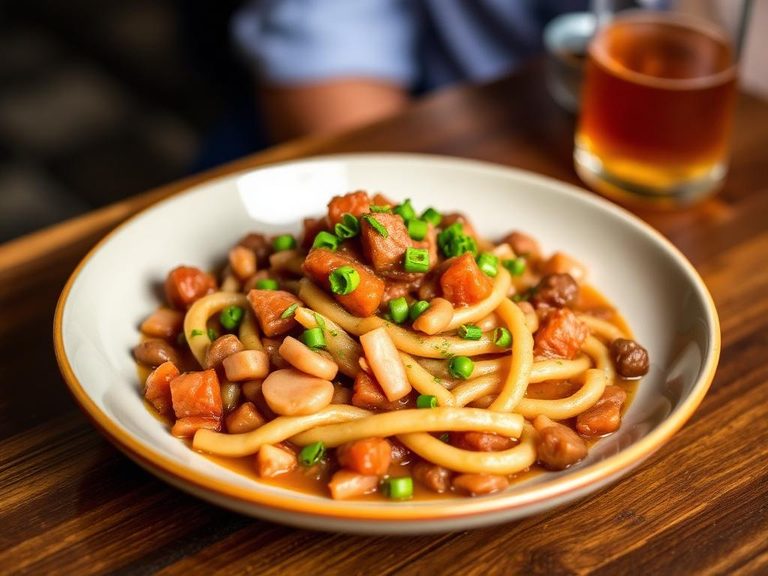



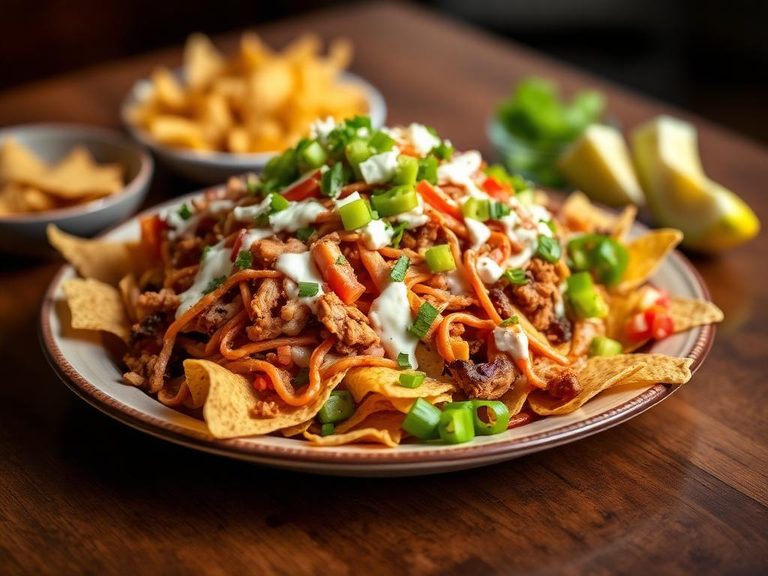
🌍 Where it's eaten
💡 Did you know?
The 'frank' in frankfurter is a nod to Frankfurt, Germany, while 'wiener' points to Vienna (Wien), Austria—two cities that have long claimed to be the birthplace of the modern sausage.
Full nutrition (USDA data · scales with serving)
| Water | 63.0 g |
| Energy | 223 kcal |
| Energy | 933 kj |
| Protein | 12.2 g |
| Total lipid (fat) | 17.3 g |
| Ash | 3.7 g |
| Carbohydrate, by difference | 3.8 g |
| Fiber, total dietary | 0.00 g |
| Total Sugars | 1.2 g |
| Sucrose | 0.00 g |
| Glucose | 1.0 g |
| Fructose | 0.00 g |
| Lactose | 0.00 g |
| Maltose | 0.17 g |
| Galactose | 0.00 g |
| Calcium, Ca | 148 mg |
| Iron, Fe | 1.5 mg |
| Magnesium, Mg | 14.0 mg |
| Phosphorus, P | 172 mg |
| Potassium, K | 392 mg |
| Sodium, Na | 911 mg |
| Zinc, Zn | 1.8 mg |
| Copper, Cu | 0.07 mg |
| Manganese, Mn | 0.03 mg |
| Selenium, Se | 15.1 ug |
| Vitamin C, total ascorbic acid | 0.00 mg |
| Thiamin | 0.04 mg |
| Riboflavin | 0.18 mg |
| Niacin | 3.7 mg |
| Pantothenic acid | 0.56 mg |
| Vitamin B-6 | 0.14 mg |
| Folate, total | 9.0 ug |
| Folic acid | 1.0 ug |
| Folate, food | 7.0 ug |
| Folate, DFE | 10.0 ug |
| Choline, total | 48.4 mg |
| Betaine | 4.7 mg |
| Vitamin B-12 | 0.82 ug |
| Vitamin B-12, added | 0.00 ug |
| Vitamin A, RAE | 0.00 ug |
| Retinol | 0.00 ug |
| Carotene, beta | 0.00 ug |
| Carotene, alpha | 0.00 ug |
| Cryptoxanthin, beta | 0.00 ug |
| Vitamin A, IU | 0.00 iu |
| Lycopene | 0.00 ug |
| Lutein + zeaxanthin | 0.00 ug |
| Vitamin E (alpha-tocopherol) | 0.62 mg |
| Vitamin E, added | 0.00 mg |
| Vitamin D (D2 + D3), International Units | 23.0 iu |
| Vitamin D (D2 + D3) | 0.60 ug |
| Vitamin K (phylloquinone) | 0.00 ug |
| Vitamin K (Dihydrophylloquinone) | 0.00 ug |
| Vitamin K (Menaquinone-4) | 31.2 ug |
| Alcohol, ethyl | 0.00 g |
| Caffeine | 0.00 mg |
| Theobromine | 0.00 mg |
Fat & fatty acid profile (per 100g)
| Fatty acids, total saturated | 4.0 g |
| SFA 4:0 | 0.00 g |
| SFA 6:0 | 0.00 g |
| SFA 8:0 | 0.00 g |
| SFA 10:0 | 0.00 g |
| SFA 12:0 | 0.01 g |
| SFA 14:0 | 0.14 g |
| SFA 15:0 | 0.02 g |
| SFA 16:0 | 2.7 g |
| SFA 17:0 | 0.04 g |
| SFA 18:0 | 1.1 g |
| SFA 20:0 | 0.01 g |
| SFA 22:0 | 0.00 g |
| SFA 24:0 | 0.00 g |
| Fatty acids, total monounsaturated | 5.7 g |
| MUFA 14:1 | 0.01 g |
| MUFA 15:1 | 0.00 g |
| MUFA 16:1 | 0.33 g |
| MUFA 17:1 | 0.00 g |
| MUFA 18:1 | 5.3 g |
| MUFA 18:1 c | 4.7 g |
| MUFA 20:1 | 0.05 g |
| MUFA 22:1 | 0.03 g |
| MUFA 22:1 c | 0.03 g |
| Fatty acids, total polyunsaturated | 3.9 g |
| PUFA 18:2 | 3.7 g |
| PUFA 18:2 n-6 c,c | 3.5 g |
| PUFA 18:3 | 0.19 g |
| PUFA 18:3 n-3 c,c,c (ALA) | 0.19 g |
| PUFA 18:3 n-6 c,c,c | 0.00 g |
| PUFA 18:4 | 0.00 g |
| PUFA 20:2 n-6 c,c | 0.02 g |
| PUFA 20:3 | 0.00 g |
| PUFA 20:4 | 0.03 g |
| PUFA 20:5 n-3 (EPA) | 0.00 g |
| PUFA 22:5 n-3 (DPA) | 0.00 g |
| PUFA 22:6 n-3 (DHA) | 0.00 g |
| Fatty acids, total trans | 0.79 g |
| Fatty acids, total trans-monoenoic | 0.58 g |
| TFA 18:1 t | 0.58 g |
| TFA 18:2 t,t | 0.21 g |
| Fatty acids, total trans-polyenoic | 0.21 g |
| Cholesterol | 77.0 mg |
| Phytosterols | 0.00 mg |
Amino acid profile (per 100g)
| Tryptophan | 0.11 g |
| Threonine | 0.68 g |
| Isoleucine | 0.54 g |
| Leucine | 1.2 g |
| Lysine | 1.2 g |
| Methionine | 0.40 g |
| Cystine | 0.10 g |
| Phenylalanine | 0.59 g |
| Tyrosine | 0.51 g |
| Valine | 0.58 g |
| Arginine | 0.93 g |
| Histidine | 0.54 g |
| Alanine | 0.94 g |
| Aspartic acid | 1.5 g |
| Glutamic acid | 2.4 g |
| Glycine | 0.84 g |
| Proline | 0.70 g |
| Serine | 0.67 g |
| Hydroxyproline | 0.12 g |
FAQ
Are turkey franks healthier than beef hot dogs?
Generally, yes. They typically have fewer calories, less total fat, and less saturated fat than traditional beef hot dogs. However, they can still be high in sodium and are a processed meat, so they should be eaten in moderation as part of a balanced diet.
How should I cook them for the best texture?
Pan-frying or grilling until lightly browned and slightly crispy on the outside enhances their flavor and texture significantly compared to simply boiling. You can also simmer them in beer or broth for added depth.
What's a good low-carb way to serve them?
Skip the bun and serve them in a lettuce wrap, chopped over a salad, or alongside roasted vegetables like broccoli and cauliflower. They also pair well with a side of sauerkraut or coleslaw.
Nutrient density (calculated · NRF9.3)
Nutrient Rich Foods index: beneficial nutrients (protein, fiber, vitamins, minerals) minus saturated fat, added sugar & sodium, per 100 kcal.
NRF9.3 index — Fulgoni, Keast & Drewnowski, 2009. Computed from USDA nutrients.
Weight-loss friendliness (composite index)
Energy density 2.23 kcal/g · 22% calories from protein · 0.0 g fiber · 1.2 g sugar per 100 g.
Composite of energy density (Rolls et al., 1999), protein & fiber satiety, minus sugar. A calculated heuristic — ranks satiety-per-calorie, not a clinical measure.
Dietary load (calculated from USDA values)
Potential renal acid load. Positive = acid-forming, negative = alkaline-forming.
Sodium-to-potassium ratio: 2.32 (lower is better — aim for ≤ 1)
Sodium:potassium per WHO potassium guidance. Computed from USDA nutrients.