

Dip, bean, original flavor
Whole food · Soups, Sauces, and Gravies

Photo: Wikipedia
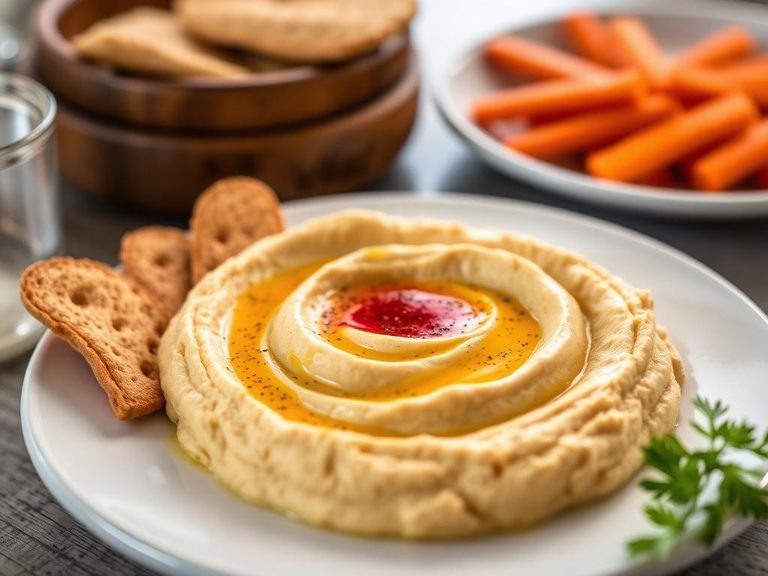
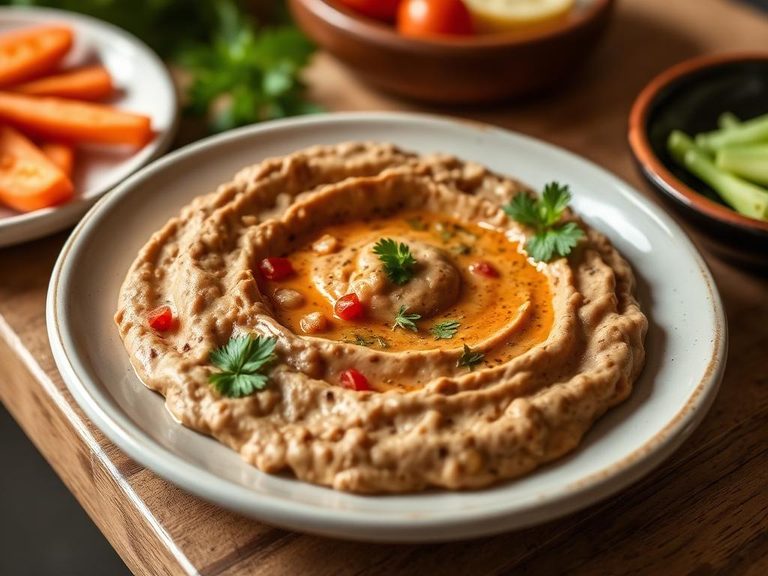
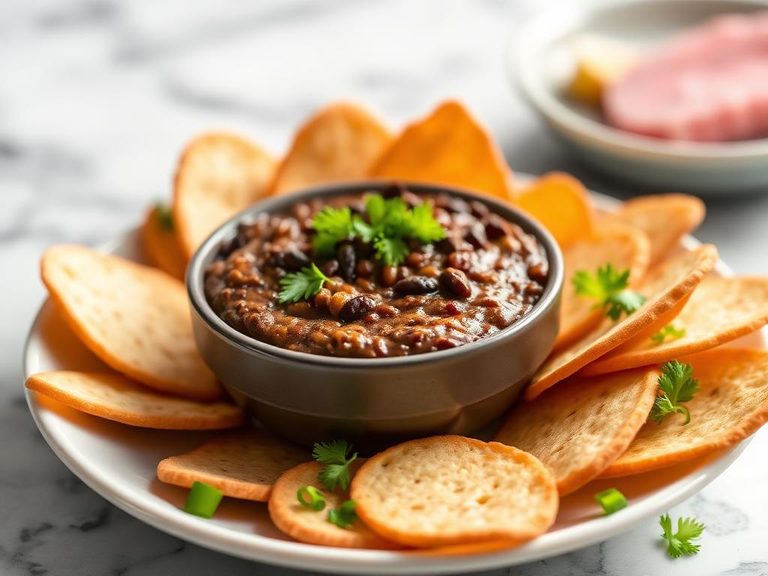
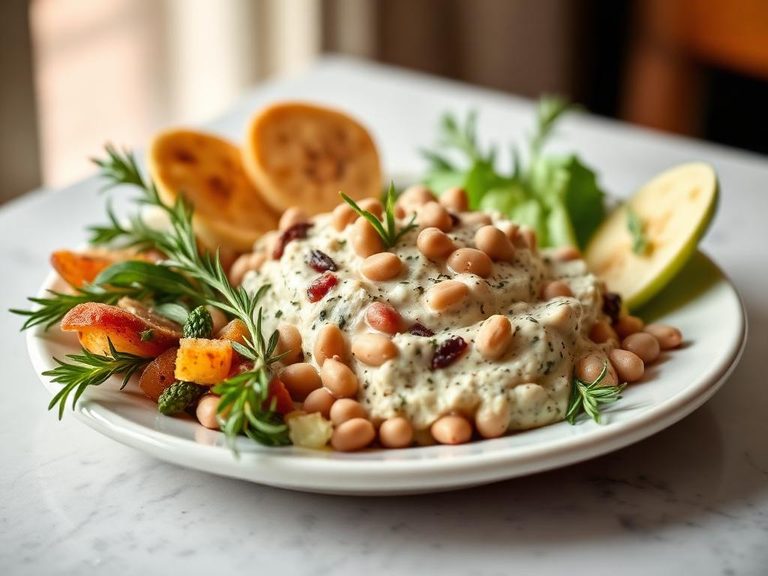
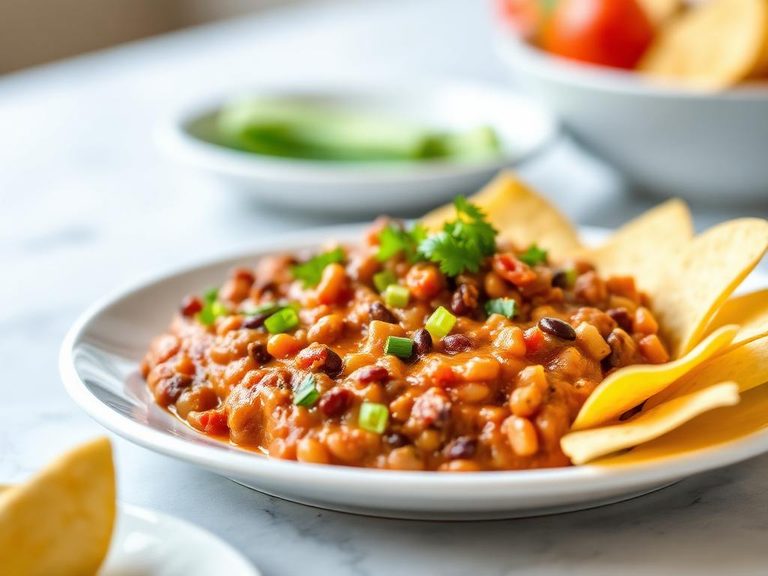
This is a smooth, creamy dip made primarily from pureed beans, offering a savory, earthy flavor with a mild, slightly nutty undertone. Its texture is thick and spreadable, similar to hummus but often lighter, making it a versatile base for snacks and meals. Nutritionally, it's a standout for its high fiber content and solid plant-based protein, with relatively low sugar.
Calorie split: 18% protein · 54% carbs · 28% fat
↓ Full nutrition💚 Why it's loved
People love it for its satisfying, umami-rich flavor that pairs perfectly with crunchy vegetables, pita bread, or chips. Its versatility is key—it can be a simple dip, a sandwich spread, or a base for soups and sauces, deeply rooted in many culinary traditions.
⚠️ Watch-outs & how to enjoy it better
Some may find it causes digestive discomfort like bloating due to its high fiber and oligosaccharide content, especially for those not accustomed to legumes. To counteract this, start with small portions, ensure beans are well-cooked, or try bean dips made from lentils or split peas which can be easier to digest.
Key benefits
- Excellent source of dietary fiber (4.9g per 100g)
- Good plant-based protein source (5.44g per 100g)
- Low in sugar (less than 1g per 100g)
- Provides sustained energy due to complex carbs and fiber
- Naturally low in fat compared to many creamy dips
🍽️ Popular dishes
🌍 Where it's eaten
💡 Did you know?
The practice of mashing beans into a dip is ancient; archaeological evidence suggests that early agricultural societies in the Fertile Crescent were making hummus-like preparations over 10,000 years ago.
Full nutrition (USDA data · scales with serving)
| Water | 73.0 g |
| Energy | 119 kcal |
| Energy | 496 kj |
| Protein | 5.4 g |
| Total lipid (fat) | 3.7 g |
| Ash | 2.0 g |
| Carbohydrate, by difference | 15.9 g |
| Fiber, total dietary | 4.9 g |
| Total Sugars | 0.99 g |
| Sucrose | 0.60 g |
| Glucose | 0.00 g |
| Fructose | 0.39 g |
| Lactose | 0.00 g |
| Maltose | 0.00 g |
| Galactose | 0.00 g |
| Starch | 8.4 g |
| Calcium, Ca | 26.0 mg |
| Iron, Fe | 1.6 mg |
| Magnesium, Mg | 40.0 mg |
| Phosphorus, P | 105 mg |
| Potassium, K | 368 mg |
| Sodium, Na | 443 mg |
| Zinc, Zn | 0.69 mg |
| Copper, Cu | 0.20 mg |
| Manganese, Mn | 0.34 mg |
| Selenium, Se | 7.7 ug |
| Vitamin C, total ascorbic acid | 0.60 mg |
| Thiamin | 0.09 mg |
| Riboflavin | 0.10 mg |
| Niacin | 0.43 mg |
| Pantothenic acid | 0.15 mg |
| Vitamin B-6 | 0.12 mg |
| Folate, total | 21.0 ug |
| Folic acid | 0.00 ug |
| Folate, food | 21.0 ug |
| Folate, DFE | 21.0 ug |
| Choline, total | 16.3 mg |
| Vitamin B-12 | 0.00 ug |
| Vitamin B-12, added | 0.00 ug |
| Vitamin A, RAE | 0.00 ug |
| Retinol | 0.00 ug |
| Carotene, beta | 0.00 ug |
| Carotene, alpha | 0.00 ug |
| Cryptoxanthin, beta | 0.00 ug |
| Vitamin A, IU | 0.00 iu |
| Lycopene | 0.00 ug |
| Lutein + zeaxanthin | 0.00 ug |
| Vitamin E (alpha-tocopherol) | 0.91 mg |
| Vitamin E, added | 0.00 mg |
| Vitamin D (D2 + D3), International Units | 0.00 iu |
| Vitamin D (D2 + D3) | 0.00 ug |
| Vitamin K (phylloquinone) | 1.7 ug |
| Alcohol, ethyl | 0.00 g |
| Caffeine | 0.00 mg |
| Theobromine | 0.00 mg |
Fat & fatty acid profile (per 100g)
| Fatty acids, total saturated | 0.53 g |
| SFA 4:0 | 0.00 g |
| SFA 6:0 | 0.00 g |
| SFA 8:0 | 0.00 g |
| SFA 10:0 | 0.01 g |
| SFA 12:0 | 0.00 g |
| SFA 14:0 | 0.01 g |
| SFA 15:0 | 0.00 g |
| SFA 16:0 | 0.42 g |
| SFA 17:0 | 0.00 g |
| SFA 18:0 | 0.06 g |
| SFA 20:0 | 0.01 g |
| SFA 22:0 | 0.01 g |
| SFA 24:0 | 0.01 g |
| Fatty acids, total monounsaturated | 0.86 g |
| MUFA 14:1 | 0.00 g |
| MUFA 15:1 | 0.00 g |
| MUFA 16:1 | 0.00 g |
| MUFA 16:1 c | 0.00 g |
| MUFA 17:1 | 0.00 g |
| MUFA 18:1 | 0.84 g |
| MUFA 18:1 c | 0.84 g |
| MUFA 20:1 | 0.01 g |
| MUFA 22:1 | 0.00 g |
| MUFA 22:1 c | 0.00 g |
| MUFA 24:1 c | 0.00 g |
| Fatty acids, total polyunsaturated | 2.0 g |
| PUFA 18:2 | 1.8 g |
| PUFA 18:2 n-6 c,c | 1.8 g |
| PUFA 18:2 CLAs | 0.00 g |
| PUFA 18:3 | 0.19 g |
| PUFA 18:3 n-3 c,c,c (ALA) | 0.19 g |
| PUFA 18:3 n-6 c,c,c | 0.00 g |
| PUFA 18:3i | 0.00 g |
| PUFA 18:4 | 0.00 g |
| PUFA 20:2 n-6 c,c | 0.00 g |
| PUFA 20:3 | 0.00 g |
| PUFA 20:3 n-3 | 0.00 g |
| PUFA 20:3 n-6 | 0.00 g |
| PUFA 20:4 | 0.00 g |
| PUFA 20:5 n-3 (EPA) | 0.00 g |
| PUFA 22:4 | 0.00 g |
| PUFA 22:5 n-3 (DPA) | 0.00 g |
| PUFA 22:6 n-3 (DHA) | 0.00 g |
| Fatty acids, total trans | 0.01 g |
| Fatty acids, total trans-monoenoic | 0.00 g |
| TFA 16:1 t | 0.00 g |
| TFA 18:1 t | 0.00 g |
| TFA 22:1 t | 0.00 g |
| TFA 18:2 t not further defined | 0.01 g |
| Fatty acids, total trans-polyenoic | 0.01 g |
| Cholesterol | 0.00 mg |
Amino acid profile (per 100g)
Estimated from Snacks, granola bar, QUAKER, DIPPS, all flavors — USDA does not publish this profile for Dip.
| Tryptophan | 0.05 g |
| Threonine | 0.13 g |
| Isoleucine | 0.15 g |
| Leucine | 0.29 g |
| Lysine | 0.17 g |
| Methionine | 0.07 g |
| Cystine | 0.10 g |
| Phenylalanine | 0.20 g |
| Tyrosine | 0.11 g |
| Valine | 0.20 g |
| Arginine | 0.29 g |
| Histidine | 0.09 g |
| Alanine | 0.17 g |
| Aspartic acid | 0.32 g |
| Glutamic acid | 1.0 g |
| Glycine | 0.17 g |
| Proline | 0.34 g |
| Serine | 0.20 g |
FAQ
Is bean dip a good source of protein for vegetarians?
Yes, it's a valuable plant-based protein source. With over 5 grams per 100 grams, it contributes meaningfully to daily protein needs, especially when paired with whole grains.
Why does bean dip sometimes cause gas?
Beans contain complex sugars (oligosaccharides) that our bodies can't fully break down, leading to fermentation by gut bacteria. Rinsing canned beans well and introducing bean foods gradually into your diet can help minimize this.
How can I use bean dip beyond just dipping?
Use it as a creamy base for salad dressings, a spread on sandwiches or wraps, a thickener for soups and stews, or even as a flavorful topping for baked potatoes or grilled vegetables.
Nutrient density (calculated · NRF9.3)
Nutrient Rich Foods index: beneficial nutrients (protein, fiber, vitamins, minerals) minus saturated fat, added sugar & sodium, per 100 kcal.
NRF9.3 index — Fulgoni, Keast & Drewnowski, 2009. Computed from USDA nutrients.
Weight-loss friendliness (composite index)
Energy density 1.19 kcal/g · 18% calories from protein · 4.9 g fiber · 1.0 g sugar per 100 g.
Composite of energy density (Rolls et al., 1999), protein & fiber satiety, minus sugar. A calculated heuristic — ranks satiety-per-calorie, not a clinical measure.
Dietary load (calculated from USDA values)
Potential renal acid load. Positive = acid-forming, negative = alkaline-forming.
Sodium-to-potassium ratio: 1.20 (lower is better — aim for ≤ 1)
Sodium:potassium per WHO potassium guidance. Computed from USDA nutrients.