

Chicken, broilers or fryers, rotisserie, original seasoning, wing, meat only, cooked
Whole food · Poultry Products
This is the savory, juicy meat from a rotisserie-cooked chicken wing, seasoned simply with salt, pepper, and herbs. It boasts a tender, slightly chewy texture with a crisp, flavorful skin and a rich, savory taste from the slow-roasting process. Nutritionally, it's a protein powerhouse with virtually zero carbohydrates, making it an excellent choice for low-carb and high-protein diets.
Calorie split: 56% protein · 0% carbs · 44% fat
↓ Full nutrition💚 Why it's loved
People love rotisserie chicken wings for their irresistible combination of crispy, seasoned skin and succulent, flavorful meat. They are a beloved, convenient comfort food, perfect for casual meals, game-day snacks, or as a versatile protein addition to salads and bowls.
⚠️ Watch-outs & how to enjoy it better
The primary concern is the high sodium content from the seasoning, which can be problematic for those managing blood pressure. The skin, while delicious, is high in saturated fat and calories. To counteract this, opt for skinless portions, pair with a potassium-rich side like steamed broccoli or a leafy salad, and drink plenty of water to help balance sodium intake.
Key benefits
- Excellent source of complete protein for muscle maintenance and satiety.
- Zero carbohydrates and sugars, ideal for ketogenic and low-carb diets.
- Provides essential nutrients like B vitamins (niacin, B6) and selenium.
- The rotisserie cooking method allows some fat to render, reducing overall fat content compared to frying.
🍽️ Popular dishes

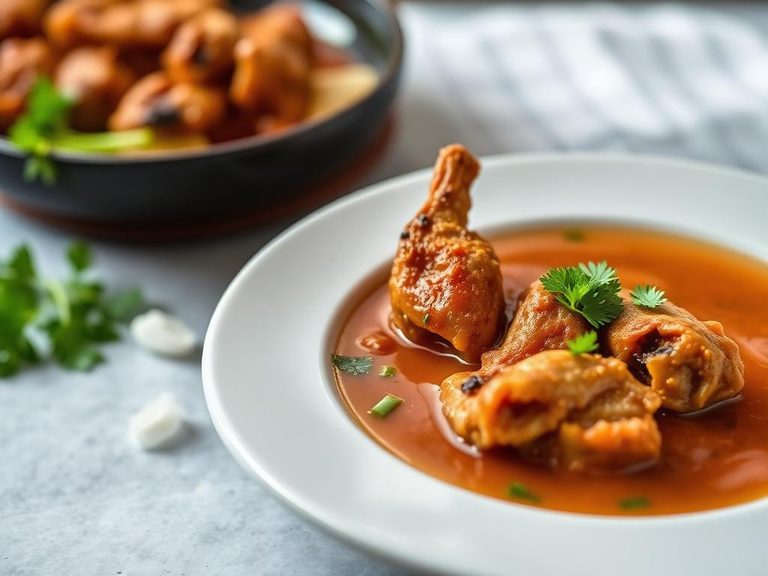
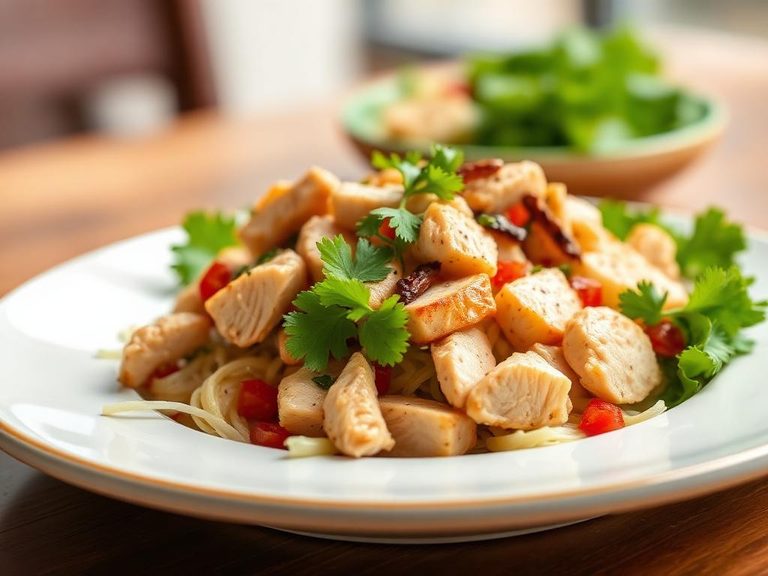


🌍 Where it's eaten
💡 Did you know?
The 'original seasoning' on a typical rotisserie chicken wing is often a proprietary blend, but a common base includes salt, black pepper, paprika, garlic powder, and onion powder, designed to enhance the natural flavor without overpowering it.
Full nutrition (USDA data · scales with serving)
| Water | 61.1 g |
| Energy | 197 kcal |
| Energy | 822 kj |
| Protein | 27.7 g |
| Total lipid (fat) | 9.5 g |
| Ash | 2.6 g |
| Carbohydrate, by difference | 0.00 g |
| Fiber, total dietary | 0.00 g |
| Total Sugars | 0.00 g |
| Sucrose | 0.00 g |
| Glucose | 0.00 g |
| Fructose | 0.00 g |
| Lactose | 0.00 g |
| Maltose | 0.00 g |
| Galactose | 0.00 g |
| Starch | 0.00 g |
| Calcium, Ca | 32.0 mg |
| Iron, Fe | 0.97 mg |
| Magnesium, Mg | 24.0 mg |
| Phosphorus, P | 264 mg |
| Potassium, K | 322 mg |
| Sodium, Na | 725 mg |
| Zinc, Zn | 2.0 mg |
| Copper, Cu | 0.07 mg |
| Manganese, Mn | 0.02 mg |
| Selenium, Se | 51.1 ug |
| Vitamin C, total ascorbic acid | 0.00 mg |
| Thiamin | 0.09 mg |
| Riboflavin | 0.14 mg |
| Niacin | 7.5 mg |
| Pantothenic acid | 1.3 mg |
| Vitamin B-6 | 0.18 mg |
| Folate, total | 7.0 ug |
| Folic acid | 0.00 ug |
| Folate, food | 7.0 ug |
| Folate, DFE | 7.0 ug |
| Choline, total | 67.9 mg |
| Betaine | 5.7 mg |
| Vitamin B-12 | 0.38 ug |
| Vitamin B-12, added | 0.00 ug |
| Vitamin A, RAE | 11.0 ug |
| Retinol | 11.0 ug |
| Carotene, beta | 0.00 ug |
| Carotene, alpha | 0.00 ug |
| Cryptoxanthin, beta | 0.00 ug |
| Vitamin A, IU | 37.0 iu |
| Lycopene | 0.00 ug |
| Lutein + zeaxanthin | 0.00 ug |
| Vitamin E (alpha-tocopherol) | 0.28 mg |
| Vitamin E, added | 0.00 mg |
| Vitamin K (phylloquinone) | 0.00 ug |
| Vitamin K (Dihydrophylloquinone) | 0.00 ug |
| Vitamin K (Menaquinone-4) | 27.5 ug |
| Alcohol, ethyl | 0.00 g |
| Caffeine | 0.00 mg |
| Theobromine | 0.00 mg |
Fat & fatty acid profile (per 100g)
| Fatty acids, total saturated | 2.2 g |
| SFA 4:0 | 0.00 g |
| SFA 6:0 | 0.00 g |
| SFA 8:0 | 0.00 g |
| SFA 10:0 | 0.00 g |
| SFA 12:0 | 0.00 g |
| SFA 14:0 | 0.05 g |
| SFA 15:0 | 0.00 g |
| SFA 16:0 | 1.8 g |
| SFA 17:0 | 0.01 g |
| SFA 18:0 | 0.41 g |
| SFA 20:0 | 0.00 g |
| SFA 22:0 | 0.00 g |
| SFA 24:0 | 0.00 g |
| Fatty acids, total monounsaturated | 3.8 g |
| MUFA 14:1 | 0.02 g |
| MUFA 15:1 | 0.00 g |
| MUFA 16:1 | 0.60 g |
| MUFA 17:1 | 0.00 g |
| MUFA 18:1 | 3.1 g |
| MUFA 18:1 c | 3.0 g |
| MUFA 20:1 | 0.02 g |
| MUFA 22:1 | 0.00 g |
| MUFA 22:1 c | 0.00 g |
| Fatty acids, total polyunsaturated | 1.3 g |
| PUFA 18:2 | 1.2 g |
| PUFA 18:2 n-6 c,c | 1.2 g |
| PUFA 18:3 | 0.07 g |
| PUFA 18:3 n-3 c,c,c (ALA) | 0.06 g |
| PUFA 18:3 n-6 c,c,c | 0.01 g |
| PUFA 18:4 | 0.00 g |
| PUFA 20:2 n-6 c,c | 0.01 g |
| PUFA 20:3 | 0.00 g |
| PUFA 20:4 | 0.03 g |
| PUFA 20:5 n-3 (EPA) | 0.00 g |
| PUFA 22:5 n-3 (DPA) | 0.00 g |
| PUFA 22:6 n-3 (DHA) | 0.00 g |
| Fatty acids, total trans | 0.10 g |
| Fatty acids, total trans-monoenoic | 0.07 g |
| TFA 18:1 t | 0.07 g |
| TFA 18:2 t,t | 0.03 g |
| Fatty acids, total trans-polyenoic | 0.03 g |
| Cholesterol | 140 mg |
Amino acid profile (per 100g)
| Tryptophan | 0.30 g |
| Threonine | 0.77 g |
| Isoleucine | 1.3 g |
| Leucine | 2.2 g |
| Lysine | 2.3 g |
| Methionine | 0.84 g |
| Cystine | 0.29 g |
| Phenylalanine | 1.1 g |
| Tyrosine | 0.86 g |
| Valine | 1.5 g |
| Arginine | 1.8 g |
| Histidine | 0.78 g |
| Alanine | 1.6 g |
| Aspartic acid | 2.6 g |
| Glutamic acid | 4.2 g |
| Glycine | 1.5 g |
| Proline | 1.8 g |
| Serine | 0.72 g |
| Hydroxyproline | 0.17 g |
FAQ
Is rotisserie chicken wing meat healthier than fried chicken wings?
Generally, yes. Rotisserie cooking allows excess fat to drip away, resulting in lower fat and calorie content compared to deep-fried wings, which absorb oil. The seasoning is also typically less heavy than a fried wing batter.
Can I eat this on a low-carb or keto diet?
Absolutely. With 0g of carbs and sugars, it's a perfect protein source for low-carb and ketogenic eating plans. Just be mindful of the sodium in the seasoning.
How should I store leftover rotisserie chicken wings?
Store meat, with or without skin, in an airtight container in the refrigerator for up to 3-4 days. For longer storage, freeze the meat in a freezer-safe bag or container for up to 3 months.
Nutrient density (calculated · NRF9.3)
Nutrient Rich Foods index: beneficial nutrients (protein, fiber, vitamins, minerals) minus saturated fat, added sugar & sodium, per 100 kcal.
NRF9.3 index — Fulgoni, Keast & Drewnowski, 2009. Computed from USDA nutrients.
Weight-loss friendliness (composite index)
Energy density 1.97 kcal/g · 56% calories from protein · 0.0 g fiber · 0.0 g sugar per 100 g.
Composite of energy density (Rolls et al., 1999), protein & fiber satiety, minus sugar. A calculated heuristic — ranks satiety-per-calorie, not a clinical measure.
Dietary load (calculated from USDA values)
Potential renal acid load. Positive = acid-forming, negative = alkaline-forming.
Sodium-to-potassium ratio: 2.25 (lower is better — aim for ≤ 1)
Sodium:potassium per WHO potassium guidance. Computed from USDA nutrients.