

Pasta Carbonara
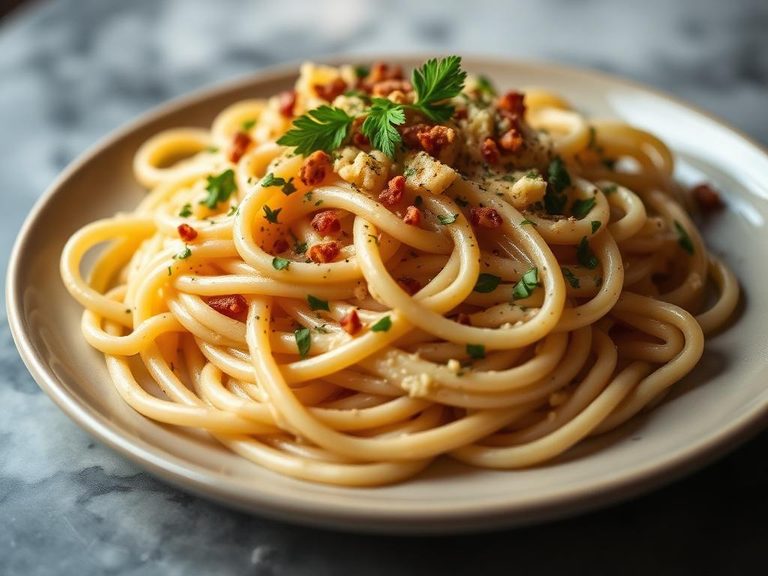
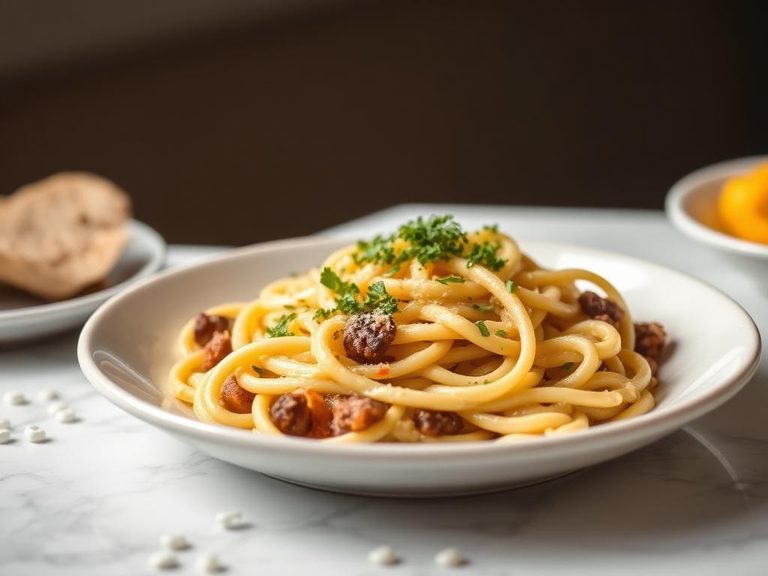
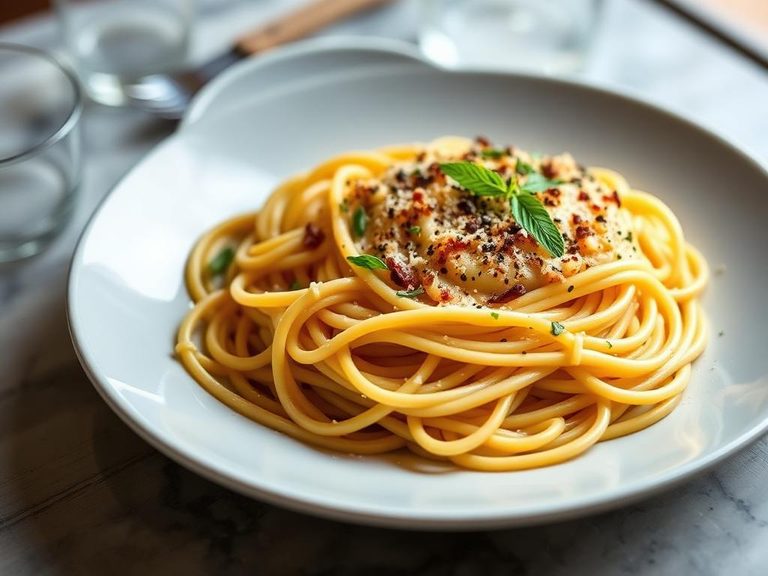
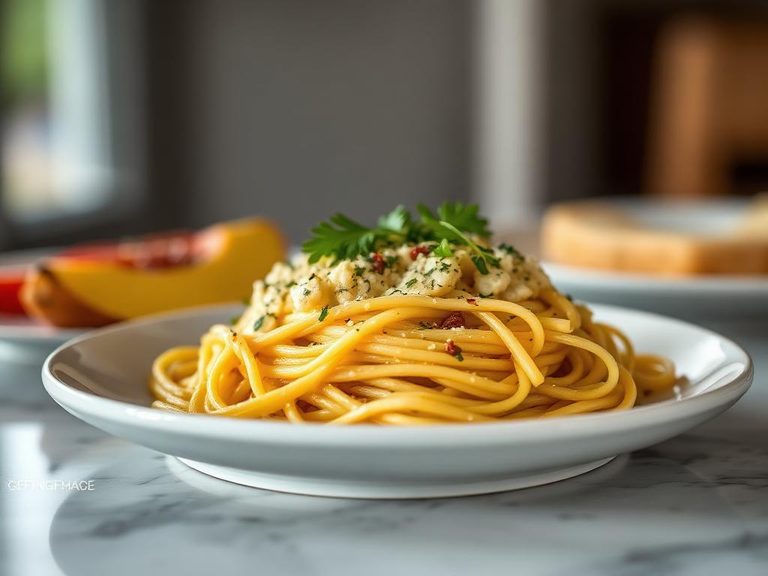
Pasta Carbonara is a classic Roman dish celebrated for its creamy, rich sauce made without any cream. The sauce is traditionally created by emulsifying egg yolks, Pecorino Romano cheese, and rendered guanciale (cured pork jowl) with starchy pasta water, all tossed with spaghetti or rigatoni. Its origins are deeply rooted in the Lazio region of Italy, with theories linking its name to the charcoal workers ('carbonari') of the Apennine mountains.
🍳 View the full Pasta Carbonara recipe →
🍽️ Nutrition at a glance
This dish is high in both carbohydrates from the pasta and fats from the cheese and cured pork, providing a significant amount of protein as well. A typical serving contains roughly 600-800 calories, offering key nutrients like calcium, phosphorus, and B vitamins.
Nutrition breakdown
| Calories | 550 kcal |
| Protein | 25 g |
| Carbs | 55 g |
| Fat | 25 g |
| Fiber | 3 g |
| Sugar | 3 g |
| Sodium | 850 mg |
| Potassium | 350 mg |
| Calcium | 120 mg |
| Iron | 2.5 mg |
| Vitamin A | 150 µg |
| Vitamin D | 0.2 µg |
| Vitamin B12 | 0.8 µg |
| Phosphorus | 280 mg |
| Zinc | 2.2 mg |
Per 1 typical serving (240 g) · estimated, varies by recipe
💡 What's interesting
Culturally, Carbonara is a point of fierce culinary pride in Italy, where the use of cream is considered a major faux pas. Nutritionally, it's a dense, energy-dense meal that historically provided sustained fuel for manual laborers.
🍽️ Related dishes
AI estimate may be inaccurate · Terms