

Broccoli, cooked, boiled, drained, without salt
Whole food · Vegetables and Vegetable Products
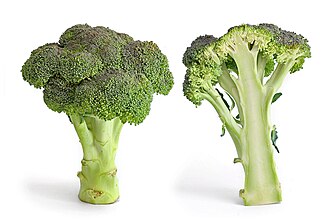
Photo: Wikipedia
Boiled broccoli is a vibrant green cruciferous vegetable with a tender-crisp texture and a mild, earthy, slightly sweet flavor. It is exceptionally low in calories (35 kcal per 100g) while being a good source of fiber and plant-based protein. This simple preparation method preserves its clean, vegetal taste and makes it a versatile base for countless dishes.
Calorie split: 23% protein · 68% carbs · 9% fat
↓ Full nutrition💚 Why it's loved
People love boiled broccoli for its satisfying, slightly crunchy texture and its remarkable versatility—it can be a simple side dish, a stir-fry component, or a pasta ingredient. Its mild flavor acts as a perfect canvas for sauces, seasonings, and cheeses, making it a family-friendly vegetable across many cultures.
⚠️ Watch-outs & how to enjoy it better
Some find boiled broccoli bland or mushy if overcooked, and its sulfurous compounds can be off-putting to sensitive palates. To counteract this, avoid over-boiling by cooking just until tender-crisp (3-5 minutes), and pair it with a fat like olive oil or a protein like cheese or nuts to enhance flavor and nutrient absorption. Those with thyroid concerns should be mindful of goitrogens, though cooking significantly reduces their impact.
Key benefits
- High in dietary fiber (3.3g per 100g) to support digestion and satiety.
- Provides a solid plant-based protein source (2.38g per 100g).
- Very low in fat (0.41g per 100g) and calories, aiding weight management.
- Rich in vitamins C and K, and contains folate and potassium.
- Contains sulforaphane, a compound linked to various health benefits.
🍽️ Popular dishes

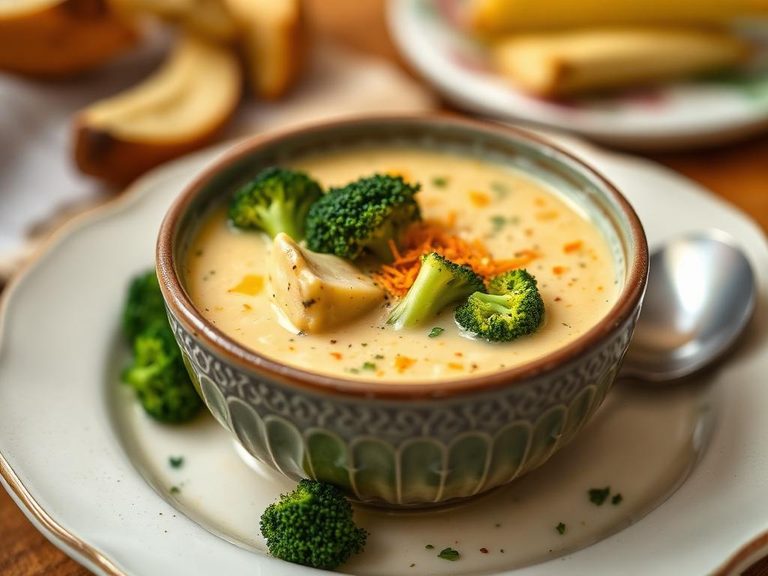
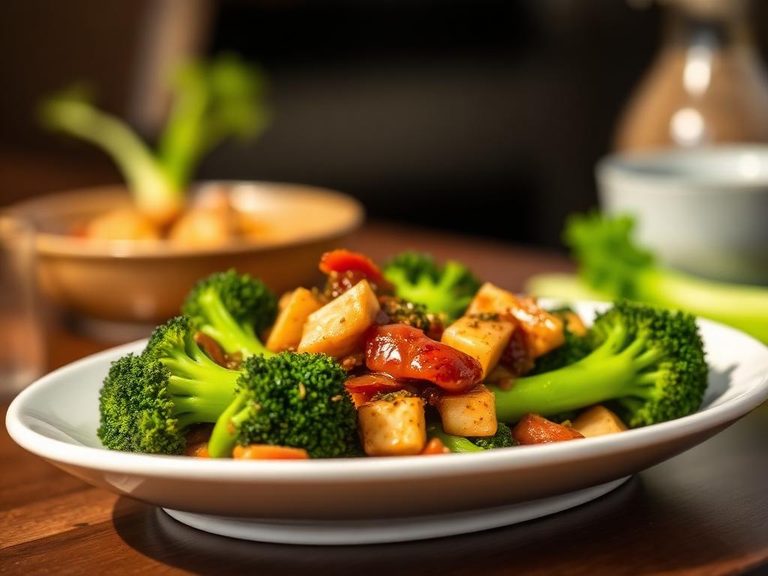
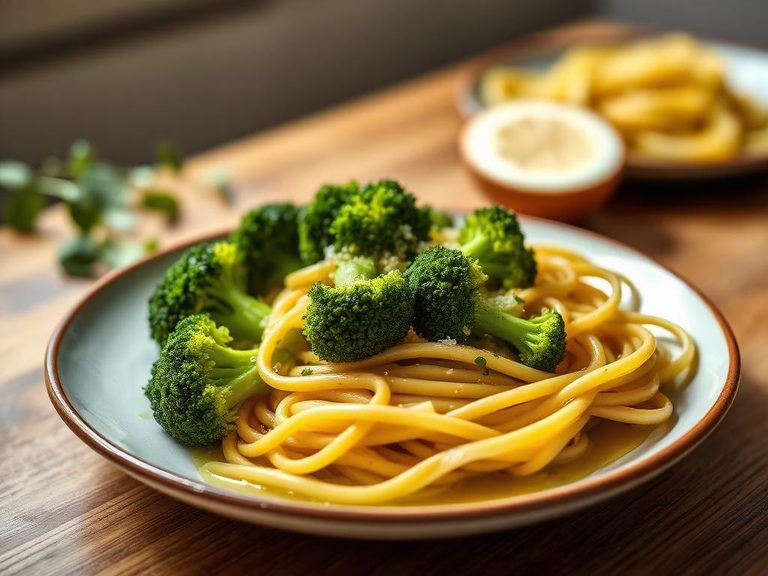
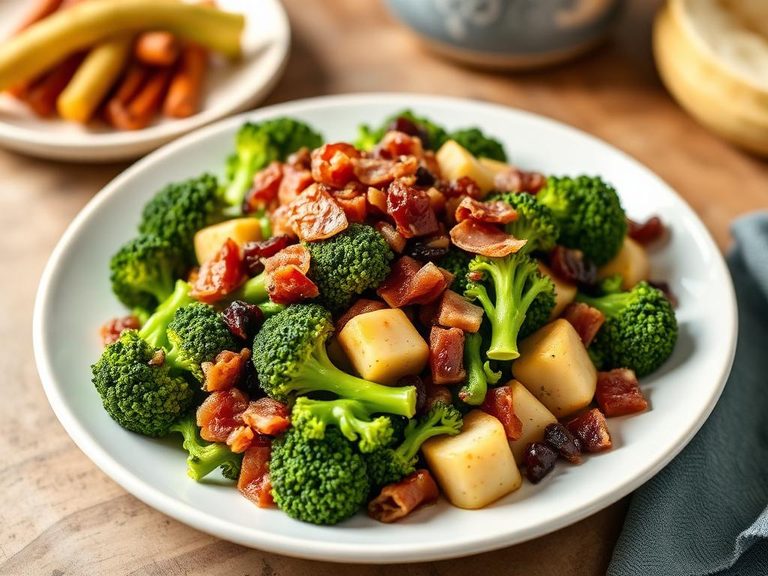
🌍 Where it's eaten
💡 Did you know?
The green florets of broccoli are actually unopened flower buds, and if left to mature, they would bloom into small yellow flowers.
Full nutrition (USDA data · scales with serving)
| Water | 89.3 g |
| Energy | 35.0 kcal |
| Energy | 146 kj |
| Protein | 2.4 g |
| Total lipid (fat) | 0.41 g |
| Ash | 0.77 g |
| Carbohydrate, by difference | 7.2 g |
| Fiber, total dietary | 3.3 g |
| Total Sugars | 1.4 g |
| Sucrose | 0.08 g |
| Glucose | 0.49 g |
| Fructose | 0.74 g |
| Lactose | 0.00 g |
| Maltose | 0.00 g |
| Galactose | 0.00 g |
| Starch | 0.00 g |
| Calcium, Ca | 40.0 mg |
| Iron, Fe | 0.67 mg |
| Magnesium, Mg | 21.0 mg |
| Phosphorus, P | 67.0 mg |
| Potassium, K | 293 mg |
| Sodium, Na | 41.0 mg |
| Zinc, Zn | 0.45 mg |
| Copper, Cu | 0.06 mg |
| Manganese, Mn | 0.19 mg |
| Selenium, Se | 1.6 ug |
| Fluoride, F | 4.0 ug |
| Vitamin C, total ascorbic acid | 64.9 mg |
| Thiamin | 0.06 mg |
| Riboflavin | 0.12 mg |
| Niacin | 0.55 mg |
| Pantothenic acid | 0.62 mg |
| Vitamin B-6 | 0.20 mg |
| Folate, total | 108 ug |
| Folic acid | 0.00 ug |
| Folate, food | 108 ug |
| Folate, DFE | 108 ug |
| Choline, total | 40.1 mg |
| Betaine | 0.10 mg |
| Vitamin B-12 | 0.00 ug |
| Vitamin B-12, added | 0.00 ug |
| Vitamin A, RAE | 77.0 ug |
| Retinol | 0.00 ug |
| Carotene, beta | 929 ug |
| Carotene, alpha | 0.00 ug |
| Cryptoxanthin, beta | 0.00 ug |
| Vitamin A, IU | 1548 iu |
| Lycopene | 0.00 ug |
| Lutein + zeaxanthin | 1080 ug |
| Vitamin E (alpha-tocopherol) | 1.4 mg |
| Vitamin E, added | 0.00 mg |
| Tocopherol, beta | 0.01 mg |
| Tocopherol, gamma | 0.25 mg |
| Tocopherol, delta | 0.00 mg |
| Tocotrienol, alpha | 0.00 mg |
| Tocotrienol, beta | 0.00 mg |
| Tocotrienol, gamma | 0.00 mg |
| Tocotrienol, delta | 0.00 mg |
| Vitamin D (D2 + D3), International Units | 0.00 iu |
| Vitamin D (D2 + D3) | 0.00 ug |
| Vitamin K (phylloquinone) | 141 ug |
| Vitamin K (Dihydrophylloquinone) | 0.00 ug |
| Alcohol, ethyl | 0.00 g |
| Caffeine | 0.00 mg |
| Theobromine | 0.00 mg |
Fat & fatty acid profile (per 100g)
| Fatty acids, total saturated | 0.08 g |
| SFA 4:0 | 0.00 g |
| SFA 6:0 | 0.00 g |
| SFA 8:0 | 0.00 g |
| SFA 10:0 | 0.00 g |
| SFA 12:0 | 0.00 g |
| SFA 14:0 | 0.00 g |
| SFA 15:0 | 0.00 g |
| SFA 16:0 | 0.06 g |
| SFA 17:0 | 0.00 g |
| SFA 18:0 | 0.01 g |
| SFA 20:0 | 0.00 g |
| SFA 22:0 | 0.01 g |
| Fatty acids, total monounsaturated | 0.04 g |
| MUFA 14:1 | 0.00 g |
| MUFA 15:1 | 0.00 g |
| MUFA 16:1 | 0.01 g |
| MUFA 17:1 | 0.00 g |
| MUFA 18:1 | 0.03 g |
| MUFA 20:1 | 0.00 g |
| MUFA 22:1 | 0.00 g |
| Fatty acids, total polyunsaturated | 0.17 g |
| PUFA 18:2 | 0.05 g |
| PUFA 18:3 | 0.12 g |
| PUFA 18:3 n-6 c,c,c | 0.00 g |
| PUFA 18:4 | 0.00 g |
| PUFA 20:2 n-6 c,c | 0.00 g |
| PUFA 20:3 | 0.00 g |
| PUFA 20:4 | 0.00 g |
| PUFA 20:5 n-3 (EPA) | 0.00 g |
| PUFA 22:5 n-3 (DPA) | 0.00 g |
| PUFA 22:6 n-3 (DHA) | 0.00 g |
| Fatty acids, total trans | 0.00 g |
| Cholesterol | 0.00 mg |
Amino acid profile (per 100g)
| Tryptophan | 0.03 g |
| Threonine | 0.10 g |
| Isoleucine | 0.09 g |
| Leucine | 0.15 g |
| Lysine | 0.15 g |
| Methionine | 0.04 g |
| Cystine | 0.03 g |
| Phenylalanine | 0.12 g |
| Tyrosine | 0.06 g |
| Valine | 0.14 g |
| Arginine | 0.20 g |
| Histidine | 0.06 g |
| Alanine | 0.11 g |
| Aspartic acid | 0.33 g |
| Glutamic acid | 0.55 g |
| Glycine | 0.10 g |
| Proline | 0.11 g |
| Serine | 0.13 g |
FAQ
Is boiled broccoli as nutritious as steamed broccoli?
Boiling can cause some water-soluble vitamins (like vitamin C and B vitamins) to leach into the cooking water. Steaming or microwaving is generally considered better for nutrient retention, but boiling still preserves most of the fiber, minerals, and beneficial compounds.
How long should I boil broccoli to keep it tender-crisp?
For tender-crisp florets, boil for about 3-5 minutes. For stems, add an extra minute or two. Always test with a fork; it should pierce easily but still have a slight bite.
Can I eat the stems of boiled broccoli?
Yes, the stems are edible and nutritious. They are often peeled and sliced or chopped before cooking, as they can be slightly tougher than the florets but become tender and sweet when boiled.
Nutrient density (calculated · NRF9.3)
Nutrient Rich Foods index: beneficial nutrients (protein, fiber, vitamins, minerals) minus saturated fat, added sugar & sodium, per 100 kcal.
NRF9.3 index — Fulgoni, Keast & Drewnowski, 2009. Computed from USDA nutrients.
Weight-loss friendliness (composite index)
Energy density 0.35 kcal/g · 27% calories from protein · 3.3 g fiber · 1.4 g sugar per 100 g.
Composite of energy density (Rolls et al., 1999), protein & fiber satiety, minus sugar. A calculated heuristic — ranks satiety-per-calorie, not a clinical measure.
Dietary load (calculated from USDA values)
Potential renal acid load. Positive = acid-forming, negative = alkaline-forming.
Sodium-to-potassium ratio: 0.14 (lower is better — aim for ≤ 1)
Sodium:potassium per WHO potassium guidance. Computed from USDA nutrients.