

Babyfood, vegetables, squash, strained
Whole food · Baby Foods

Photo: Wikipedia
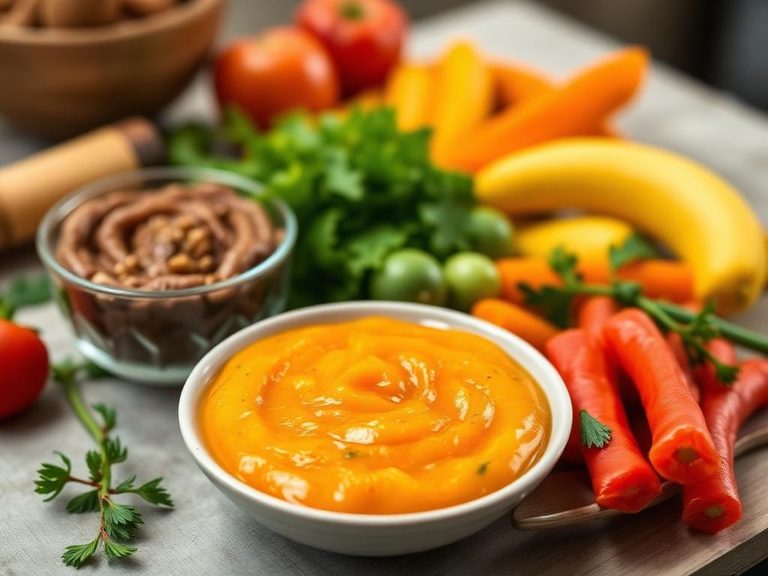
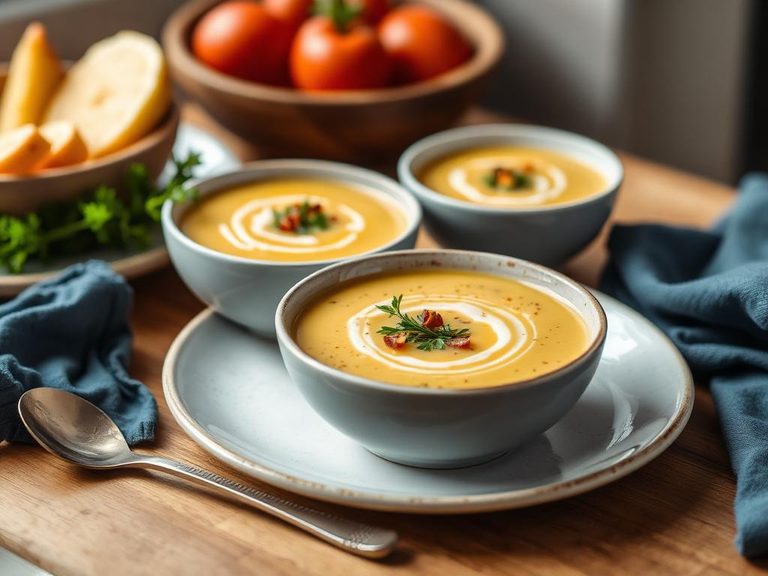
This is a smooth, velvety purée of cooked squash, typically winter varieties like butternut, offering a naturally sweet, earthy flavor with a mild, buttery finish. Its texture is uniformly silky, designed for easy swallowing, making it a foundational first food. Nutritionally, it's a low-calorie source of carbohydrates and dietary fiber, with a notable natural sugar content for energy.
Calorie split: 12% protein · 82% carbs · 6% fat
↓ Full nutrition💚 Why it's loved
It's cherished for its gentle, sweet taste that introduces babies to vegetable flavors without bitterness, and its smooth texture makes it a mess-free, convenient option for parents. In many cultures, squash is a traditional weaning food due to its digestibility and nutritional density.
⚠️ Watch-outs & how to enjoy it better
The natural sugars can cause a quicker rise in blood sugar compared to lower-glycemic vegetables, which is a consideration for those monitoring glucose levels. To mitigate this, pair it with a source of protein or fat (like a side of yogurt or a sprinkle of ground flaxseed) to slow absorption. Always check labels for added salt or sugars in commercial versions.
Key benefits
- Excellent source of beta-carotene (vitamin A precursor)
- Provides dietary fiber for digestive health
- Naturally low in fat and cholesterol-free
- Contains antioxidants like lutein and zeaxanthin
- Mild flavor aids in palate development for infants
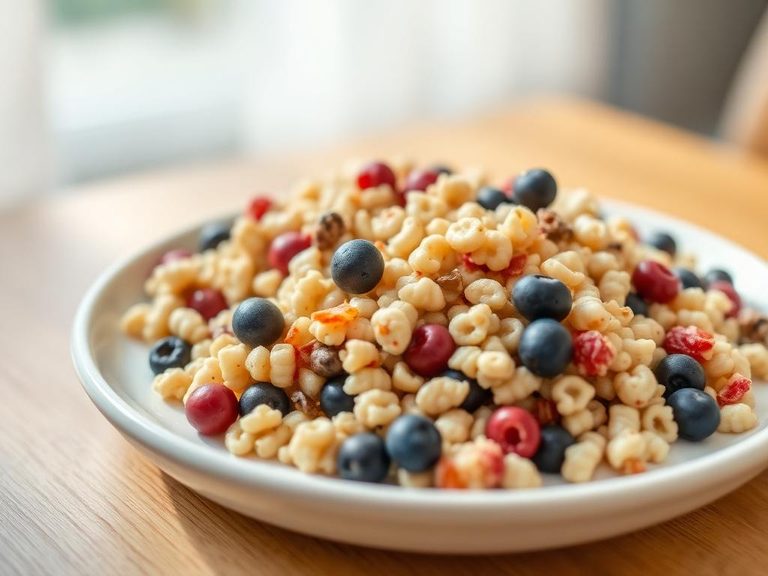
🍽️ Popular dishes
🌍 Where it's eaten
💡 Did you know?
The beta-carotene in orange squash is so potent that eating large amounts can temporarily give skin a slight orange tint, a harmless condition called carotenemia.
Full nutrition (USDA data · scales with serving)
| Water | 92.7 g |
| Energy | 28.0 kcal |
| Energy | 117 kj |
| Protein | 0.81 g |
| Total lipid (fat) | 0.20 g |
| Ash | 0.60 g |
| Carbohydrate, by difference | 5.7 g |
| Fiber, total dietary | 0.90 g |
| Total Sugars | 3.4 g |
| Sucrose | 1.3 g |
| Glucose | 1.1 g |
| Fructose | 1.0 g |
| Lactose | 0.00 g |
| Maltose | 0.00 g |
| Galactose | 0.00 g |
| Starch | 1.2 g |
| Calcium, Ca | 24.0 mg |
| Iron, Fe | 0.32 mg |
| Magnesium, Mg | 14.0 mg |
| Phosphorus, P | 21.0 mg |
| Potassium, K | 185 mg |
| Sodium, Na | 5.0 mg |
| Zinc, Zn | 0.19 mg |
| Copper, Cu | 0.03 mg |
| Manganese, Mn | 0.08 mg |
| Selenium, Se | 0.20 ug |
| Fluoride, F | 0.70 ug |
| Vitamin C, total ascorbic acid | 0.30 mg |
| Thiamin | 0.03 mg |
| Riboflavin | 0.05 mg |
| Niacin | 0.68 mg |
| Pantothenic acid | 0.21 mg |
| Vitamin B-6 | 0.07 mg |
| Folate, total | 8.0 ug |
| Folic acid | 0.00 ug |
| Folate, food | 8.0 ug |
| Folate, DFE | 8.0 ug |
| Choline, total | 7.6 mg |
| Betaine | 0.30 mg |
| Vitamin B-12 | 0.00 ug |
| Vitamin B-12, added | 0.00 ug |
| Vitamin A, RAE | 85.0 ug |
| Retinol | 0.00 ug |
| Carotene, beta | 896 ug |
| Carotene, alpha | 242 ug |
| Cryptoxanthin, beta | 9.0 ug |
| Vitamin A, IU | 1703 iu |
| Lycopene | 0.00 ug |
| Lutein + zeaxanthin | 3527 ug |
| Vitamin E (alpha-tocopherol) | 0.55 mg |
| Vitamin E, added | 0.00 mg |
| Tocopherol, beta | 0.00 mg |
| Tocopherol, gamma | 0.11 mg |
| Tocopherol, delta | 0.00 mg |
| Tocotrienol, alpha | 0.00 mg |
| Tocotrienol, beta | 0.00 mg |
| Tocotrienol, gamma | 0.00 mg |
| Tocotrienol, delta | 0.00 mg |
| Vitamin D (D2 + D3), International Units | 0.00 iu |
| Vitamin D (D2 + D3) | 0.00 ug |
| Vitamin K (phylloquinone) | 4.7 ug |
| Vitamin K (Dihydrophylloquinone) | 0.00 ug |
| Vitamin K (Menaquinone-4) | 0.00 ug |
| Alcohol, ethyl | 0.00 g |
| Caffeine | 0.00 mg |
| Theobromine | 0.00 mg |
Fat & fatty acid profile (per 100g)
| Fatty acids, total saturated | 0.02 g |
| SFA 4:0 | 0.00 g |
| SFA 6:0 | 0.00 g |
| SFA 8:0 | 0.00 g |
| SFA 10:0 | 0.00 g |
| SFA 12:0 | 0.00 g |
| SFA 14:0 | 0.00 g |
| SFA 15:0 | 0.00 g |
| SFA 16:0 | 0.02 g |
| SFA 17:0 | 0.00 g |
| SFA 18:0 | 0.00 g |
| SFA 20:0 | 0.00 g |
| SFA 22:0 | 0.00 g |
| SFA 24:0 | 0.00 g |
| Fatty acids, total monounsaturated | 0.02 g |
| MUFA 14:1 | 0.00 g |
| MUFA 15:1 | 0.00 g |
| MUFA 16:1 | 0.00 g |
| MUFA 17:1 | 0.00 g |
| MUFA 18:1 | 0.02 g |
| MUFA 20:1 | 0.00 g |
| MUFA 22:1 | 0.00 g |
| MUFA 24:1 c | 0.00 g |
| Fatty acids, total polyunsaturated | 0.04 g |
| PUFA 18:2 | 0.03 g |
| PUFA 18:3 | 0.01 g |
| PUFA 18:4 | 0.00 g |
| PUFA 20:2 n-6 c,c | 0.00 g |
| PUFA 20:3 | 0.00 g |
| PUFA 20:4 | 0.00 g |
| PUFA 20:5 n-3 (EPA) | 0.00 g |
| PUFA 21:5 | 0.00 g |
| PUFA 22:4 | 0.00 g |
| PUFA 22:5 n-3 (DPA) | 0.00 g |
| PUFA 22:6 n-3 (DHA) | 0.00 g |
| Cholesterol | 0.00 mg |
Amino acid profile (per 100g)
Estimated from Babyfood, grape juice, no sugar, canned — USDA does not publish this profile for Babyfood.
| Threonine | 0.02 g |
| Isoleucine | 0.01 g |
| Leucine | 0.02 g |
| Lysine | 0.02 g |
| Methionine | 0.03 g |
| Cystine | 0.01 g |
| Phenylalanine | 0.02 g |
| Tyrosine | 0.02 g |
| Valine | 0.02 g |
| Arginine | 0.06 g |
| Histidine | 0.03 g |
| Alanine | 0.04 g |
| Aspartic acid | 0.10 g |
| Glutamic acid | 0.18 g |
| Glycine | 0.03 g |
| Proline | 0.03 g |
| Serine | 0.04 g |
FAQ
Is strained squash baby food nutritious?
Yes, it's a nutrient-dense first food, rich in vitamin A, fiber, and antioxidants, with no added fats. It provides essential energy and nutrients for growth.
When can my baby start eating squash?
Most pediatric guidelines suggest introducing single-vegetable purées like squash around 6 months of age, when the baby shows signs of readiness for solids.
How do I make it at home?
Steam or roast peeled, cubed squash until very tender, then blend with a small amount of water, breast milk, or formula to achieve a smooth, thin consistency.
Nutrient density (calculated · NRF9.3)
Nutrient Rich Foods index: beneficial nutrients (protein, fiber, vitamins, minerals) minus saturated fat, added sugar & sodium, per 100 kcal.
NRF9.3 index — Fulgoni, Keast & Drewnowski, 2009. Computed from USDA nutrients.
Weight-loss friendliness (composite index)
Energy density 0.28 kcal/g · 12% calories from protein · 0.9 g fiber · 3.4 g sugar per 100 g.
Composite of energy density (Rolls et al., 1999), protein & fiber satiety, minus sugar. A calculated heuristic — ranks satiety-per-calorie, not a clinical measure.
Dietary load (calculated from USDA values)
Potential renal acid load. Positive = acid-forming, negative = alkaline-forming.
Sodium-to-potassium ratio: 0.03 (lower is better — aim for ≤ 1)
Sodium:potassium per WHO potassium guidance. Computed from USDA nutrients.