

Turkey, retail parts, drumstick, meat only, raw
Whole food · Poultry Products

Photo: Wikipedia
A raw turkey drumstick is a lean, dense cut of poultry meat with a deep pink hue and a firm, fibrous texture that becomes tender and juicy when slow-cooked. It is an excellent source of high-quality protein, providing over 20 grams per 100 grams with virtually no carbohydrates or sugar. This makes it a staple for high-protein, low-carb diets.
Calorie split: 70% protein · 0% carbs · 30% fat
↓ Full nutrition💚 Why it's loved
People love turkey drumsticks for their rich, savory flavor that intensifies with roasting or braising, and their satisfying, meaty texture on the bone. They are a centerpiece of festive meals and hearty comfort food, offering a sense of tradition and abundance.
⚠️ Watch-outs & how to enjoy it better
The primary downside is its potential to become dry and tough if overcooked due to its low fat content. To counteract this, use moist-heat cooking methods like braising or stewing, or employ a meat thermometer to avoid overcooking. Pairing it with sauces or cooking liquids also helps retain moisture.
Key benefits
- Excellent source of lean, complete protein
- Very low in carbohydrates and sugar
- Contains essential minerals like selenium and phosphorus
- Supports muscle maintenance and growth
- Versatile for various healthy cooking methods
🍽️ Popular dishes
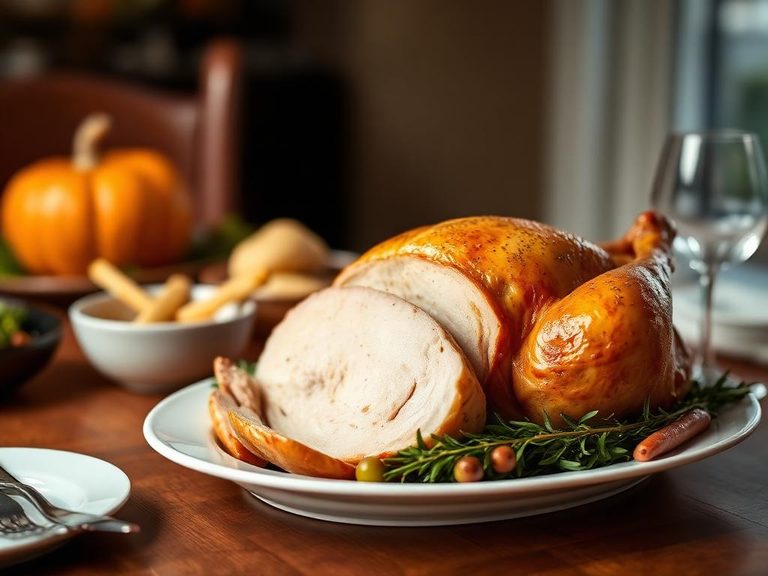


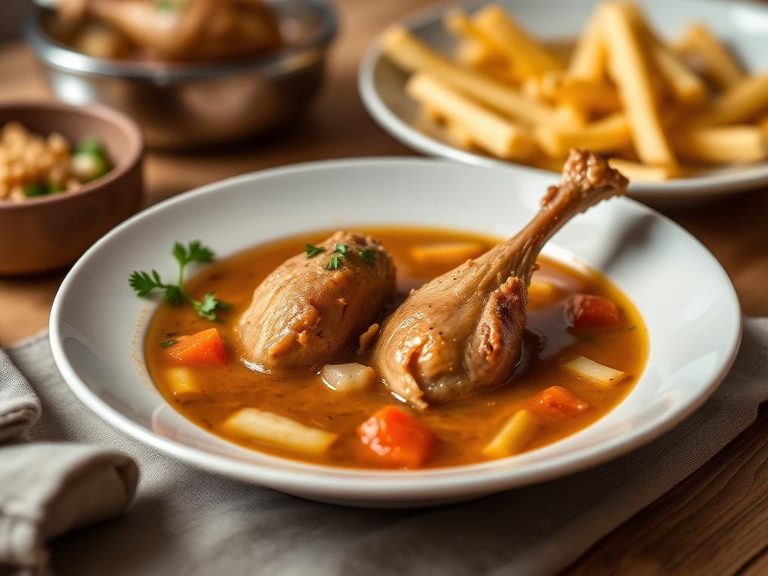

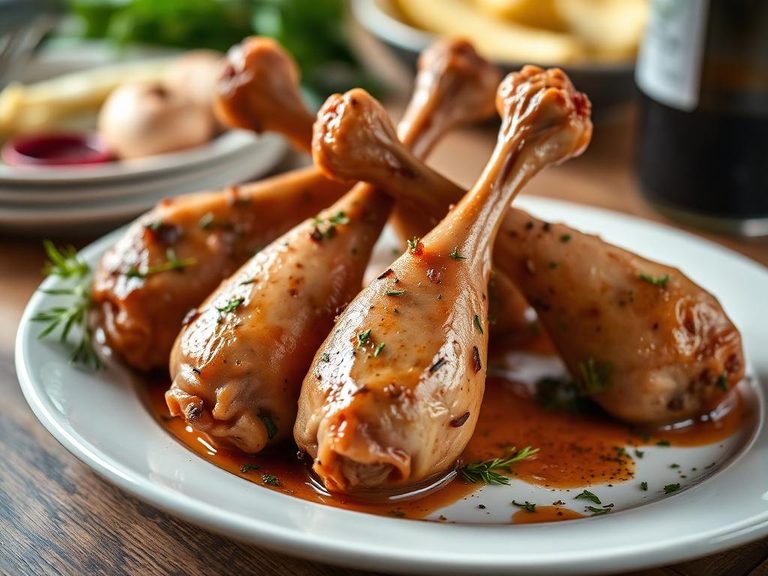
🌍 Where it's eaten
💡 Did you know?
A single turkey drumstick contains roughly the same amount of protein as two large eggs, but with almost no fat and zero carbs.
Full nutrition (USDA data · scales with serving)
| Water | 75.7 g |
| Energy | 118 kcal |
| Energy | 493 kj |
| Protein | 20.5 g |
| Total lipid (fat) | 4.0 g |
| Ash | 0.91 g |
| Carbohydrate, by difference | 0.00 g |
| Fiber, total dietary | 0.00 g |
| Total Sugars | 0.00 g |
| Calcium, Ca | 10.0 mg |
| Iron, Fe | 1.2 mg |
| Magnesium, Mg | 22.0 mg |
| Phosphorus, P | 158 mg |
| Potassium, K | 220 mg |
| Sodium, Na | 87.0 mg |
| Zinc, Zn | 3.1 mg |
| Copper, Cu | 0.08 mg |
| Manganese, Mn | 0.01 mg |
| Selenium, Se | 21.2 ug |
| Vitamin C, total ascorbic acid | 0.00 mg |
| Thiamin | 0.05 mg |
| Riboflavin | 0.30 mg |
| Niacin | 5.0 mg |
| Pantothenic acid | 1.1 mg |
| Vitamin B-6 | 0.36 mg |
| Folate, total | 6.0 ug |
| Folate, food | 6.0 ug |
| Choline, total | 75.6 mg |
| Betaine | 5.9 mg |
| Vitamin B-12 | 1.9 ug |
| Vitamin B-12, added | 0.00 ug |
| Vitamin A, RAE | 20.0 ug |
| Retinol | 20.0 ug |
| Carotene, beta | 0.00 ug |
| Carotene, alpha | 0.00 ug |
| Cryptoxanthin, beta | 0.00 ug |
| Vitamin A, IU | 68.0 iu |
| Lycopene | 0.00 ug |
| Lutein + zeaxanthin | 4.0 ug |
| Vitamin E (alpha-tocopherol) | 0.19 mg |
| Vitamin E, added | 0.00 mg |
| Vitamin D (D2 + D3), International Units | 17.0 iu |
| Vitamin D (D2 + D3) | 0.40 ug |
| Vitamin D3 (cholecalciferol) | 0.40 ug |
| Vitamin K (phylloquinone) | 0.00 ug |
| Alcohol, ethyl | 0.00 g |
| Caffeine | 0.00 mg |
| Theobromine | 0.00 mg |
Fat & fatty acid profile (per 100g)
| Fatty acids, total saturated | 1.1 g |
| SFA 4:0 | 0.00 g |
| SFA 6:0 | 0.00 g |
| SFA 8:0 | 0.00 g |
| SFA 10:0 | 0.00 g |
| SFA 12:0 | 0.01 g |
| SFA 14:0 | 0.03 g |
| SFA 15:0 | 0.00 g |
| SFA 16:0 | 0.70 g |
| SFA 17:0 | 0.01 g |
| SFA 18:0 | 0.31 g |
| SFA 20:0 | 0.01 g |
| SFA 22:0 | 0.01 g |
| SFA 24:0 | 0.00 g |
| Fatty acids, total monounsaturated | 1.2 g |
| MUFA 14:1 | 0.01 g |
| MUFA 15:1 | 0.00 g |
| MUFA 16:1 | 0.12 g |
| MUFA 16:1 c | 0.12 g |
| MUFA 17:1 | 0.01 g |
| MUFA 18:1 | 1.0 g |
| MUFA 18:1 c | 0.99 g |
| MUFA 20:1 | 0.02 g |
| MUFA 22:1 | 0.00 g |
| MUFA 22:1 c | 0.00 g |
| MUFA 24:1 c | 0.00 g |
| Fatty acids, total polyunsaturated | 1.1 g |
| PUFA 18:2 | 0.86 g |
| PUFA 18:2 n-6 c,c | 0.85 g |
| PUFA 18:2 CLAs | 0.01 g |
| PUFA 18:3 | 0.05 g |
| PUFA 18:3 n-3 c,c,c (ALA) | 0.05 g |
| PUFA 18:3 n-6 c,c,c | 0.00 g |
| PUFA 18:4 | 0.00 g |
| PUFA 20:2 n-6 c,c | 0.01 g |
| PUFA 20:3 | 0.01 g |
| PUFA 20:3 n-3 | 0.00 g |
| PUFA 20:3 n-6 | 0.01 g |
| PUFA 20:4 | 0.10 g |
| PUFA 20:5 n-3 (EPA) | 0.00 g |
| PUFA 22:4 | 0.02 g |
| PUFA 22:5 n-3 (DPA) | 0.01 g |
| PUFA 22:6 n-3 (DHA) | 0.01 g |
| Fatty acids, total trans | 0.04 g |
| Fatty acids, total trans-monoenoic | 0.03 g |
| TFA 16:1 t | 0.00 g |
| TFA 18:1 t | 0.03 g |
| TFA 22:1 t | 0.00 g |
| TFA 18:2 t not further defined | 0.01 g |
| Fatty acids, total trans-polyenoic | 0.01 g |
| Cholesterol | 79.0 mg |
Amino acid profile (per 100g)
| Tryptophan | 0.22 g |
| Threonine | 0.74 g |
| Isoleucine | 0.59 g |
| Leucine | 1.4 g |
| Lysine | 1.7 g |
| Methionine | 0.54 g |
| Cystine | 0.19 g |
| Phenylalanine | 0.66 g |
| Tyrosine | 0.61 g |
| Valine | 0.66 g |
| Arginine | 1.2 g |
| Histidine | 0.56 g |
| Alanine | 1.1 g |
| Aspartic acid | 1.6 g |
| Glutamic acid | 2.8 g |
| Glycine | 0.88 g |
| Proline | 1.1 g |
| Serine | 0.81 g |
| Hydroxyproline | 0.13 g |
FAQ
How do I prevent a turkey drumstick from drying out?
The best methods are braising (cooking slowly in liquid) or roasting at a lower temperature while basting frequently. Using a meat thermometer to pull it out at 165°F (74°C) internal temperature is crucial. Brining the meat beforehand also helps it retain moisture.
Is turkey drumstick white or dark meat?
It is dark meat. Dark meat comes from muscles that are used more frequently for movement (like legs), which gives it a slightly richer flavor and more fat than breast meat, but it's still considered a lean protein source overall.
What's the best way to season a raw turkey drumstick?
For roasting, a simple rub of salt, pepper, garlic powder, and herbs like thyme or rosemary works well. For braising or stews, it can be seasoned directly in the cooking liquid with aromatics like onion, celery, and bay leaves. Marinating for a few hours can also add flavor.
Nutrient density (calculated · NRF9.3)
Nutrient Rich Foods index: beneficial nutrients (protein, fiber, vitamins, minerals) minus saturated fat, added sugar & sodium, per 100 kcal.
NRF9.3 index — Fulgoni, Keast & Drewnowski, 2009. Computed from USDA nutrients.
Weight-loss friendliness (composite index)
Energy density 1.18 kcal/g · 70% calories from protein · 0.0 g fiber · 0.0 g sugar per 100 g.
Composite of energy density (Rolls et al., 1999), protein & fiber satiety, minus sugar. A calculated heuristic — ranks satiety-per-calorie, not a clinical measure.
Dietary load (calculated from USDA values)
Potential renal acid load. Positive = acid-forming, negative = alkaline-forming.
Sodium-to-potassium ratio: 0.40 (lower is better — aim for ≤ 1)
Sodium:potassium per WHO potassium guidance. Computed from USDA nutrients.