

T.G.I. FRIDAY'S, macaroni & cheese, from kid's menu
Whole food · Restaurant Foods

Photo: Wikipedia
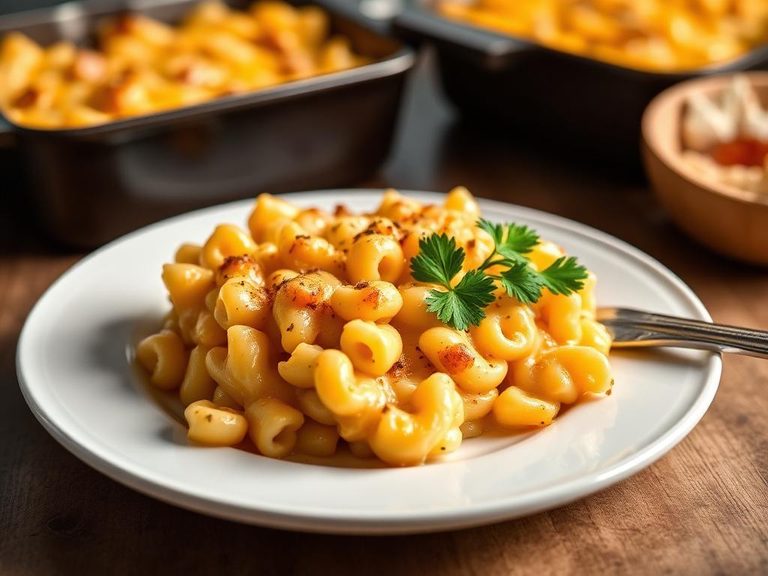
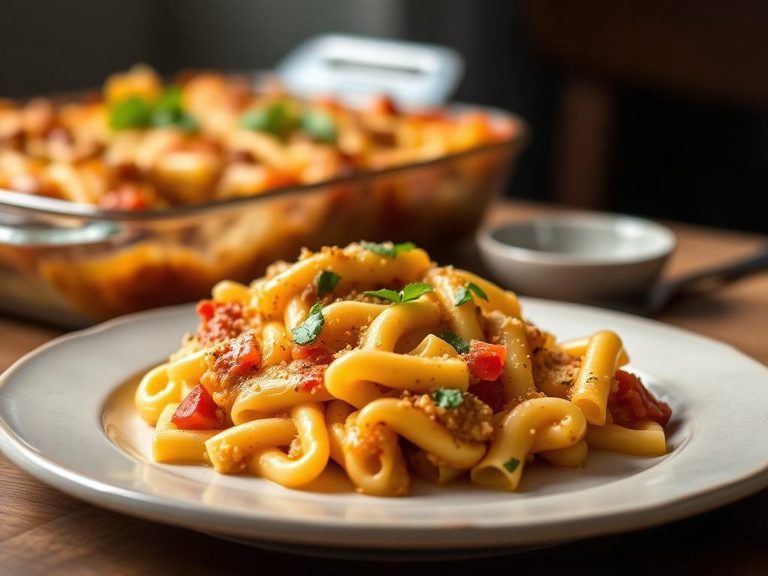
This is T.G.I. Friday's kid-sized portion of creamy, baked macaroni and cheese, featuring tender pasta shells coated in a smooth, mild cheddar sauce. It delivers a comforting, cheesy flavor with a soft, cohesive texture, offering a modest 121 calories per 100g with a balanced macronutrient profile.
Calorie split: 17% protein · 58% carbs · 26% fat
↓ Full nutrition💚 Why it's loved
People adore its nostalgic, savory cheese flavor and the satisfying, soft texture that makes it a classic comfort food. Its mild taste and simple preparation make it a reliable crowd-pleaser, especially for children.
⚠️ Watch-outs & how to enjoy it better
As a refined-carb dish with added cheese, it can cause blood-sugar spikes and may be high in sodium and saturated fat. To counteract, pair it with a side of steamed broccoli or a lean protein like grilled chicken to add fiber and slow digestion, and stick to the kid-sized portion.
Key benefits
- Provides quick energy from carbohydrates
- Contains some protein for muscle maintenance
- Offers calcium from cheese for bone health
- Kid-friendly portion size aids in portion control
- Convenient, familiar comfort food
🍽️ Popular dishes
🌍 Where it's eaten
💡 Did you know?
The earliest known published recipe for macaroni and cheese appeared in an 1802 American cookbook, 'The Virginia Housewife,' but it was popularized in the U.S. by Kraft's boxed version introduced in 1937.
Full nutrition (USDA data · scales with serving)
| Water | 72.5 g |
| Energy | 121 kcal |
| Energy | 505 kj |
| Protein | 5.0 g |
| Total lipid (fat) | 3.5 g |
| Ash | 1.6 g |
| Carbohydrate, by difference | 17.4 g |
| Fiber, total dietary | 1.0 g |
| Total Sugars | 1.6 g |
| Sucrose | 0.00 g |
| Glucose | 0.00 g |
| Fructose | 0.00 g |
| Lactose | 1.6 g |
| Maltose | 0.00 g |
| Galactose | 0.00 g |
| Starch | 13.2 g |
| Calcium, Ca | 89.0 mg |
| Iron, Fe | 0.53 mg |
| Magnesium, Mg | 14.0 mg |
| Phosphorus, P | 131 mg |
| Potassium, K | 88.0 mg |
| Sodium, Na | 482 mg |
| Zinc, Zn | 0.58 mg |
| Copper, Cu | 0.07 mg |
| Manganese, Mn | 0.14 mg |
| Selenium, Se | 17.3 ug |
| Thiamin | 0.08 mg |
| Riboflavin | 0.21 mg |
| Niacin | 0.62 mg |
| Pantothenic acid | 0.41 mg |
| Vitamin B-6 | 0.03 mg |
| Vitamin B-12 | 0.12 ug |
| Vitamin A, RAE | 25.0 ug |
| Retinol | 24.0 ug |
| Carotene, beta | 7.0 ug |
| Carotene, alpha | 1.0 ug |
| Cryptoxanthin, beta | 0.00 ug |
| Vitamin A, IU | 92.0 iu |
| Lycopene | 0.00 ug |
| Lutein + zeaxanthin | 68.0 ug |
| Vitamin E (alpha-tocopherol) | 1.2 mg |
| Tocopherol, beta | 0.04 mg |
| Tocopherol, gamma | 0.52 mg |
| Tocopherol, delta | 0.16 mg |
| Tocotrienol, alpha | 0.03 mg |
| Tocotrienol, beta | 0.33 mg |
| Tocotrienol, gamma | 0.00 mg |
| Tocotrienol, delta | 0.02 mg |
Fat & fatty acid profile (per 100g)
| Fatty acids, total saturated | 1.6 g |
| SFA 4:0 | 0.05 g |
| SFA 6:0 | 0.04 g |
| SFA 8:0 | 0.03 g |
| SFA 10:0 | 0.06 g |
| SFA 12:0 | 0.07 g |
| SFA 14:0 | 0.23 g |
| SFA 15:0 | 0.03 g |
| SFA 16:0 | 0.80 g |
| SFA 17:0 | 0.02 g |
| SFA 18:0 | 0.30 g |
| SFA 20:0 | 0.01 g |
| SFA 22:0 | 0.01 g |
| SFA 24:0 | 0.00 g |
| Fatty acids, total monounsaturated | 0.90 g |
| MUFA 14:1 | 0.02 g |
| MUFA 15:1 | 0.00 g |
| MUFA 16:1 | 0.04 g |
| MUFA 16:1 c | 0.03 g |
| MUFA 17:1 | 0.01 g |
| MUFA 18:1 | 0.81 g |
| MUFA 18:1 c | 0.75 g |
| MUFA 20:1 | 0.01 g |
| MUFA 22:1 | 0.00 g |
| MUFA 22:1 c | 0.00 g |
| MUFA 24:1 c | 0.00 g |
| Fatty acids, total polyunsaturated | 0.72 g |
| PUFA 18:2 | 0.64 g |
| PUFA 18:2 n-6 c,c | 0.59 g |
| PUFA 18:2 CLAs | 0.01 g |
| PUFA 18:3 | 0.07 g |
| PUFA 18:3 n-3 c,c,c (ALA) | 0.07 g |
| PUFA 18:3 n-6 c,c,c | 0.00 g |
| PUFA 18:3i | 0.00 g |
| PUFA 18:4 | 0.00 g |
| PUFA 20:2 n-6 c,c | 0.00 g |
| PUFA 20:3 | 0.00 g |
| PUFA 20:3 n-3 | 0.00 g |
| PUFA 20:3 n-6 | 0.00 g |
| PUFA 20:4 | 0.01 g |
| PUFA 20:5 n-3 (EPA) | 0.00 g |
| PUFA 22:4 | 0.00 g |
| PUFA 22:5 n-3 (DPA) | 0.00 g |
| PUFA 22:6 n-3 (DHA) | 0.00 g |
| Fatty acids, total trans | 0.10 g |
| Fatty acids, total trans-monoenoic | 0.07 g |
| TFA 16:1 t | 0.01 g |
| TFA 18:1 t | 0.06 g |
| TFA 22:1 t | 0.00 g |
| TFA 18:2 t not further defined | 0.03 g |
| Fatty acids, total trans-polyenoic | 0.03 g |
| Cholesterol | 8.0 mg |
Amino acid profile (per 100g)
| Tryptophan | 0.07 g |
| Threonine | 0.18 g |
| Isoleucine | 0.23 g |
| Leucine | 0.42 g |
| Lysine | 0.30 g |
| Methionine | 0.10 g |
| Cystine | 0.07 g |
| Phenylalanine | 0.25 g |
| Tyrosine | 0.18 g |
| Valine | 0.28 g |
| Arginine | 0.18 g |
| Histidine | 0.14 g |
| Alanine | 0.16 g |
| Aspartic acid | 0.31 g |
| Glutamic acid | 1.3 g |
| Glycine | 0.13 g |
| Proline | 0.53 g |
| Serine | 0.25 g |
| Hydroxyproline | 0.00 g |
FAQ
Is this macaroni and cheese a good source of protein?
With about 5g of protein per 100g, it provides a moderate amount, but it's not a primary protein source. For a more balanced meal, add a side of beans, chicken, or fish.
Why is it lower in calories than homemade versions?
Restaurant kids' menu items are often portion-controlled and may use less cheese or butter per serving than richer, homemade recipes, resulting in a lighter calorie count.
Can I make a healthier version at home?
Absolutely. Use whole-wheat pasta, reduce the cheese by half and use a sharper variety for more flavor, and blend in pureed butternut squash or cauliflower for creaminess and added nutrients.
Nutrient density (calculated · NRF9.3)
Nutrient Rich Foods index: beneficial nutrients (protein, fiber, vitamins, minerals) minus saturated fat, added sugar & sodium, per 100 kcal.
NRF9.3 index — Fulgoni, Keast & Drewnowski, 2009. Computed from USDA nutrients.
Weight-loss friendliness (composite index)
Energy density 1.21 kcal/g · 17% calories from protein · 1.0 g fiber · 1.6 g sugar per 100 g.
Composite of energy density (Rolls et al., 1999), protein & fiber satiety, minus sugar. A calculated heuristic — ranks satiety-per-calorie, not a clinical measure.
Dietary load (calculated from USDA values)
Potential renal acid load. Positive = acid-forming, negative = alkaline-forming.
Sodium-to-potassium ratio: 5.48 (lower is better — aim for ≤ 1)
Sodium:potassium per WHO potassium guidance. Computed from USDA nutrients.