

Pork, cured, ham with natural juices, whole, boneless, separable lean and fat, unheated
Whole food · Pork Products

Photo: Wikipedia
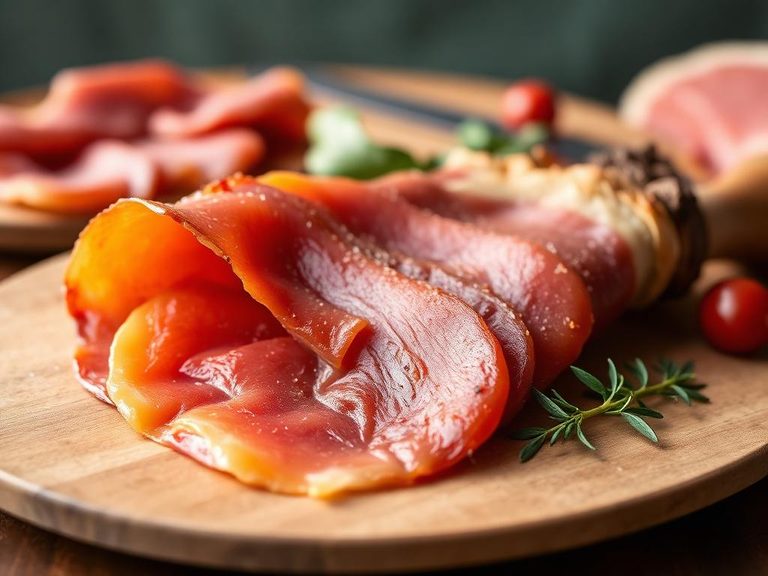
This is a lean, boneless cut of cured ham, typically from the leg, preserved with salt and often smoked or air-dried. It offers a firm yet tender texture with a savory, slightly salty flavor profile and a clean, meaty finish. Nutritionally, it's a powerhouse of high-quality protein with very low fat and minimal carbohydrates.
Calorie split: 69% protein · 4% carbs · 27% fat
↓ Full nutrition💚 Why it's loved
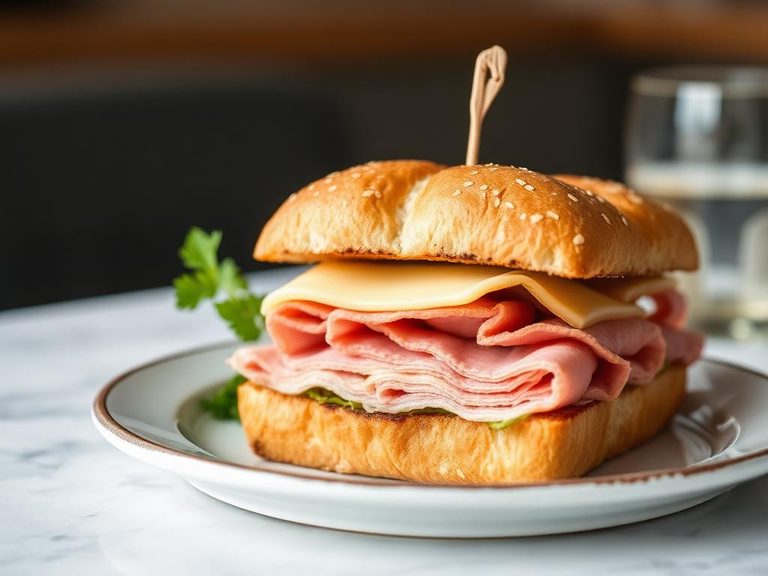
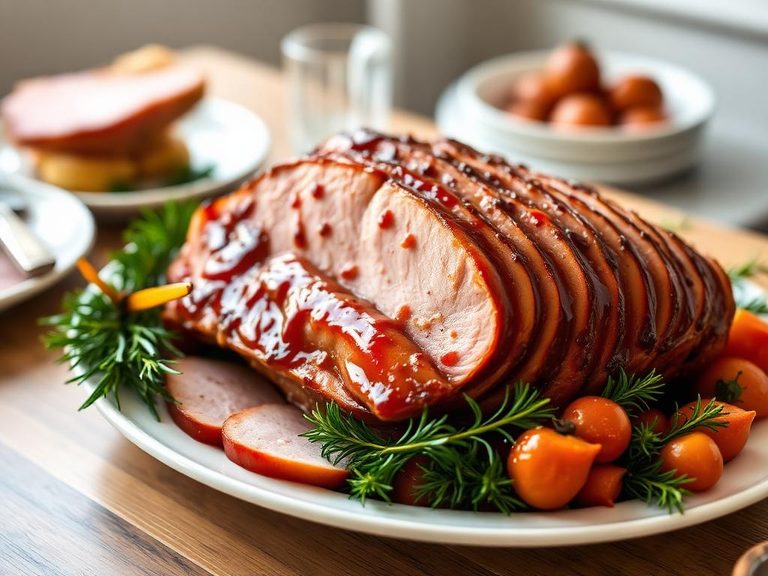
People love it for its deep, savory umami flavor and satisfying texture that requires no cooking, making it a convenient protein source. Its cultural significance in charcuterie boards, sandwiches, and holiday feasts across Europe and the Americas makes it a beloved staple.
⚠️ Watch-outs & how to enjoy it better
The primary concern is its high sodium content from the curing process, which can be problematic for those monitoring blood pressure. To counteract this, pair it with potassium-rich foods like leafy greens or avocado, rinse slices lightly if very salty, and practice strict portion control.
Key benefits
- Excellent source of complete, high-quality protein (19.38g per 100g)
- Very low in fat (3.43g per 100g) and calories (112 kcal per 100g)
- Contains zero carbohydrates and sugars (1.02g per 100g)
- Provides essential minerals like zinc and B vitamins (especially B1, B6, and B12)
- Versatile for both cold platters and cooked dishes
🍽️ Popular dishes



🌍 Where it's eaten
💡 Did you know?
The process of curing ham with salt dates back to ancient times, but the specific use of 'natural juices' in modern labeling often refers to the ham being packaged in its own rendered fats and broths without added water, preserving a more concentrated flavor.
Full nutrition (USDA data · scales with serving)
| Water | 72.7 g |
| Energy | 112 kcal |
| Energy | 469 kj |
| Protein | 19.4 g |
| Total lipid (fat) | 3.4 g |
| Ash | 3.6 g |
| Carbohydrate, by difference | 1.0 g |
| Fiber, total dietary | 0.00 g |
| Total Sugars | 1.0 g |
| Sucrose | 0.28 g |
| Glucose | 0.73 g |
| Fructose | 0.01 g |
| Lactose | 0.00 g |
| Maltose | 0.00 g |
| Galactose | 0.00 g |
| Calcium, Ca | 6.0 mg |
| Iron, Fe | 0.87 mg |
| Magnesium, Mg | 21.0 mg |
| Phosphorus, P | 302 mg |
| Potassium, K | 346 mg |
| Sodium, Na | 1096 mg |
| Zinc, Zn | 2.0 mg |
| Copper, Cu | 0.14 mg |
| Manganese, Mn | 0.03 mg |
| Selenium, Se | 34.4 ug |
| Vitamin C, total ascorbic acid | 0.00 mg |
| Thiamin | 0.53 mg |
| Riboflavin | 0.21 mg |
| Niacin | 6.9 mg |
| Pantothenic acid | 0.79 mg |
| Vitamin B-6 | 0.47 mg |
| Folate, total | 1.0 ug |
| Folic acid | 0.00 ug |
| Folate, food | 1.0 ug |
| Folate, DFE | 1.0 ug |
| Choline, total | 75.0 mg |
| Betaine | 5.5 mg |
| Vitamin B-12 | 0.41 ug |
| Vitamin B-12, added | 0.00 ug |
| Vitamin A, RAE | 13.0 ug |
| Retinol | 13.0 ug |
| Carotene, beta | 0.00 ug |
| Carotene, alpha | 0.00 ug |
| Cryptoxanthin, beta | 0.00 ug |
| Vitamin A, IU | 44.0 iu |
| Lycopene | 0.00 ug |
| Lutein + zeaxanthin | 0.00 ug |
| Vitamin E (alpha-tocopherol) | 0.26 mg |
| Vitamin E, added | 0.00 mg |
| Tocopherol, beta | 0.01 mg |
| Tocopherol, gamma | 0.03 mg |
| Tocopherol, delta | 0.00 mg |
| Tocotrienol, alpha | 0.04 mg |
| Tocotrienol, beta | 0.00 mg |
| Tocotrienol, gamma | 0.01 mg |
| Tocotrienol, delta | 0.00 mg |
| Vitamin D (D2 + D3), International Units | 25.0 iu |
| Vitamin D (D2 + D3) | 0.60 ug |
| Vitamin D3 (cholecalciferol) | 0.60 ug |
| Vitamin K (phylloquinone) | 0.00 ug |
| Vitamin K (Dihydrophylloquinone) | 0.00 ug |
| Vitamin K (Menaquinone-4) | 3.2 ug |
| Alcohol, ethyl | 0.00 g |
| Caffeine | 0.00 mg |
| Theobromine | 0.00 mg |
Fat & fatty acid profile (per 100g)
| Fatty acids, total saturated | 1.0 g |
| SFA 4:0 | 0.00 g |
| SFA 6:0 | 0.00 g |
| SFA 8:0 | 0.00 g |
| SFA 10:0 | 0.00 g |
| SFA 12:0 | 0.00 g |
| SFA 14:0 | 0.04 g |
| SFA 15:0 | 0.00 g |
| SFA 16:0 | 0.64 g |
| SFA 17:0 | 0.01 g |
| SFA 18:0 | 0.31 g |
| SFA 20:0 | 0.00 g |
| SFA 22:0 | 0.01 g |
| Fatty acids, total monounsaturated | 1.4 g |
| MUFA 14:1 | 0.00 g |
| MUFA 15:1 | 0.00 g |
| MUFA 16:1 | 0.08 g |
| MUFA 17:1 | 0.00 g |
| MUFA 18:1 | 1.3 g |
| MUFA 20:1 | 0.02 g |
| MUFA 22:1 | 0.00 g |
| Fatty acids, total polyunsaturated | 0.43 g |
| PUFA 18:2 | 0.35 g |
| PUFA 18:3 | 0.01 g |
| PUFA 18:4 | 0.00 g |
| PUFA 20:2 n-6 c,c | 0.01 g |
| PUFA 20:3 | 0.00 g |
| PUFA 20:4 | 0.06 g |
| PUFA 20:5 n-3 (EPA) | 0.00 g |
| PUFA 22:5 n-3 (DPA) | 0.00 g |
| PUFA 22:6 n-3 (DHA) | 0.00 g |
| Fatty acids, total trans | 0.02 g |
| Cholesterol | 53.0 mg |
Amino acid profile (per 100g)
| Tryptophan | 0.18 g |
| Threonine | 0.87 g |
| Isoleucine | 0.88 g |
| Leucine | 1.6 g |
| Lysine | 1.6 g |
| Methionine | 0.46 g |
| Cystine | 0.22 g |
| Phenylalanine | 0.78 g |
| Tyrosine | 0.63 g |
| Valine | 0.98 g |
| Arginine | 1.2 g |
| Histidine | 0.84 g |
| Alanine | 1.1 g |
| Aspartic acid | 1.7 g |
| Glutamic acid | 2.8 g |
| Glycine | 1.0 g |
| Proline | 0.83 g |
| Serine | 0.76 g |
| Hydroxyproline | 0.10 g |
FAQ
Is this ham pre-cooked and safe to eat cold?
Yes, cured and smoked hams are fully cooked during processing and are safe to eat cold directly from the package. Heating is primarily for flavor or recipe integration.
How does the nutrition differ from fresh pork loin?
Cured ham has significantly more sodium but less fat and slightly more protein per gram than fresh pork loin, which has no added salt.
What does 'separable lean and fat' mean?
It indicates the nutritional values account for both the lean meat and the attached fat that a consumer would typically eat, not just the lean portion alone.
Nutrient density (calculated · NRF9.3)
Nutrient Rich Foods index: beneficial nutrients (protein, fiber, vitamins, minerals) minus saturated fat, added sugar & sodium, per 100 kcal.
NRF9.3 index — Fulgoni, Keast & Drewnowski, 2009. Computed from USDA nutrients.
Weight-loss friendliness (composite index)
Energy density 1.12 kcal/g · 69% calories from protein · 0.0 g fiber · 1.0 g sugar per 100 g.
Composite of energy density (Rolls et al., 1999), protein & fiber satiety, minus sugar. A calculated heuristic — ranks satiety-per-calorie, not a clinical measure.
Dietary load (calculated from USDA values)
Potential renal acid load. Positive = acid-forming, negative = alkaline-forming.
Sodium-to-potassium ratio: 3.17 (lower is better — aim for ≤ 1)
Sodium:potassium per WHO potassium guidance. Computed from USDA nutrients.