

Pork, cured, ham with natural juices, slice, bone-in, separable lean and fat, heated, pan-broil
Whole food · Pork Products

Photo: Wikipedia
This is a premium cut of cured ham, still on the bone, that has been heated by pan-broiling to render its fat and intensify its savory flavor. The result is a succulent, salty slice with a tender, meaty texture and a satisfying contrast between the lean muscle and the melting fat. Nutritionally, it is a powerhouse of protein with virtually no carbohydrates, making it a very low-glycemic, high-satiety food.
Calorie split: 58% protein · 0% carbs · 41% fat
↓ Full nutrition💚 Why it's loved
People adore the deep, complex umami flavor that comes from the curing process and bone-in cooking, which infuses the meat with rich, savory notes. Its versatility makes it a beloved staple, equally at home in a hearty breakfast, a simple dinner, or as a flavorful addition to salads and pastas.
⚠️ Watch-outs & how to enjoy it better
The primary concern is its high sodium content from the curing salt, which can be problematic for those monitoring blood pressure. To counteract this, pair it with potassium-rich foods like steamed vegetables or fresh fruit, and be mindful of portion size. The fat content, while flavorful, is also significant, so those managing fat intake should opt for leaner slices and balance the meal with fiber-rich sides.
Key benefits
- Excellent source of complete protein (26g per 100g).
- Extremely low in carbohydrates and sugars.
- Provides essential B vitamins like thiamine and niacin.
- Contains minerals such as zinc and phosphorus.
- Pan-broiling helps render excess fat, reducing final fat content.
🍽️ Popular dishes

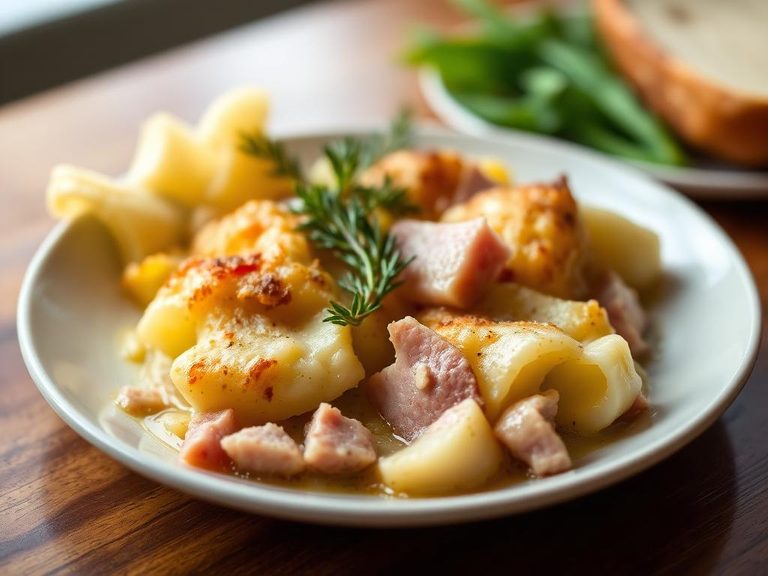


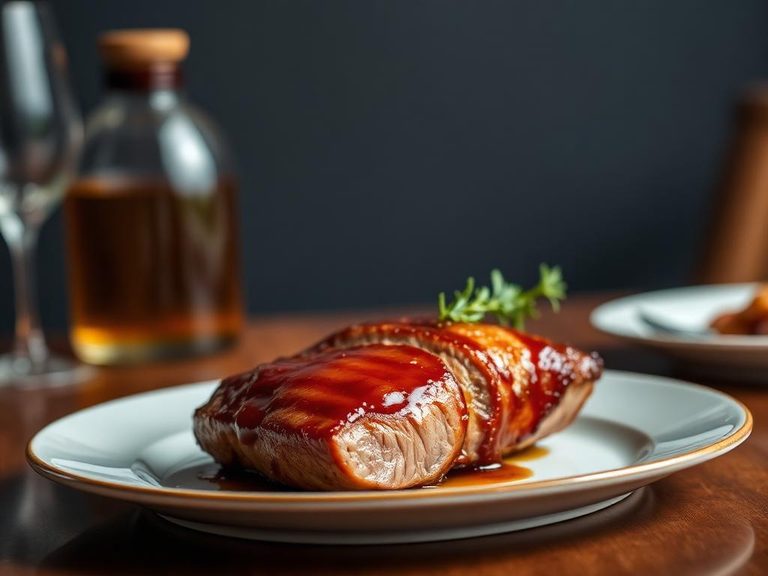
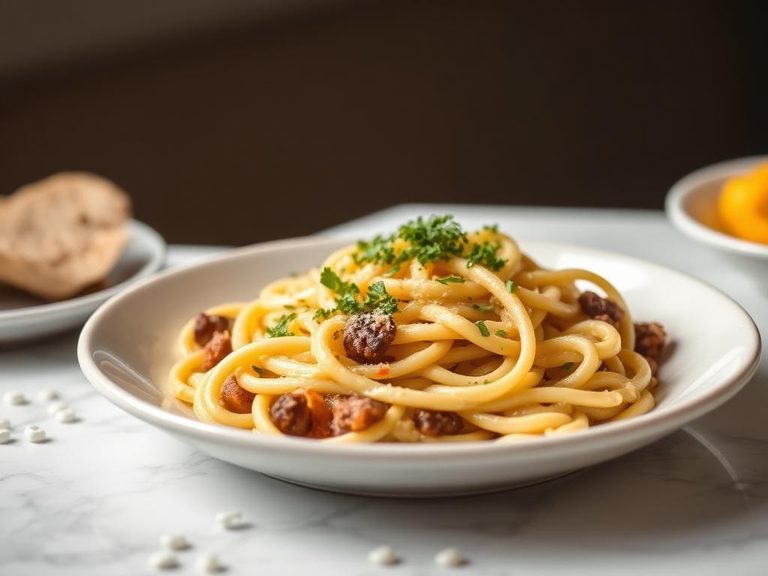
🌍 Where it's eaten
💡 Did you know?
The tradition of curing ham with salt and air-drying is thousands of years old, but the specific 'natural juices' label indicates this ham was not pre-injected with a water-based solution, preserving a more concentrated, traditional flavor and texture.
Full nutrition (USDA data · scales with serving)
| Water | 63.4 g |
| Energy | 180 kcal |
| Energy | 753 kj |
| Protein | 26.2 g |
| Total lipid (fat) | 8.3 g |
| Ash | 2.8 g |
| Carbohydrate, by difference | 0.17 g |
| Fiber, total dietary | 0.00 g |
| Total Sugars | 0.02 g |
| Sucrose | 0.00 g |
| Glucose | 0.02 g |
| Fructose | 0.00 g |
| Lactose | 0.00 g |
| Maltose | 0.00 g |
| Galactose | 0.00 g |
| Calcium, Ca | 12.0 mg |
| Iron, Fe | 1.1 mg |
| Magnesium, Mg | 22.0 mg |
| Phosphorus, P | 280 mg |
| Potassium, K | 344 mg |
| Sodium, Na | 821 mg |
| Zinc, Zn | 2.9 mg |
| Copper, Cu | 0.12 mg |
| Manganese, Mn | 0.02 mg |
| Selenium, Se | 48.2 ug |
| Vitamin C, total ascorbic acid | 0.00 mg |
| Thiamin | 0.31 mg |
| Riboflavin | 0.25 mg |
| Niacin | 8.5 mg |
| Pantothenic acid | 0.46 mg |
| Vitamin B-6 | 0.38 mg |
| Folate, total | 1.0 ug |
| Folic acid | 0.00 ug |
| Folate, food | 1.0 ug |
| Folate, DFE | 1.0 ug |
| Choline, total | 127 mg |
| Betaine | 1.7 mg |
| Vitamin B-12 | 0.58 ug |
| Vitamin B-12, added | 0.00 ug |
| Vitamin A, RAE | 13.0 ug |
| Retinol | 13.0 ug |
| Carotene, beta | 0.00 ug |
| Carotene, alpha | 0.00 ug |
| Cryptoxanthin, beta | 0.00 ug |
| Vitamin A, IU | 44.0 iu |
| Lycopene | 0.00 ug |
| Lutein + zeaxanthin | 0.00 ug |
| Vitamin E (alpha-tocopherol) | 0.24 mg |
| Vitamin E, added | 0.00 mg |
| Tocopherol, beta | 0.01 mg |
| Tocopherol, gamma | 0.04 mg |
| Tocopherol, delta | 0.00 mg |
| Tocotrienol, alpha | 0.05 mg |
| Tocotrienol, beta | 0.00 mg |
| Tocotrienol, gamma | 0.03 mg |
| Tocotrienol, delta | 0.00 mg |
| Vitamin K (phylloquinone) | 0.00 ug |
| Vitamin K (Dihydrophylloquinone) | 0.00 ug |
| Vitamin K (Menaquinone-4) | 5.1 ug |
| Alcohol, ethyl | 0.00 g |
| Caffeine | 0.00 mg |
| Theobromine | 0.00 mg |
Fat & fatty acid profile (per 100g)
| Fatty acids, total saturated | 2.4 g |
| SFA 4:0 | 0.00 g |
| SFA 6:0 | 0.00 g |
| SFA 8:0 | 0.00 g |
| SFA 10:0 | 0.00 g |
| SFA 12:0 | 0.00 g |
| SFA 14:0 | 0.09 g |
| SFA 15:0 | 0.00 g |
| SFA 16:0 | 1.6 g |
| SFA 17:0 | 0.02 g |
| SFA 18:0 | 0.73 g |
| SFA 20:0 | 0.01 g |
| SFA 22:0 | 0.02 g |
| Fatty acids, total monounsaturated | 3.2 g |
| MUFA 14:1 | 0.00 g |
| MUFA 15:1 | 0.00 g |
| MUFA 16:1 | 0.19 g |
| MUFA 17:1 | 0.00 g |
| MUFA 18:1 | 3.0 g |
| MUFA 20:1 | 0.05 g |
| MUFA 22:1 | 0.00 g |
| Fatty acids, total polyunsaturated | 1.1 g |
| PUFA 18:2 | 0.90 g |
| PUFA 18:3 | 0.03 g |
| PUFA 18:4 | 0.00 g |
| PUFA 20:2 n-6 c,c | 0.04 g |
| PUFA 20:3 | 0.00 g |
| PUFA 20:4 | 0.10 g |
| PUFA 20:5 n-3 (EPA) | 0.00 g |
| PUFA 22:5 n-3 (DPA) | 0.00 g |
| PUFA 22:6 n-3 (DHA) | 0.00 g |
| Fatty acids, total trans | 0.05 g |
| Cholesterol | 80.0 mg |
Amino acid profile (per 100g)
| Tryptophan | 0.24 g |
| Threonine | 1.2 g |
| Isoleucine | 1.2 g |
| Leucine | 2.1 g |
| Lysine | 2.2 g |
| Methionine | 0.62 g |
| Cystine | 0.29 g |
| Phenylalanine | 1.0 g |
| Tyrosine | 0.85 g |
| Valine | 1.3 g |
| Arginine | 1.7 g |
| Histidine | 1.1 g |
| Alanine | 1.5 g |
| Aspartic acid | 2.3 g |
| Glutamic acid | 3.7 g |
| Glycine | 1.4 g |
| Proline | 1.1 g |
| Serine | 1.0 g |
| Hydroxyproline | 0.17 g |
FAQ
What does 'natural juices' mean on a ham label?
It means the ham was not pumped with a water, salt, and flavoring solution (a common practice called 'enhancing'). The moisture and flavor come from the ham itself during cooking, resulting in a denser texture and more concentrated taste.
Why is it 'bone-in' and does that matter?
The bone acts as a natural conductor of heat, helping the ham cook more evenly and often more tenderly. It also adds significant flavor to the meat and any pan drippings, which are excellent for making sauces or gravies.
Is pan-broiling a healthy way to cook ham?
Pan-broiling is a dry-heat method that allows excess fat to render out and drip away from the meat, which can reduce the overall fat content of the final dish compared to methods where the ham sits in its own fat. It creates a delicious, slightly caramelized exterior.
Nutrient density (calculated · NRF9.3)
Nutrient Rich Foods index: beneficial nutrients (protein, fiber, vitamins, minerals) minus saturated fat, added sugar & sodium, per 100 kcal.
NRF9.3 index — Fulgoni, Keast & Drewnowski, 2009. Computed from USDA nutrients.
Weight-loss friendliness (composite index)
Energy density 1.80 kcal/g · 58% calories from protein · 0.0 g fiber · 0.0 g sugar per 100 g.
Composite of energy density (Rolls et al., 1999), protein & fiber satiety, minus sugar. A calculated heuristic — ranks satiety-per-calorie, not a clinical measure.
Dietary load (calculated from USDA values)
Potential renal acid load. Positive = acid-forming, negative = alkaline-forming.
Sodium-to-potassium ratio: 2.39 (lower is better — aim for ≤ 1)
Sodium:potassium per WHO potassium guidance. Computed from USDA nutrients.