

Pasta, cooked, enriched, with added salt
Whole food · Cereal Grains and Pasta
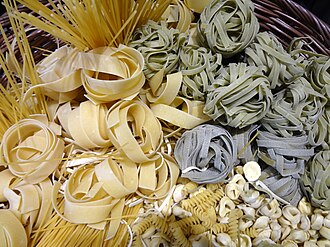
Photo: Wikipedia
This is the classic, everyday pasta—think spaghetti, penne, or fusilli—boiled until tender and enriched with B vitamins and iron to replace what's lost in milling. It has a neutral, starchy flavor and a satisfyingly chewy or soft texture that acts as the perfect canvas for sauces. Nutritionally, it's a carbohydrate powerhouse, delivering quick energy with a modest 5.8g of protein per 100g serving.
Calorie split: 15% protein · 79% carbs · 5% fat
↓ Full nutrition💚 Why it's loved
People adore it for its incredible versatility and comforting, mild flavor that pairs with virtually any sauce, from a simple garlic and olive oil to a rich bolognese. It's a cornerstone of global comfort food, evoking feelings of home and tradition across countless cultures.
⚠️ Watch-outs & how to enjoy it better
Its high glycemic index can cause rapid blood-sugar spikes, which is a concern for those managing diabetes or insulin resistance. The added salt increases sodium content, and it's a common gluten-containing allergen. To counteract this, pair pasta with protein (like chicken or beans) and healthy fats (like olive oil or avocado) to slow digestion, choose smaller portions, and consider whole-wheat or legume-based alternatives.
Key benefits
- Excellent source of quick-release energy for active lifestyles
- Enriched with B vitamins (like folate and thiamine) and iron to support metabolism
- Low in fat, making it a lean base for hearty, balanced meals
- Provides a small amount of dietary fiber for digestive health
- Highly versatile and budget-friendly pantry staple
🍽️ Popular dishes
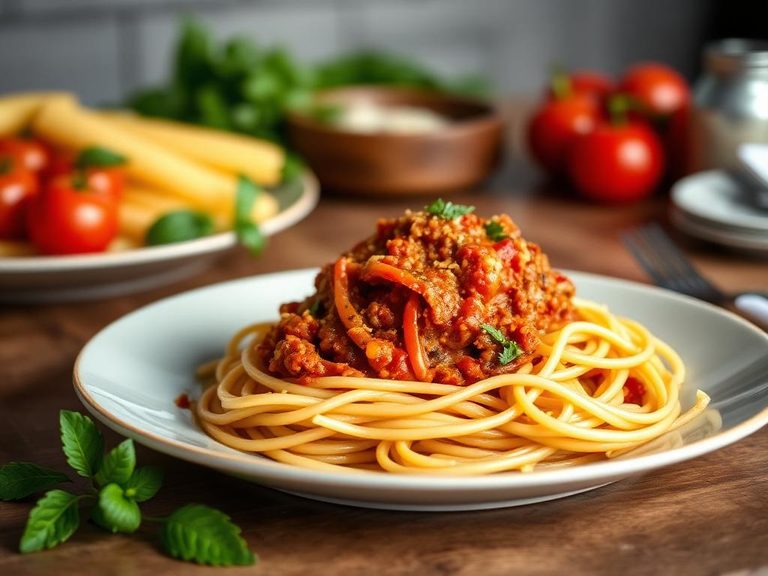
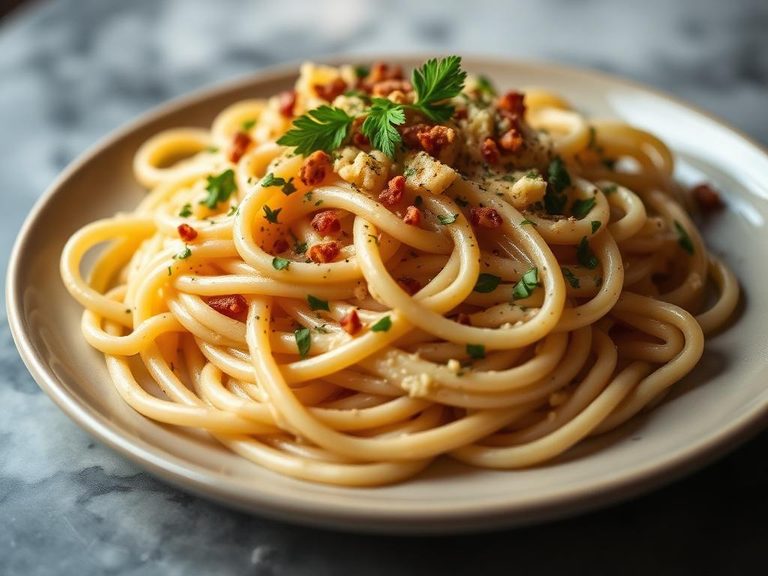
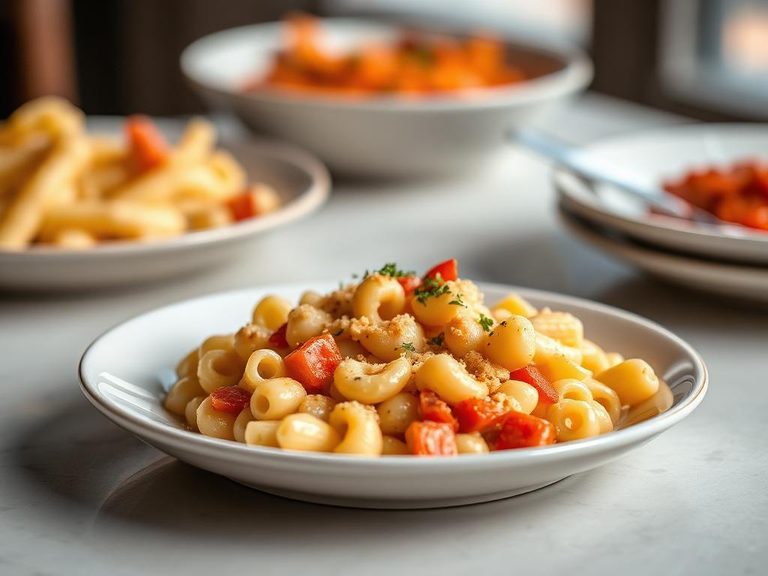
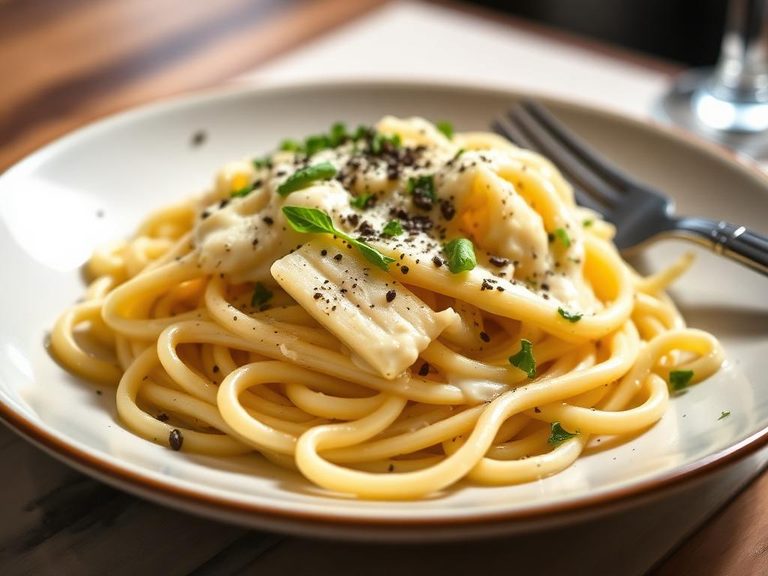
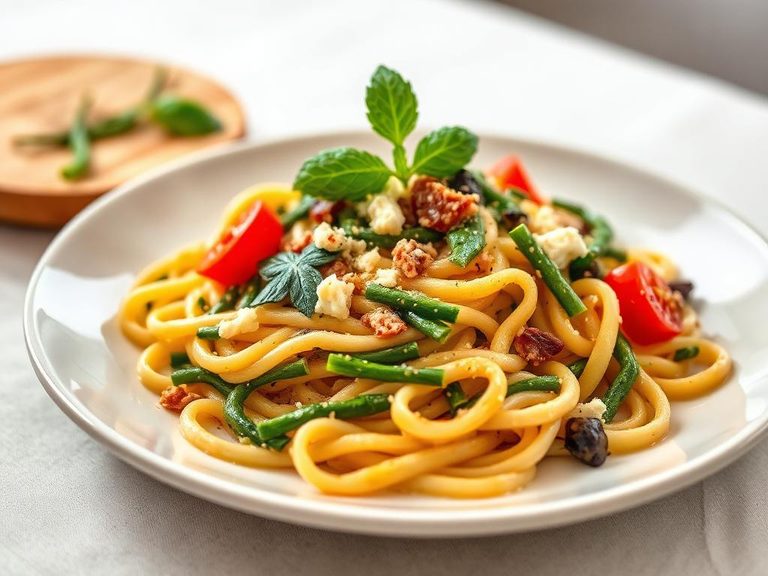
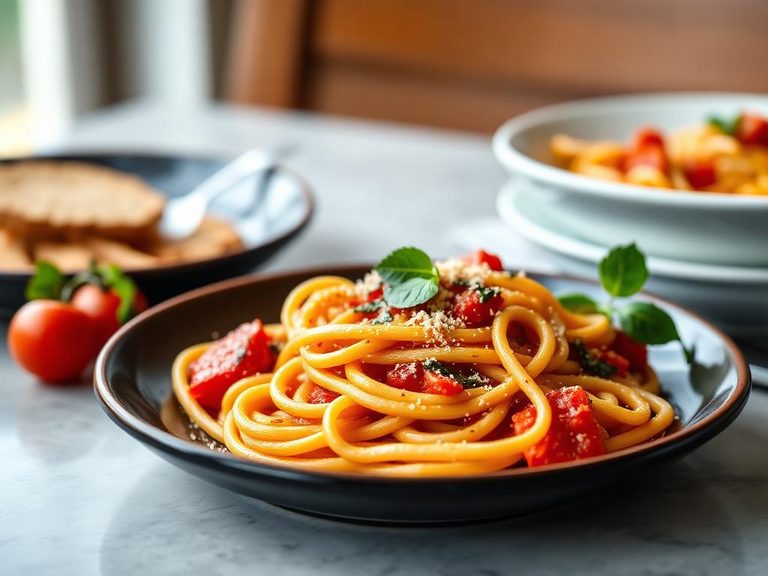
🌍 Where it's eaten
💡 Did you know?
The average Italian eats about 23 kg (50 lbs) of pasta per year, which is roughly equivalent to eating a plate of pasta every single day.
Full nutrition (USDA data · scales with serving)
| Water | 62.1 g |
| Energy | 157 kcal |
| Energy | 655 kj |
| Protein | 5.8 g |
| Total lipid (fat) | 0.93 g |
| Ash | 0.55 g |
| Carbohydrate, by difference | 30.6 g |
| Fiber, total dietary | 1.8 g |
| Total Sugars | 0.56 g |
| Sucrose | 0.09 g |
| Glucose | 0.04 g |
| Fructose | 0.03 g |
| Lactose | 0.00 g |
| Maltose | 0.40 g |
| Galactose | 0.00 g |
| Starch | 26.0 g |
| Calcium, Ca | 7.0 mg |
| Iron, Fe | 1.3 mg |
| Magnesium, Mg | 18.0 mg |
| Phosphorus, P | 58.0 mg |
| Potassium, K | 44.0 mg |
| Sodium, Na | 131 mg |
| Zinc, Zn | 0.51 mg |
| Copper, Cu | 0.10 mg |
| Manganese, Mn | 0.32 mg |
| Selenium, Se | 26.4 ug |
| Vitamin C, total ascorbic acid | 0.00 mg |
| Thiamin | 0.27 mg |
| Riboflavin | 0.14 mg |
| Niacin | 1.7 mg |
| Pantothenic acid | 0.11 mg |
| Vitamin B-6 | 0.05 mg |
| Folate, total | 73.0 ug |
| Folic acid | 66.0 ug |
| Folate, food | 7.0 ug |
| Folate, DFE | 119 ug |
| Vitamin B-12 | 0.00 ug |
| Vitamin B-12, added | 0.00 ug |
| Vitamin A, RAE | 0.00 ug |
| Retinol | 0.00 ug |
| Carotene, beta | 0.00 ug |
| Carotene, alpha | 0.00 ug |
| Cryptoxanthin, beta | 0.00 ug |
| Vitamin A, IU | 0.00 iu |
| Lycopene | 0.00 ug |
| Lutein + zeaxanthin | 7.0 ug |
| Vitamin E (alpha-tocopherol) | 0.06 mg |
| Vitamin E, added | 0.00 mg |
| Tocopherol, beta | 0.03 mg |
| Tocopherol, gamma | 0.50 mg |
| Tocopherol, delta | 0.00 mg |
| Tocotrienol, alpha | 0.05 mg |
| Tocotrienol, beta | 0.00 mg |
| Tocotrienol, gamma | 0.00 mg |
| Tocotrienol, delta | 0.00 mg |
| Vitamin D (D2 + D3), International Units | 0.00 iu |
| Vitamin D (D2 + D3) | 0.00 ug |
| Vitamin K (phylloquinone) | 0.00 ug |
| Vitamin K (Dihydrophylloquinone) | 0.50 ug |
| Alcohol, ethyl | 0.00 g |
| Caffeine | 0.00 mg |
| Theobromine | 0.00 mg |
Fat & fatty acid profile (per 100g)
| Fatty acids, total saturated | 0.18 g |
| SFA 4:0 | 0.00 g |
| SFA 6:0 | 0.00 g |
| SFA 8:0 | 0.00 g |
| SFA 10:0 | 0.00 g |
| SFA 12:0 | 0.01 g |
| SFA 13:0 | 0.00 g |
| SFA 14:0 | 0.01 g |
| SFA 15:0 | 0.00 g |
| SFA 16:0 | 0.15 g |
| SFA 17:0 | 0.00 g |
| SFA 18:0 | 0.01 g |
| SFA 20:0 | 0.00 g |
| SFA 22:0 | 0.00 g |
| SFA 24:0 | 0.00 g |
| Fatty acids, total monounsaturated | 0.13 g |
| MUFA 14:1 | 0.00 g |
| MUFA 15:1 | 0.00 g |
| MUFA 16:1 | 0.00 g |
| MUFA 17:1 | 0.00 g |
| MUFA 18:1 | 0.13 g |
| MUFA 18:1 c | 0.13 g |
| MUFA 20:1 | 0.00 g |
| MUFA 22:1 | 0.00 g |
| MUFA 24:1 c | 0.00 g |
| Fatty acids, total polyunsaturated | 0.33 g |
| PUFA 18:2 | 0.29 g |
| PUFA 18:3 | 0.02 g |
| PUFA 18:3 n-3 c,c,c (ALA) | 0.02 g |
| PUFA 18:3 n-6 c,c,c | 0.00 g |
| PUFA 18:4 | 0.00 g |
| PUFA 20:2 n-6 c,c | 0.00 g |
| PUFA 20:3 | 0.00 g |
| PUFA 20:4 | 0.00 g |
| PUFA 20:5 n-3 (EPA) | 0.00 g |
| PUFA 22:5 n-3 (DPA) | 0.00 g |
| PUFA 22:6 n-3 (DHA) | 0.00 g |
| Fatty acids, total trans | 0.00 g |
| Fatty acids, total trans-monoenoic | 0.00 g |
| TFA 18:1 t | 0.00 g |
| Cholesterol | 0.00 mg |
Amino acid profile (per 100g)
| Tryptophan | 0.08 g |
| Threonine | 0.20 g |
| Isoleucine | 0.22 g |
| Leucine | 0.43 g |
| Lysine | 0.13 g |
| Methionine | 0.06 g |
| Cystine | 0.11 g |
| Phenylalanine | 0.29 g |
| Tyrosine | 0.11 g |
| Valine | 0.26 g |
| Arginine | 0.21 g |
| Histidine | 0.13 g |
| Alanine | 0.19 g |
| Aspartic acid | 0.27 g |
| Glutamic acid | 2.0 g |
| Glycine | 0.19 g |
| Proline | 0.69 g |
| Serine | 0.27 g |
| Hydroxyproline | 0.00 g |
FAQ
Is enriched pasta healthier than regular pasta?
Enriched pasta has added B vitamins and iron that are lost during processing, making it more nutritious than unenriched white pasta, though it still lacks the fiber and nutrients of whole-wheat varieties.
How much salt should I add when cooking pasta?
A good rule of thumb is about 1 tablespoon of salt per 4-6 quarts of water. This seasons the pasta from within without making it overly salty.
Can I freeze cooked pasta?
Yes, you can freeze cooked pasta. Toss it with a little oil to prevent sticking, then store in airtight containers or bags for up to 2 months. It's best used in baked dishes or soups after freezing.
Nutrient density (calculated · NRF9.3)
Nutrient Rich Foods index: beneficial nutrients (protein, fiber, vitamins, minerals) minus saturated fat, added sugar & sodium, per 100 kcal.
NRF9.3 index — Fulgoni, Keast & Drewnowski, 2009. Computed from USDA nutrients.
Weight-loss friendliness (composite index)
Energy density 1.57 kcal/g · 15% calories from protein · 1.8 g fiber · 0.6 g sugar per 100 g.
Composite of energy density (Rolls et al., 1999), protein & fiber satiety, minus sugar. A calculated heuristic — ranks satiety-per-calorie, not a clinical measure.
Dietary load (calculated from USDA values)
Potential renal acid load. Positive = acid-forming, negative = alkaline-forming.
Sodium-to-potassium ratio: 2.98 (lower is better — aim for ≤ 1)
Sodium:potassium per WHO potassium guidance. Computed from USDA nutrients.