

Fish, salmon, red, (sockeye), kippered (Alaska Native)
Whole food · American Indian/Alaska Native Foods

Photo: Wikipedia
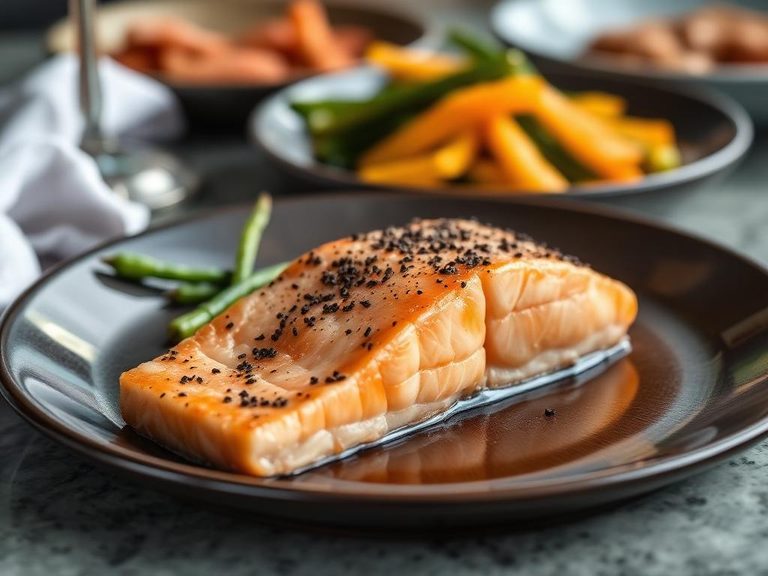
Kippered sockeye salmon is a traditional Alaska Native preparation where the fish is split, brined, and slow-smoked over alder or driftwood. The result is a deeply flavorful, tender, and flaky fillet with a rich, smoky aroma and a satisfyingly dense, meaty texture. It is a nutritional powerhouse, packing an impressive 24.5 grams of high-quality protein per 100g with virtually no carbohydrates.
Calorie split: 70% protein · 0% carbs · 30% fat
↓ Full nutrition💚 Why it's loved
People love it for its intense, concentrated salmon flavor and the unique, smoky depth from the traditional kippering process. Its versatility as a ready-to-eat protein makes it a beloved staple for quick meals, snacks, and adding a punch of flavor to salads or chowders.
⚠️ Watch-outs & how to enjoy it better
The smoking process can result in a high sodium content, which may be a concern for those monitoring salt intake. As a common fish allergen, it must be avoided by individuals with fish allergies. To manage sodium, you can rinse the fillets briefly before use or pair it with unsalted, potassium-rich foods like steamed vegetables or fresh fruit to help balance electrolytes.
Key benefits
- Exceptionally high in complete protein for muscle maintenance and satiety.
- Rich in omega-3 fatty acids (EPA & DHA) for heart and brain health.
- Excellent source of vitamin D, crucial for bone health and immune function.
- Provides significant amounts of B vitamins, especially B12 and niacin.
- Naturally low in carbohydrates, making it ideal for low-carb or ketogenic diets.
🍽️ Popular dishes

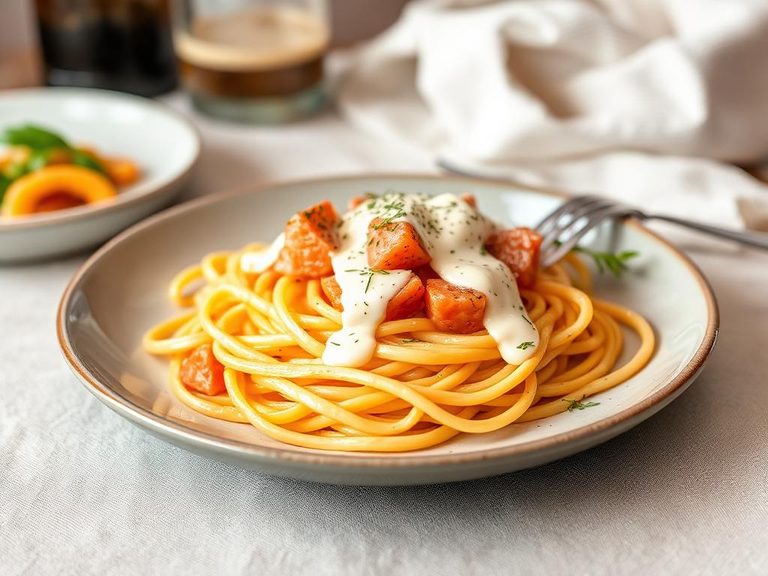
🌍 Where it's eaten
💡 Did you know?
The term 'kippered' comes from the word 'kipper,' which historically referred to a male salmon caught during its spawning run, a time when the fish was traditionally smoked for preservation.
Full nutrition (USDA data · scales with serving)
| Water | 69.4 g |
| Energy | 141 kcal |
| Energy | 589 kj |
| Protein | 24.5 g |
| Total lipid (fat) | 4.8 g |
| Ash | 2.3 g |
| Carbohydrate, by difference | 0.00 g |
| Fiber, total dietary | 0.00 g |
| Total Sugars | 0.00 g |
| Sucrose | 0.00 g |
| Glucose | 0.00 g |
| Fructose | 0.00 g |
| Lactose | 0.00 g |
| Maltose | 0.00 g |
| Galactose | 0.00 g |
| Starch | 0.00 g |
| Calcium, Ca | 54.0 mg |
| Iron, Fe | 0.49 mg |
| Magnesium, Mg | 31.0 mg |
| Phosphorus, P | 280 mg |
| Potassium, K | 400 mg |
| Sodium, Na | 460 mg |
| Zinc, Zn | 0.75 mg |
| Copper, Cu | 0.15 mg |
| Manganese, Mn | 0.04 mg |
| Selenium, Se | 33.5 ug |
| Vitamin C, total ascorbic acid | 0.00 mg |
| Thiamin | 0.09 mg |
| Riboflavin | 0.23 mg |
| Niacin | 8.5 mg |
| Pantothenic acid | 0.92 mg |
| Vitamin B-6 | 0.29 mg |
| Folate, total | 6.0 ug |
| Folic acid | 0.00 ug |
| Folate, food | 6.0 ug |
| Folate, DFE | 6.0 ug |
| Choline, total | 88.2 mg |
| Betaine | 4.2 mg |
| Vitamin B-12 | 5.0 ug |
| Vitamin A, RAE | 15.0 ug |
| Retinol | 14.0 ug |
| Carotene, beta | 0.00 ug |
| Carotene, alpha | 0.00 ug |
| Cryptoxanthin, beta | 0.00 ug |
| Vitamin A, IU | 50.0 iu |
| Lycopene | 0.00 ug |
| Lutein + zeaxanthin | 0.00 ug |
| Vitamin E (alpha-tocopherol) | 0.44 mg |
| Tocopherol, beta | 0.00 mg |
| Tocopherol, gamma | 0.00 mg |
| Tocopherol, delta | 0.00 mg |
| Tocotrienol, alpha | 0.00 mg |
| Tocotrienol, beta | 0.00 mg |
| Tocotrienol, gamma | 0.00 mg |
| Tocotrienol, delta | 0.00 mg |
| Vitamin D (D2 + D3), International Units | 80.0 iu |
| Vitamin D (D2 + D3) | 2.0 ug |
| Vitamin K (phylloquinone) | 0.00 ug |
| Vitamin K (Dihydrophylloquinone) | 0.00 ug |
| Vitamin K (Menaquinone-4) | 0.00 ug |
| Alcohol, ethyl | 0.00 g |
| Caffeine | 0.00 mg |
Fat & fatty acid profile (per 100g)
| Fatty acids, total saturated | 0.80 g |
| SFA 8:0 | 0.00 g |
| SFA 10:0 | 0.00 g |
| SFA 12:0 | 0.00 g |
| SFA 14:0 | 0.12 g |
| SFA 15:0 | 0.02 g |
| SFA 16:0 | 0.57 g |
| SFA 17:0 | 0.00 g |
| SFA 18:0 | 0.09 g |
| SFA 20:0 | 0.00 g |
| SFA 22:0 | 0.00 g |
| SFA 24:0 | 0.00 g |
| Fatty acids, total monounsaturated | 1.8 g |
| MUFA 14:1 | 0.00 g |
| MUFA 15:1 | 0.00 g |
| MUFA 16:1 | 0.15 g |
| MUFA 17:1 | 0.00 g |
| MUFA 18:1 | 0.67 g |
| MUFA 20:1 | 0.58 g |
| MUFA 22:1 | 0.40 g |
| MUFA 24:1 c | 0.03 g |
| Fatty acids, total polyunsaturated | 1.1 g |
| PUFA 18:2 | 0.06 g |
| PUFA 18:3 | 0.06 g |
| PUFA 18:4 | 0.06 g |
| PUFA 20:2 n-6 c,c | 0.01 g |
| PUFA 20:3 | 0.01 g |
| PUFA 20:4 | 0.06 g |
| PUFA 20:5 n-3 (EPA) | 0.26 g |
| PUFA 21:5 | 0.00 g |
| PUFA 22:4 | 0.00 g |
| PUFA 22:5 n-3 (DPA) | 0.07 g |
| PUFA 22:6 n-3 (DHA) | 0.54 g |
| Cholesterol | 68.0 mg |
Amino acid profile (per 100g)
Estimated from Fish, halibut, raw, with skin (Alaska Native) — USDA does not publish this profile for Fish.
| Tryptophan | 0.31 g |
| Threonine | 0.95 g |
| Isoleucine | 0.94 g |
| Leucine | 1.6 g |
| Lysine | 1.8 g |
| Methionine | 0.80 g |
| Cystine | 0.35 g |
| Phenylalanine | 0.82 g |
| Tyrosine | 0.70 g |
| Valine | 1.0 g |
| Arginine | 1.2 g |
| Histidine | 0.50 g |
| Alanine | 1.2 g |
| Aspartic acid | 2.8 g |
| Glutamic acid | 3.2 g |
| Glycine | 0.93 g |
| Proline | 0.73 g |
| Serine | 0.91 g |
| Hydroxyproline | 0.18 g |
FAQ
What is the difference between kippered salmon and regular smoked salmon?
Kippered salmon is typically split, brined, and smoked using a traditional method that results in a fully cooked, tender, and flaky product. Regular smoked salmon (like lox) is often cold-smoked and cured, remaining raw in texture and requiring no further cooking.
Is kippered salmon cooked?
Yes, the traditional kippering process involves both brining and hot-smoking, which fully cooks the fish, making it ready to eat straight from the package.
How should I store leftover kippered salmon?
Once opened, wrap any unused portion tightly in plastic wrap or place it in an airtight container. It should be refrigerated and consumed within 2-3 days. For longer storage, it can be frozen for up to 3 months.
Nutrient density (calculated · NRF9.3)
Nutrient Rich Foods index: beneficial nutrients (protein, fiber, vitamins, minerals) minus saturated fat, added sugar & sodium, per 100 kcal.
NRF9.3 index — Fulgoni, Keast & Drewnowski, 2009. Computed from USDA nutrients.
Weight-loss friendliness (composite index)
Energy density 1.41 kcal/g · 70% calories from protein · 0.0 g fiber · 0.0 g sugar per 100 g.
Composite of energy density (Rolls et al., 1999), protein & fiber satiety, minus sugar. A calculated heuristic — ranks satiety-per-calorie, not a clinical measure.
Dietary load (calculated from USDA values)
Potential renal acid load. Positive = acid-forming, negative = alkaline-forming.
Sodium-to-potassium ratio: 1.15 (lower is better — aim for ≤ 1)
Sodium:potassium per WHO potassium guidance. Computed from USDA nutrients.