Alaska Native 'Kippered' Salmon
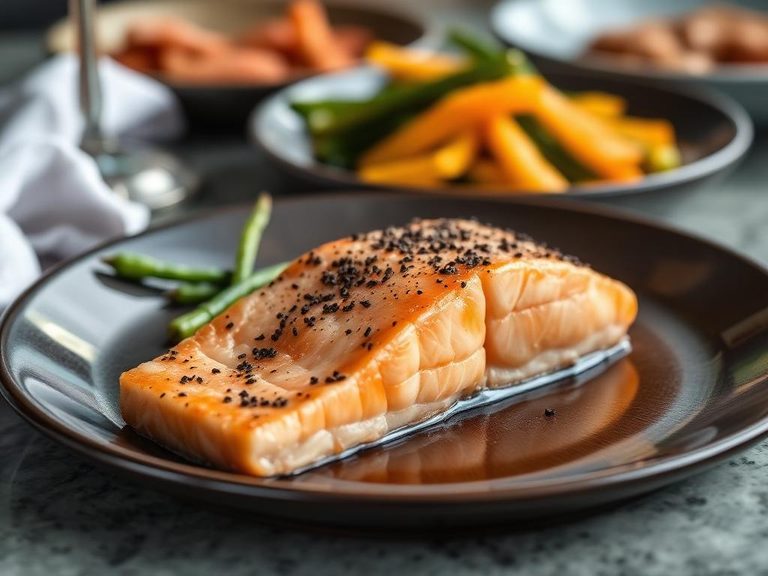
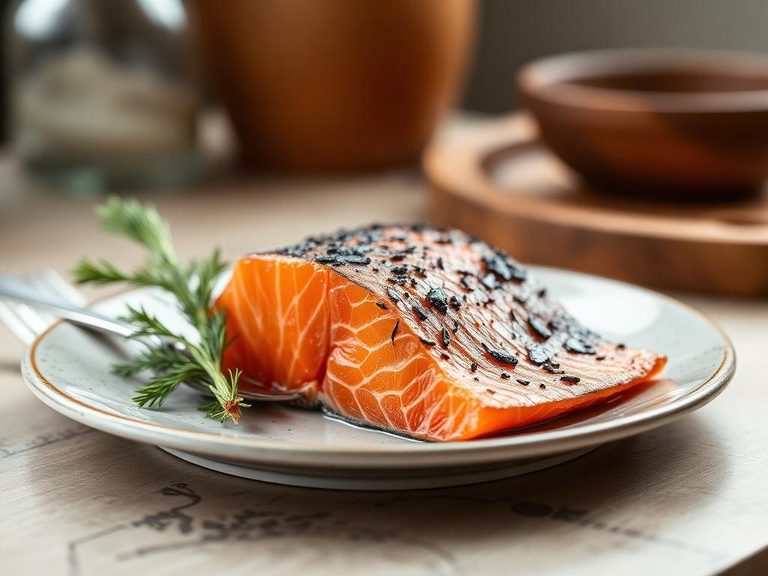
Alaska Native 'Kippered' Salmon is a traditional method of preserving salmon by slow-smoking it over alder or other local woods until it becomes a dense, jerky-like, or semi-moist dried fish. It is made primarily from salmon (such as Sockeye or King), often seasoned simply with salt or left plain, and is a staple food from the Indigenous cultures of coastal Alaska.
🍽️ Nutrition at a glance
This dish is exceptionally high in protein and healthy fats, while being virtually carbohydrate-free. It is a powerhouse of nutrients like Omega-3 fatty acids, Vitamin D, and selenium, with a calorie count that varies by preparation but typically ranges from 150 to 250 calories per ounce due to its concentrated nature.
Nutrition breakdown
| Calories | 180 kcal |
| Protein | 22 g |
| Carbs | 0 g |
| Fat | 10 g |
| Fiber | 0 g |
| Sugar | 0 g |
| Sodium | 450 mg |
| Omega-3 (EPA+DHA) | 1200 mg |
| Vitamin D | 15 mcg (600 IU) |
| Selenium | 30 mcg |
| Vitamin B12 | 5 mcg |
| Niacin (B3) | 8 mg |
| Phosphorus | 250 mg |
| Potassium | 300 mg |
| Vitamin B6 | 0.4 mg |
Per 1 ounce (28 g) · estimated, varies by recipe
💡 What's interesting
Kippering is a centuries-old preservation technique that allowed Alaska Native communities to store vital nutrients for long, harsh winters, making it a cornerstone of food security. Nutritionally, it's a naturally concentrated source of anti-inflammatory fats and high-quality protein, designed by tradition to fuel survival in a demanding environment.