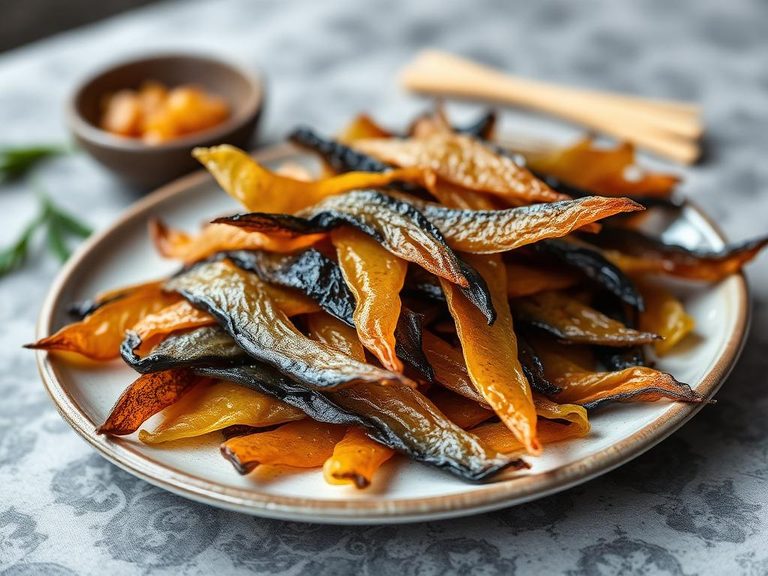
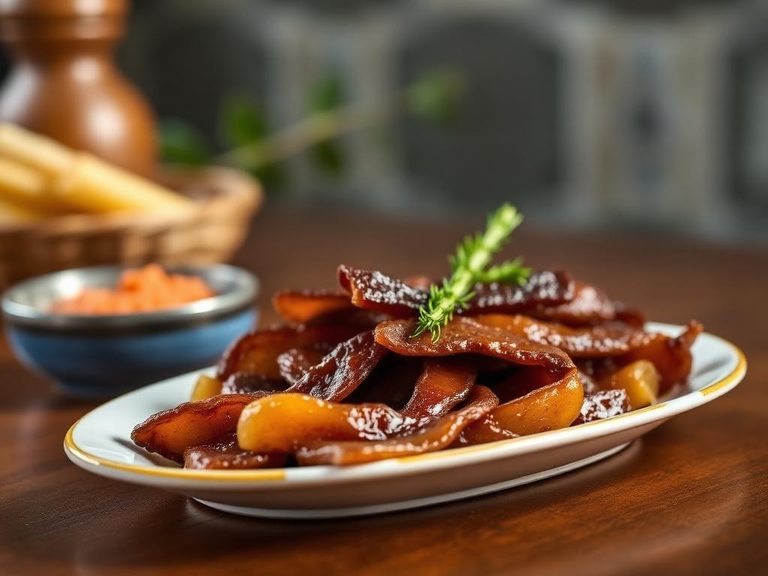
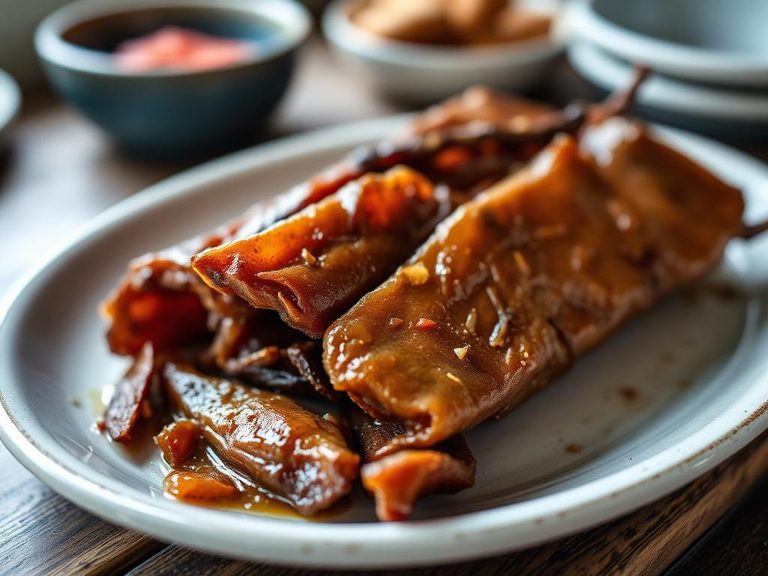
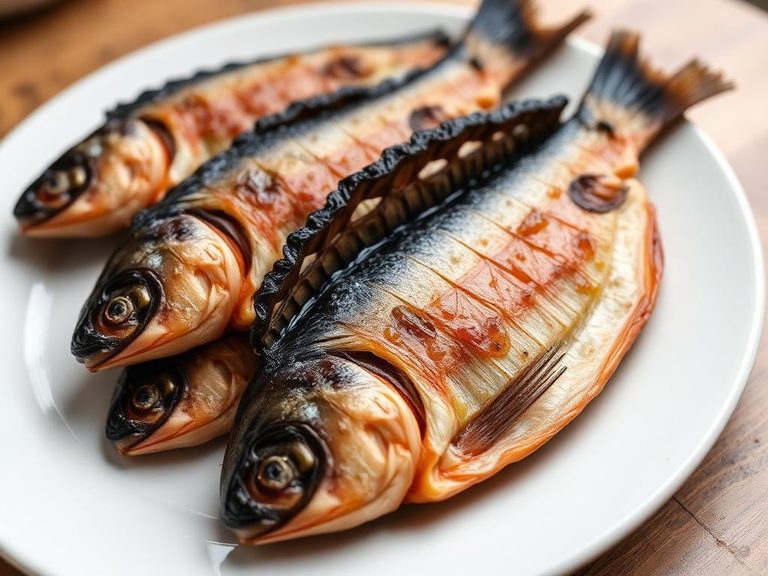
Alaska Native Salmon Strip (dried)
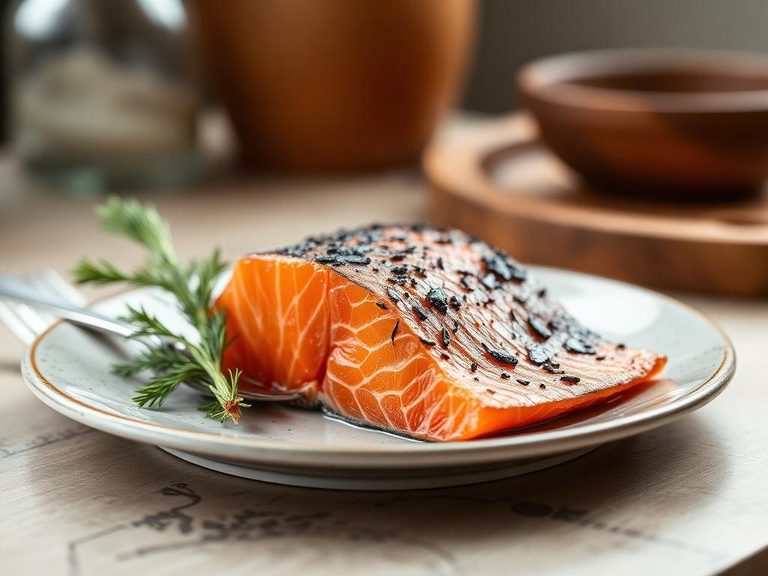
Alaska Native Salmon Strip (dried) is a traditional food made from salmon fillets that are cut into strips and sun-dried or smoked, often without any added salt or seasonings. This method of preservation has been used for centuries by Indigenous peoples in coastal Alaska, such as the Tlingit, Haida, and Yup'ik, to store food for long, harsh winters. The result is a chewy, nutrient-dense snack with a concentrated, savory fish flavor.
🍽️ Nutrition at a glance
This food is exceptionally high in protein and healthy fats, particularly omega-3 fatty acids, while being very low in carbohydrates. A single serving provides a powerful dose of essential nutrients like vitamin D, selenium, and B vitamins, with a calorie count that reflects its dense, energy-rich nature.
Nutrition breakdown
| Calories | 80 kcal |
| Protein | 13 g |
| Carbs | 0 g |
| Fat | 3 g |
| Fiber | 0 g |
| Sugar | 0 g |
| Sodium | 40 mg |
| Vitamin D | 15 mcg |
| Selenium | 18 mcg |
| Vitamin B12 | 2.5 mcg |
| Niacin (B3) | 4 mg |
| Phosphorus | 150 mg |
| Potassium | 180 mg |
| Omega-3 (EPA+DHA) | 800 mg |
Per 1 strip (about 30 g) · estimated, varies by recipe
💡 What's interesting
What makes this dish culturally unique is that it is a cornerstone of traditional food sovereignty and a vital source of nutrition in the Arctic, representing a deep connection to the land and sea. Nutritionally, it's a rare natural food that is one of the best dietary sources of vitamin D, which is crucial in regions with limited sunlight.