

Salmon, red (sockeye), filets with skin, smoked (Alaska Native)
Whole food · American Indian/Alaska Native Foods

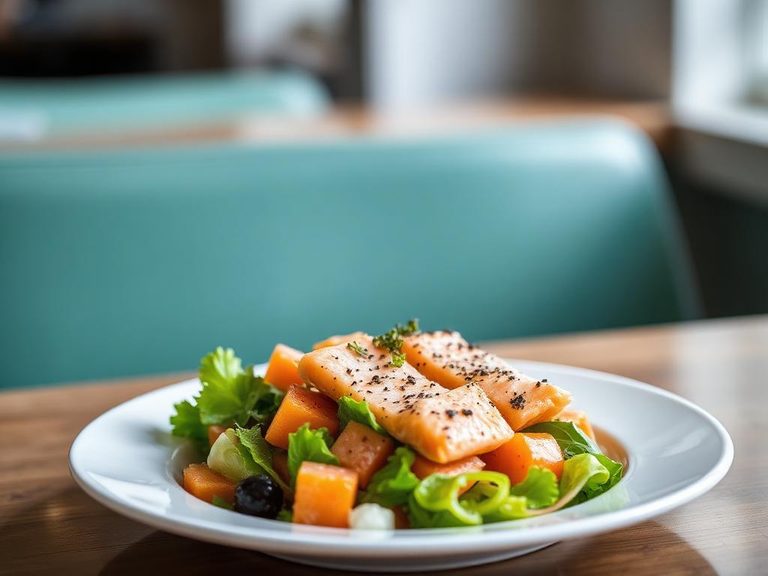
Photo: Wikipedia
This is wild-caught sockeye salmon, meticulously smoked using traditional Alaska Native methods, resulting in a deep ruby-red fillet with a firm, velvety texture. The cold-smoking process imparts a rich, savory, and subtly sweet woodsy flavor without cooking the flesh, preserving its natural oils. It is an exceptionally dense source of high-quality protein and heart-healthy omega-3 fats, with virtually no carbohydrates.
Calorie split: 70% protein · 0% carbs · 30% fat
↓ Full nutrition💚 Why it's loved
People adore it for its luxurious, melt-in-your-mouth texture and the complex, smoky-sweet flavor that is both bold and clean. It's a versatile staple in coastal cuisines, prized for its ability to elevate simple dishes or stand alone as a centerpiece.
⚠️ Watch-outs & how to enjoy it better
The smoking process can increase sodium content, which may be a concern for those monitoring salt intake. To counteract this, rinse the fillet briefly under cold water before serving and pair it with unsalted sides like fresh greens or plain grains. As a common fish allergen, it must be avoided by those with fish allergies.
Key benefits
- Exceptionally high in complete protein for muscle maintenance.
- Rich in long-chain omega-3 fatty acids (EPA & DHA) for brain and heart health.
- Excellent source of vitamin D, crucial for bone health and immunity.
- Contains astaxanthin, a potent antioxidant responsible for its red color.
- Naturally low in carbohydrates, making it suitable for keto and paleo diets.
🍽️ Popular dishes
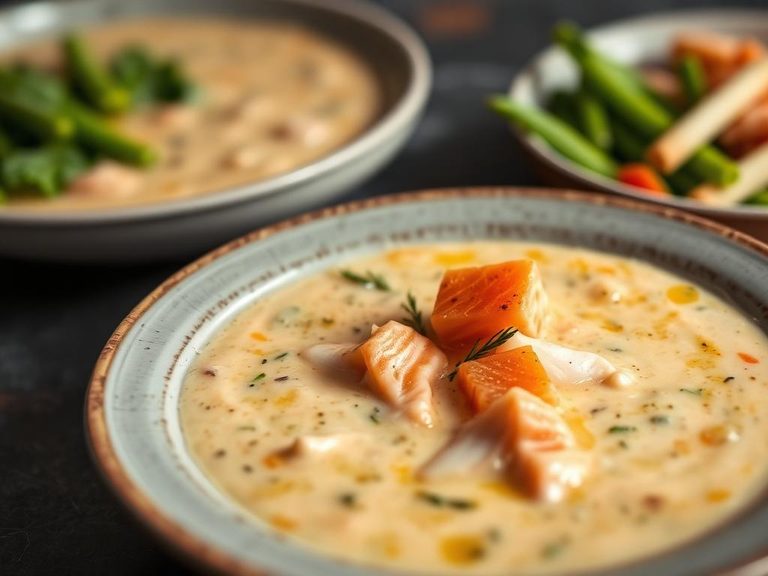
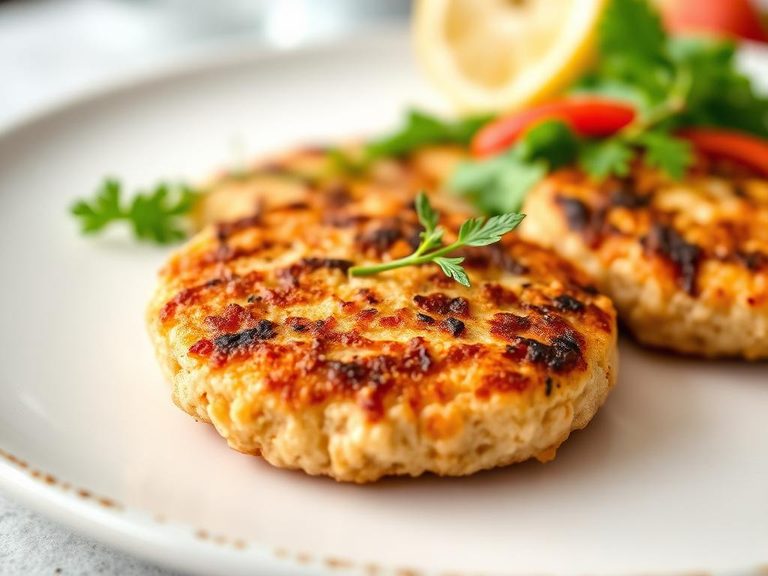

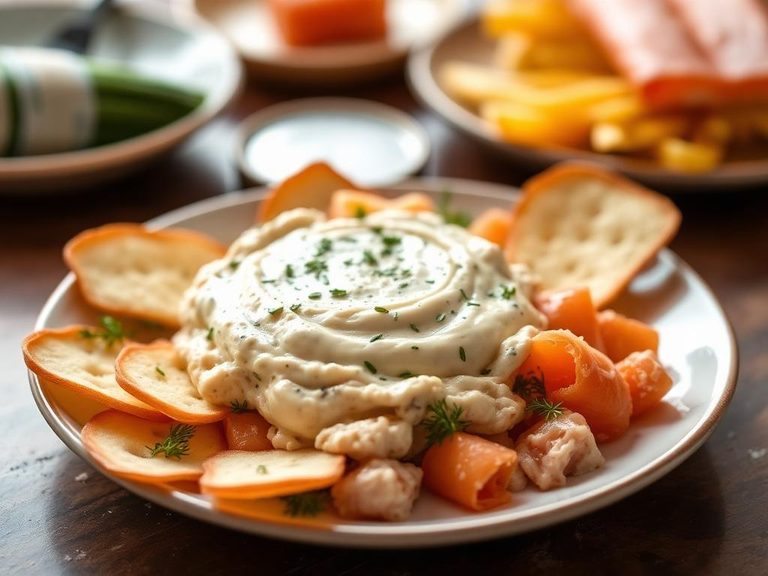
🌍 Where it's eaten
💡 Did you know?
Traditional Alaska Native smoking often uses a 'smokehouse' built over a shallow pit, where fish are hung on wooden racks and slowly dried and flavored by smoldering alder or cottonwood fires over several days.
Full nutrition (USDA data · scales with serving)
| Water | 23.9 g |
| Energy | 345 kcal |
| Energy | 1445 kj |
| Protein | 60.6 g |
| Total lipid (fat) | 11.4 g |
| Ash | 6.2 g |
| Carbohydrate, by difference | 0.00 g |
| Fiber, total dietary | 0.00 g |
| Total Sugars | 0.00 g |
| Sucrose | 0.00 g |
| Glucose | 0.00 g |
| Fructose | 0.00 g |
| Lactose | 0.00 g |
| Maltose | 0.00 g |
| Galactose | 0.00 g |
| Starch | 0.00 g |
| Calcium, Ca | 58.0 mg |
| Iron, Fe | 1.1 mg |
| Magnesium, Mg | 58.0 mg |
| Phosphorus, P | 650 mg |
| Potassium, K | 960 mg |
| Sodium, Na | 51.0 mg |
| Zinc, Zn | 1.1 mg |
| Copper, Cu | 0.15 mg |
| Manganese, Mn | 0.05 mg |
| Selenium, Se | 76.0 ug |
| Vitamin C, total ascorbic acid | 0.00 mg |
| Thiamin | 0.49 mg |
| Riboflavin | 0.54 mg |
| Niacin | 22.8 mg |
| Pantothenic acid | 2.7 mg |
| Vitamin B-6 | 0.82 mg |
| Folate, total | 9.0 ug |
| Folic acid | 0.00 ug |
| Folate, food | 9.0 ug |
| Folate, DFE | 9.0 ug |
| Choline, total | 224 mg |
| Betaine | 6.8 mg |
| Vitamin B-12 | 18.1 ug |
| Vitamin B-12, added | 0.00 ug |
| Vitamin A, RAE | 31.0 ug |
| Retinol | 31.0 ug |
| Carotene, beta | 0.00 ug |
| Carotene, alpha | 0.00 ug |
| Cryptoxanthin, beta | 0.00 ug |
| Vitamin A, IU | 103 iu |
| Lycopene | 0.00 ug |
| Lutein + zeaxanthin | 0.00 ug |
| Vitamin E (alpha-tocopherol) | 1.2 mg |
| Vitamin E, added | 0.00 mg |
| Tocopherol, beta | 0.03 mg |
| Tocopherol, gamma | 0.03 mg |
| Tocopherol, delta | 0.03 mg |
| Tocotrienol, alpha | 0.01 mg |
| Tocotrienol, beta | 0.00 mg |
| Tocotrienol, gamma | 0.00 mg |
| Tocotrienol, delta | 0.00 mg |
| Vitamin K (phylloquinone) | 0.00 ug |
| Vitamin K (Dihydrophylloquinone) | 0.00 ug |
| Vitamin K (Menaquinone-4) | 0.90 ug |
| Alcohol, ethyl | 0.00 g |
| Caffeine | 0.00 mg |
| Theobromine | 0.00 mg |
Fat & fatty acid profile (per 100g)
| Fatty acids, total saturated | 2.6 g |
| SFA 8:0 | 0.00 g |
| SFA 10:0 | 0.00 g |
| SFA 12:0 | 0.00 g |
| SFA 14:0 | 0.38 g |
| SFA 15:0 | 0.05 g |
| SFA 16:0 | 1.8 g |
| SFA 17:0 | 0.07 g |
| SFA 18:0 | 0.33 g |
| SFA 20:0 | 0.01 g |
| SFA 22:0 | 0.00 g |
| SFA 24:0 | 0.00 g |
| Fatty acids, total monounsaturated | 4.0 g |
| MUFA 14:1 | 0.00 g |
| MUFA 15:1 | 0.00 g |
| MUFA 16:1 | 0.37 g |
| MUFA 17:1 | 0.04 g |
| MUFA 18:1 | 2.2 g |
| MUFA 20:1 | 0.86 g |
| MUFA 22:1 | 0.54 g |
| MUFA 24:1 c | 0.04 g |
| Fatty acids, total polyunsaturated | 3.5 g |
| PUFA 18:2 | 0.18 g |
| PUFA 18:3 | 0.13 g |
| PUFA 18:4 | 0.14 g |
| PUFA 20:2 n-6 c,c | 0.03 g |
| PUFA 20:3 | 0.03 g |
| PUFA 20:4 | 0.18 g |
| PUFA 20:5 n-3 (EPA) | 0.91 g |
| PUFA 21:5 | 0.03 g |
| PUFA 22:4 | 0.01 g |
| PUFA 22:5 n-3 (DPA) | 0.31 g |
| PUFA 22:6 n-3 (DHA) | 1.5 g |
| Cholesterol | 155 mg |
Amino acid profile (per 100g)
Estimated from Fish, Salmon, Chum, raw (Alaska Native) — USDA does not publish this profile for Salmon.
| Tryptophan | 0.32 g |
| Threonine | 0.92 g |
| Isoleucine | 0.92 g |
| Leucine | 1.5 g |
| Lysine | 1.7 g |
| Methionine | 0.77 g |
| Cystine | 0.30 g |
| Phenylalanine | 0.84 g |
| Tyrosine | 1.1 g |
| Valine | 1.0 g |
| Arginine | 1.1 g |
| Histidine | 0.51 g |
| Alanine | 1.2 g |
| Aspartic acid | 2.5 g |
| Glutamic acid | 2.9 g |
| Glycine | 0.90 g |
| Proline | 0.69 g |
| Serine | 0.78 g |
FAQ
Is smoked salmon cooked?
Traditional cold-smoked salmon like this is not cooked with heat; it is preserved and flavored by salt and smoke, resulting in a silky, raw-like texture. Hot-smoked salmon is cooked through by the heat of the smoke.
How is Alaska Native smoked salmon different from other smoked salmon?
It often uses local wood (like alder) and traditional, slower cold-smoking techniques passed down for generations, focusing on preservation and a distinct, nuanced flavor profile.
What is the best way to store it?
Keep it refrigerated at or below 40°F (4°C), tightly wrapped. For longer storage, freeze it for up to 3 months. Once opened, consume within 3-5 days.
Nutrient density (calculated · NRF9.3)
Nutrient Rich Foods index: beneficial nutrients (protein, fiber, vitamins, minerals) minus saturated fat, added sugar & sodium, per 100 kcal.
NRF9.3 index — Fulgoni, Keast & Drewnowski, 2009. Computed from USDA nutrients.
Weight-loss friendliness (composite index)
Energy density 3.45 kcal/g · 70% calories from protein · 0.0 g fiber · 0.0 g sugar per 100 g.
Composite of energy density (Rolls et al., 1999), protein & fiber satiety, minus sugar. A calculated heuristic — ranks satiety-per-calorie, not a clinical measure.
Dietary load (calculated from USDA values)
Potential renal acid load. Positive = acid-forming, negative = alkaline-forming.
Sodium-to-potassium ratio: 0.05 (lower is better — aim for ≤ 1)
Sodium:potassium per WHO potassium guidance. Computed from USDA nutrients.