

Pinon Nuts, roasted (Navajo)
Whole food · American Indian/Alaska Native Foods

Photo: Wikipedia
Roasted Navajo piñon nuts are the small, buttery seeds of the piñon pine, prized for their rich, resinous aroma and satisfyingly crunchy yet creamy texture. Nutritionally, they are a powerhouse of fiber and healthy fats, with a notable protein content that makes them a substantial snack.
Calorie split: 5% protein · 38% carbs · 57% fat
↓ Full nutrition💚 Why it's loved
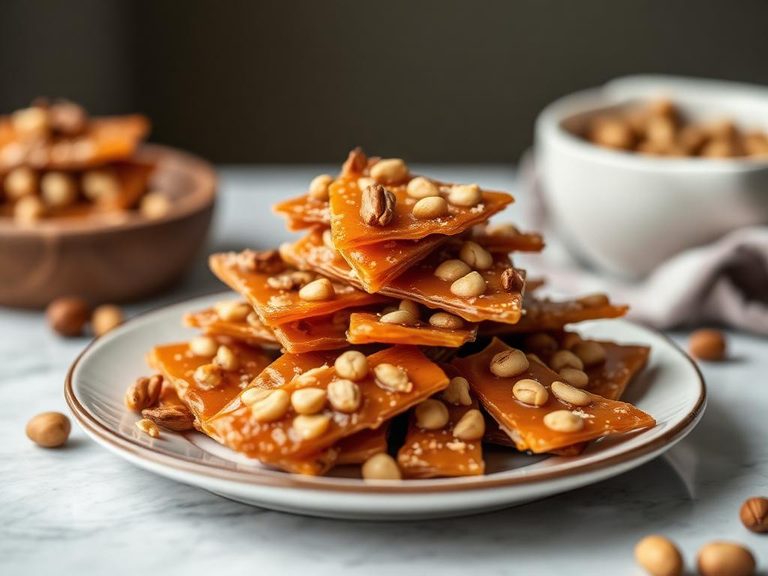
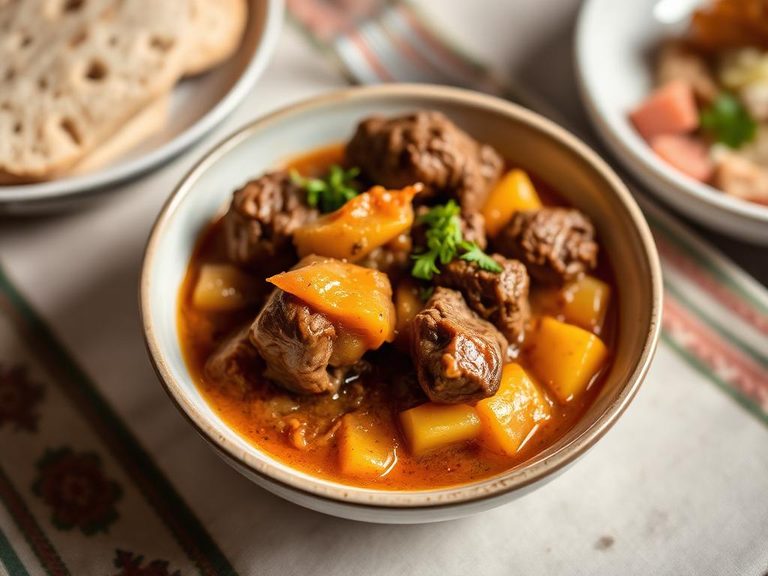
People cherish them for their unique, deep nutty flavor that intensifies with roasting, evoking the essence of the American Southwest. Their versatility shines in both savory dishes, like stews and salads, and sweet applications, such as brittle or ice cream toppings.
⚠️ Watch-outs & how to enjoy it better
Their high fat and calorie density means portion control is key for those managing weight. The extremely high fiber content can cause digestive discomfort if introduced too quickly; start with a small handful and drink plenty of water.
Key benefits
- Exceptionally high in dietary fiber (43.4g per 100g)
- Rich in heart-healthy monounsaturated fats
- Good plant-based source of protein
- Naturally gluten-free and sugar-free
🍽️ Popular dishes

🌍 Where it's eaten
💡 Did you know?
Harvesting piñon nuts is a labor-intensive process, as the pine cones must be gathered, dried, and cracked by hand or machine, making them a valuable and seasonal wild food.
Full nutrition (USDA data · scales with serving)
| Water | 5.0 g |
| Energy | 541 kcal |
| Energy | 2262 kj |
| Protein | 7.4 g |
| Total lipid (fat) | 34.1 g |
| Ash | 2.5 g |
| Carbohydrate, by difference | 51.1 g |
| Fiber, total dietary | 43.4 g |
| Sucrose | 3.5 g |
| Glucose | 0.15 g |
| Fructose | 0.30 g |
| Lactose | 0.00 g |
| Maltose | 0.00 g |
| Starch | 5.5 g |
| Calcium, Ca | 18.0 mg |
| Iron, Fe | 3.5 mg |
| Magnesium, Mg | 152 mg |
| Phosphorus, P | 345 mg |
| Potassium, K | 458 mg |
| Sodium, Na | 310 mg |
| Zinc, Zn | 2.9 mg |
| Copper, Cu | 0.65 mg |
| Manganese, Mn | 1.7 mg |
| Vitamin C, total ascorbic acid | 0.00 mg |
| Thiamin | 0.21 mg |
| Riboflavin | 0.22 mg |
| Niacin | 1.6 mg |
| Pantothenic acid | 0.79 mg |
| Vitamin B-6 | 0.12 mg |
| Folate, total | 7.0 ug |
| Folate, food | 7.0 ug |
| Vitamin E (alpha-tocopherol) | 11.3 mg |
| Tocopherol, gamma | 0.00 mg |
| Tocopherol, delta | 0.00 mg |
Fat & fatty acid profile (per 100g)
| Fatty acids, total saturated | 3.2 g |
| SFA 8:0 | 0.00 g |
| SFA 10:0 | 0.00 g |
| SFA 12:0 | 0.00 g |
| SFA 14:0 | 0.00 g |
| SFA 15:0 | 0.00 g |
| SFA 16:0 | 2.3 g |
| SFA 17:0 | 0.00 g |
| SFA 18:0 | 0.75 g |
| SFA 20:0 | 0.13 g |
| SFA 22:0 | 0.04 g |
| SFA 24:0 | 0.00 g |
| Fatty acids, total monounsaturated | 15.6 g |
| MUFA 14:1 | 0.00 g |
| MUFA 15:1 | 0.00 g |
| MUFA 16:1 | 0.06 g |
| MUFA 17:1 | 0.00 g |
| MUFA 18:1 | 15.3 g |
| MUFA 20:1 | 0.21 g |
| MUFA 22:1 | 0.00 g |
| Fatty acids, total polyunsaturated | 14.4 g |
| PUFA 18:2 | 14.2 g |
| PUFA 18:3 | 0.07 g |
| PUFA 18:3 n-3 c,c,c (ALA) | 0.07 g |
| PUFA 18:4 | 0.00 g |
| PUFA 20:2 n-6 c,c | 0.08 g |
| PUFA 20:3 | 0.00 g |
| PUFA 20:4 | 0.00 g |
| PUFA 20:5 n-3 (EPA) | 0.00 g |
| PUFA 22:5 n-3 (DPA) | 0.00 g |
| PUFA 22:6 n-3 (DHA) | 0.00 g |
FAQ
How do I roast piñon nuts at home?
Spread raw nuts in a single layer on a baking sheet. Roast at 350°F (175°C) for 5-10 minutes, stirring frequently, until fragrant and lightly golden. Watch closely as they burn quickly.
What's the difference between piñon nuts and pine nuts?
Piñon nuts specifically come from certain pine species native to the American Southwest (like Pinus edulis), while 'pine nuts' is a broader term for edible seeds from various pine trees worldwide. Piñon nuts are often smaller and more intensely flavored.
How should I store them?
Due to their high oil content, store in an airtight container in the refrigerator for up to 3 months or in the freezer for up to a year to prevent rancidity.
Nutrient density (calculated · NRF9.3)
Nutrient Rich Foods index: beneficial nutrients (protein, fiber, vitamins, minerals) minus saturated fat, added sugar & sodium, per 100 kcal.
NRF9.3 index — Fulgoni, Keast & Drewnowski, 2009. Computed from USDA nutrients.
Weight-loss friendliness (composite index)
Energy density 5.41 kcal/g · 5% calories from protein · 43.4 g fiber · 0.0 g sugar per 100 g.
Composite of energy density (Rolls et al., 1999), protein & fiber satiety, minus sugar. A calculated heuristic — ranks satiety-per-calorie, not a clinical measure.
Dietary load (calculated from USDA values)
Potential renal acid load. Positive = acid-forming, negative = alkaline-forming.
Sodium-to-potassium ratio: 0.68 (lower is better — aim for ≤ 1)
Sodium:potassium per WHO potassium guidance. Computed from USDA nutrients.