

Fish, Salmon, pink, canned, drained solids, without skin and bones
Whole food · Finfish and Shellfish Products

Photo: Wikipedia
This is lean, flaky pink salmon, canned and drained, with skin and bones removed for a clean, tender bite. It has a mild, savory flavor and a soft, moist texture that absorbs dressings and sauces beautifully. Nutritionally, it's a powerhouse of high-quality protein with minimal fat and zero carbohydrates.
Calorie split: 72% protein · 0% carbs · 28% fat
↓ Full nutrition💚 Why it's loved
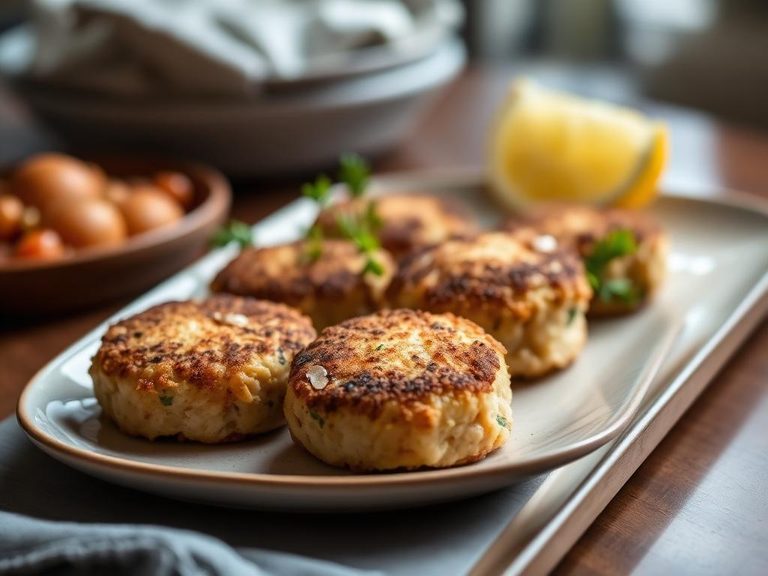
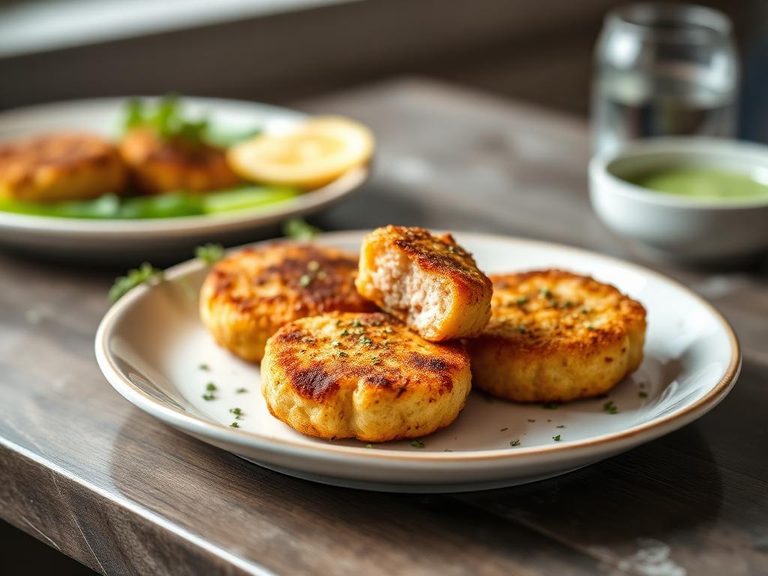
People love it for its incredible convenience and versatility—it's a ready-to-eat protein boost that can be mixed into salads, pastas, or sandwiches in seconds. Its mild, savory flavor is a crowd-pleaser, forming the beloved base of classics like salmon patties and fish cakes.
⚠️ Watch-outs & how to enjoy it better
The primary concern is the potential for high sodium content in the canning liquid, which can be an issue for those monitoring salt intake. To counteract this, rinse the salmon thoroughly under cold water before use, or look for 'no salt added' versions. As a common fish allergen, it must be avoided by those with fish allergies.
Key benefits
- Excellent source of complete protein (24.62g per 100g)
- Very low in fat (4.21g per 100g), primarily heart-healthy unsaturated fats
- Zero carbohydrates, making it ideal for low-carb and ketogenic diets
- Provides omega-3 fatty acids, known for supporting heart and brain health
- A convenient, shelf-stable source of lean animal protein
🍽️ Popular dishes

🌍 Where it's eaten
💡 Did you know?
The canning process actually increases the bioavailability of calcium in the salmon, as the heat softens the tiny bones (which are removed in this product) to the point where they become edible and digestible in traditional canned salmon.
Full nutrition (USDA data · scales with serving)
| Water | 70.6 g |
| Energy | 136 kcal |
| Energy | 570 kj |
| Protein | 24.6 g |
| Total lipid (fat) | 4.2 g |
| Ash | 1.9 g |
| Carbohydrate, by difference | 0.00 g |
| Fiber, total dietary | 0.00 g |
| Total Sugars | 0.00 g |
| Calcium, Ca | 60.0 mg |
| Iron, Fe | 0.57 mg |
| Magnesium, Mg | 24.0 mg |
| Phosphorus, P | 253 mg |
| Potassium, K | 326 mg |
| Sodium, Na | 378 mg |
| Zinc, Zn | 0.65 mg |
| Copper, Cu | 0.08 mg |
| Manganese, Mn | 0.01 mg |
| Selenium, Se | 39.6 ug |
| Vitamin C, total ascorbic acid | 0.00 mg |
| Thiamin | 0.03 mg |
| Riboflavin | 0.20 mg |
| Niacin | 7.4 mg |
| Vitamin B-6 | 0.10 mg |
| Folate, total | 4.0 ug |
| Folic acid | 0.00 ug |
| Folate, food | 4.0 ug |
| Folate, DFE | 4.0 ug |
| Choline, total | 88.0 mg |
| Vitamin B-12 | 5.0 ug |
| Vitamin B-12, added | 0.00 ug |
| Vitamin A, RAE | 20.0 ug |
| Retinol | 20.0 ug |
| Carotene, beta | 0.00 ug |
| Carotene, alpha | 0.00 ug |
| Cryptoxanthin, beta | 0.00 ug |
| Vitamin A, IU | 66.0 iu |
| Lycopene | 0.00 ug |
| Lutein + zeaxanthin | 0.00 ug |
| Vitamin E (alpha-tocopherol) | 1.3 mg |
| Vitamin E, added | 0.00 mg |
| Vitamin D (D2 + D3), International Units | 563 iu |
| Vitamin D (D2 + D3) | 14.1 ug |
| Vitamin D2 (ergocalciferol) | 0.00 ug |
| Vitamin D3 (cholecalciferol) | 14.1 ug |
| Vitamin K (phylloquinone) | 0.10 ug |
| Alcohol, ethyl | 0.00 g |
| Caffeine | 0.00 mg |
| Theobromine | 0.00 mg |
Fat & fatty acid profile (per 100g)
| Fatty acids, total saturated | 0.75 g |
| SFA 4:0 | 0.00 g |
| SFA 6:0 | 0.00 g |
| SFA 8:0 | 0.00 g |
| SFA 10:0 | 0.01 g |
| SFA 12:0 | 0.00 g |
| SFA 14:0 | 0.13 g |
| SFA 15:0 | 0.02 g |
| SFA 16:0 | 0.47 g |
| SFA 17:0 | 0.01 g |
| SFA 18:0 | 0.09 g |
| SFA 20:0 | 0.01 g |
| SFA 22:0 | 0.00 g |
| SFA 24:0 | 0.00 g |
| Fatty acids, total monounsaturated | 0.97 g |
| MUFA 14:1 | 0.00 g |
| MUFA 15:1 | 0.00 g |
| MUFA 16:1 | 0.12 g |
| MUFA 16:1 c | 0.11 g |
| MUFA 17:1 | 0.01 g |
| MUFA 18:1 | 0.46 g |
| MUFA 18:1 c | 0.45 g |
| MUFA 20:1 | 0.34 g |
| MUFA 22:1 | 0.04 g |
| MUFA 22:1 c | 0.04 g |
| MUFA 24:1 c | 0.01 g |
| Fatty acids, total polyunsaturated | 1.3 g |
| PUFA 18:2 | 0.07 g |
| PUFA 18:2 n-6 c,c | 0.06 g |
| PUFA 18:2 CLAs | 0.00 g |
| PUFA 18:3 | 0.04 g |
| PUFA 18:3 n-3 c,c,c (ALA) | 0.04 g |
| PUFA 18:3 n-6 c,c,c | 0.00 g |
| PUFA 18:4 | 0.11 g |
| PUFA 20:2 n-6 c,c | 0.01 g |
| PUFA 20:3 | 0.01 g |
| PUFA 20:3 n-3 | 0.01 g |
| PUFA 20:3 n-6 | 0.01 g |
| PUFA 20:4 | 0.02 g |
| PUFA 20:5 n-3 (EPA) | 0.27 g |
| PUFA 22:4 | 0.00 g |
| PUFA 22:5 n-3 (DPA) | 0.07 g |
| PUFA 22:6 n-3 (DHA) | 0.68 g |
| Fatty acids, total trans | 0.02 g |
| Fatty acids, total trans-monoenoic | 0.01 g |
| TFA 16:1 t | 0.01 g |
| TFA 18:1 t | 0.01 g |
| TFA 22:1 t | 0.00 g |
| TFA 18:2 t not further defined | 0.01 g |
| Fatty acids, total trans-polyenoic | 0.01 g |
| Cholesterol | 83.0 mg |
Amino acid profile (per 100g)
| Tryptophan | 0.27 g |
| Threonine | 1.3 g |
| Isoleucine | 1.1 g |
| Leucine | 1.9 g |
| Lysine | 2.1 g |
| Methionine | 0.69 g |
| Cystine | 0.19 g |
| Phenylalanine | 1.0 g |
| Tyrosine | 0.89 g |
| Valine | 1.3 g |
| Arginine | 1.5 g |
| Histidine | 0.65 g |
| Alanine | 1.6 g |
| Aspartic acid | 3.1 g |
| Glutamic acid | 3.5 g |
| Glycine | 1.5 g |
| Proline | 1.0 g |
| Serine | 1.1 g |
FAQ
Is canned salmon as healthy as fresh salmon?
Yes, it's an excellent and often more affordable alternative. The canning process preserves the high-quality protein and omega-3 fatty acids. The main difference is texture (softer) and the potential for added sodium, which can be rinsed off.
What's the best way to use it in cooking?
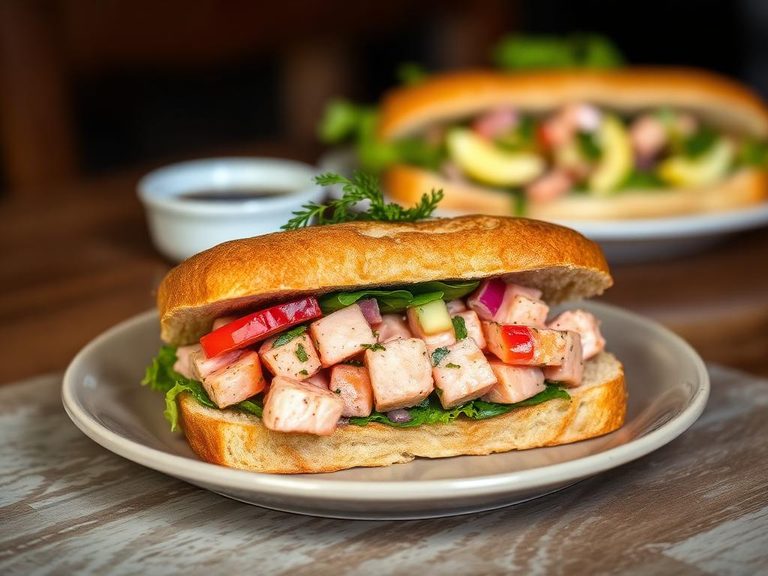
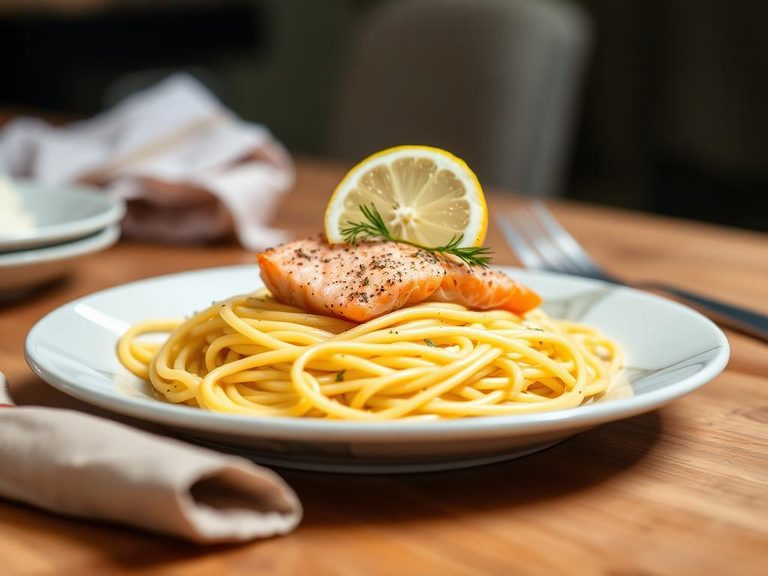
It's incredibly versatile. Flake it directly into salads, mix with mayonnaise or Greek yogurt for sandwiches, form into patties with breadcrumbs and egg, or stir into pasta sauces and omelets. It's ready to eat, so it just needs heating or combining.
Why is it pink?
The pink color comes from astaxanthin, a natural antioxidant pigment that salmon accumulate from eating krill and shrimp. This compound is stable and remains vibrant even after canning.
Nutrient density (calculated · NRF9.3)
Nutrient Rich Foods index: beneficial nutrients (protein, fiber, vitamins, minerals) minus saturated fat, added sugar & sodium, per 100 kcal.
NRF9.3 index — Fulgoni, Keast & Drewnowski, 2009. Computed from USDA nutrients.
Weight-loss friendliness (composite index)
Energy density 1.36 kcal/g · 72% calories from protein · 0.0 g fiber · 0.0 g sugar per 100 g.
Composite of energy density (Rolls et al., 1999), protein & fiber satiety, minus sugar. A calculated heuristic — ranks satiety-per-calorie, not a clinical measure.
Dietary load (calculated from USDA values)
Potential renal acid load. Positive = acid-forming, negative = alkaline-forming.
Sodium-to-potassium ratio: 1.16 (lower is better — aim for ≤ 1)
Sodium:potassium per WHO potassium guidance. Computed from USDA nutrients.