

Beans, baked, canned, with pork and tomato sauce
Whole food · Legumes and Legume Products

Photo: Wikipedia
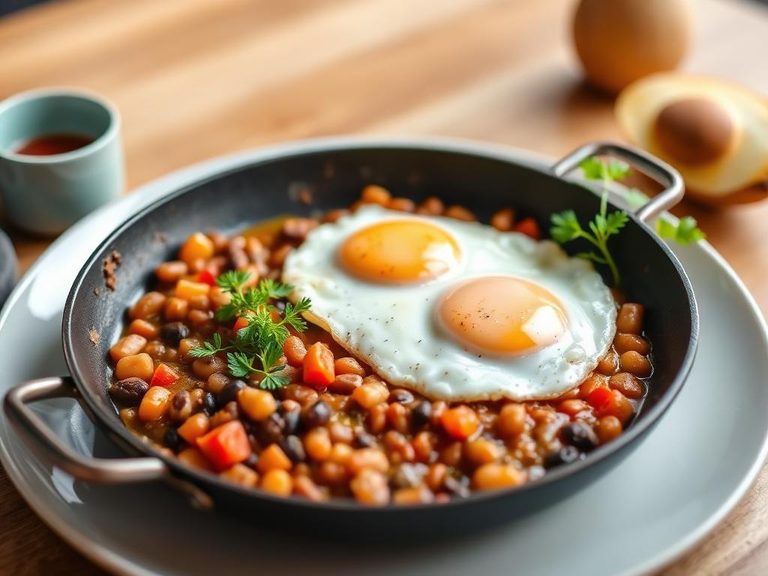
These are tender navy beans slow-simmered in a thick, savory-sweet tomato sauce with savory bits of pork. The texture is soft and hearty, with a rich, comforting flavor that balances smoky meatiness with a subtle tang. Nutritionally, it's a standout for its high fiber and solid protein content relative to its low calorie count.
Calorie split: 20% protein · 72% carbs · 8% fat
↓ Full nutrition💚 Why it's loved
People love it for its deep, savory, and slightly sweet flavor profile that feels like a warm hug in a bowl. Its incredible versatility makes it a beloved staple, equally at home as a simple side, a hearty topping, or the star of a quick meal.
⚠️ Watch-outs & how to enjoy it better
The primary concern is often the high sodium content from the canning process and added sauces, which can be problematic for blood pressure. Those monitoring blood sugar should also be mindful, as the combination of refined carbs and sugar can cause a spike. Counteract this by rinsing the beans thoroughly under water to reduce sodium by up to 40%, and pair them with a source of healthy fat or additional protein (like an egg or cheese) to slow digestion.
Key benefits
- Excellent source of dietary fiber for digestive health.
- Provides plant-based protein, enhanced by the pork.
- Low in fat, making it a lean, satisfying meal component.
- Rich in complex carbohydrates for sustained energy.
🍽️ Popular dishes
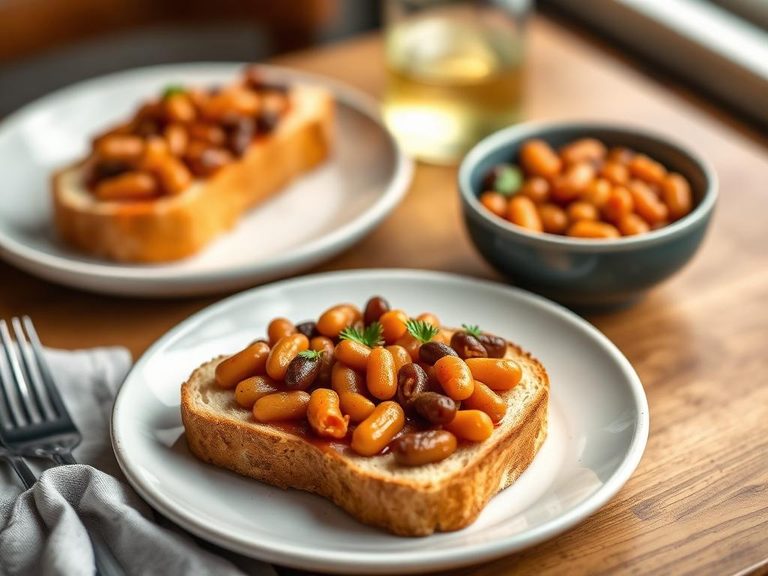
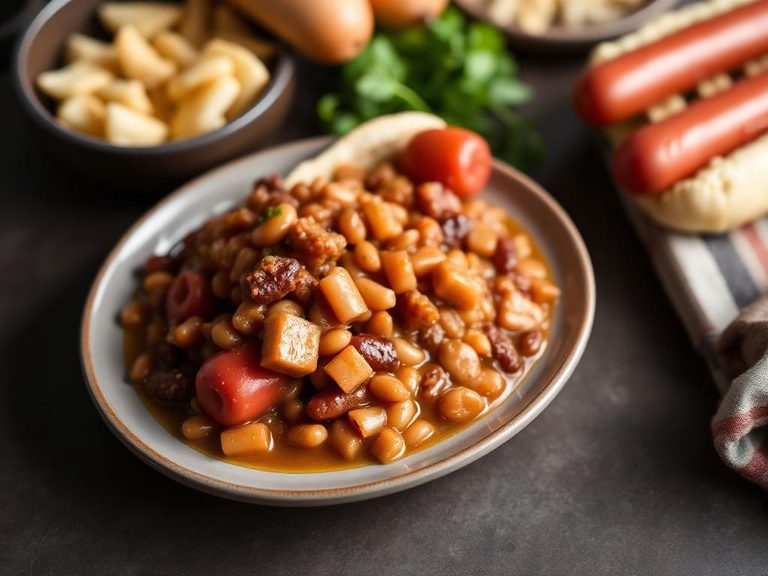
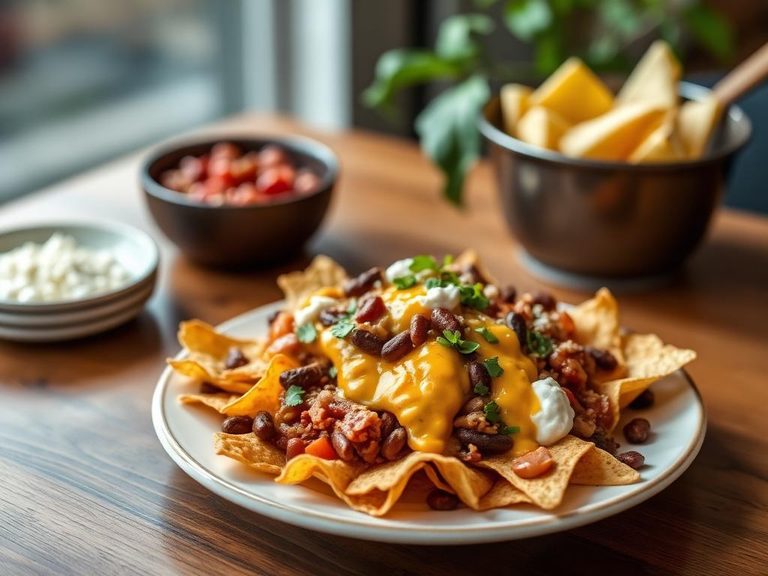
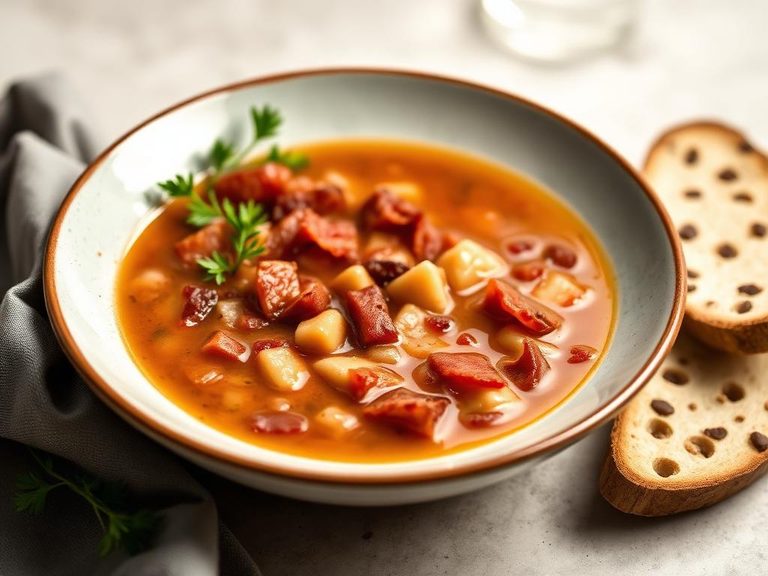
🌍 Where it's eaten
💡 Did you know?
The classic canned variety is most commonly made with small, white navy beans, which are prized for their ability to hold their shape during the long canning process while becoming perfectly creamy inside.
Full nutrition (USDA data · scales with serving)
| Water | 73.5 g |
| Energy | 94.0 kcal |
| Energy | 394 kj |
| Protein | 5.2 g |
| Total lipid (fat) | 0.93 g |
| Ash | 1.7 g |
| Carbohydrate, by difference | 18.7 g |
| Fiber, total dietary | 4.0 g |
| Total Sugars | 5.7 g |
| Sucrose | 3.4 g |
| Glucose | 1.2 g |
| Fructose | 1.0 g |
| Lactose | 0.00 g |
| Maltose | 0.09 g |
| Galactose | 0.00 g |
| Starch | 8.1 g |
| Calcium, Ca | 56.0 mg |
| Iron, Fe | 3.2 mg |
| Magnesium, Mg | 34.0 mg |
| Phosphorus, P | 116 mg |
| Potassium, K | 295 mg |
| Sodium, Na | 437 mg |
| Zinc, Zn | 5.5 mg |
| Copper, Cu | 0.21 mg |
| Manganese, Mn | 0.30 mg |
| Selenium, Se | 4.7 ug |
| Vitamin C, total ascorbic acid | 3.0 mg |
| Thiamin | 0.05 mg |
| Riboflavin | 0.05 mg |
| Niacin | 0.49 mg |
| Pantothenic acid | 0.39 mg |
| Vitamin B-6 | 0.06 mg |
| Folate, total | 15.0 ug |
| Folic acid | 0.00 ug |
| Folate, food | 15.0 ug |
| Folate, DFE | 15.0 ug |
| Choline, total | 39.2 mg |
| Betaine | 0.40 mg |
| Vitamin B-12 | 0.00 ug |
| Vitamin B-12, added | 0.00 ug |
| Vitamin A, RAE | 4.0 ug |
| Retinol | 0.00 ug |
| Carotene, beta | 50.0 ug |
| Carotene, alpha | 0.00 ug |
| Cryptoxanthin, beta | 0.00 ug |
| Vitamin A, IU | 84.0 iu |
| Lycopene | 322 ug |
| Lutein + zeaxanthin | 14.0 ug |
| Vitamin E (alpha-tocopherol) | 0.10 mg |
| Vitamin E, added | 0.00 mg |
| Tocopherol, beta | 0.00 mg |
| Tocopherol, gamma | 0.61 mg |
| Tocopherol, delta | 0.04 mg |
| Tocotrienol, alpha | 0.04 mg |
| Tocotrienol, beta | 0.00 mg |
| Tocotrienol, gamma | 0.00 mg |
| Tocotrienol, delta | 0.00 mg |
| Vitamin D (D2 + D3), International Units | 0.00 iu |
| Vitamin D (D2 + D3) | 0.00 ug |
| Vitamin K (phylloquinone) | 0.50 ug |
| Vitamin K (Dihydrophylloquinone) | 0.00 ug |
| Alcohol, ethyl | 0.00 g |
| Caffeine | 0.00 mg |
| Theobromine | 0.00 mg |
Fat & fatty acid profile (per 100g)
| Fatty acids, total saturated | 0.29 g |
| SFA 4:0 | 0.00 g |
| SFA 6:0 | 0.00 g |
| SFA 8:0 | 0.00 g |
| SFA 10:0 | 0.00 g |
| SFA 12:0 | 0.00 g |
| SFA 13:0 | 0.00 g |
| SFA 14:0 | 0.01 g |
| SFA 15:0 | 0.00 g |
| SFA 16:0 | 0.17 g |
| SFA 17:0 | 0.00 g |
| SFA 18:0 | 0.11 g |
| SFA 20:0 | 0.00 g |
| SFA 22:0 | 0.00 g |
| SFA 24:0 | 0.00 g |
| Fatty acids, total monounsaturated | 0.28 g |
| MUFA 14:1 | 0.00 g |
| MUFA 15:1 | 0.00 g |
| MUFA 16:1 | 0.01 g |
| MUFA 17:1 | 0.00 g |
| MUFA 18:1 | 0.26 g |
| MUFA 18:1 c | 0.26 g |
| MUFA 20:1 | 0.00 g |
| MUFA 22:1 | 0.00 g |
| Fatty acids, total polyunsaturated | 0.16 g |
| PUFA 18:2 | 0.11 g |
| PUFA 18:3 | 0.04 g |
| PUFA 18:3 n-3 c,c,c (ALA) | 0.04 g |
| PUFA 18:3 n-6 c,c,c | 0.00 g |
| PUFA 18:4 | 0.00 g |
| PUFA 20:2 n-6 c,c | 0.00 g |
| PUFA 20:3 | 0.00 g |
| PUFA 20:4 | 0.00 g |
| PUFA 20:5 n-3 (EPA) | 0.00 g |
| PUFA 22:5 n-3 (DPA) | 0.00 g |
| PUFA 22:6 n-3 (DHA) | 0.00 g |
| Fatty acids, total trans | 0.00 g |
| TFA 18:1 t | 0.00 g |
| Cholesterol | 7.0 mg |
Amino acid profile (per 100g)
| Tryptophan | 0.07 g |
| Threonine | 0.14 g |
| Isoleucine | 0.22 g |
| Leucine | 0.38 g |
| Lysine | 0.33 g |
| Methionine | 0.04 g |
| Cystine | 0.04 g |
| Phenylalanine | 0.24 g |
| Tyrosine | 0.12 g |
| Valine | 0.25 g |
| Arginine | 0.23 g |
| Histidine | 0.12 g |
| Alanine | 0.18 g |
| Aspartic acid | 0.60 g |
| Glutamic acid | 0.74 g |
| Glycine | 0.18 g |
| Proline | 0.26 g |
| Serine | 0.29 g |
| Hydroxyproline | 0.00 g |
FAQ
Are baked beans with pork vegetarian?
No, traditional canned baked beans with pork contain pork products (like bacon or salt pork) for flavor. Vegetarian versions are widely available and use liquid smoke or other seasonings to mimic the savory taste.
Can I eat baked beans straight from the can?
Yes, canned baked beans are fully cooked during the canning process and are safe to eat cold. However, they are most commonly heated and served warm to enhance their flavor and texture.
How can I reduce the sugar content?
Look for 'reduced sugar' or 'no added sugar' varieties on the label. Alternatively, you can rinse the beans thoroughly to remove some of the sugary sauce, or make a homemade version where you control the amount of sweetener.
Nutrient density (calculated · NRF9.3)
Nutrient Rich Foods index: beneficial nutrients (protein, fiber, vitamins, minerals) minus saturated fat, added sugar & sodium, per 100 kcal.
NRF9.3 index — Fulgoni, Keast & Drewnowski, 2009. Computed from USDA nutrients.
Weight-loss friendliness (composite index)
Energy density 0.94 kcal/g · 22% calories from protein · 4.0 g fiber · 5.7 g sugar per 100 g.
Composite of energy density (Rolls et al., 1999), protein & fiber satiety, minus sugar. A calculated heuristic — ranks satiety-per-calorie, not a clinical measure.
Dietary load (calculated from USDA values)
Potential renal acid load. Positive = acid-forming, negative = alkaline-forming.
Sodium-to-potassium ratio: 1.48 (lower is better — aim for ≤ 1)
Sodium:potassium per WHO potassium guidance. Computed from USDA nutrients.