

Spices, mustard seed, ground
Whole food · Spices and Herbs

Photo: Wikipedia
Ground mustard seed is a pungent, dry powder made from the seeds of the mustard plant, delivering a sharp, sinus-clearing heat and a slightly bitter, nutty flavor. Nutritionally, it's a calorie-dense spice packed with protein, healthy fats, and a significant dose of dietary fiber.
Calorie split: 19% protein · 21% carbs · 60% fat
↓ Full nutrition💚 Why it's loved
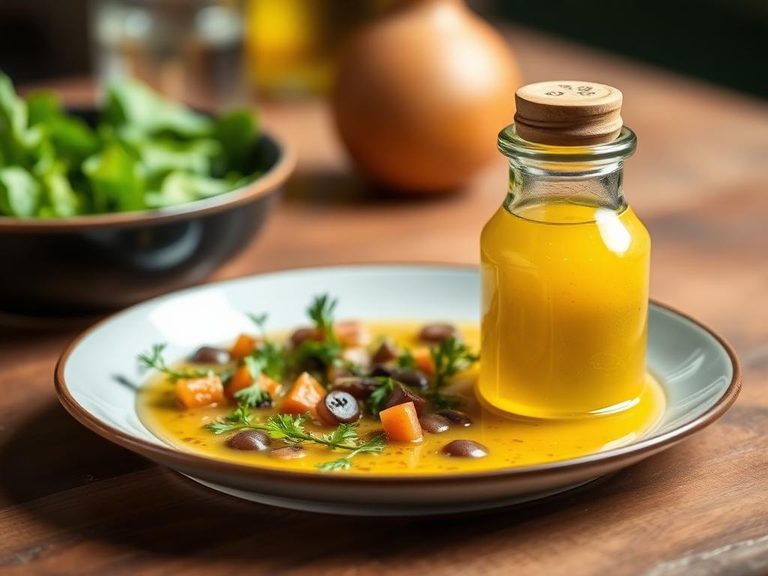
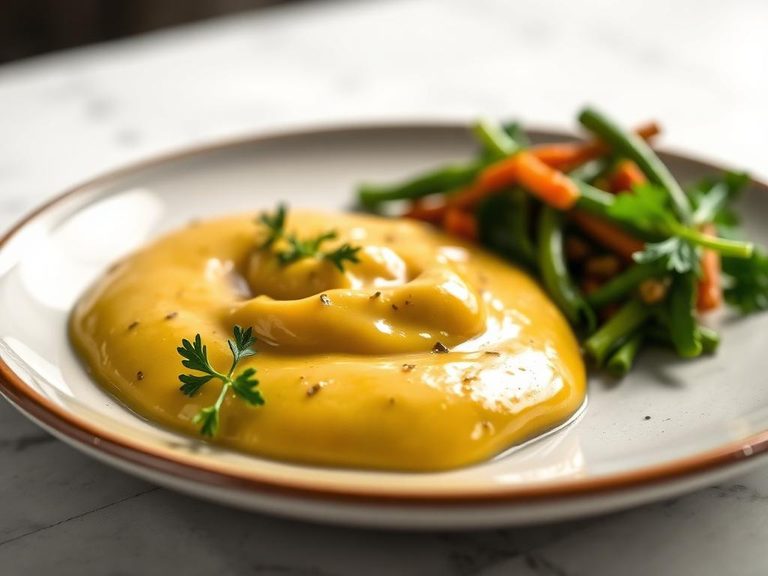
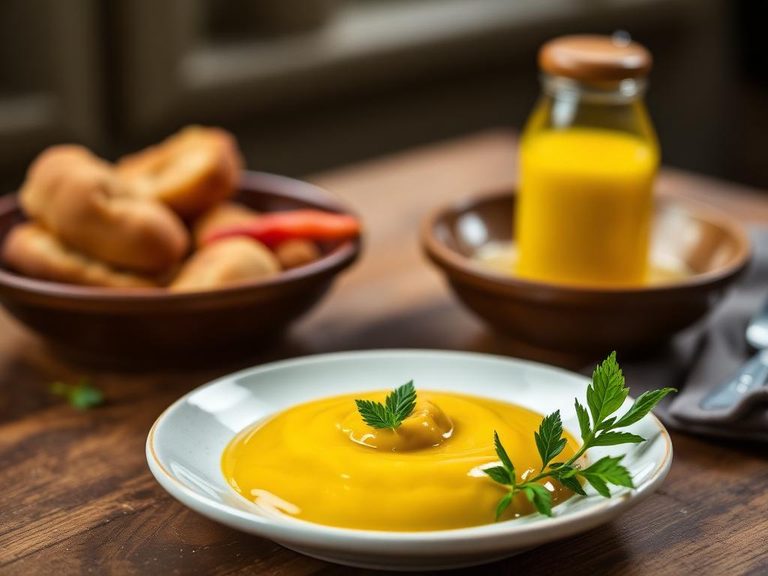
People love it for its intense, complex heat that builds and then fades, unlike the one-note burn of chili. Its versatility allows it to anchor everything from creamy salad dressings and marinades to dry rubs and pickling brines.
⚠️ Watch-outs & how to enjoy it better
The potent, volatile compounds can cause digestive discomfort or heartburn in sensitive individuals. For those monitoring blood sugar, the 6.79g of sugar per 100g is notable, though typical culinary use is very small. To mitigate, always use measured portions and pair it in dishes containing fat or protein (like in a mayonnaise-based sauce or meat marinade) to slow absorption.
Key benefits
- Rich in plant-based protein for a spice
- High in dietary fiber, supporting digestion
- Contains selenium and magnesium
- Source of glucosinolates, compounds studied for health properties
- Adds flavor without added sodium or sugar
🍽️ Popular dishes

🌍 Where it's eaten
💡 Did you know?
The heat in mustard powder is not present in the seed itself; it's created by a chemical reaction when the ground seed mixes with cool water, releasing the enzyme myrosinase.
Full nutrition (USDA data · scales with serving)
| Water | 5.3 g |
| Energy | 508 kcal |
| Energy | 2126 kj |
| Protein | 26.1 g |
| Total lipid (fat) | 36.2 g |
| Ash | 4.3 g |
| Carbohydrate, by difference | 28.1 g |
| Fiber, total dietary | 12.2 g |
| Total Sugars | 6.8 g |
| Sucrose | 3.7 g |
| Glucose | 2.9 g |
| Fructose | 0.02 g |
| Lactose | 0.00 g |
| Maltose | 0.00 g |
| Galactose | 0.20 g |
| Calcium, Ca | 266 mg |
| Iron, Fe | 9.2 mg |
| Magnesium, Mg | 370 mg |
| Phosphorus, P | 828 mg |
| Potassium, K | 738 mg |
| Sodium, Na | 13.0 mg |
| Zinc, Zn | 6.1 mg |
| Copper, Cu | 0.65 mg |
| Manganese, Mn | 2.4 mg |
| Selenium, Se | 208 ug |
| Vitamin C, total ascorbic acid | 7.1 mg |
| Thiamin | 0.81 mg |
| Riboflavin | 0.26 mg |
| Niacin | 4.7 mg |
| Pantothenic acid | 0.81 mg |
| Vitamin B-6 | 0.40 mg |
| Folate, total | 162 ug |
| Folic acid | 0.00 ug |
| Folate, food | 162 ug |
| Folate, DFE | 162 ug |
| Choline, total | 123 mg |
| Betaine | 1.9 mg |
| Vitamin B-12 | 0.00 ug |
| Vitamin B-12, added | 0.00 ug |
| Vitamin A, RAE | 2.0 ug |
| Retinol | 0.00 ug |
| Carotene, beta | 18.0 ug |
| Carotene, alpha | 0.00 ug |
| Cryptoxanthin, beta | 0.00 ug |
| Vitamin A, IU | 31.0 iu |
| Lycopene | 0.00 ug |
| Lutein + zeaxanthin | 568 ug |
| Vitamin E (alpha-tocopherol) | 5.1 mg |
| Vitamin E, added | 0.00 mg |
| Tocopherol, beta | 0.00 mg |
| Tocopherol, gamma | 19.8 mg |
| Tocopherol, delta | 0.81 mg |
| Tocotrienol, alpha | 0.00 mg |
| Tocotrienol, beta | 0.00 mg |
| Tocotrienol, gamma | 0.07 mg |
| Tocotrienol, delta | 0.00 mg |
| Vitamin D (D2 + D3), International Units | 0.00 iu |
| Vitamin D (D2 + D3) | 0.00 ug |
| Vitamin K (phylloquinone) | 5.4 ug |
| Vitamin K (Dihydrophylloquinone) | 0.00 ug |
| Alcohol, ethyl | 0.00 g |
| Caffeine | 0.00 mg |
| Theobromine | 0.00 mg |
Fat & fatty acid profile (per 100g)
| Fatty acids, total saturated | 2.0 g |
| SFA 4:0 | 0.00 g |
| SFA 6:0 | 0.00 g |
| SFA 8:0 | 0.00 g |
| SFA 10:0 | 0.00 g |
| SFA 12:0 | 0.00 g |
| SFA 13:0 | 0.00 g |
| SFA 14:0 | 0.00 g |
| SFA 15:0 | 0.00 g |
| SFA 16:0 | 0.98 g |
| SFA 17:0 | 0.00 g |
| SFA 18:0 | 0.46 g |
| SFA 20:0 | 0.28 g |
| SFA 22:0 | 0.17 g |
| SFA 24:0 | 0.10 g |
| Fatty acids, total monounsaturated | 22.5 g |
| MUFA 14:1 | 0.00 g |
| MUFA 15:1 | 0.00 g |
| MUFA 16:1 | 0.06 g |
| MUFA 17:1 | 0.00 g |
| MUFA 18:1 | 8.5 g |
| MUFA 20:1 | 4.0 g |
| MUFA 22:1 | 9.4 g |
| MUFA 24:1 c | 0.64 g |
| Fatty acids, total polyunsaturated | 10.1 g |
| PUFA 18:2 | 5.9 g |
| PUFA 18:3 | 3.8 g |
| PUFA 18:3 n-6 c,c,c | 0.00 g |
| PUFA 18:4 | 0.00 g |
| PUFA 20:2 n-6 c,c | 0.25 g |
| PUFA 20:4 | 0.00 g |
| PUFA 20:5 n-3 (EPA) | 0.00 g |
| PUFA 22:5 n-3 (DPA) | 0.00 g |
| PUFA 22:6 n-3 (DHA) | 0.00 g |
| Fatty acids, total trans | 0.00 g |
| Fatty acids, total trans-monoenoic | 0.00 g |
| TFA 18:1 t | 0.00 g |
| Cholesterol | 0.00 mg |
| Phytosterols | 118 mg |
Amino acid profile (per 100g)
| Tryptophan | 0.26 g |
| Threonine | 0.84 g |
| Isoleucine | 1.2 g |
| Leucine | 2.1 g |
| Lysine | 1.8 g |
| Methionine | 0.48 g |
| Cystine | 0.68 g |
| Phenylalanine | 1.2 g |
| Tyrosine | 0.81 g |
| Valine | 1.5 g |
| Arginine | 1.9 g |
| Histidine | 0.88 g |
| Alanine | 1.2 g |
| Aspartic acid | 2.4 g |
| Glutamic acid | 5.3 g |
| Glycine | 1.6 g |
| Proline | 2.8 g |
| Serine | 0.76 g |
| Hydroxyproline | 0.00 g |
FAQ
What's the difference between ground mustard and prepared mustard?
Ground mustard is the dry, powdered seed. Prepared mustard is a condiment made by mixing the powder with liquid (water, vinegar, wine) and other ingredients like salt, spices, or mayonnaise.
How should I store ground mustard?
Store it in an airtight container in a cool, dark place. While it won't spoil, its potent flavor and heat diminish over time; for best results, use within 1-2 years.
Can I use ground mustard as a direct substitute for mustard seeds?
Not directly. Ground mustard is much more potent and lacks the textural pop of whole seeds. Use about 1 teaspoon of powder for every 1 tablespoon of whole seeds called for in a recipe.
Nutrient density (calculated · NRF9.3)
Nutrient Rich Foods index: beneficial nutrients (protein, fiber, vitamins, minerals) minus saturated fat, added sugar & sodium, per 100 kcal.
NRF9.3 index — Fulgoni, Keast & Drewnowski, 2009. Computed from USDA nutrients.
Weight-loss friendliness (composite index)
Energy density 5.08 kcal/g · 21% calories from protein · 12.2 g fiber · 6.8 g sugar per 100 g.
Composite of energy density (Rolls et al., 1999), protein & fiber satiety, minus sugar. A calculated heuristic — ranks satiety-per-calorie, not a clinical measure.
Dietary load (calculated from USDA values)
Potential renal acid load. Positive = acid-forming, negative = alkaline-forming.
Sodium-to-potassium ratio: 0.02 (lower is better — aim for ≤ 1)
Sodium:potassium per WHO potassium guidance. Computed from USDA nutrients.