

Spanish rice mix, dry mix, unprepared
Whole food · Meals, Entrees, and Side Dishes

Photo: Wikipedia
A dry blend of long-grain rice, tomato powder, and a signature mix of spices like cumin, garlic, and onion, this mix transforms into a fluffy, savory side dish with a vibrant reddish-orange hue. It delivers a warm, aromatic flavor profile that is mildly tangy and earthy, with a texture that is tender yet distinct. Nutritionally, it is a high-carbohydrate, low-fat staple that provides a quick source of energy and a modest amount of plant-based protein.
Calorie split: 12% protein · 84% carbs · 4% fat
↓ Full nutrition💚 Why it's loved
People love it for its deep, savory flavor that pairs perfectly with Mexican and Tex-Mex cuisines, adding a rich, tomato-infused depth to any meal. Its versatility makes it a go-to side for tacos, enchiladas, or a simple bowl of beans and rice, embodying the comforting, communal spirit of Latin American home cooking.
⚠️ Watch-outs & how to enjoy it better
The mix is often high in sodium, which can contribute to water retention and elevated blood pressure in sensitive individuals. To counteract this, choose low-sodium versions or rinse the cooked rice, and pair it with fresh, potassium-rich vegetables like avocado or bell peppers to balance the mineral profile. Additionally, its high carbohydrate load can cause rapid blood sugar spikes, so it is best consumed alongside a source of protein or healthy fat (like grilled chicken or beans) and in controlled portions.
Key benefits
- Excellent source of quick-release carbohydrates for energy
- Low in fat, making it suitable for low-fat dietary patterns
- Provides a modest amount of plant-based protein
- Convenient, shelf-stable pantry staple for rapid meal preparation
- Rich in complex carbohydrates and dietary fiber for satiety
🍽️ Popular dishes
🌍 Where it's eaten
💡 Did you know?
Despite its name, 'Spanish rice' is not a traditional dish from Spain; it is a Mexican-American invention that gained popularity in the United States during the early 20th century, likely adapted from Mexican 'arroz rojo'.
Full nutrition (USDA data · scales with serving)
| Water | 7.3 g |
| Energy | 363 kcal |
| Energy | 1518 kj |
| Protein | 10.6 g |
| Total lipid (fat) | 1.6 g |
| Ash | 4.0 g |
| Carbohydrate, by difference | 76.5 g |
| Fiber, total dietary | 3.1 g |
| Total Sugars | 3.8 g |
| Sucrose | 0.62 g |
| Glucose | 1.4 g |
| Fructose | 0.91 g |
| Lactose | 0.00 g |
| Maltose | 0.93 g |
| Galactose | 0.00 g |
| Starch | 66.0 g |
| Calcium, Ca | 29.0 mg |
| Iron, Fe | 3.3 mg |
| Magnesium, Mg | 37.0 mg |
| Phosphorus, P | 146 mg |
| Potassium, K | 445 mg |
| Sodium, Na | 1085 mg |
| Zinc, Zn | 1.0 mg |
| Copper, Cu | 0.19 mg |
| Manganese, Mn | 0.79 mg |
| Selenium, Se | 33.1 ug |
| Thiamin | 0.82 mg |
| Riboflavin | 0.29 mg |
| Niacin | 7.2 mg |
| Pantothenic acid | 0.63 mg |
| Vitamin B-6 | 0.25 mg |
| Folate, total | 162 ug |
| Vitamin A, RAE | 23.0 ug |
| Carotene, beta | 255 ug |
| Carotene, alpha | 1.0 ug |
| Cryptoxanthin, beta | 52.0 ug |
| Vitamin A, IU | 469 iu |
| Lycopene | 3677 ug |
| Lutein + zeaxanthin | 245 ug |
| Vitamin E (alpha-tocopherol) | 0.86 mg |
| Tocopherol, beta | 0.05 mg |
| Tocopherol, gamma | 0.14 mg |
| Tocopherol, delta | 0.02 mg |
| Tocotrienol, alpha | 0.06 mg |
| Tocotrienol, beta | 0.39 mg |
| Tocotrienol, gamma | 0.16 mg |
| Tocotrienol, delta | 0.00 mg |
| Vitamin K (phylloquinone) | 2.7 ug |
| Vitamin K (Dihydrophylloquinone) | 0.00 ug |
| Vitamin K (Menaquinone-4) | 0.00 ug |
Fat & fatty acid profile (per 100g)
| Fatty acids, total saturated | 0.40 g |
| SFA 4:0 | 0.00 g |
| SFA 6:0 | 0.00 g |
| SFA 8:0 | 0.00 g |
| SFA 10:0 | 0.00 g |
| SFA 12:0 | 0.00 g |
| SFA 14:0 | 0.01 g |
| SFA 15:0 | 0.00 g |
| SFA 16:0 | 0.33 g |
| SFA 17:0 | 0.00 g |
| SFA 18:0 | 0.04 g |
| SFA 20:0 | 0.00 g |
| SFA 22:0 | 0.01 g |
| SFA 24:0 | 0.01 g |
| Fatty acids, total monounsaturated | 0.34 g |
| MUFA 14:1 | 0.00 g |
| MUFA 15:1 | 0.00 g |
| MUFA 16:1 | 0.00 g |
| MUFA 16:1 c | 0.00 g |
| MUFA 17:1 | 0.00 g |
| MUFA 18:1 | 0.34 g |
| MUFA 18:1 c | 0.32 g |
| MUFA 20:1 | 0.00 g |
| MUFA 22:1 | 0.00 g |
| MUFA 22:1 c | 0.00 g |
| MUFA 24:1 c | 0.00 g |
| Fatty acids, total polyunsaturated | 0.60 g |
| PUFA 18:2 | 0.57 g |
| PUFA 18:2 n-6 c,c | 0.57 g |
| PUFA 18:2 CLAs | 0.00 g |
| PUFA 18:3 | 0.03 g |
| PUFA 18:3 n-3 c,c,c (ALA) | 0.03 g |
| PUFA 18:3 n-6 c,c,c | 0.00 g |
| PUFA 18:3i | 0.00 g |
| PUFA 18:4 | 0.00 g |
| PUFA 20:2 n-6 c,c | 0.00 g |
| PUFA 20:3 | 0.00 g |
| PUFA 20:3 n-3 | 0.00 g |
| PUFA 20:3 n-6 | 0.00 g |
| PUFA 20:4 | 0.00 g |
| PUFA 20:5 n-3 (EPA) | 0.00 g |
| PUFA 22:4 | 0.00 g |
| PUFA 22:5 n-3 (DPA) | 0.00 g |
| PUFA 22:6 n-3 (DHA) | 0.00 g |
| Fatty acids, total trans | 0.02 g |
| Fatty acids, total trans-monoenoic | 0.02 g |
| TFA 16:1 t | 0.00 g |
| TFA 18:1 t | 0.02 g |
| TFA 22:1 t | 0.00 g |
| TFA 18:2 t not further defined | 0.01 g |
| Fatty acids, total trans-polyenoic | 0.01 g |
Amino acid profile (per 100g)
Estimated from Restaurant, Mexican, spanish rice — USDA does not publish this profile for Spanish rice mix.
| Tryptophan | 0.04 g |
| Threonine | 0.10 g |
| Isoleucine | 0.11 g |
| Leucine | 0.24 g |
| Lysine | 0.13 g |
| Methionine | 0.07 g |
| Cystine | 0.07 g |
| Phenylalanine | 0.15 g |
| Tyrosine | 0.10 g |
| Valine | 0.14 g |
| Arginine | 0.26 g |
| Histidine | 0.07 g |
| Alanine | 0.17 g |
| Aspartic acid | 0.27 g |
| Glutamic acid | 0.61 g |
| Glycine | 0.14 g |
| Proline | 0.14 g |
| Serine | 0.15 g |
| Hydroxyproline | 0.00 g |
FAQ
Is Spanish rice mix gluten-free?
Most Spanish rice mixes are naturally gluten-free as they are primarily made from rice and spices. However, always check the label for any added thickeners or flavorings that might contain gluten, especially if you have celiac disease.
How much sodium is in a typical serving?
A standard 100g serving can contain between 600-1200mg of sodium, depending on the brand. This is a significant portion of the recommended daily limit, so it's wise to monitor intake, especially for those with hypertension.
Can I use this mix as a base for other dishes?
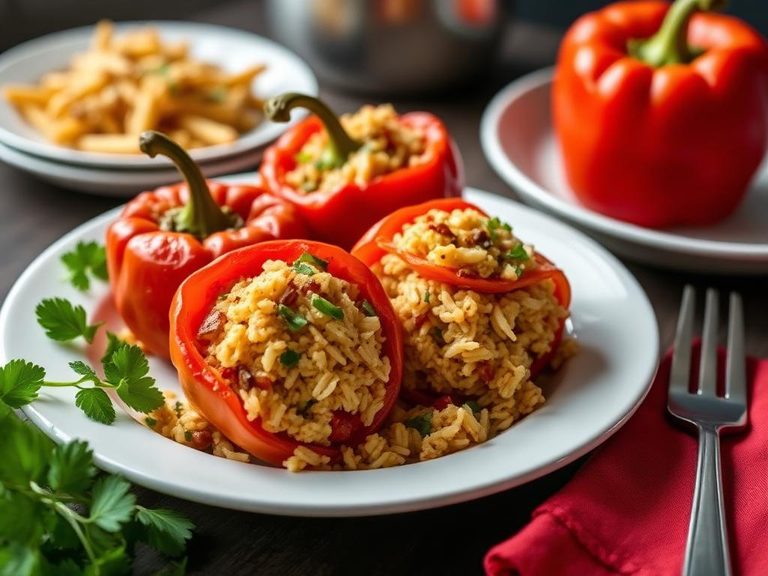
Absolutely. It's a versatile base for casseroles, stuffed peppers, or as a bed for grilled meats and vegetables. You can also add diced tomatoes, corn, or black beans to enhance its nutritional profile and flavor.
Nutrient density (calculated · NRF9.3)
Nutrient Rich Foods index: beneficial nutrients (protein, fiber, vitamins, minerals) minus saturated fat, added sugar & sodium, per 100 kcal.
NRF9.3 index — Fulgoni, Keast & Drewnowski, 2009. Computed from USDA nutrients.
Weight-loss friendliness (composite index)
Energy density 3.63 kcal/g · 12% calories from protein · 3.1 g fiber · 3.8 g sugar per 100 g.
Composite of energy density (Rolls et al., 1999), protein & fiber satiety, minus sugar. A calculated heuristic — ranks satiety-per-calorie, not a clinical measure.
Dietary load (calculated from USDA values)
Potential renal acid load. Positive = acid-forming, negative = alkaline-forming.
Sodium-to-potassium ratio: 2.44 (lower is better — aim for ≤ 1)
Sodium:potassium per WHO potassium guidance. Computed from USDA nutrients.