

Restaurant, Mexican, cheese enchilada
Whole food · Restaurant Foods

Photo: Wikipedia
A classic Mexican cheese enchilada is a soft corn tortilla dipped in a warm chili sauce, filled with melted cheese, and baked until bubbly. The texture is tender and gooey, with the rich, savory cheese balanced by the earthy, slightly smoky chili sauce. At 273 kcal per 100g, it's a calorie-dense dish where fat from the cheese is the primary energy source.
Calorie split: 16% protein · 23% carbs · 61% fat
↓ Full nutrition💚 Why it's loved
People adore cheese enchiladas for their perfect balance of simple, hearty flavors—the savory, melty cheese, the rich chili sauce, and the soft tortilla creating a deeply satisfying bite. They are a versatile staple, often served as a main dish or part of a larger platter, embodying the comforting essence of Mexican home cooking.
⚠️ Watch-outs & how to enjoy it better
The dish is high in saturated fat and calories, which can be a concern for heart health or weight management. The cheese and sauce can also be high in sodium. To counteract this, pair with a large side of fiber-rich vegetables like a fresh salad or sautéed greens to increase fullness and slow digestion, and practice portion control by having one or two enchiladas with the sides.
Key benefits
- Provides calcium from the cheese for bone health.
- Contains protein for muscle maintenance and satiety.
- Corn tortillas offer a source of dietary fiber.
- Chili sauce can contain capsaicin, which has metabolic benefits.
- A culturally significant and comforting comfort food.
🍽️ Popular dishes
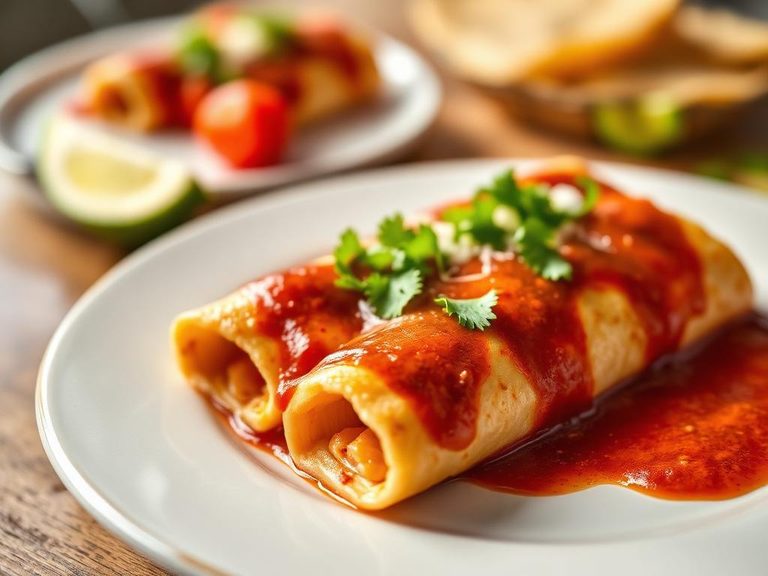
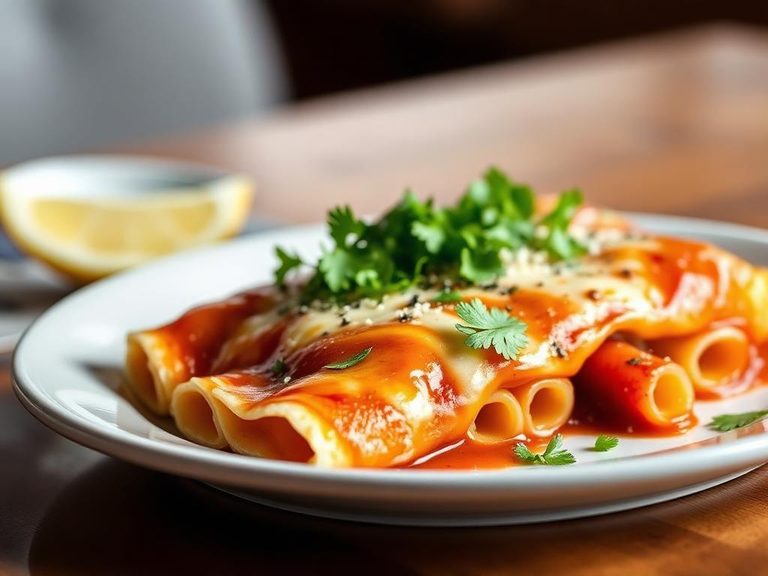
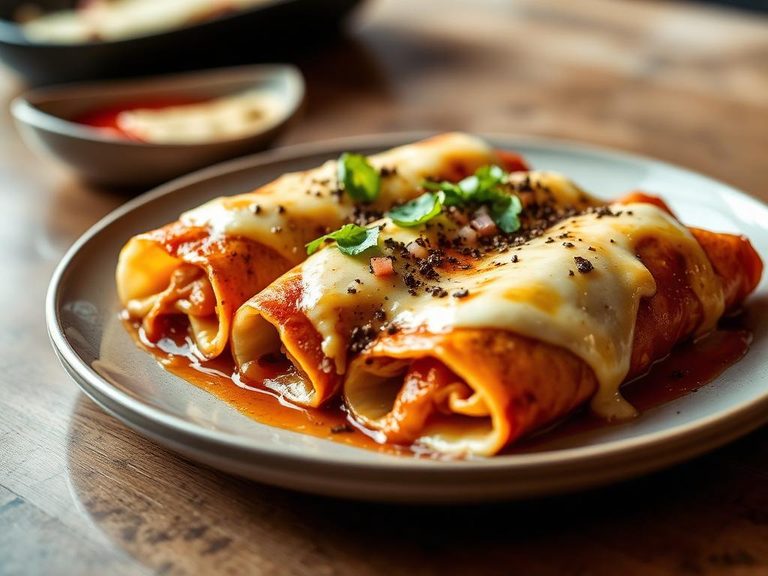
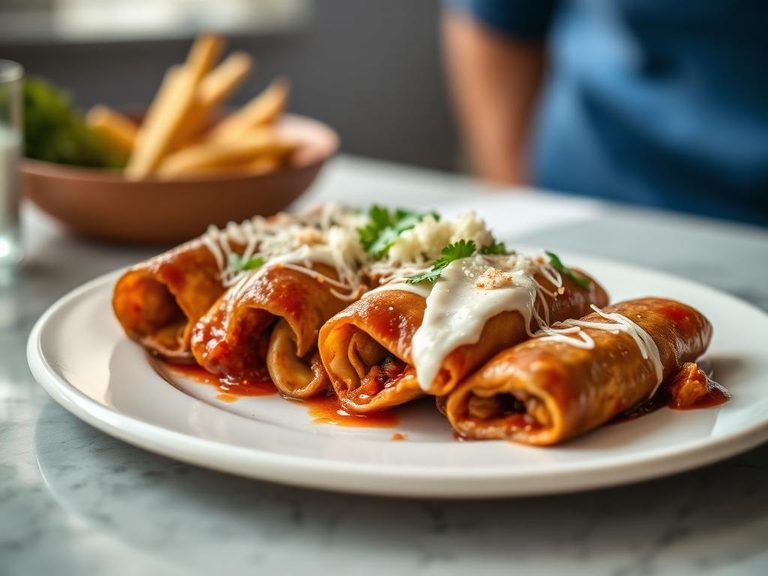

🌍 Where it's eaten
💡 Did you know?
The word 'enchilada' literally means 'en-chili-ed' in Spanish, referring to the tortilla being dipped or coated in chili sauce before being filled and rolled.
Full nutrition (USDA data · scales with serving)
| Water | 52.4 g |
| Energy | 273 kcal |
| Energy | 1142 kj |
| Protein | 11.2 g |
| Total lipid (fat) | 18.5 g |
| Ash | 2.5 g |
| Carbohydrate, by difference | 15.4 g |
| Fiber, total dietary | 1.9 g |
| Total Sugars | 2.6 g |
| Sucrose | 0.21 g |
| Glucose | 0.71 g |
| Fructose | 0.55 g |
| Lactose | 0.72 g |
| Maltose | 0.41 g |
| Galactose | 0.00 g |
| Starch | 10.9 g |
| Calcium, Ca | 314 mg |
| Iron, Fe | 0.66 mg |
| Magnesium, Mg | 29.0 mg |
| Phosphorus, P | 268 mg |
| Potassium, K | 140 mg |
| Sodium, Na | 528 mg |
| Zinc, Zn | 1.8 mg |
| Copper, Cu | 0.06 mg |
| Manganese, Mn | 0.12 mg |
| Selenium, Se | 15.8 ug |
| Thiamin | 0.06 mg |
| Riboflavin | 0.22 mg |
| Niacin | 0.63 mg |
| Pantothenic acid | 0.33 mg |
| Vitamin B-6 | 0.12 mg |
| Folate, total | 17.0 ug |
| Vitamin B-12 | 0.86 ug |
| Vitamin A, RAE | 205 ug |
| Retinol | 186 ug |
| Carotene, beta | 191 ug |
| Carotene, alpha | 0.00 ug |
| Cryptoxanthin, beta | 58.0 ug |
| Vitamin A, IU | 988 iu |
| Lycopene | 820 ug |
| Lutein + zeaxanthin | 143 ug |
| Vitamin E (alpha-tocopherol) | 1.3 mg |
| Tocopherol, beta | 0.05 mg |
| Tocopherol, gamma | 2.5 mg |
| Tocopherol, delta | 0.52 mg |
| Tocotrienol, alpha | 0.13 mg |
| Tocotrienol, beta | 0.01 mg |
| Tocotrienol, gamma | 0.04 mg |
| Tocotrienol, delta | 0.00 mg |
Fat & fatty acid profile (per 100g)
| Fatty acids, total saturated | 8.4 g |
| SFA 4:0 | 0.25 g |
| SFA 6:0 | 0.21 g |
| SFA 8:0 | 0.14 g |
| SFA 10:0 | 0.33 g |
| SFA 12:0 | 0.38 g |
| SFA 14:0 | 1.2 g |
| SFA 15:0 | 0.13 g |
| SFA 16:0 | 4.0 g |
| SFA 17:0 | 0.08 g |
| SFA 18:0 | 1.6 g |
| SFA 20:0 | 0.03 g |
| SFA 22:0 | 0.02 g |
| SFA 24:0 | 0.01 g |
| Fatty acids, total monounsaturated | 4.7 g |
| MUFA 14:1 | 0.12 g |
| MUFA 15:1 | 0.00 g |
| MUFA 16:1 | 0.22 g |
| MUFA 16:1 c | 0.18 g |
| MUFA 17:1 | 0.03 g |
| MUFA 18:1 | 4.3 g |
| MUFA 18:1 c | 3.9 g |
| MUFA 20:1 | 0.04 g |
| MUFA 22:1 | 0.00 g |
| MUFA 22:1 c | 0.00 g |
| MUFA 24:1 c | 0.00 g |
| Fatty acids, total polyunsaturated | 2.7 g |
| PUFA 18:2 | 2.4 g |
| PUFA 18:2 n-6 c,c | 2.3 g |
| PUFA 18:2 CLAs | 0.07 g |
| PUFA 18:3 | 0.26 g |
| PUFA 18:3 n-3 c,c,c (ALA) | 0.25 g |
| PUFA 18:3 n-6 c,c,c | 0.01 g |
| PUFA 18:3i | 0.00 g |
| PUFA 18:4 | 0.00 g |
| PUFA 20:2 n-6 c,c | 0.01 g |
| PUFA 20:3 | 0.01 g |
| PUFA 20:3 n-3 | 0.00 g |
| PUFA 20:3 n-6 | 0.01 g |
| PUFA 20:4 | 0.02 g |
| PUFA 20:5 n-3 (EPA) | 0.00 g |
| PUFA 22:4 | 0.00 g |
| PUFA 22:5 n-3 (DPA) | 0.01 g |
| PUFA 22:6 n-3 (DHA) | 0.00 g |
| Fatty acids, total trans | 0.54 g |
| Fatty acids, total trans-monoenoic | 0.43 g |
| TFA 16:1 t | 0.04 g |
| TFA 18:1 t | 0.39 g |
| TFA 22:1 t | 0.00 g |
| TFA 18:2 t not further defined | 0.11 g |
| Fatty acids, total trans-polyenoic | 0.11 g |
| Cholesterol | 42.0 mg |
Amino acid profile (per 100g)
| Tryptophan | 0.15 g |
| Threonine | 0.42 g |
| Isoleucine | 0.52 g |
| Leucine | 1.1 g |
| Lysine | 0.91 g |
| Methionine | 0.31 g |
| Cystine | 0.12 g |
| Phenylalanine | 0.60 g |
| Tyrosine | 0.54 g |
| Valine | 0.69 g |
| Arginine | 0.46 g |
| Histidine | 0.31 g |
| Alanine | 0.37 g |
| Aspartic acid | 0.79 g |
| Glutamic acid | 2.5 g |
| Glycine | 0.25 g |
| Proline | 1.6 g |
| Serine | 0.65 g |
| Hydroxyproline | 0.00 g |
FAQ
What is the difference between red and green enchilada sauce?
Red enchilada sauce (salsa roja) is typically made from dried red chilies like ancho or guajillo, giving it a deeper, earthier flavor. Green enchilada sauce (salsa verde) is made from tomatillos and green chilies like jalapeño or serrano, resulting in a brighter, tangier taste.
Can I make cheese enchiladas ahead of time?
Yes, you can assemble them (without baking) and refrigerate for up to 24 hours. Add 5-10 minutes to the baking time if cooking from cold. They can also be baked, cooled, and frozen for up to 3 months.
What cheese is traditionally used?
Traditional Mexican cheeses like Queso Chihuahua, Queso Oaxaca, or Queso Fresco are common. In Tex-Mex and American versions, a blend of mild cheddar and Monterey Jack is often used for its excellent melting properties.
Nutrient density (calculated · NRF9.3)
Nutrient Rich Foods index: beneficial nutrients (protein, fiber, vitamins, minerals) minus saturated fat, added sugar & sodium, per 100 kcal.
NRF9.3 index — Fulgoni, Keast & Drewnowski, 2009. Computed from USDA nutrients.
Weight-loss friendliness (composite index)
Energy density 2.73 kcal/g · 16% calories from protein · 1.9 g fiber · 2.6 g sugar per 100 g.
Composite of energy density (Rolls et al., 1999), protein & fiber satiety, minus sugar. A calculated heuristic — ranks satiety-per-calorie, not a clinical measure.
Dietary load (calculated from USDA values)
Potential renal acid load. Positive = acid-forming, negative = alkaline-forming.
Sodium-to-potassium ratio: 3.77 (lower is better — aim for ≤ 1)
Sodium:potassium per WHO potassium guidance. Computed from USDA nutrients.