

Pork, pickled pork hocks
Whole food · Pork Products

Photo: Wikipedia
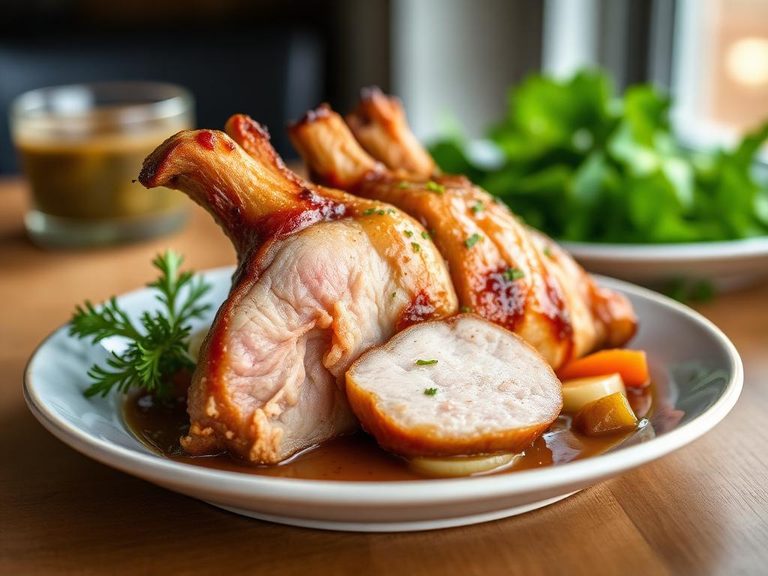
Pickled pork hocks are gelatinous pork feet preserved in a tangy, savory brine, yielding a uniquely bouncy, cartilage-rich texture that softens with cooking. The flavor is deeply savory and salty, often with aromatic spices like star anise or Sichuan peppercorn infusing the meat. Nutritionally, they are a high-protein, zero-carb food with a moderate fat content, primarily from collagen-rich connective tissue.
Calorie split: 45% protein · 0% carbs · 55% fat
↓ Full nutrition💚 Why it's loved
People adore it for the unique, satisfying chew of the skin and cartilage, which absorbs the complex flavors of the pickling brine. It's a beloved staple in many cuisines, valued as a hearty, flavorful dish that can be served cold as an appetizer or hot as a main course.
⚠️ Watch-outs & how to enjoy it better
The high sodium content from the pickling brine can be a concern for those monitoring salt intake. The fat, while flavorful, is concentrated, and the dish offers no fiber or carbohydrates. To counteract, serve with a large portion of steamed vegetables or a fresh salad to add fiber and balance the meal, and be mindful of portion size.
Key benefits
- Excellent source of collagen for joint and skin health
- High-quality protein with zero carbohydrates
- Rich in minerals like zinc and iron from the bone and meat
- Long shelf life due to pickling preservation
🍽️ Popular dishes
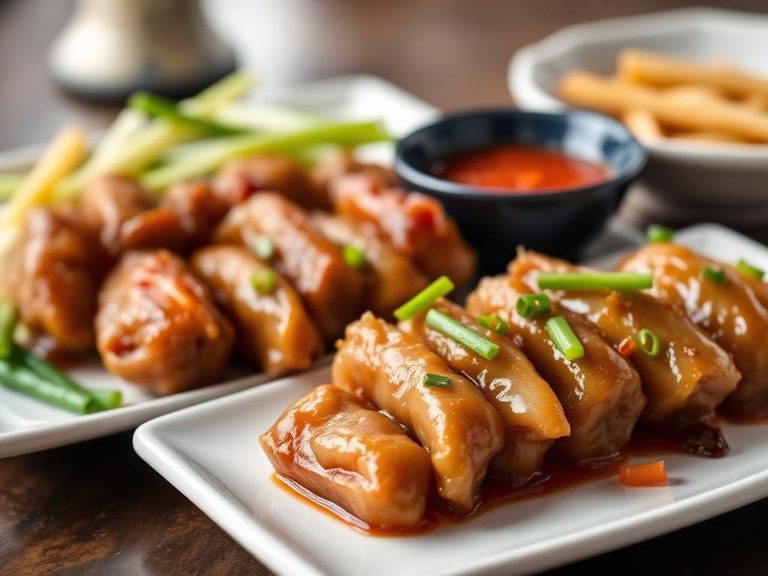
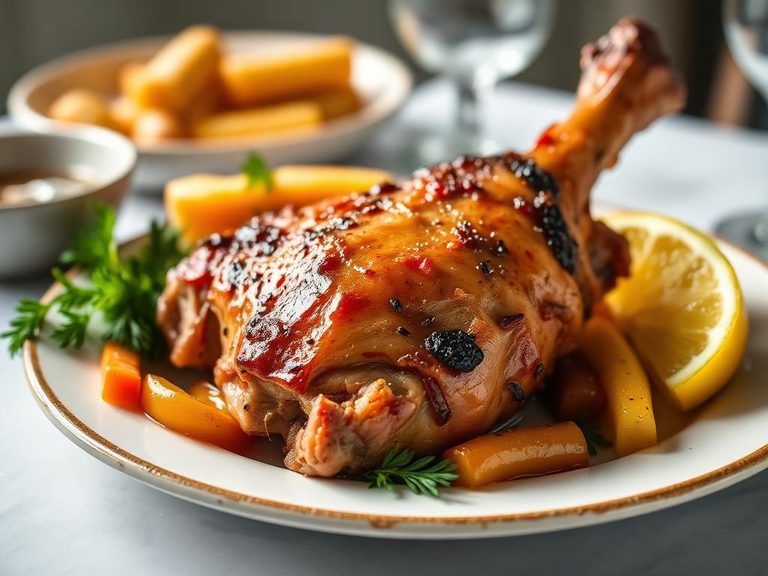
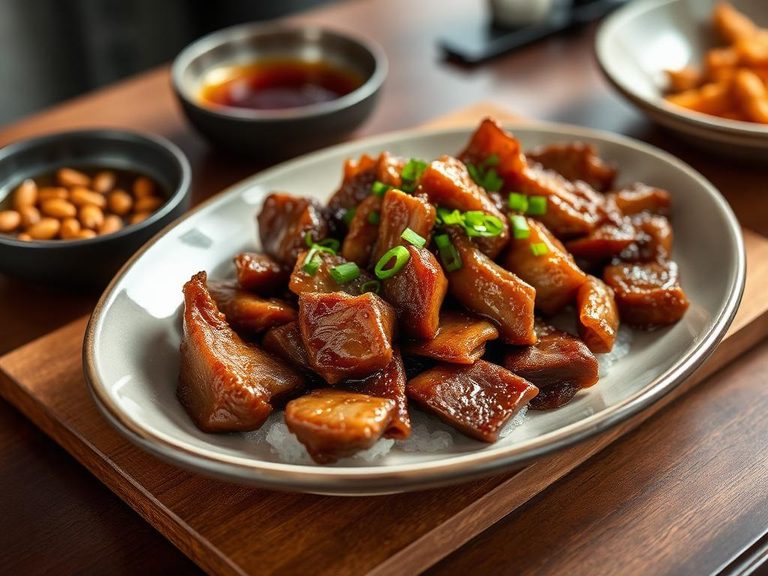
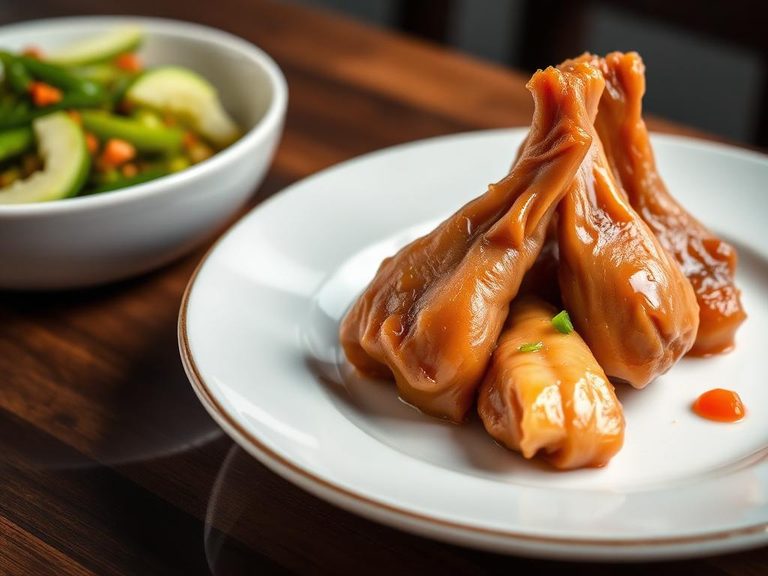
🌍 Where it's eaten
💡 Did you know?
The collagen in pickled pork hocks breaks down into gelatin when simmered, which is why the cooking liquid often sets into a savory aspic when chilled.
Full nutrition (USDA data · scales with serving)
| Water | 68.0 g |
| Energy | 171 kcal |
| Energy | 716 kj |
| Protein | 19.1 g |
| Total lipid (fat) | 10.5 g |
| Ash | 2.8 g |
| Carbohydrate, by difference | 0.00 g |
| Fiber, total dietary | 0.00 g |
| Total Sugars | 0.00 g |
| Sucrose | 0.00 g |
| Glucose | 0.00 g |
| Fructose | 0.00 g |
| Lactose | 0.00 g |
| Maltose | 0.00 g |
| Galactose | 0.00 g |
| Calcium, Ca | 19.0 mg |
| Iron, Fe | 1.1 mg |
| Magnesium, Mg | 6.0 mg |
| Phosphorus, P | 60.0 mg |
| Potassium, K | 47.0 mg |
| Sodium, Na | 1050 mg |
| Zinc, Zn | 2.4 mg |
| Copper, Cu | 0.08 mg |
| Manganese, Mn | 0.02 mg |
| Selenium, Se | 26.3 ug |
| Vitamin C, total ascorbic acid | 0.00 mg |
| Thiamin | 0.08 mg |
| Riboflavin | 0.07 mg |
| Niacin | 1.1 mg |
| Pantothenic acid | 0.34 mg |
| Vitamin B-6 | 0.06 mg |
| Folate, total | 1.0 ug |
| Folic acid | 0.00 ug |
| Folate, food | 1.0 ug |
| Folate, DFE | 1.0 ug |
| Vitamin B-12 | 0.51 ug |
| Vitamin B-12, added | 0.00 ug |
| Vitamin A, RAE | 23.0 ug |
| Retinol | 23.0 ug |
| Carotene, beta | 0.00 ug |
| Carotene, alpha | 0.00 ug |
| Cryptoxanthin, beta | 0.00 ug |
| Vitamin A, IU | 76.0 iu |
| Lycopene | 0.00 ug |
| Lutein + zeaxanthin | 0.00 ug |
| Vitamin E (alpha-tocopherol) | 0.17 mg |
| Vitamin E, added | 0.00 mg |
| Tocopherol, beta | 0.01 mg |
| Tocopherol, gamma | 0.02 mg |
| Tocopherol, delta | 0.00 mg |
| Tocotrienol, alpha | 0.02 mg |
| Tocotrienol, beta | 0.00 mg |
| Tocotrienol, gamma | 0.00 mg |
| Tocotrienol, delta | 0.00 mg |
| Vitamin K (phylloquinone) | 0.00 ug |
| Vitamin K (Dihydrophylloquinone) | 0.00 ug |
| Vitamin K (Menaquinone-4) | 6.0 ug |
| Alcohol, ethyl | 0.00 g |
| Caffeine | 0.00 mg |
| Theobromine | 0.00 mg |
Fat & fatty acid profile (per 100g)
| Fatty acids, total saturated | 3.2 g |
| SFA 4:0 | 0.00 g |
| SFA 6:0 | 0.00 g |
| SFA 8:0 | 0.00 g |
| SFA 10:0 | 0.00 g |
| SFA 12:0 | 0.00 g |
| SFA 14:0 | 0.12 g |
| SFA 15:0 | 0.00 g |
| SFA 16:0 | 2.1 g |
| SFA 17:0 | 0.02 g |
| SFA 18:0 | 0.93 g |
| SFA 20:0 | 0.01 g |
| SFA 22:0 | 0.02 g |
| Fatty acids, total monounsaturated | 5.1 g |
| MUFA 14:1 | 0.00 g |
| MUFA 15:1 | 0.00 g |
| MUFA 16:1 | 0.30 g |
| MUFA 17:1 | 0.00 g |
| MUFA 18:1 | 4.8 g |
| MUFA 18:1 c | 4.7 g |
| MUFA 20:1 | 0.07 g |
| MUFA 22:1 | 0.00 g |
| Fatty acids, total polyunsaturated | 1.2 g |
| PUFA 18:2 | 1.0 g |
| PUFA 18:2 n-6 c,c | 0.99 g |
| PUFA 18:3 | 0.04 g |
| PUFA 18:3 n-3 c,c,c (ALA) | 0.04 g |
| PUFA 18:3 n-6 c,c,c | 0.00 g |
| PUFA 18:4 | 0.00 g |
| PUFA 20:2 n-6 c,c | 0.04 g |
| PUFA 20:3 | 0.00 g |
| PUFA 20:4 | 0.08 g |
| PUFA 20:5 n-3 (EPA) | 0.00 g |
| PUFA 22:5 n-3 (DPA) | 0.00 g |
| PUFA 22:6 n-3 (DHA) | 0.00 g |
| Fatty acids, total trans | 0.11 g |
| Fatty acids, total trans-monoenoic | 0.06 g |
| TFA 18:1 t | 0.06 g |
| TFA 18:2 t,t | 0.05 g |
| Fatty acids, total trans-polyenoic | 0.05 g |
| Cholesterol | 89.0 mg |
Amino acid profile (per 100g)
| Tryptophan | 0.04 g |
| Threonine | 0.52 g |
| Isoleucine | 0.33 g |
| Leucine | 0.84 g |
| Lysine | 0.82 g |
| Methionine | 0.21 g |
| Cystine | 0.17 g |
| Phenylalanine | 0.55 g |
| Tyrosine | 0.30 g |
| Valine | 0.48 g |
| Arginine | 1.4 g |
| Histidine | 0.21 g |
| Alanine | 1.6 g |
| Aspartic acid | 1.4 g |
| Glutamic acid | 2.1 g |
| Glycine | 3.3 g |
| Proline | 2.0 g |
| Serine | 0.77 g |
FAQ
Is the pickling brine safe to consume?
The brine is typically edible and very flavorful, but it's extremely salty. It's often used to cook other ingredients like potatoes or vegetables, or diluted to make a sauce base, rather than consumed straight.
How do I reduce the saltiness before eating?
Soaking the pickled hock in cold water for several hours, changing the water a few times, can leach out excess salt. Simmering it in water or broth for 30-60 minutes before final preparation also helps.
Can I eat the bone and cartilage?
Yes, the cartilage and soft connective tissues are a prized part of the dish, offering a unique texture. The bones are typically not eaten but can be used to make a rich stock.
Nutrient density (calculated · NRF9.3)
Nutrient Rich Foods index: beneficial nutrients (protein, fiber, vitamins, minerals) minus saturated fat, added sugar & sodium, per 100 kcal.
NRF9.3 index — Fulgoni, Keast & Drewnowski, 2009. Computed from USDA nutrients.
Weight-loss friendliness (composite index)
Energy density 1.71 kcal/g · 45% calories from protein · 0.0 g fiber · 0.0 g sugar per 100 g.
Composite of energy density (Rolls et al., 1999), protein & fiber satiety, minus sugar. A calculated heuristic — ranks satiety-per-calorie, not a clinical measure.
Dietary load (calculated from USDA values)
Potential renal acid load. Positive = acid-forming, negative = alkaline-forming.
Sodium-to-potassium ratio: 22.34 (lower is better — aim for ≤ 1)
Sodium:potassium per WHO potassium guidance. Computed from USDA nutrients.