

Pork, fresh, composite of trimmed leg, loin, shoulder, and spareribs, (includes cuts to be cured), separable lean and fat, raw
Whole food · Pork Products
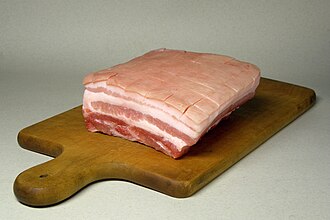
Photo: Wikipedia
This is a raw, composite cut of pork from the leg, loin, shoulder, and spareribs, offering a rich, meaty flavor with a balanced marbling of lean and fat. Its texture is firm and dense when raw, ready to transform into tender, juicy bites with proper cooking. Nutritionally, it's a powerhouse of protein with a significant fat content, providing substantial energy and essential amino acids.
Calorie split: 35% protein · 0% carbs · 65% fat
↓ Full nutrition💚 Why it's loved
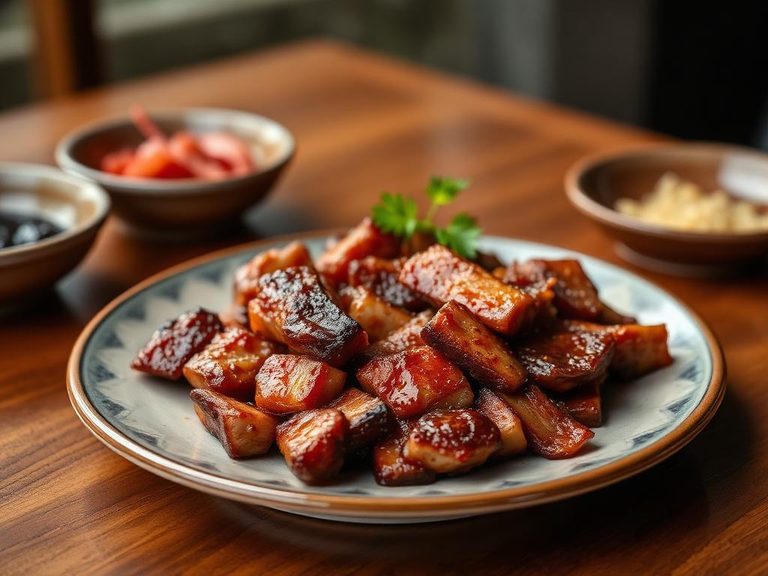
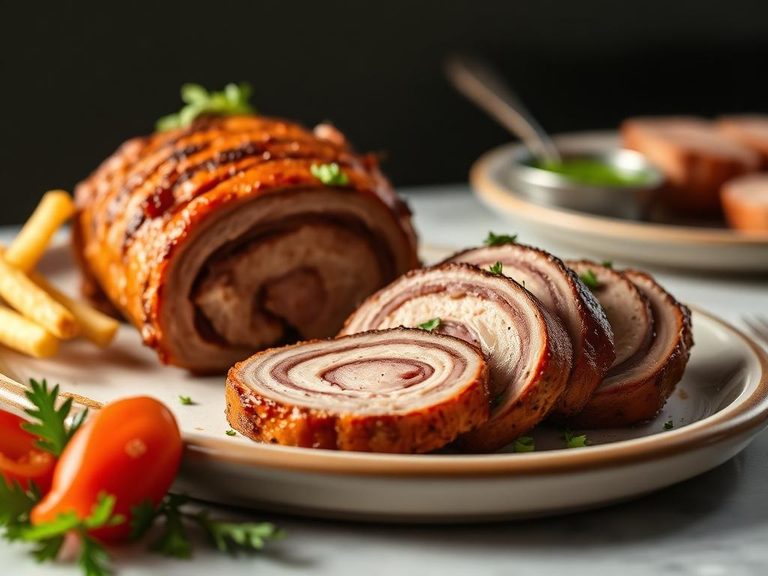
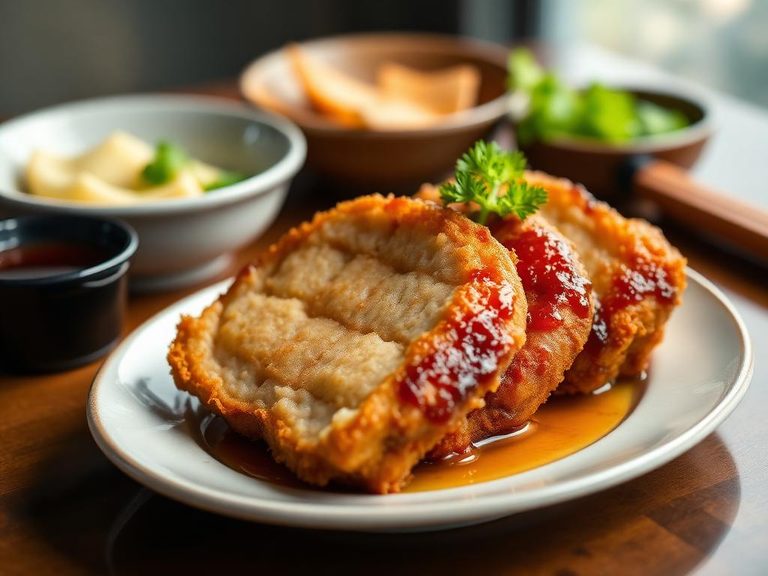
People adore it for its deep, savory umami flavor and incredible versatility—it's the canvas for everything from crispy roast pork to slow-cooked stews. Its cultural significance in cuisines worldwide, from Chinese char siu to Italian porchetta, makes it a beloved centerpiece for family meals and celebrations.
⚠️ Watch-outs & how to enjoy it better
The high fat content, particularly saturated fat, means it should be consumed in moderation by those managing heart health or calorie intake. To counteract this, trim visible fat before cooking, choose leaner cuts like loin more often, and pair it with fiber-rich vegetables or whole grains to create a more balanced plate.
Key benefits
- Excellent source of high-quality protein for muscle maintenance.
- Rich in essential B vitamins like thiamine (B1), niacin (B3), and B12 for energy metabolism.
- Provides key minerals such as zinc, selenium, and phosphorus for immune and bone health.
- The fat content includes monounsaturated fats, which can be part of a balanced diet.
- Versatile base for countless cooking methods from grilling to braising.
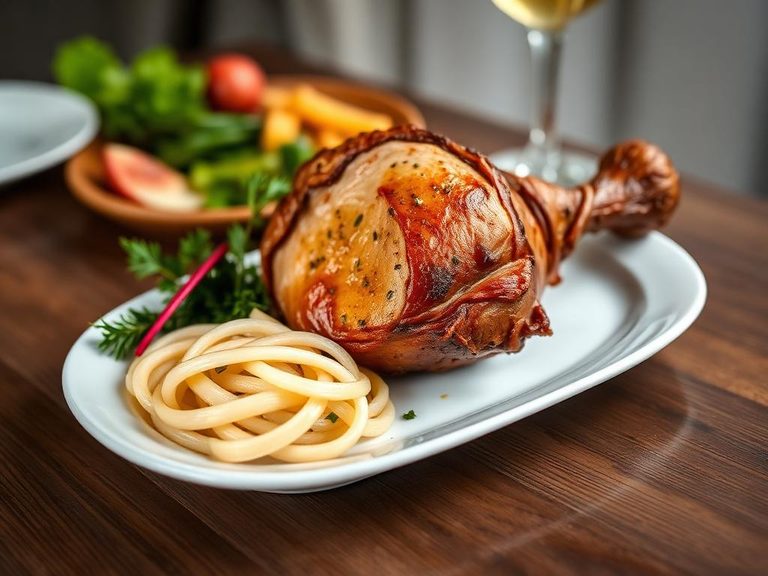
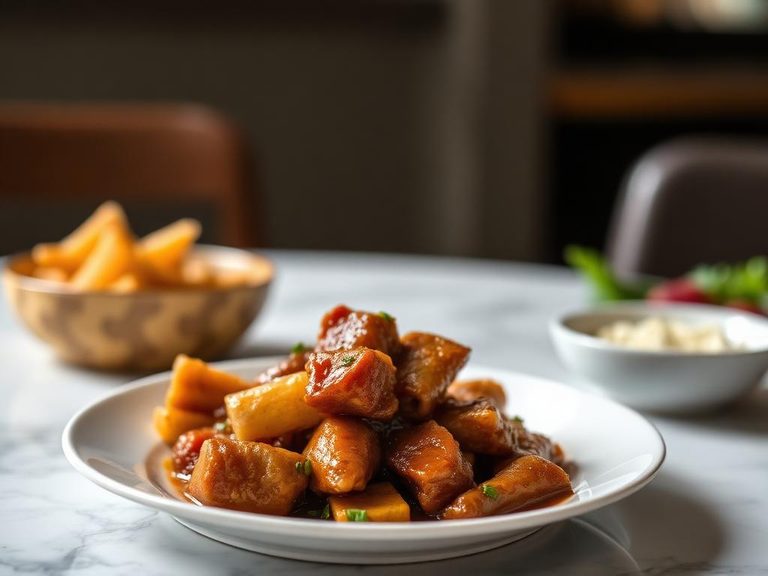
🍽️ Popular dishes

🌍 Where it's eaten
💡 Did you know?
The specific composite cut described is often the base for the USDA's standard 'pork, fresh' nutrient database entry, meaning it's the reference blend used to calculate the nutrition facts for countless pork products and recipes.
Full nutrition (USDA data · scales with serving)
| Water | 66.0 g |
| Energy | 211 kcal |
| Energy | 884 kj |
| Protein | 18.2 g |
| Total lipid (fat) | 14.8 g |
| Ash | 0.88 g |
| Carbohydrate, by difference | 0.00 g |
| Fiber, total dietary | 0.00 g |
| Total Sugars | 0.00 g |
| Calcium, Ca | 11.0 mg |
| Iron, Fe | 0.89 mg |
| Magnesium, Mg | 21.0 mg |
| Phosphorus, P | 195 mg |
| Potassium, K | 319 mg |
| Sodium, Na | 57.0 mg |
| Zinc, Zn | 2.3 mg |
| Copper, Cu | 0.07 mg |
| Manganese, Mn | 0.01 mg |
| Selenium, Se | 28.5 ug |
| Vitamin C, total ascorbic acid | 0.30 mg |
| Thiamin | 0.62 mg |
| Riboflavin | 0.26 mg |
| Niacin | 4.7 mg |
| Pantothenic acid | 0.90 mg |
| Vitamin B-6 | 0.50 mg |
| Folate, total | 3.0 ug |
| Folic acid | 0.00 ug |
| Folate, food | 3.0 ug |
| Folate, DFE | 3.0 ug |
| Choline, total | 34.7 mg |
| Betaine | 1.7 mg |
| Vitamin B-12 | 0.67 ug |
| Vitamin B-12, added | 0.00 ug |
| Vitamin A, RAE | 1.0 ug |
| Retinol | 1.0 ug |
| Carotene, beta | 0.00 ug |
| Carotene, alpha | 0.00 ug |
| Cryptoxanthin, beta | 0.00 ug |
| Vitamin A, IU | 6.0 iu |
| Lycopene | 0.00 ug |
| Lutein + zeaxanthin | 0.00 ug |
| Vitamin E (alpha-tocopherol) | 0.12 mg |
| Vitamin E, added | 0.00 mg |
| Tocopherol, beta | 0.00 mg |
| Tocopherol, gamma | 0.00 mg |
| Tocopherol, delta | 0.00 mg |
| Tocotrienol, alpha | 0.00 mg |
| Tocotrienol, beta | 0.00 mg |
| Tocotrienol, gamma | 0.00 mg |
| Tocotrienol, delta | 0.00 mg |
| Vitamin D (D2 + D3), International Units | 29.0 iu |
| Vitamin D (D2 + D3) | 0.70 ug |
| Vitamin D3 (cholecalciferol) | 0.70 ug |
| Vitamin K (phylloquinone) | 0.00 ug |
| Vitamin K (Dihydrophylloquinone) | 0.00 ug |
| Alcohol, ethyl | 0.00 g |
| Caffeine | 0.00 mg |
| Theobromine | 0.00 mg |
Fat & fatty acid profile (per 100g)
| Fatty acids, total saturated | 4.9 g |
| SFA 4:0 | 0.00 g |
| SFA 6:0 | 0.00 g |
| SFA 8:0 | 0.00 g |
| SFA 10:0 | 0.01 g |
| SFA 12:0 | 0.01 g |
| SFA 14:0 | 0.18 g |
| SFA 15:0 | 0.00 g |
| SFA 16:0 | 3.1 g |
| SFA 17:0 | 0.01 g |
| SFA 18:0 | 1.7 g |
| SFA 20:0 | 0.01 g |
| SFA 22:0 | 0.00 g |
| Fatty acids, total monounsaturated | 6.1 g |
| MUFA 14:1 | 0.00 g |
| MUFA 15:1 | 0.00 g |
| MUFA 16:1 | 0.38 g |
| MUFA 17:1 | 0.00 g |
| MUFA 18:1 | 5.8 g |
| MUFA 18:1 c | 2.2 g |
| MUFA 20:1 | 0.10 g |
| MUFA 22:1 | 0.00 g |
| Fatty acids, total polyunsaturated | 1.7 g |
| PUFA 18:2 | 1.5 g |
| PUFA 18:2 n-6 c,c | 0.70 g |
| PUFA 18:3 | 0.09 g |
| PUFA 18:3 n-3 c,c,c (ALA) | 0.03 g |
| PUFA 18:3 n-6 c,c,c | 0.00 g |
| PUFA 18:4 | 0.00 g |
| PUFA 20:2 n-6 c,c | 0.02 g |
| PUFA 20:3 | 0.00 g |
| PUFA 20:4 | 0.12 g |
| PUFA 20:5 n-3 (EPA) | 0.00 g |
| PUFA 22:5 n-3 (DPA) | 0.00 g |
| PUFA 22:6 n-3 (DHA) | 0.00 g |
| Fatty acids, total trans | 0.03 g |
| Fatty acids, total trans-monoenoic | 0.02 g |
| TFA 18:1 t | 0.04 g |
| TFA 18:2 t,t | 0.02 g |
| Fatty acids, total trans-polyenoic | 0.01 g |
| Cholesterol | 69.0 mg |
Amino acid profile (per 100g)
| Tryptophan | 0.20 g |
| Threonine | 0.82 g |
| Isoleucine | 0.86 g |
| Leucine | 1.5 g |
| Lysine | 1.7 g |
| Methionine | 0.48 g |
| Cystine | 0.22 g |
| Phenylalanine | 0.74 g |
| Tyrosine | 0.65 g |
| Valine | 0.96 g |
| Arginine | 1.2 g |
| Histidine | 0.74 g |
| Alanine | 1.1 g |
| Aspartic acid | 1.7 g |
| Glutamic acid | 2.8 g |
| Glycine | 0.92 g |
| Proline | 0.77 g |
| Serine | 0.77 g |
| Hydroxyproline | 0.02 g |
FAQ
What's the best way to cook this mixed cut?
Because it combines different muscles, moist-heat methods like braising, stewing, or slow-roasting work best to tenderize the leaner parts while rendering the fat. Quick, high-heat methods like grilling are ideal for the loin or sparerib portions.
Is this the same as 'pork shoulder' or 'pork loin'?
No. This is a composite blend from multiple primal cuts (leg, loin, shoulder, spareribs). It's a generic representation used for nutritional analysis, not a specific retail cut you'd buy by name.
How does the fat content affect cooking?
The fat bastes the meat from within during cooking, adding flavor and preventing dryness. However, it will produce more drippings and require careful temperature control to avoid flare-ups on a grill or excessive grease in a pan.
Nutrient density (calculated · NRF9.3)
Nutrient Rich Foods index: beneficial nutrients (protein, fiber, vitamins, minerals) minus saturated fat, added sugar & sodium, per 100 kcal.
NRF9.3 index — Fulgoni, Keast & Drewnowski, 2009. Computed from USDA nutrients.
Weight-loss friendliness (composite index)
Energy density 2.11 kcal/g · 35% calories from protein · 0.0 g fiber · 0.0 g sugar per 100 g.
Composite of energy density (Rolls et al., 1999), protein & fiber satiety, minus sugar. A calculated heuristic — ranks satiety-per-calorie, not a clinical measure.
Dietary load (calculated from USDA values)
Potential renal acid load. Positive = acid-forming, negative = alkaline-forming.
Sodium-to-potassium ratio: 0.18 (lower is better — aim for ≤ 1)
Sodium:potassium per WHO potassium guidance. Computed from USDA nutrients.