

Adobo

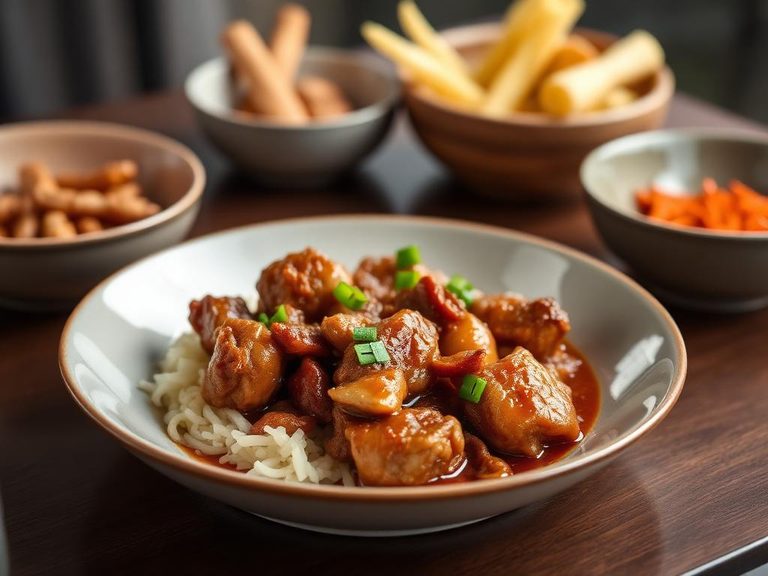
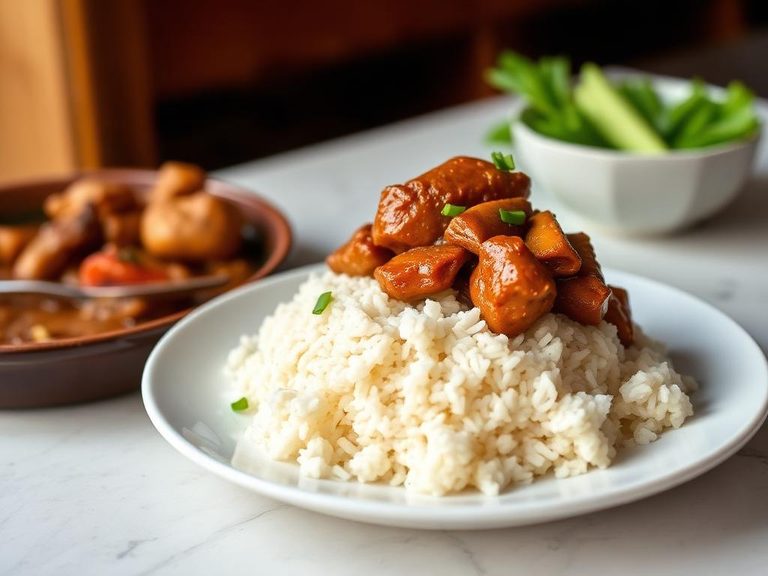
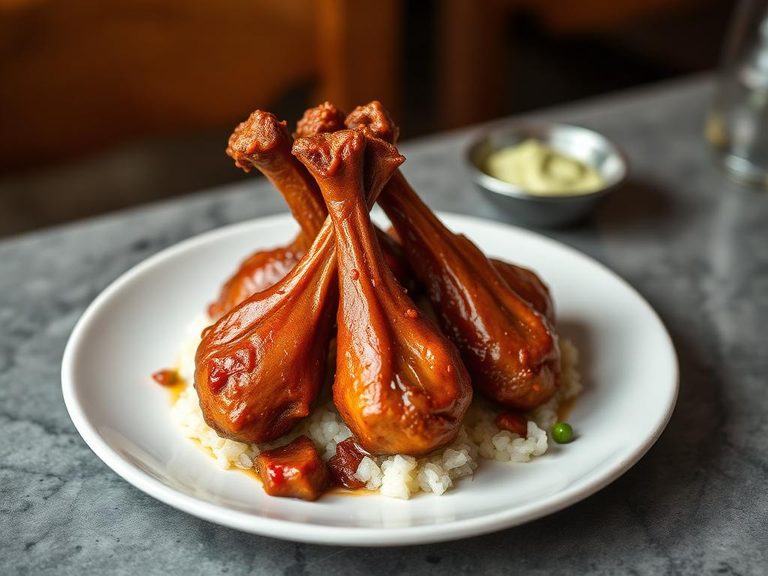
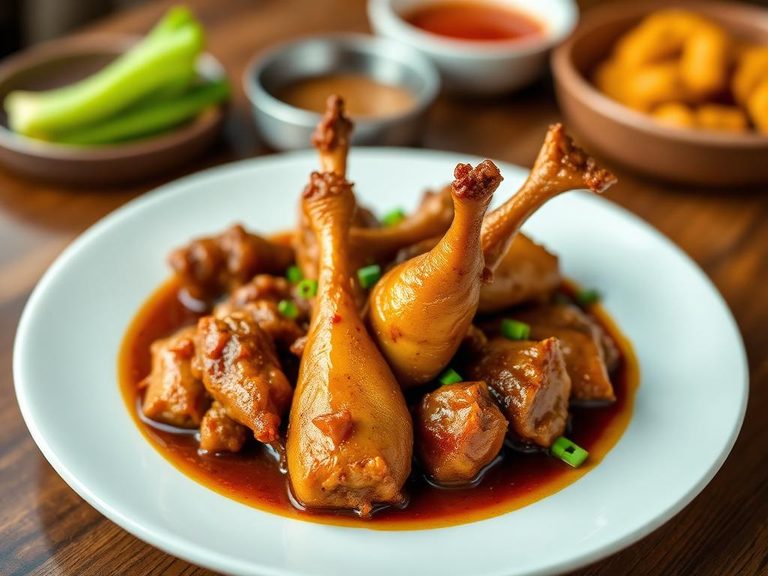
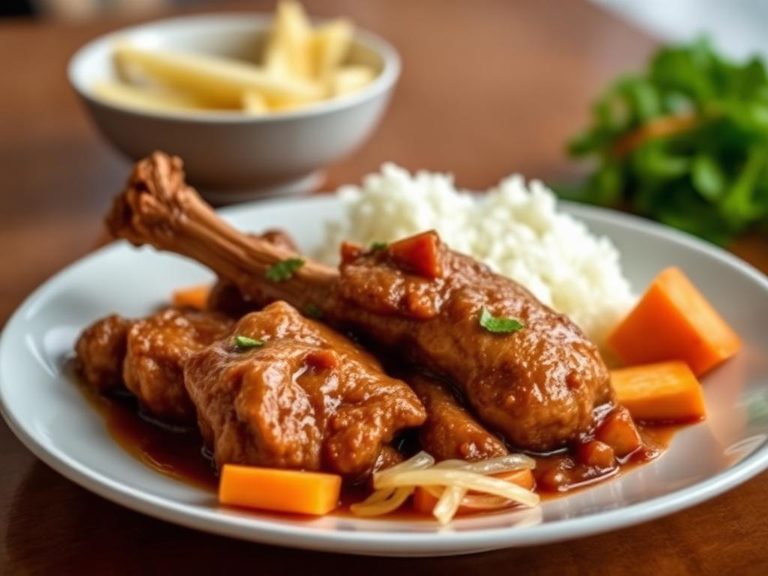
Adobo is a beloved Filipino dish featuring meat—most commonly chicken, pork, or a combination—braised in a savory and tangy sauce of vinegar, soy sauce, garlic, bay leaves, and black peppercorns. It is a staple of Filipino cuisine, often considered the unofficial national dish, with regional variations found throughout the archipelago.
🍳 View the full Adobo recipe →
🍽️ Nutrition at a glance
Adobo is generally high in protein from the meat and moderate in fat, with minimal carbohydrates unless served with a large portion of rice. A typical serving provides a good source of iron and B vitamins, and a rough calorie estimate is around 300-400 calories per serving, depending on the cut of meat and amount of sauce.
Nutrition breakdown
| Calories | 450 kcal |
| Protein | 35 g |
| Carbs | 8 g |
| Fat | 30 g |
| Fiber | 1 g |
| Sugar | 5 g |
| Sodium | 1200 mg |
| Potassium | 400 mg |
| Iron | 4 mg |
| Zinc | 5 mg |
| Vitamin B6 | 0.5 mg |
| Vitamin B12 | 1.5 mcg |
| Niacin (B3) | 8 mg |
| Phosphorus | 250 mg |
| Selenium | 25 mcg |
Per 1 cup (240 g) · estimated, varies by recipe
💡 What's interesting
Culturally, adobo's vinegar-based cooking method is a traditional preservation technique in the tropical Philippine climate, allowing the dish to stay edible for days without refrigeration. Nutritionally, the vinegar may aid in digestion and blood sugar regulation, making it a practical and flavorful everyday meal.
🍽️ Related dishes
AI estimate may be inaccurate · Terms