

Pork, cured, ham with natural juices, shank, bone-in, separable lean only, unheated
Whole food · Pork Products
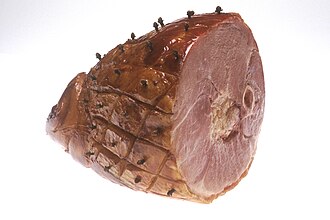
Photo: Wikipedia
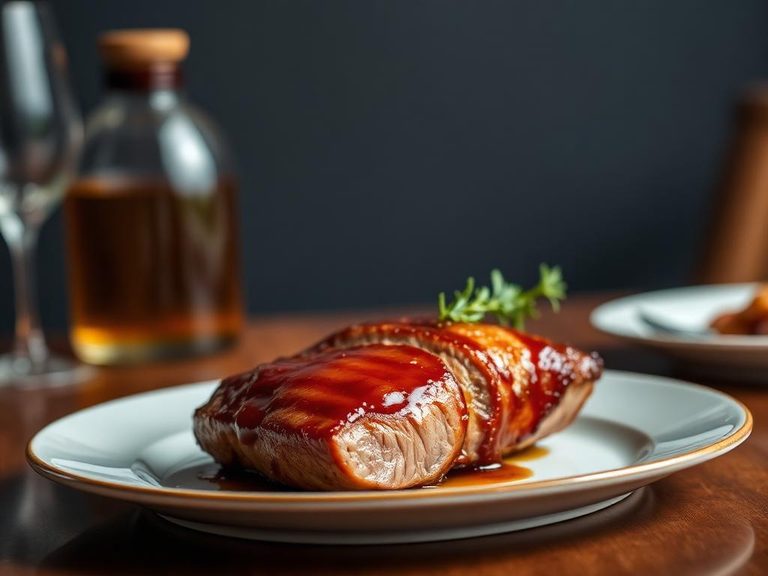
This is a lean, bone-in cut of cured pork leg, specifically the shank, preserved with its natural juices. It boasts a firm, dense texture with a deep, savory, and mildly salty ham flavor, often with a subtle smokiness. Nutritionally, it's a powerhouse of high-quality protein with minimal fat and virtually no carbohydrates.
Calorie split: 76% protein · 1% carbs · 23% fat
↓ Full nutrition💚 Why it's loved
People adore it for its concentrated, savory ham flavor and satisfying, meaty texture that stands up well in hearty dishes. It's a beloved staple for its versatility in both quick meals and slow-cooked recipes.
⚠️ Watch-outs & how to enjoy it better
As a cured meat, it is typically high in sodium, which can be a concern for those monitoring blood pressure. To counteract this, pair it with potassium-rich vegetables like spinach or potatoes, and rinse slices briefly before use. Those on strict low-sodium diets should practice strict portion control.
Key benefits
- Excellent source of complete protein for muscle maintenance.
- Very low in fat and carbohydrates.
- Provides essential minerals like zinc and B vitamins.
- Convenient, ready-to-eat protein source.
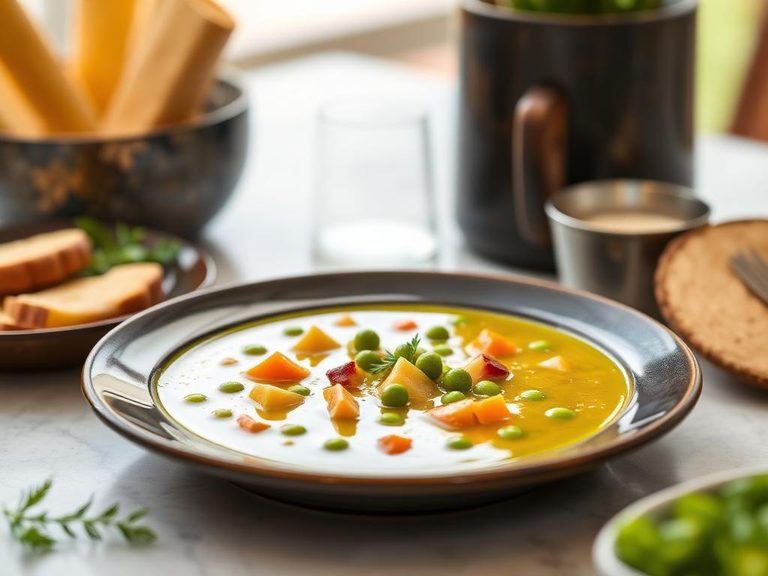
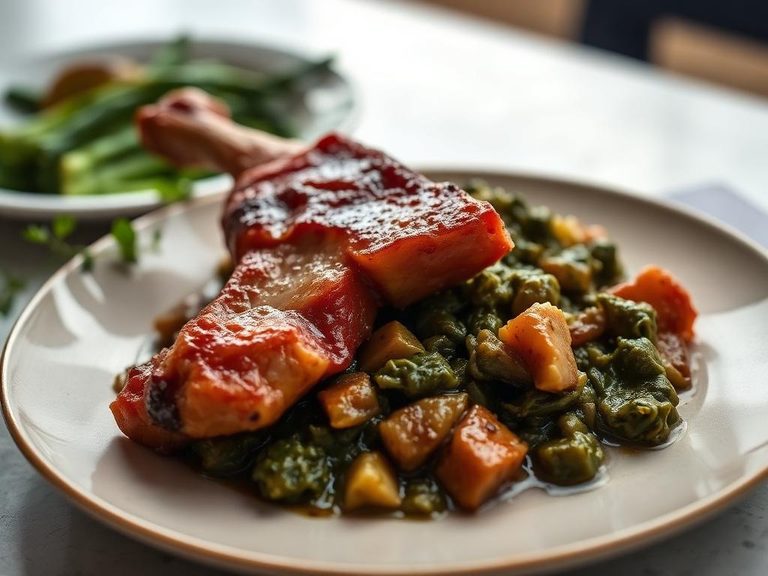
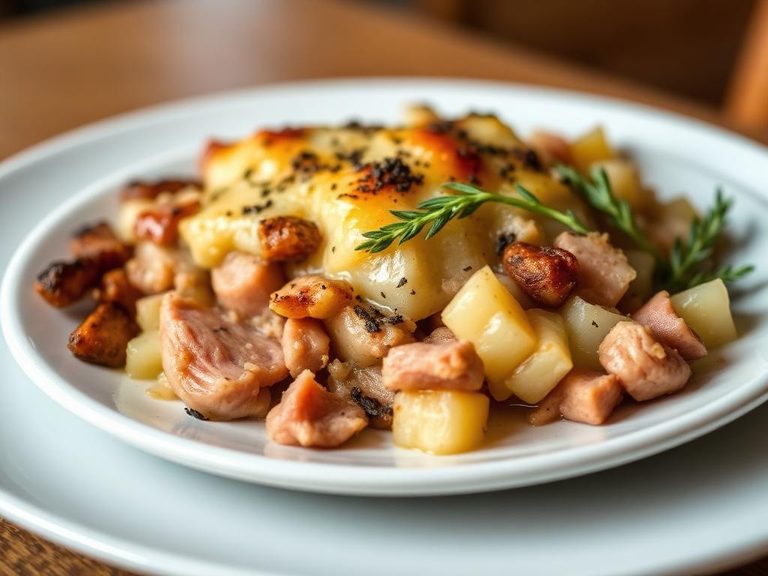
🍽️ Popular dishes

🌍 Where it's eaten
💡 Did you know?
The ham shank is the lower part of the pig's leg, a hard-working muscle that develops rich flavor and gelatin from slow cooking, making it ideal for enriching broths and stews.
Full nutrition (USDA data · scales with serving)
| Water | 70.5 g |
| Energy | 130 kcal |
| Energy | 546 kj |
| Protein | 25.1 g |
| Total lipid (fat) | 3.3 g |
| Ash | 2.6 g |
| Carbohydrate, by difference | 0.30 g |
| Fiber, total dietary | 0.00 g |
| Total Sugars | 0.30 g |
| Sucrose | 0.05 g |
| Glucose | 0.11 g |
| Fructose | 0.14 g |
| Lactose | 0.00 g |
| Maltose | 0.00 g |
| Galactose | 0.00 g |
| Calcium, Ca | 7.0 mg |
| Iron, Fe | 1.1 mg |
| Magnesium, Mg | 20.0 mg |
| Phosphorus, P | 250 mg |
| Potassium, K | 299 mg |
| Sodium, Na | 809 mg |
| Zinc, Zn | 2.8 mg |
| Copper, Cu | 0.12 mg |
| Manganese, Mn | 0.02 mg |
| Selenium, Se | 52.3 ug |
| Vitamin C, total ascorbic acid | 0.00 mg |
| Thiamin | 0.23 mg |
| Riboflavin | 0.25 mg |
| Niacin | 5.3 mg |
| Pantothenic acid | 0.52 mg |
| Vitamin B-6 | 0.39 mg |
| Folate, total | 3.0 ug |
| Folic acid | 0.00 ug |
| Folate, food | 3.0 ug |
| Folate, DFE | 3.0 ug |
| Choline, total | 97.3 mg |
| Betaine | 2.7 mg |
| Vitamin B-12 | 0.37 ug |
| Vitamin B-12, added | 0.00 ug |
| Vitamin A, RAE | 10.0 ug |
| Retinol | 10.0 ug |
| Carotene, beta | 0.00 ug |
| Carotene, alpha | 0.00 ug |
| Cryptoxanthin, beta | 0.00 ug |
| Vitamin A, IU | 33.0 iu |
| Lycopene | 0.00 ug |
| Lutein + zeaxanthin | 0.00 ug |
| Vitamin E (alpha-tocopherol) | 0.26 mg |
| Vitamin E, added | 0.00 mg |
| Tocopherol, beta | 0.00 mg |
| Tocopherol, gamma | 0.04 mg |
| Tocopherol, delta | 0.00 mg |
| Vitamin K (phylloquinone) | 0.00 ug |
| Alcohol, ethyl | 0.00 g |
| Caffeine | 0.00 mg |
| Theobromine | 0.00 mg |
Fat & fatty acid profile (per 100g)
| Fatty acids, total saturated | 1.0 g |
| SFA 4:0 | 0.00 g |
| SFA 6:0 | 0.00 g |
| SFA 8:0 | 0.00 g |
| SFA 10:0 | 0.00 g |
| SFA 12:0 | 0.00 g |
| SFA 14:0 | 0.03 g |
| SFA 15:0 | 0.00 g |
| SFA 16:0 | 0.68 g |
| SFA 17:0 | 0.01 g |
| SFA 18:0 | 0.32 g |
| SFA 20:0 | 0.01 g |
| SFA 22:0 | 0.01 g |
| Fatty acids, total monounsaturated | 1.6 g |
| MUFA 14:1 | 0.00 g |
| MUFA 15:1 | 0.00 g |
| MUFA 16:1 | 0.08 g |
| MUFA 17:1 | 0.00 g |
| MUFA 18:1 | 1.5 g |
| MUFA 18:1 c | 1.5 g |
| MUFA 20:1 | 0.02 g |
| MUFA 22:1 | 0.00 g |
| Fatty acids, total polyunsaturated | 0.40 g |
| PUFA 18:2 | 0.34 g |
| PUFA 18:2 n-6 c,c | 0.32 g |
| PUFA 18:2 CLAs | 0.01 g |
| PUFA 18:3 | 0.01 g |
| PUFA 18:3 n-3 c,c,c (ALA) | 0.01 g |
| PUFA 18:3 n-6 c,c,c | 0.00 g |
| PUFA 18:4 | 0.00 g |
| PUFA 20:2 n-6 c,c | 0.01 g |
| PUFA 20:3 | 0.00 g |
| PUFA 20:4 | 0.04 g |
| PUFA 20:5 n-3 (EPA) | 0.00 g |
| PUFA 22:5 n-3 (DPA) | 0.00 g |
| PUFA 22:6 n-3 (DHA) | 0.00 g |
| Fatty acids, total trans | 0.02 g |
| Fatty acids, total trans-monoenoic | 0.01 g |
| TFA 18:1 t | 0.01 g |
| TFA 18:2 t,t | 0.01 g |
| Fatty acids, total trans-polyenoic | 0.01 g |
| Cholesterol | 63.0 mg |
Amino acid profile (per 100g)
| Tryptophan | 0.24 g |
| Threonine | 1.1 g |
| Isoleucine | 1.1 g |
| Leucine | 2.0 g |
| Lysine | 2.1 g |
| Methionine | 0.60 g |
| Cystine | 0.28 g |
| Phenylalanine | 1.0 g |
| Tyrosine | 0.81 g |
| Valine | 1.3 g |
| Arginine | 1.6 g |
| Histidine | 1.1 g |
| Alanine | 1.5 g |
| Aspartic acid | 2.2 g |
| Glutamic acid | 3.6 g |
| Glycine | 1.3 g |
| Proline | 1.1 g |
| Serine | 0.98 g |
| Hydroxyproline | 0.16 g |
FAQ
What's the difference between the shank and the butt of the ham?
The shank is the lower, narrower, more muscular end of the leg, often with more connective tissue. The butt is the upper, wider, meatier portion with a more uniform shape and typically less sinew.
Should I cook this before eating?
It is fully cooked and safe to eat cold, but it is most commonly heated to enhance its flavor and texture, especially when used in soups, stews, or as a glazed main dish.
How can I reduce the saltiness?
Soaking the ham in cold water for several hours (changing the water occasionally) or simmering it in unsalted broth can help draw out excess salt before you use it in your recipe.
Nutrient density (calculated · NRF9.3)
Nutrient Rich Foods index: beneficial nutrients (protein, fiber, vitamins, minerals) minus saturated fat, added sugar & sodium, per 100 kcal.
NRF9.3 index — Fulgoni, Keast & Drewnowski, 2009. Computed from USDA nutrients.
Weight-loss friendliness (composite index)
Energy density 1.30 kcal/g · 77% calories from protein · 0.0 g fiber · 0.3 g sugar per 100 g.
Composite of energy density (Rolls et al., 1999), protein & fiber satiety, minus sugar. A calculated heuristic — ranks satiety-per-calorie, not a clinical measure.
Dietary load (calculated from USDA values)
Potential renal acid load. Positive = acid-forming, negative = alkaline-forming.
Sodium-to-potassium ratio: 2.71 (lower is better — aim for ≤ 1)
Sodium:potassium per WHO potassium guidance. Computed from USDA nutrients.