

Peppers, sweet, red, raw
Whole food · Vegetables and Vegetable Products
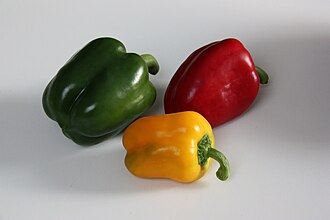
Photo: Wikipedia
A raw, vibrant red bell pepper is a crunchy, juicy vegetable with a sweet, almost fruity flavor and a thick, crisp flesh. It's a nutritional powerhouse, exceptionally low in calories while being an outstanding source of Vitamin C—providing over 150% of your daily needs in just one pepper. Its bright color comes from carotenoids like capsanthin, which are potent antioxidants.
Calorie split: 13% protein · 78% carbs · 9% fat
↓ Full nutrition💚 Why it's loved
People adore red peppers for their satisfying crunch and natural sweetness that intensifies when roasted. They are celebrated for their incredible versatility, adding vibrant color, fresh flavor, and nutrition to everything from salads and stir-fries to sauces and stuffings.
⚠️ Watch-outs & how to enjoy it better
While low in sugar, the natural sugars and carbohydrates can contribute to blood sugar rises if eaten in very large quantities alone. To mitigate this, pair slices with a protein or healthy fat like hummus, guacamole, or nuts to slow absorption. Some individuals may experience mild digestive discomfort (like gas) from the fiber; starting with smaller portions can help.
Key benefits
- Exceptionally high in immune-boosting Vitamin C.
- Rich in antioxidant carotenoids like capsanthin and beta-carotene.
- Very low in calories and carbohydrates, making it ideal for weight management.
- Good source of dietary fiber for digestive health.
- Contains Vitamin B6, which supports nervous system function.
🍽️ Popular dishes
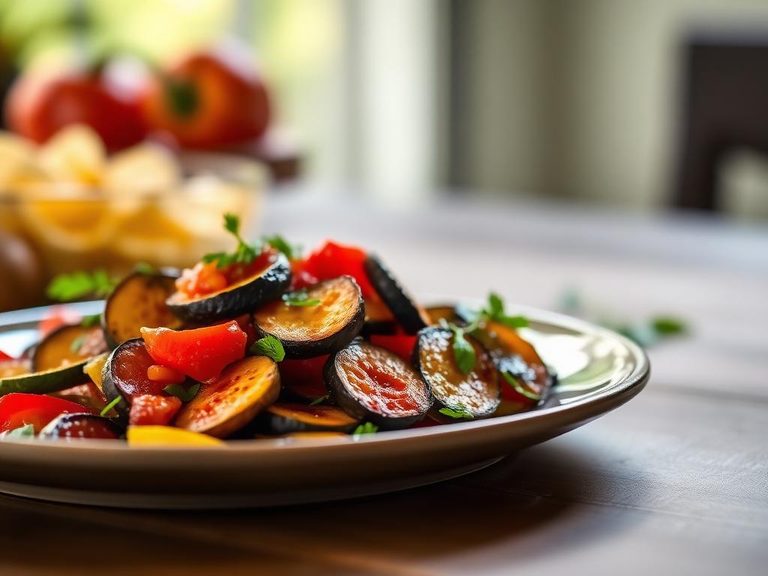
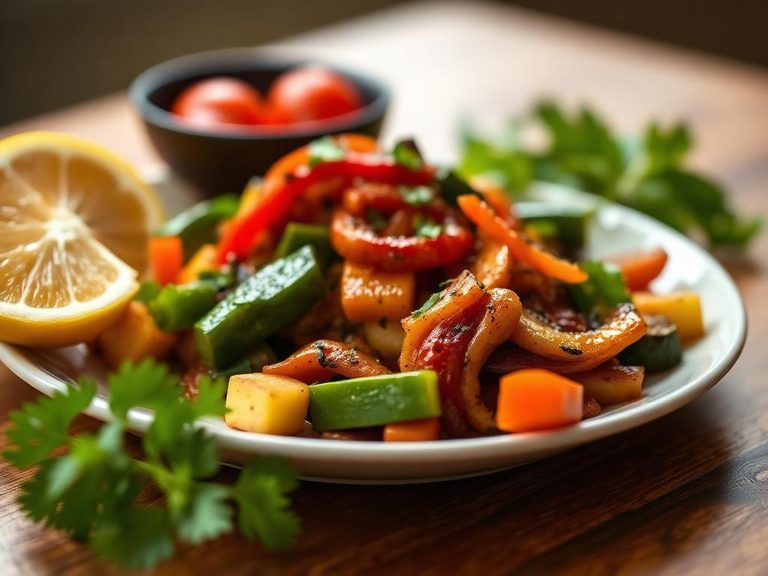
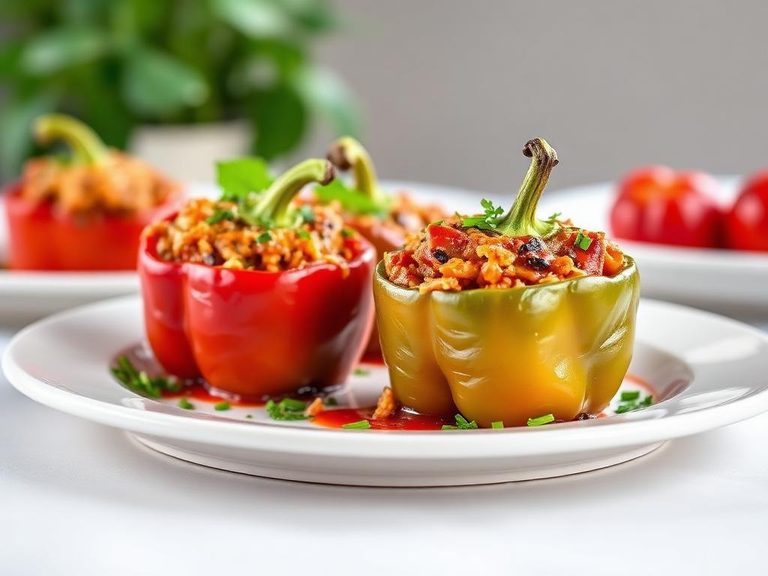
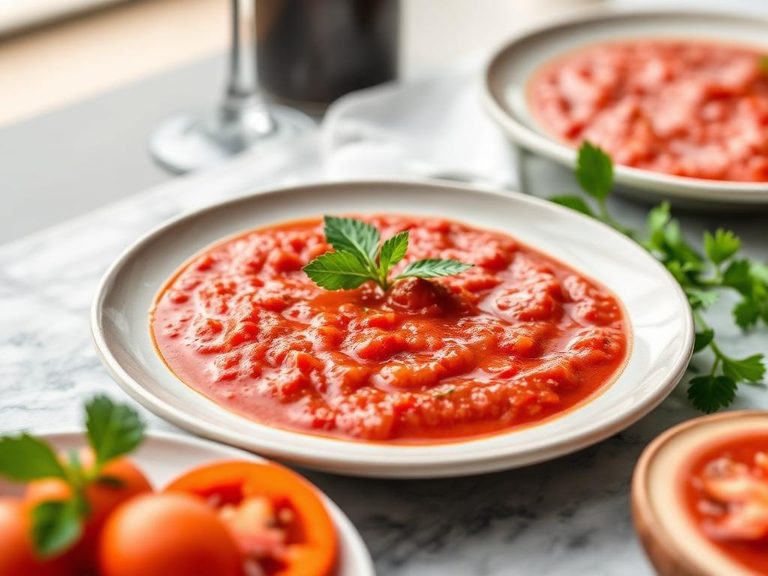
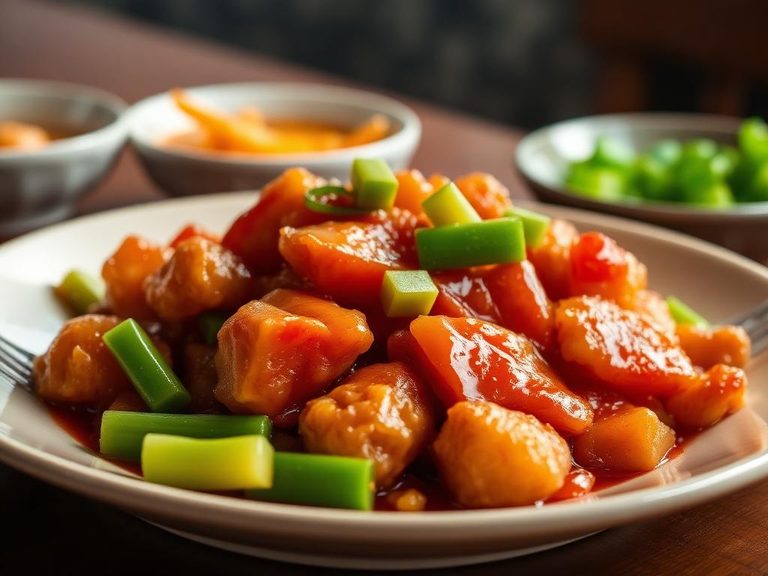
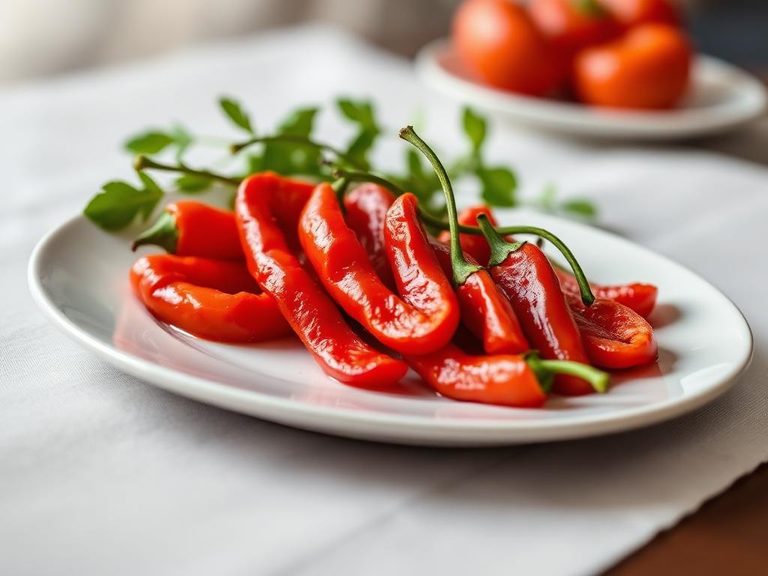
🌍 Where it's eaten
💡 Did you know?
Red bell peppers aren't a separate variety; they are simply green bell peppers that have been left on the vine to fully ripen, a process that converts their chlorophyll into the sweet, red pigments and boosts their Vitamin C content dramatically.
Full nutrition (USDA data · scales with serving)
| Water | 92.2 g |
| Energy | 26.0 kcal |
| Energy | 111 kj |
| Protein | 0.99 g |
| Total lipid (fat) | 0.30 g |
| Ash | 0.47 g |
| Carbohydrate, by difference | 6.0 g |
| Fiber, total dietary | 2.1 g |
| Total Sugars | 4.2 g |
| Sucrose | 0.00 g |
| Glucose | 1.9 g |
| Fructose | 2.3 g |
| Lactose | 0.00 g |
| Maltose | 0.00 g |
| Galactose | 0.00 g |
| Starch | 0.00 g |
| Calcium, Ca | 7.0 mg |
| Iron, Fe | 0.43 mg |
| Magnesium, Mg | 12.0 mg |
| Phosphorus, P | 26.0 mg |
| Potassium, K | 211 mg |
| Sodium, Na | 4.0 mg |
| Zinc, Zn | 0.25 mg |
| Copper, Cu | 0.02 mg |
| Manganese, Mn | 0.11 mg |
| Selenium, Se | 0.10 ug |
| Vitamin C, total ascorbic acid | 128 mg |
| Thiamin | 0.05 mg |
| Riboflavin | 0.09 mg |
| Niacin | 0.98 mg |
| Pantothenic acid | 0.32 mg |
| Vitamin B-6 | 0.29 mg |
| Folate, total | 46.0 ug |
| Folic acid | 0.00 ug |
| Folate, food | 46.0 ug |
| Folate, DFE | 46.0 ug |
| Choline, total | 5.6 mg |
| Betaine | 0.10 mg |
| Vitamin B-12 | 0.00 ug |
| Vitamin B-12, added | 0.00 ug |
| Vitamin A, RAE | 157 ug |
| Retinol | 0.00 ug |
| Carotene, beta | 1624 ug |
| Carotene, alpha | 20.0 ug |
| Cryptoxanthin, beta | 490 ug |
| Vitamin A, IU | 3131 iu |
| Lycopene | 0.00 ug |
| Lutein + zeaxanthin | 51.0 ug |
| Vitamin E (alpha-tocopherol) | 1.6 mg |
| Vitamin E, added | 0.00 mg |
| Tocopherol, beta | 0.05 mg |
| Tocopherol, gamma | 0.14 mg |
| Tocopherol, delta | 0.01 mg |
| Tocotrienol, alpha | 0.00 mg |
| Tocotrienol, beta | 0.00 mg |
| Tocotrienol, gamma | 0.00 mg |
| Tocotrienol, delta | 0.00 mg |
| Vitamin D (D2 + D3), International Units | 0.00 iu |
| Vitamin D (D2 + D3) | 0.00 ug |
| Vitamin K (phylloquinone) | 4.9 ug |
| Vitamin K (Dihydrophylloquinone) | 0.00 ug |
| Alcohol, ethyl | 0.00 g |
| Caffeine | 0.00 mg |
| Theobromine | 0.00 mg |
Fat & fatty acid profile (per 100g)
| Fatty acids, total saturated | 0.06 g |
| SFA 4:0 | 0.00 g |
| SFA 6:0 | 0.00 g |
| SFA 8:0 | 0.00 g |
| SFA 10:0 | 0.00 g |
| SFA 12:0 | 0.00 g |
| SFA 14:0 | 0.00 g |
| SFA 15:0 | 0.00 g |
| SFA 16:0 | 0.06 g |
| SFA 17:0 | 0.00 g |
| SFA 18:0 | 0.00 g |
| SFA 20:0 | 0.00 g |
| SFA 22:0 | 0.00 g |
| SFA 24:0 | 0.00 g |
| Fatty acids, total monounsaturated | 0.01 g |
| MUFA 14:1 | 0.00 g |
| MUFA 15:1 | 0.00 g |
| MUFA 16:1 | 0.00 g |
| MUFA 17:1 | 0.00 g |
| MUFA 18:1 | 0.00 g |
| MUFA 20:1 | 0.00 g |
| MUFA 22:1 | 0.00 g |
| Fatty acids, total polyunsaturated | 0.16 g |
| PUFA 18:2 | 0.10 g |
| PUFA 18:3 | 0.06 g |
| PUFA 18:4 | 0.00 g |
| PUFA 20:2 n-6 c,c | 0.00 g |
| PUFA 20:3 | 0.00 g |
| PUFA 20:4 | 0.00 g |
| PUFA 20:5 n-3 (EPA) | 0.00 g |
| PUFA 22:5 n-3 (DPA) | 0.00 g |
| PUFA 22:6 n-3 (DHA) | 0.00 g |
| Fatty acids, total trans | 0.00 g |
| Cholesterol | 0.00 mg |
Amino acid profile (per 100g)
| Tryptophan | 0.01 g |
| Threonine | 0.04 g |
| Isoleucine | 0.02 g |
| Leucine | 0.04 g |
| Lysine | 0.04 g |
| Methionine | 0.01 g |
| Cystine | 0.02 g |
| Phenylalanine | 0.05 g |
| Tyrosine | 0.01 g |
| Valine | 0.03 g |
| Arginine | 0.04 g |
| Histidine | 0.02 g |
| Alanine | 0.03 g |
| Aspartic acid | 0.28 g |
| Glutamic acid | 0.21 g |
| Glycine | 0.03 g |
| Proline | 0.02 g |
| Serine | 0.05 g |
FAQ
What's the nutritional difference between red, green, and yellow peppers?
Red peppers are the ripest and contain the most Vitamin C and antioxidants (like capsanthin). Green peppers are unripe and slightly more bitter, with less sugar and Vitamin C. Yellow and orange peppers are intermediate in ripeness and sweetness.
Are the seeds and white pith edible?
Yes, they are completely edible. However, the white pith (the inner membrane) can be slightly bitter and is often removed for a smoother taste in raw preparations or sauces.
How can I tell if a red pepper is fresh?
Look for firm, glossy skin without wrinkles or soft spots. The stem should be fresh and green. A fresh pepper will feel heavy for its size and have a crisp snap when broken.
Nutrient density (calculated · NRF9.3)
Nutrient Rich Foods index: beneficial nutrients (protein, fiber, vitamins, minerals) minus saturated fat, added sugar & sodium, per 100 kcal.
NRF9.3 index — Fulgoni, Keast & Drewnowski, 2009. Computed from USDA nutrients.
Weight-loss friendliness (composite index)
Energy density 0.26 kcal/g · 15% calories from protein · 2.1 g fiber · 4.2 g sugar per 100 g.
Composite of energy density (Rolls et al., 1999), protein & fiber satiety, minus sugar. A calculated heuristic — ranks satiety-per-calorie, not a clinical measure.
Dietary load (calculated from USDA values)
Potential renal acid load. Positive = acid-forming, negative = alkaline-forming.
Sodium-to-potassium ratio: 0.02 (lower is better — aim for ≤ 1)
Sodium:potassium per WHO potassium guidance. Computed from USDA nutrients.