

Fajita vegetables
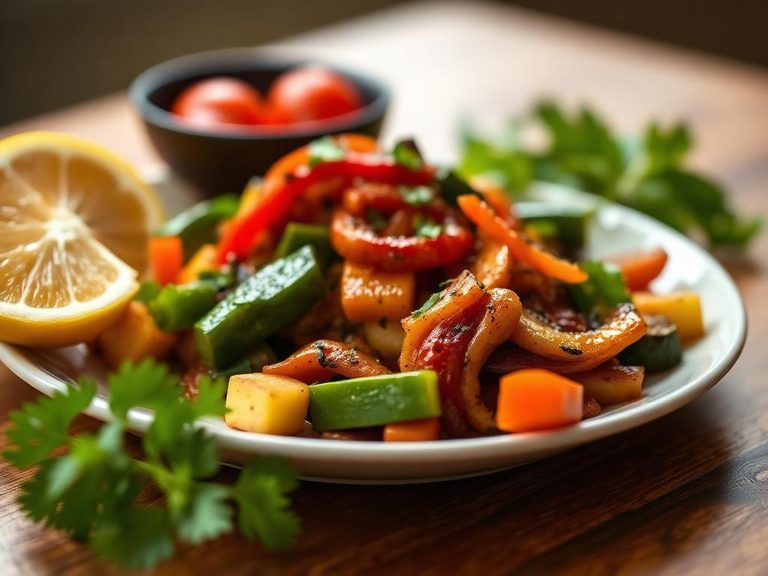
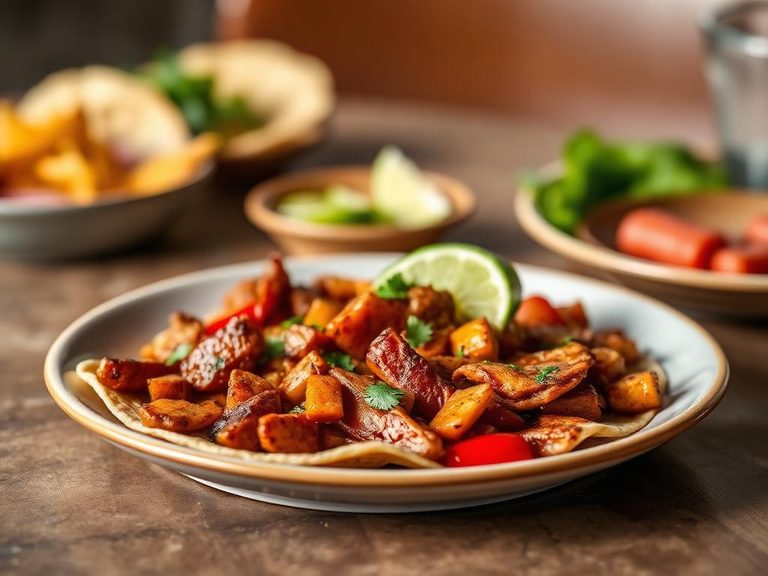
Fajita vegetables are a colorful, sizzling medley of sliced bell peppers and onions, typically cooked in a flavorful blend of spices like cumin, chili powder, and garlic. Originating from the Tex-Mex culinary tradition, they are a classic accompaniment to fajitas, often served alongside grilled meats like steak or chicken.
🍳 View the full Fajita vegetables recipe →
🍽️ Nutrition at a glance
This dish is naturally low in calories and carbohydrates, primarily providing fiber, vitamin C, and antioxidants from the peppers and onions. Its nutritional profile can vary slightly based on the amount of oil used for cooking, but it remains a light, vegetable-forward option.
Nutrition breakdown
| Calories | 90 kcal |
| Protein | 3 g |
| Carbs | 12 g |
| Fat | 4 g |
| Fiber | 4 g |
| Sugar | 6 g |
| Sodium | 300 mg |
| Potassium | 400 mg |
| Vitamin C | 60 mg |
| Vitamin A | 1500 IU |
| Folate | 60 mcg |
| Vitamin K | 15 mcg |
| Manganese | 0.3 mg |
| Magnesium | 25 mg |
| Iron | 1.5 mg |
Per 1 cup (180 g) · estimated, varies by recipe
💡 What's interesting
Culturally, fajita vegetables represent the fusion of Mexican and American (specifically Texan) cooking styles that became popular in the mid-20th century. Nutritionally, the high vitamin C content from the bell peppers can actually enhance the absorption of iron from any accompanying meat in the meal.
🍽️ Related dishes
AI estimate may be inaccurate · Terms