

Mushroom, white, exposed to ultraviolet light, raw
Whole food · Vegetables and Vegetable Products
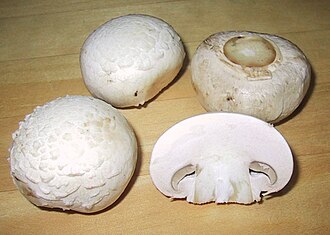
Photo: Wikipedia
This is a common white button mushroom (Agaricus bisporus) that has been exposed to ultraviolet light to significantly boost its natural vitamin D content. It has a mild, earthy flavor and a firm, slightly spongy texture that becomes tender when cooked. Nutritionally, it's a standout for being a rare, non-animal food source of bioavailable vitamin D, with very few calories.
Calorie split: 43% protein · 46% carbs · 11% fat
↓ Full nutrition💚 Why it's loved
People love it for its mild, savory umami flavor and incredibly versatile texture that absorbs sauces and seasonings beautifully. It's a kitchen staple that can be used raw in salads or cooked in countless ways, making it a reliable and affordable ingredient.
⚠️ Watch-outs & how to enjoy it better
Some individuals may experience digestive discomfort like bloating due to its chitin content, which is a type of fiber. To counteract this, try cooking it thoroughly, which breaks down the chitin, or start with smaller portions. Those with a mushroom allergy should obviously avoid it.
Key benefits
- Excellent source of vitamin D when UV-exposed
- Very low in calories and fat
- Good source of dietary fiber and protein
- Contains antioxidants like selenium
- Naturally low in sodium
🍽️ Popular dishes
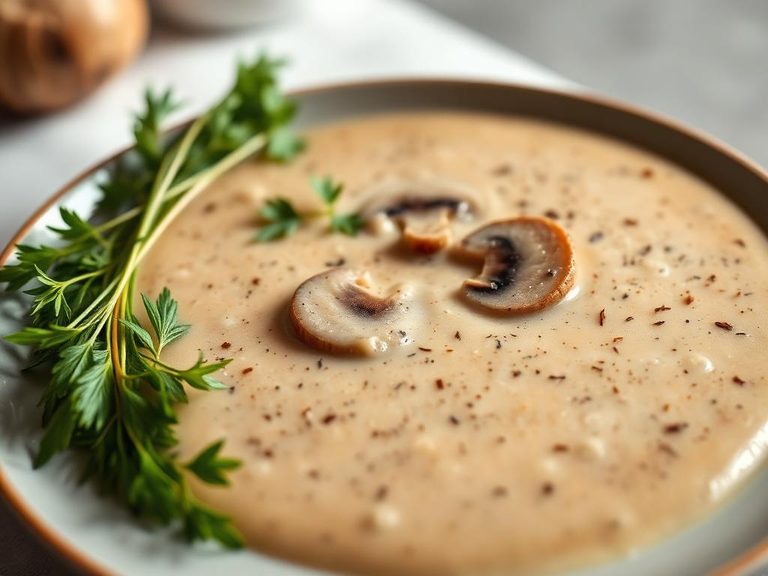
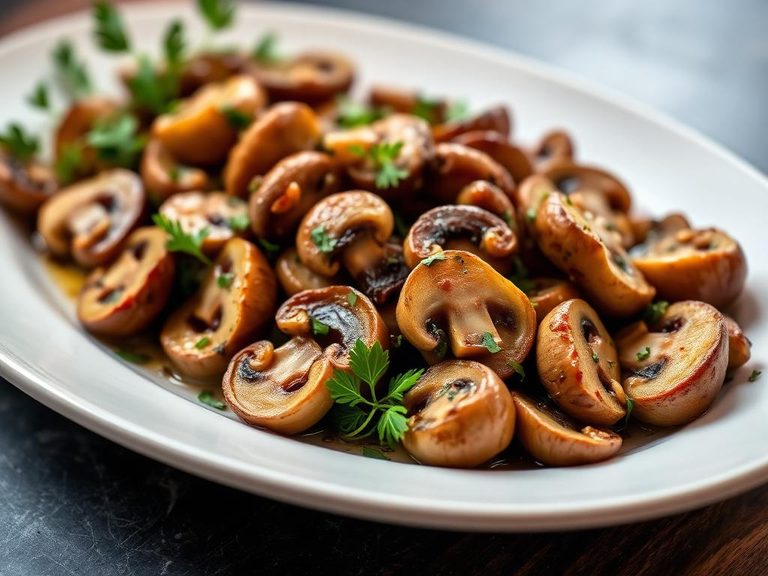
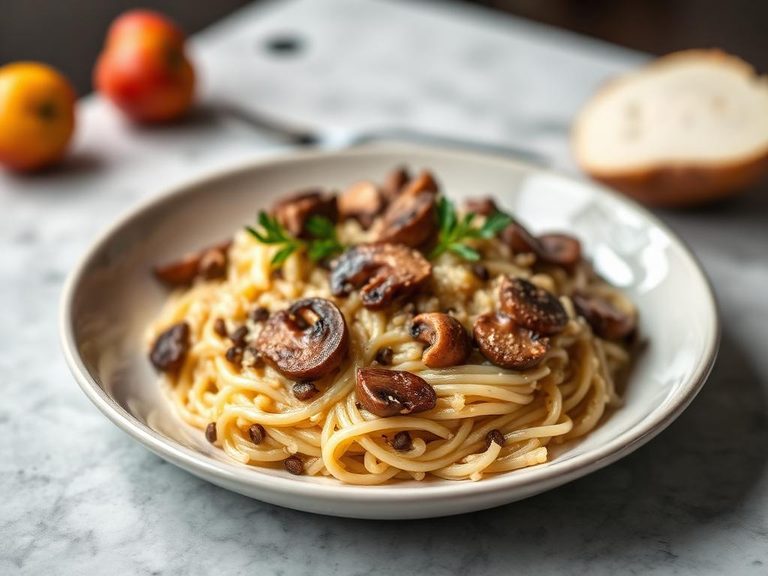
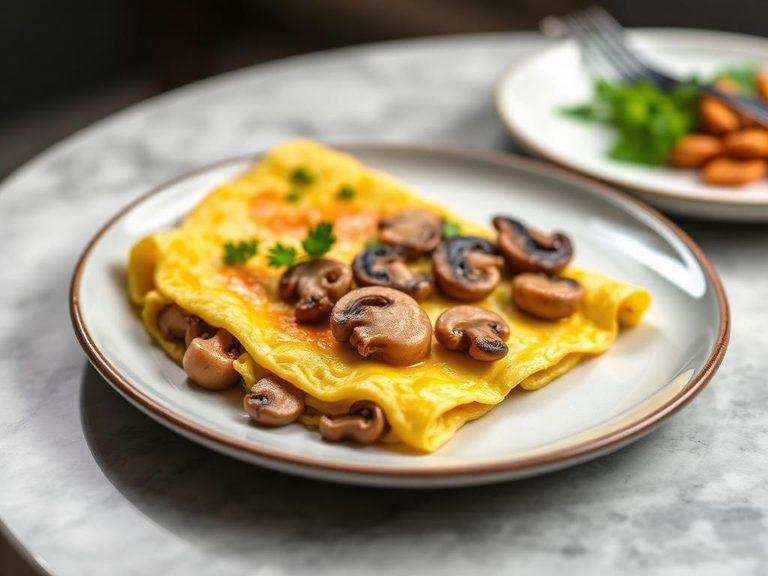
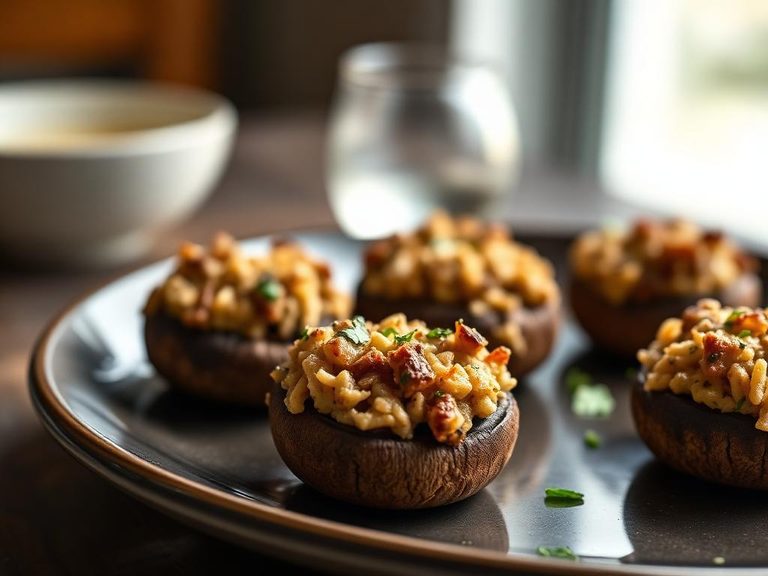
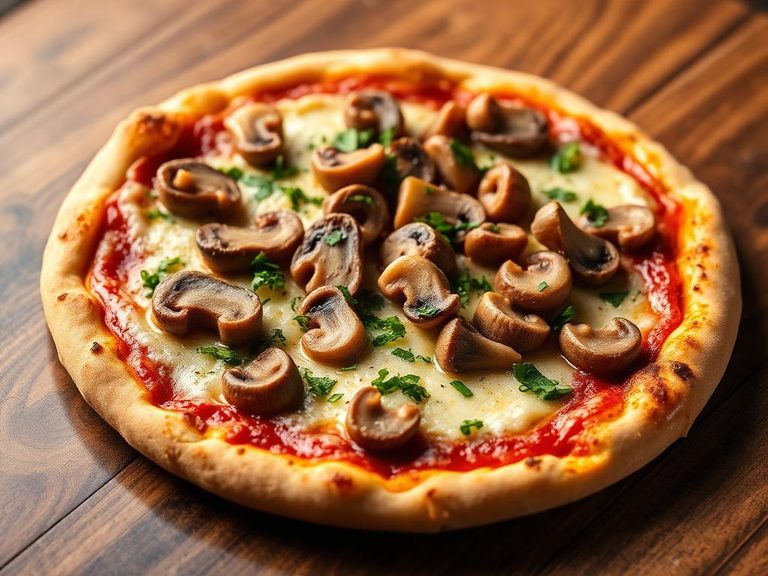
🌍 Where it's eaten
💡 Did you know?
Commercial white mushrooms are the immature stage of the same species that becomes the brown cremini and the large portobello mushroom as it matures.
Full nutrition (USDA data · scales with serving)
| Water | 92.5 g |
| Energy | 22.0 kcal |
| Energy | 93.0 kj |
| Protein | 3.1 g |
| Total lipid (fat) | 0.34 g |
| Ash | 0.85 g |
| Carbohydrate, by difference | 3.3 g |
| Fiber, total dietary | 1.0 g |
| Total Sugars | 2.0 g |
| Sucrose | 0.00 g |
| Glucose | 1.5 g |
| Fructose | 0.17 g |
| Lactose | 0.00 g |
| Maltose | 0.00 g |
| Galactose | 0.00 g |
| Starch | 0.00 g |
| Calcium, Ca | 3.0 mg |
| Iron, Fe | 0.50 mg |
| Magnesium, Mg | 9.0 mg |
| Phosphorus, P | 86.0 mg |
| Potassium, K | 318 mg |
| Sodium, Na | 5.0 mg |
| Zinc, Zn | 0.52 mg |
| Copper, Cu | 0.32 mg |
| Manganese, Mn | 0.05 mg |
| Selenium, Se | 9.3 ug |
| Vitamin C, total ascorbic acid | 2.1 mg |
| Thiamin | 0.08 mg |
| Riboflavin | 0.40 mg |
| Niacin | 3.6 mg |
| Pantothenic acid | 1.5 mg |
| Vitamin B-6 | 0.10 mg |
| Folate, total | 17.0 ug |
| Folic acid | 0.00 ug |
| Folate, food | 17.0 ug |
| Folate, DFE | 17.0 ug |
| Choline, total | 17.3 mg |
| Betaine | 9.4 mg |
| Vitamin B-12 | 0.00 ug |
| Retinol | 0.00 ug |
| Vitamin A, IU | 0.00 iu |
| Vitamin E (alpha-tocopherol) | 0.01 mg |
| Tocopherol, beta | 0.01 mg |
| Tocopherol, gamma | 0.01 mg |
| Tocopherol, delta | 0.01 mg |
| Tocotrienol, alpha | 0.05 mg |
| Tocotrienol, beta | 0.00 mg |
| Tocotrienol, gamma | 0.00 mg |
| Tocotrienol, delta | 0.00 mg |
| Vitamin D (D2 + D3), International Units | 1046 iu |
| Vitamin D (D2 + D3) | 26.2 ug |
| Vitamin D2 (ergocalciferol) | 26.2 ug |
| Vitamin D3 (cholecalciferol) | 0.00 ug |
| Vitamin K (phylloquinone) | 0.00 ug |
| Vitamin K (Dihydrophylloquinone) | 1.0 ug |
| Vitamin K (Menaquinone-4) | 0.00 ug |
| Alcohol, ethyl | 0.00 g |
| Caffeine | 0.00 mg |
| Theobromine | 0.00 mg |
Fat & fatty acid profile (per 100g)
| Fatty acids, total saturated | 0.05 g |
| SFA 4:0 | 0.00 g |
| SFA 6:0 | 0.00 g |
| SFA 8:0 | 0.00 g |
| SFA 10:0 | 0.00 g |
| SFA 12:0 | 0.00 g |
| SFA 14:0 | 0.00 g |
| SFA 15:0 | 0.00 g |
| SFA 16:0 | 0.04 g |
| SFA 17:0 | 0.00 g |
| SFA 18:0 | 0.01 g |
| SFA 20:0 | 0.00 g |
| SFA 22:0 | 0.00 g |
| SFA 24:0 | 0.00 g |
| Fatty acids, total monounsaturated | 0.00 g |
| MUFA 14:1 | 0.00 g |
| MUFA 15:1 | 0.00 g |
| MUFA 16:1 | 0.00 g |
| MUFA 17:1 | 0.00 g |
| MUFA 18:1 | 0.00 g |
| MUFA 20:1 | 0.00 g |
| MUFA 22:1 | 0.00 g |
| MUFA 24:1 c | 0.00 g |
| Fatty acids, total polyunsaturated | 0.16 g |
| PUFA 18:2 | 0.16 g |
| PUFA 18:3 | 0.00 g |
| PUFA 18:4 | 0.00 g |
| PUFA 20:2 n-6 c,c | 0.00 g |
| PUFA 20:3 | 0.00 g |
| PUFA 20:4 | 0.00 g |
| PUFA 20:5 n-3 (EPA) | 0.00 g |
| PUFA 21:5 | 0.00 g |
| PUFA 22:4 | 0.00 g |
| PUFA 22:5 n-3 (DPA) | 0.00 g |
| PUFA 22:6 n-3 (DHA) | 0.00 g |
| Cholesterol | 0.00 mg |
| Stigmasterol | 0.00 mg |
| Campesterol | 2.0 mg |
| Beta-sitosterol | 0.00 mg |
Amino acid profile (per 100g)
Estimated from Mushrooms, brown, italian, or crimini, raw — USDA does not publish this profile for Mushroom.
| Tryptophan | 0.06 g |
| Threonine | 0.11 g |
| Isoleucine | 0.10 g |
| Leucine | 0.15 g |
| Lysine | 0.25 g |
| Methionine | 0.05 g |
| Cystine | 0.01 g |
| Phenylalanine | 0.10 g |
| Tyrosine | 0.05 g |
| Valine | 0.12 g |
| Arginine | 0.12 g |
| Histidine | 0.07 g |
| Alanine | 0.19 g |
| Aspartic acid | 0.23 g |
| Glutamic acid | 0.43 g |
| Glycine | 0.11 g |
| Proline | 0.18 g |
| Serine | 0.11 g |
FAQ
How does UV light increase the vitamin D?
Like human skin, mushrooms contain a compound that converts to vitamin D2 when exposed to ultraviolet light. This process is sometimes called 'vitamin D fortification' and is done post-harvest.
Should I wash or wipe mushrooms?
Mushrooms are like sponges and absorb water. For firm varieties like this, a quick rinse under running water and immediate patting dry is fine. For more delicate mushrooms, a dry brush or damp paper towel is often preferred.
What's the difference between white, cremini, and portobello mushrooms?
They are all the same species (Agaricus bisporus) at different stages of maturity. White are the youngest, cremini (or 'baby bella') are slightly more mature, and portobello are fully mature with a large, open cap.
Nutrient density (calculated · NRF9.3)
Nutrient Rich Foods index: beneficial nutrients (protein, fiber, vitamins, minerals) minus saturated fat, added sugar & sodium, per 100 kcal.
NRF9.3 index — Fulgoni, Keast & Drewnowski, 2009. Computed from USDA nutrients.
Weight-loss friendliness (composite index)
Energy density 0.22 kcal/g · 56% calories from protein · 1.0 g fiber · 2.0 g sugar per 100 g.
Composite of energy density (Rolls et al., 1999), protein & fiber satiety, minus sugar. A calculated heuristic — ranks satiety-per-calorie, not a clinical measure.
Dietary load (calculated from USDA values)
Potential renal acid load. Positive = acid-forming, negative = alkaline-forming.
Sodium-to-potassium ratio: 0.02 (lower is better — aim for ≤ 1)
Sodium:potassium per WHO potassium guidance. Computed from USDA nutrients.