

Milk, chocolate, fluid, commercial, reduced fat, with added vitamin A and vitamin D
Whole food · Dairy and Egg Products
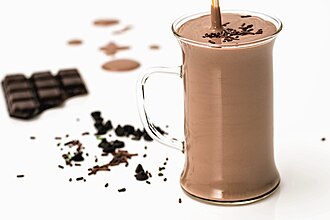
Photo: Wikipedia
This is a smooth, ready-to-drink commercial chocolate milk made from reduced-fat milk, sweetened and enriched with vitamins A and D. It offers a familiar, creamy chocolate flavor with a texture that's slightly thinner than whole-milk versions due to its lower fat content. Nutritionally, it's a source of protein and carbohydrates, with added vitamins to bolster its nutritional profile.
Calorie split: 15% protein · 63% carbs · 22% fat
↓ Full nutrition💚 Why it's loved
People love its nostalgic, comforting sweetness and the convenience of a ready-to-drink beverage that tastes like a treat. It's a versatile drink that pairs well with breakfast cereals, cookies, or is enjoyed on its own as a quick snack.
⚠️ Watch-outs & how to enjoy it better
The added sugars can contribute to rapid blood-sugar spikes, making it less ideal for those monitoring their glycemic response. To counteract this, pair it with a source of fiber or protein (like whole-grain toast or nuts) to slow sugar absorption. It's also a common dairy allergen; those with lactose intolerance or milk allergies should avoid it or choose a fortified plant-based alternative.
Key benefits
- Provides a convenient source of calcium and protein for muscle and bone support.
- Enriched with vitamins A and D, which are essential for vision and immune function.
- Offers a quick source of energy from its carbohydrate content.
- A popular and palatable way to increase fluid and nutrient intake, especially for children.
- The protein and fluid content can aid in post-exercise recovery.
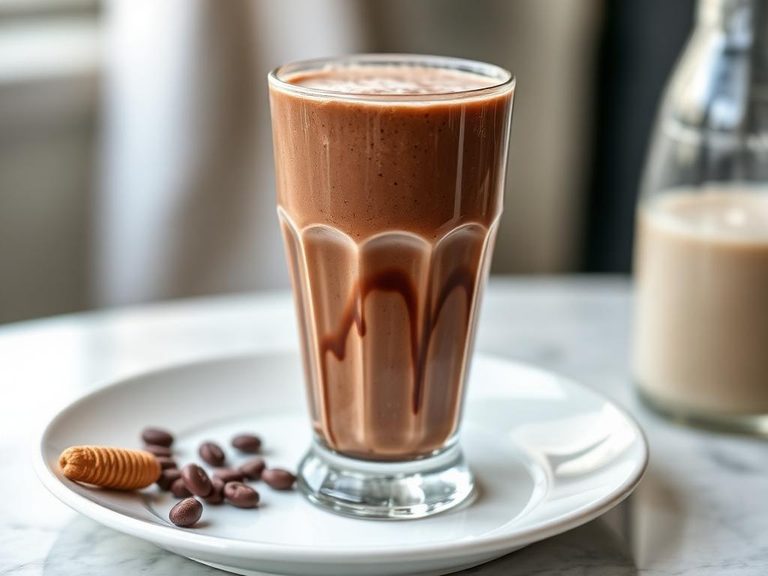
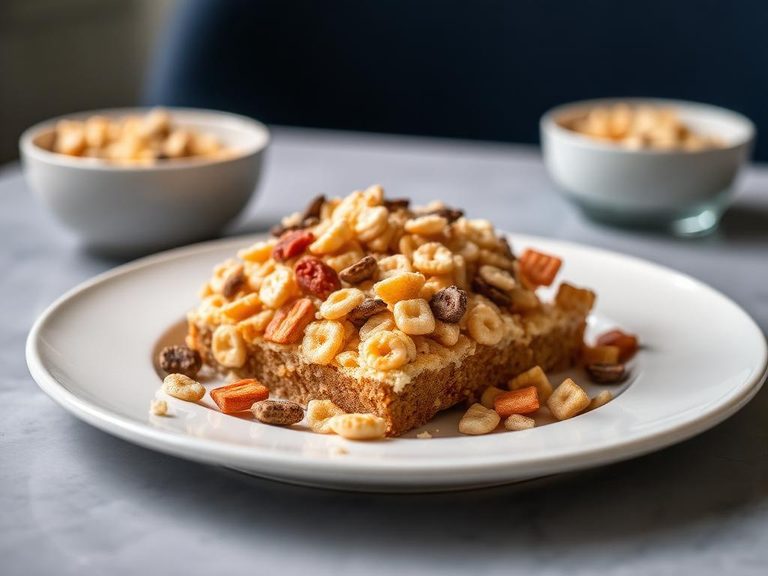
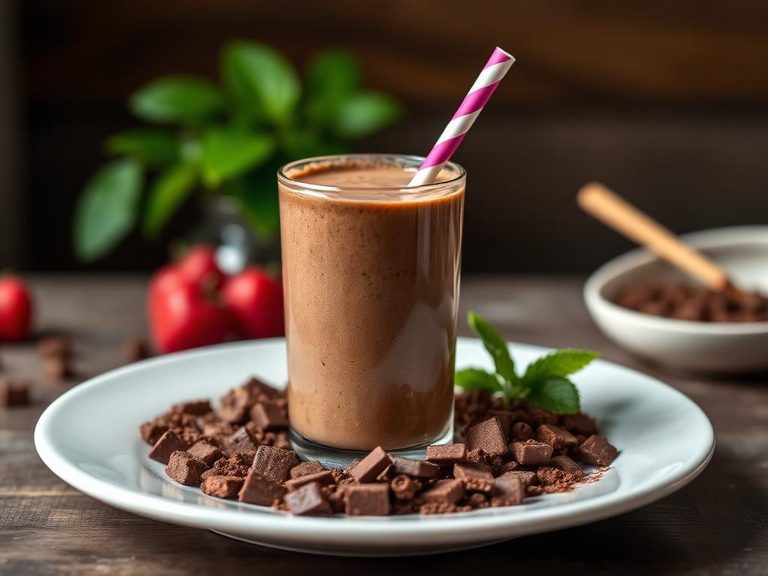
🍽️ Popular dishes



🌍 Where it's eaten
💡 Did you know?
Chocolate milk was first introduced in the 17th century as a health drink in Europe, where it was believed to have medicinal properties.
Full nutrition (USDA data · scales with serving)
| Water | 82.2 g |
| Energy | 76.0 kcal |
| Energy | 320 kj |
| Protein | 3.0 g |
| Total lipid (fat) | 1.9 g |
| Ash | 0.81 g |
| Carbohydrate, by difference | 12.1 g |
| Fiber, total dietary | 0.70 g |
| Total Sugars | 9.6 g |
| Sucrose | 4.8 g |
| Glucose | 0.53 g |
| Fructose | 0.41 g |
| Lactose | 3.8 g |
| Maltose | 0.00 g |
| Starch | 1.6 g |
| Calcium, Ca | 109 mg |
| Iron, Fe | 0.24 mg |
| Magnesium, Mg | 14.0 mg |
| Phosphorus, P | 102 mg |
| Potassium, K | 169 mg |
| Sodium, Na | 66.0 mg |
| Zinc, Zn | 0.39 mg |
| Copper, Cu | 0.07 mg |
| Manganese, Mn | 0.06 mg |
| Selenium, Se | 3.4 ug |
| Fluoride, F | 5.2 ug |
| Vitamin C, total ascorbic acid | 0.00 mg |
| Thiamin | 0.04 mg |
| Riboflavin | 0.18 mg |
| Niacin | 0.16 mg |
| Pantothenic acid | 0.54 mg |
| Vitamin B-6 | 0.02 mg |
| Folate, total | 2.0 ug |
| Folic acid | 0.00 ug |
| Folate, food | 2.0 ug |
| Folate, DFE | 2.0 ug |
| Choline, total | 17.1 mg |
| Betaine | 0.70 mg |
| Vitamin B-12 | 0.33 ug |
| Vitamin B-12, added | 0.00 ug |
| Vitamin A, RAE | 64.0 ug |
| Retinol | 63.0 ug |
| Carotene, beta | 11.0 ug |
| Carotene, alpha | 0.00 ug |
| Cryptoxanthin, beta | 0.00 ug |
| Vitamin A, IU | 227 iu |
| Lycopene | 0.00 ug |
| Lutein + zeaxanthin | 0.00 ug |
| Vitamin E (alpha-tocopherol) | 0.04 mg |
| Vitamin E, added | 0.00 mg |
| Tocopherol, beta | 0.00 mg |
| Tocopherol, gamma | 0.02 mg |
| Tocopherol, delta | 0.00 mg |
| Tocotrienol, alpha | 0.03 mg |
| Tocotrienol, beta | 0.00 mg |
| Tocotrienol, gamma | 0.00 mg |
| Tocotrienol, delta | 0.00 mg |
| Vitamin D (D2 + D3), International Units | 49.0 iu |
| Vitamin D (D2 + D3) | 1.2 ug |
| Vitamin D3 (cholecalciferol) | 1.2 ug |
| Vitamin K (phylloquinone) | 0.20 ug |
| Vitamin K (Dihydrophylloquinone) | 0.00 ug |
| Alcohol, ethyl | 0.00 g |
| Caffeine | 1.0 mg |
| Theobromine | 22.0 mg |
Fat & fatty acid profile (per 100g)
| Fatty acids, total saturated | 1.2 g |
| SFA 4:0 | 0.06 g |
| SFA 6:0 | 0.03 g |
| SFA 8:0 | 0.02 g |
| SFA 10:0 | 0.04 g |
| SFA 12:0 | 0.04 g |
| SFA 14:0 | 0.17 g |
| SFA 15:0 | 0.01 g |
| SFA 16:0 | 0.52 g |
| SFA 17:0 | 0.01 g |
| SFA 18:0 | 0.27 g |
| SFA 20:0 | 0.00 g |
| SFA 22:0 | 0.00 g |
| SFA 24:0 | 0.00 g |
| Fatty acids, total monounsaturated | 0.46 g |
| MUFA 14:1 | 0.01 g |
| MUFA 15:1 | 0.00 g |
| MUFA 16:1 | 0.02 g |
| MUFA 17:1 | 0.00 g |
| MUFA 18:1 | 0.43 g |
| MUFA 20:1 | 0.00 g |
| MUFA 22:1 | 0.00 g |
| Fatty acids, total polyunsaturated | 0.09 g |
| PUFA 18:2 | 0.08 g |
| PUFA 18:3 | 0.00 g |
| PUFA 18:3 n-3 c,c,c (ALA) | 0.00 g |
| PUFA 18:4 | 0.01 g |
| PUFA 20:2 n-6 c,c | 0.00 g |
| PUFA 20:3 | 0.00 g |
| PUFA 20:4 | 0.00 g |
| PUFA 20:5 n-3 (EPA) | 0.00 g |
| PUFA 22:5 n-3 (DPA) | 0.00 g |
| PUFA 22:6 n-3 (DHA) | 0.00 g |
| Cholesterol | 8.0 mg |
| Stigmasterol | 0.00 mg |
| Campesterol | 0.00 mg |
| Beta-sitosterol | 0.00 mg |
Amino acid profile (per 100g)
| Tryptophan | 0.04 g |
| Threonine | 0.13 g |
| Isoleucine | 0.15 g |
| Leucine | 0.28 g |
| Lysine | 0.25 g |
| Methionine | 0.08 g |
| Cystine | 0.02 g |
| Phenylalanine | 0.15 g |
| Tyrosine | 0.15 g |
| Valine | 0.20 g |
| Arginine | 0.09 g |
| Histidine | 0.09 g |
| Alanine | 0.10 g |
| Aspartic acid | 0.26 g |
| Glutamic acid | 0.67 g |
| Glycine | 0.06 g |
| Proline | 0.29 g |
| Serine | 0.18 g |
FAQ
Is reduced-fat chocolate milk healthier than whole-fat chocolate milk?
It typically contains less total fat and saturated fat, but often has a similar or even higher sugar content to maintain flavor. The 'healthier' choice depends on your specific dietary goals, such as fat reduction versus sugar intake.
Why are vitamins A and D added?
They are added to replace nutrients that can be reduced during processing (like skimming fat) and to fortify the product, enhancing its nutritional value for bone health and immune support.
Can I use this in baking recipes that call for regular milk?
Yes, but be aware it will add sweetness and chocolate flavor to your dish. It works well in brownies, cakes, or muffins where those flavors are desired.
Nutrient density (calculated · NRF9.3)
Nutrient Rich Foods index: beneficial nutrients (protein, fiber, vitamins, minerals) minus saturated fat, added sugar & sodium, per 100 kcal.
NRF9.3 index — Fulgoni, Keast & Drewnowski, 2009. Computed from USDA nutrients.
Weight-loss friendliness (composite index)
Energy density 0.76 kcal/g · 16% calories from protein · 0.7 g fiber · 9.6 g sugar per 100 g.
Composite of energy density (Rolls et al., 1999), protein & fiber satiety, minus sugar. A calculated heuristic — ranks satiety-per-calorie, not a clinical measure.
Dietary load (calculated from USDA values)
Potential renal acid load. Positive = acid-forming, negative = alkaline-forming.
Sodium-to-potassium ratio: 0.39 (lower is better — aim for ≤ 1)
Sodium:potassium per WHO potassium guidance. Computed from USDA nutrients.