

Fish, flatfish (flounder and sole species), cooked, dry heat
Whole food · Finfish and Shellfish Products

Photo: Wikipedia
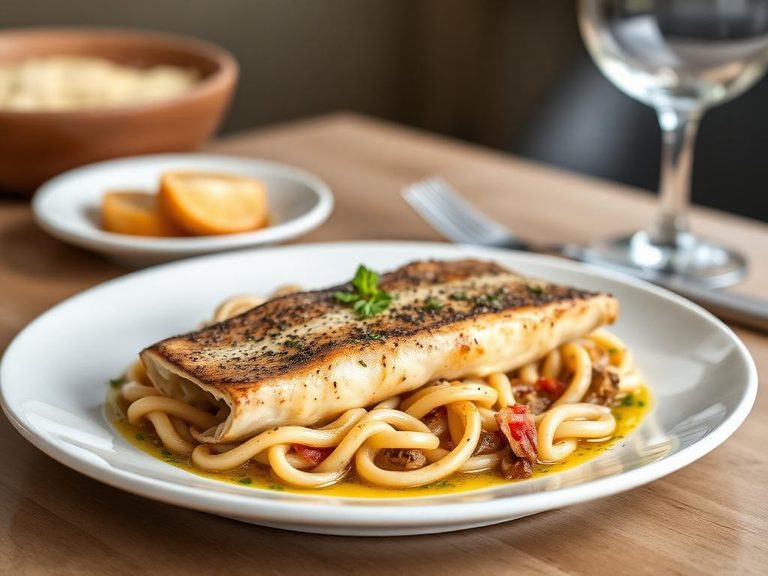
Flatfish like flounder and sole, when cooked with dry heat, transform into delicate, snow-white fillets with a mild, subtly sweet flavor and a tender, flaky texture. This lean protein powerhouse delivers an impressive 15.24 grams of protein per 100 grams for only 86 calories, with virtually no carbohydrates or fat.
Calorie split: 74% protein · 0% carbs · 26% fat
↓ Full nutrition💚 Why it's loved
People adore its clean, delicate taste that acts as a perfect canvas for sauces and seasonings, and its quick, forgiving cooking time makes it a weeknight favorite. Its cultural significance in classic French and Japanese cuisines adds an element of refined simplicity.
⚠️ Watch-outs & how to enjoy it better
Its mild flavor can be perceived as bland if overcooked or under-seasoned. As a common fish allergen, it must be avoided by those with fish allergies. To counteract blandness, pair it with bright, acidic sauces like lemon-caper butter or a vibrant salsa verde.
Key benefits
- Excellent source of lean, high-quality protein for muscle maintenance.
- Very low in calories, supporting weight management goals.
- Naturally free of carbohydrates and sugars.
- Provides essential nutrients like selenium and B vitamins.
- Low in fat, making it a heart-healthy protein choice.
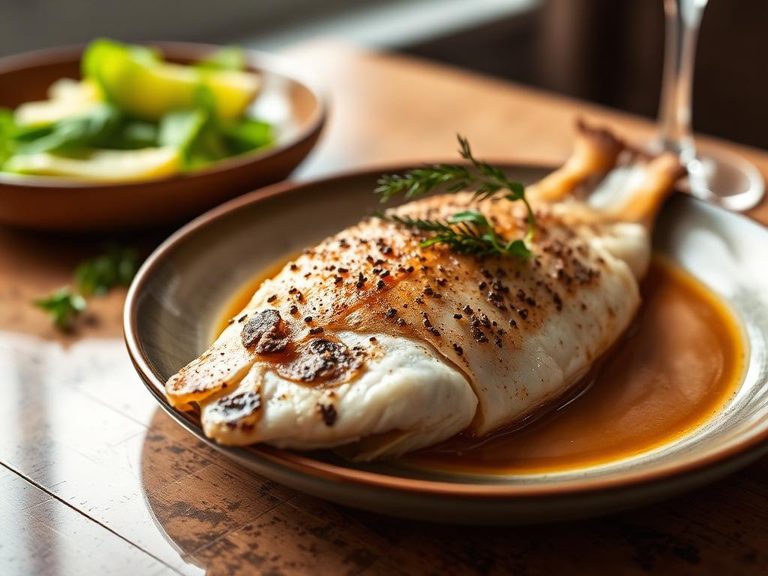
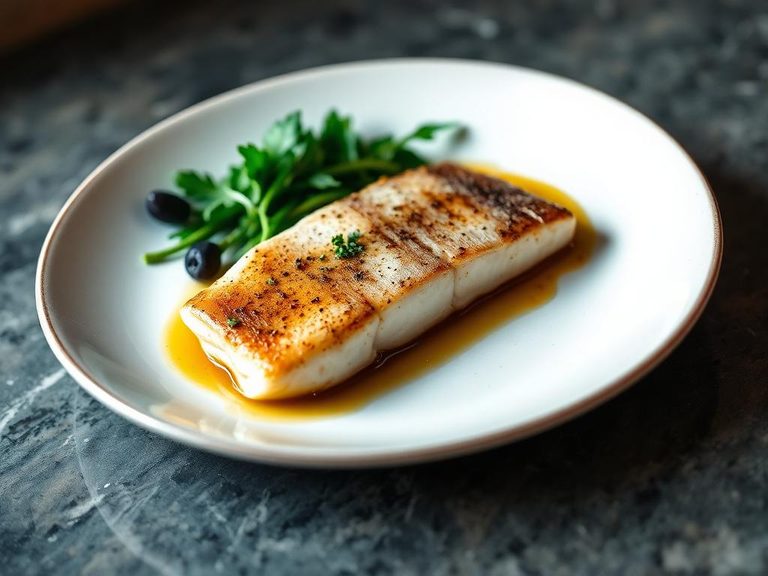
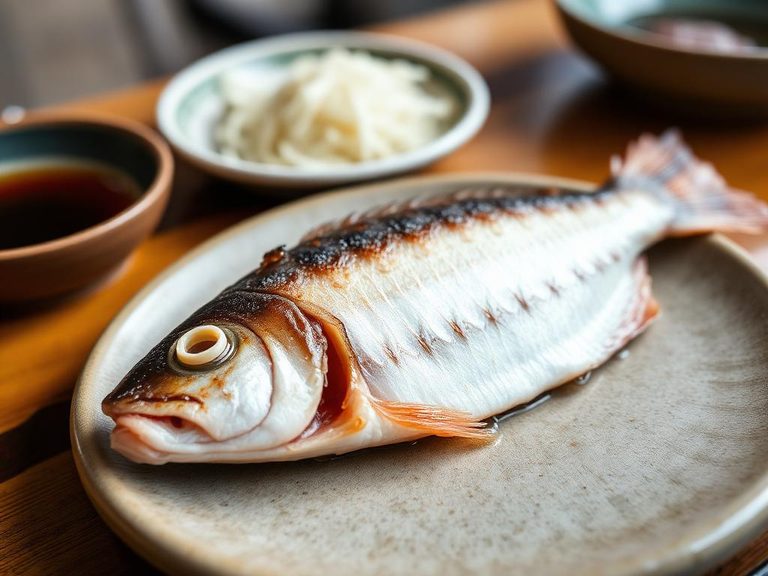
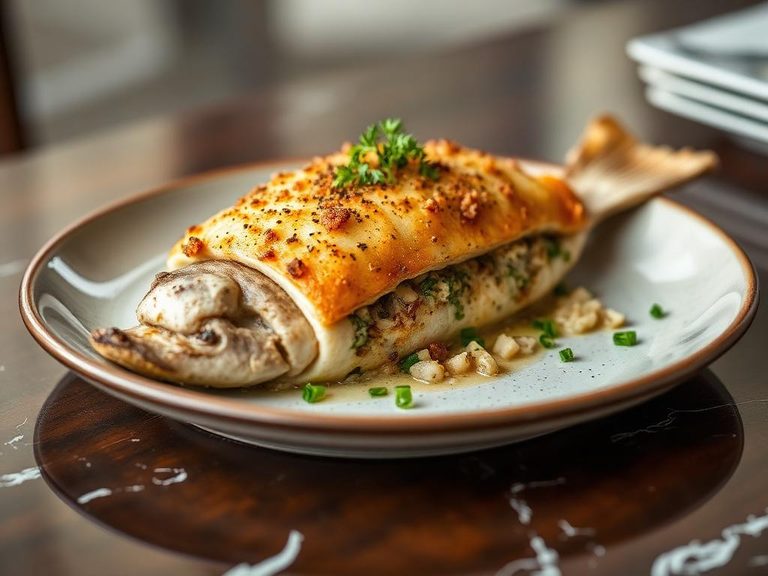
🍽️ Popular dishes

🌍 Where it's eaten
💡 Did you know?
Flounder are born as normal, upright-swimming fish, but undergo a remarkable metamorphosis where one eye migrates to the other side of the head, allowing them to lie flat on the ocean floor.
Full nutrition (USDA data · scales with serving)
| Water | 81.1 g |
| Energy | 86.0 kcal |
| Energy | 362 kj |
| Protein | 15.2 g |
| Total lipid (fat) | 2.4 g |
| Ash | 1.5 g |
| Carbohydrate, by difference | 0.00 g |
| Fiber, total dietary | 0.00 g |
| Total Sugars | 0.00 g |
| Sucrose | 0.00 g |
| Glucose | 0.00 g |
| Fructose | 0.00 g |
| Lactose | 0.00 g |
| Maltose | 0.00 g |
| Galactose | 0.00 g |
| Starch | 0.00 g |
| Calcium, Ca | 25.0 mg |
| Iron, Fe | 0.23 mg |
| Magnesium, Mg | 22.0 mg |
| Phosphorus, P | 309 mg |
| Potassium, K | 197 mg |
| Sodium, Na | 363 mg |
| Zinc, Zn | 0.39 mg |
| Copper, Cu | 0.02 mg |
| Manganese, Mn | 0.02 mg |
| Selenium, Se | 32.6 ug |
| Vitamin C, total ascorbic acid | 0.00 mg |
| Thiamin | 0.03 mg |
| Riboflavin | 0.03 mg |
| Niacin | 1.3 mg |
| Pantothenic acid | 0.23 mg |
| Vitamin B-6 | 0.12 mg |
| Folate, total | 6.0 ug |
| Folic acid | 0.00 ug |
| Folate, food | 6.0 ug |
| Folate, DFE | 6.0 ug |
| Choline, total | 79.9 mg |
| Vitamin B-12 | 1.3 ug |
| Vitamin B-12, added | 0.00 ug |
| Vitamin A, RAE | 12.0 ug |
| Retinol | 12.0 ug |
| Carotene, beta | 0.00 ug |
| Carotene, alpha | 0.00 ug |
| Cryptoxanthin, beta | 0.00 ug |
| Vitamin A, IU | 37.0 iu |
| Lycopene | 0.00 ug |
| Lutein + zeaxanthin | 0.00 ug |
| Vitamin E (alpha-tocopherol) | 0.77 mg |
| Vitamin E, added | 0.00 mg |
| Tocopherol, beta | 0.02 mg |
| Tocopherol, gamma | 0.01 mg |
| Tocopherol, delta | 0.32 mg |
| Tocotrienol, alpha | 0.00 mg |
| Tocotrienol, beta | 0.00 mg |
| Tocotrienol, gamma | 0.00 mg |
| Tocotrienol, delta | 0.00 mg |
| Vitamin D (D2 + D3), International Units | 139 iu |
| Vitamin D (D2 + D3) | 3.5 ug |
| Vitamin D3 (cholecalciferol) | 3.5 ug |
| Vitamin K (phylloquinone) | 0.10 ug |
| Vitamin K (Dihydrophylloquinone) | 0.00 ug |
| Vitamin K (Menaquinone-4) | 0.30 ug |
| Alcohol, ethyl | 0.00 g |
| Caffeine | 0.00 mg |
| Theobromine | 0.00 mg |
Fat & fatty acid profile (per 100g)
| Fatty acids, total saturated | 0.54 g |
| SFA 4:0 | 0.00 g |
| SFA 6:0 | 0.00 g |
| SFA 8:0 | 0.00 g |
| SFA 10:0 | 0.00 g |
| SFA 12:0 | 0.01 g |
| SFA 14:0 | 0.11 g |
| SFA 15:0 | 0.01 g |
| SFA 16:0 | 0.35 g |
| SFA 17:0 | 0.00 g |
| SFA 18:0 | 0.07 g |
| SFA 20:0 | 0.00 g |
| SFA 22:0 | 0.00 g |
| SFA 24:0 | 0.00 g |
| Fatty acids, total monounsaturated | 0.66 g |
| MUFA 14:1 | 0.00 g |
| MUFA 15:1 | 0.00 g |
| MUFA 16:1 | 0.11 g |
| MUFA 17:1 | 0.03 g |
| MUFA 18:1 | 0.44 g |
| MUFA 20:1 | 0.07 g |
| MUFA 22:1 | 0.00 g |
| MUFA 24:1 c | 0.00 g |
| Fatty acids, total polyunsaturated | 0.46 g |
| PUFA 18:2 | 0.06 g |
| PUFA 18:3 | 0.02 g |
| PUFA 18:4 | 0.01 g |
| PUFA 20:2 n-6 c,c | 0.01 g |
| PUFA 20:3 | 0.01 g |
| PUFA 20:4 | 0.02 g |
| PUFA 20:5 n-3 (EPA) | 0.17 g |
| PUFA 22:4 | 0.00 g |
| PUFA 22:5 n-3 (DPA) | 0.03 g |
| PUFA 22:6 n-3 (DHA) | 0.13 g |
| Fatty acids, total trans | 0.01 g |
| Cholesterol | 56.0 mg |
Amino acid profile (per 100g)
| Tryptophan | 0.20 g |
| Threonine | 0.72 g |
| Isoleucine | 0.75 g |
| Leucine | 1.3 g |
| Lysine | 1.6 g |
| Methionine | 0.56 g |
| Cystine | 0.18 g |
| Phenylalanine | 0.62 g |
| Tyrosine | 0.59 g |
| Valine | 0.80 g |
| Arginine | 1.1 g |
| Histidine | 0.37 g |
| Alanine | 0.95 g |
| Aspartic acid | 1.7 g |
| Glutamic acid | 2.6 g |
| Glycine | 0.79 g |
| Proline | 0.60 g |
| Serine | 0.71 g |
FAQ
What's the difference between flounder and sole?
While often used interchangeably in markets, true sole (like Dover sole) is a specific family with a firmer texture and slightly sweeter taste. Flounder is a broader term for many flatfish species, with a more delicate, softer flesh.
How do I prevent it from falling apart when cooking?
Pat the fillets completely dry before cooking. Use a non-stick or well-seasoned pan with medium-high heat. Don't move the fish until a golden crust forms, and use a thin, wide spatula for flipping.
Is this a sustainable seafood choice?
Sustainability varies greatly by species and fishing method. Look for certifications like MSC (Marine Stewardship Council) or consult the Monterey Bay Aquarium Seafood Watch guide for specific recommendations on flounder and sole.
Nutrient density (calculated · NRF9.3)
Nutrient Rich Foods index: beneficial nutrients (protein, fiber, vitamins, minerals) minus saturated fat, added sugar & sodium, per 100 kcal.
NRF9.3 index — Fulgoni, Keast & Drewnowski, 2009. Computed from USDA nutrients.
Weight-loss friendliness (composite index)
Energy density 0.86 kcal/g · 71% calories from protein · 0.0 g fiber · 0.0 g sugar per 100 g.
Composite of energy density (Rolls et al., 1999), protein & fiber satiety, minus sugar. A calculated heuristic — ranks satiety-per-calorie, not a clinical measure.
Dietary load (calculated from USDA values)
Potential renal acid load. Positive = acid-forming, negative = alkaline-forming.
Sodium-to-potassium ratio: 1.84 (lower is better — aim for ≤ 1)
Sodium:potassium per WHO potassium guidance. Computed from USDA nutrients.