Cheese, swiss
Whole food · Dairy and Egg Products
Swiss cheese is a firm, pale-yellow Alpine cheese characterized by its iconic holes, or "eyes," and a mild, slightly sweet, nutty flavor. Its dense, chewy texture and balanced taste make it a standout in both cooked and raw applications. Nutritionally, it is a protein powerhouse, delivering 27 grams per 100 grams with minimal carbohydrates, making it a staple for low-carb and high-protein diets.
💚 Why it's loved
People love Swiss cheese for its versatile, mild nuttiness that enhances without overpowering, and its satisfyingly firm, sliceable texture. It is a cultural icon of the Swiss Alps and a beloved staple in deli counters worldwide, prized for its ability to melt beautifully while retaining a distinct, savory character.
⚠️ Watch-outs & how to enjoy it better
Its high sodium and saturated fat content can be a concern for those managing blood pressure or heart health. To counteract this, practice strict portion control (stick to 1-2 ounces) and pair it with potassium-rich foods like leafy greens or tomatoes to help balance sodium intake. As a dairy product, it is a common allergen for those with lactose intolerance or milk protein allergies; lactase enzyme supplements or aged cheese alternatives can help mitigate digestive issues.
Key benefits
- Excellent source of high-quality protein for muscle maintenance and satiety.
- Naturally very low in carbohydrates and sugar, suitable for ketogenic diets.
- Rich in calcium and phosphorus for bone health.
- Contains Vitamin B12, essential for nerve function and red blood cell formation.
- Provides conjugated linoleic acid (CLA), a fatty acid studied for metabolic benefits.
🍽️ Popular dishes

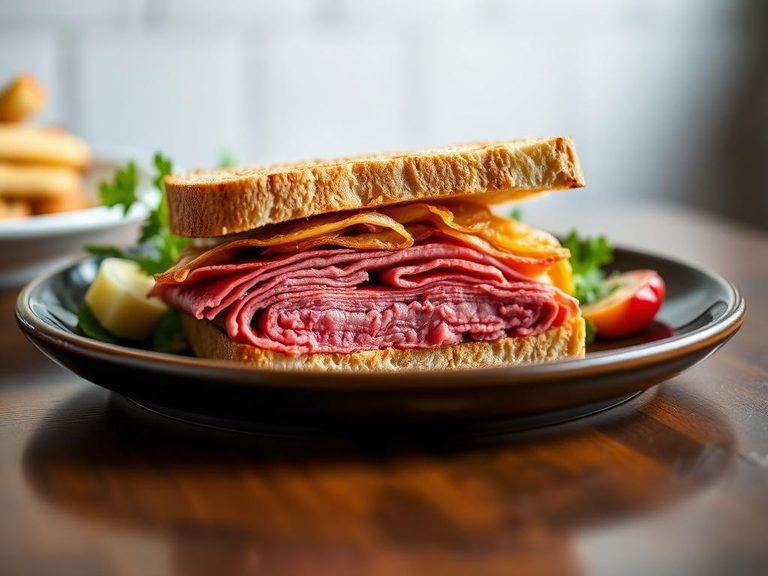
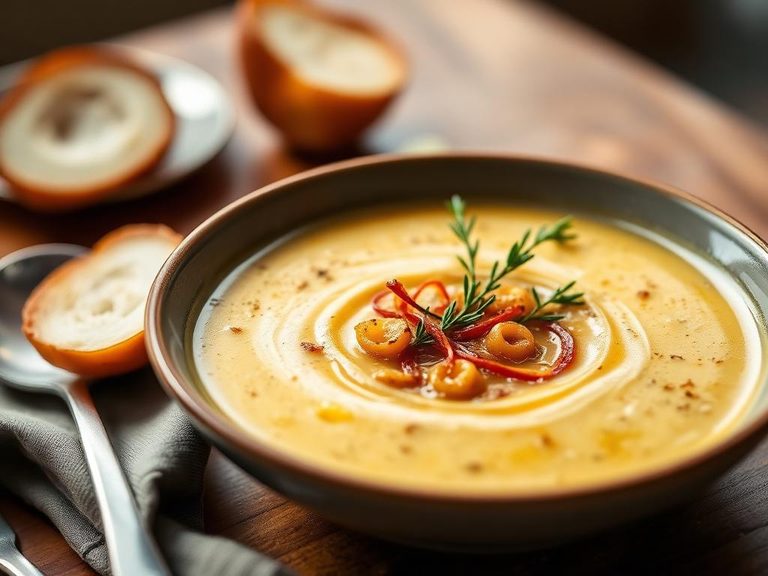
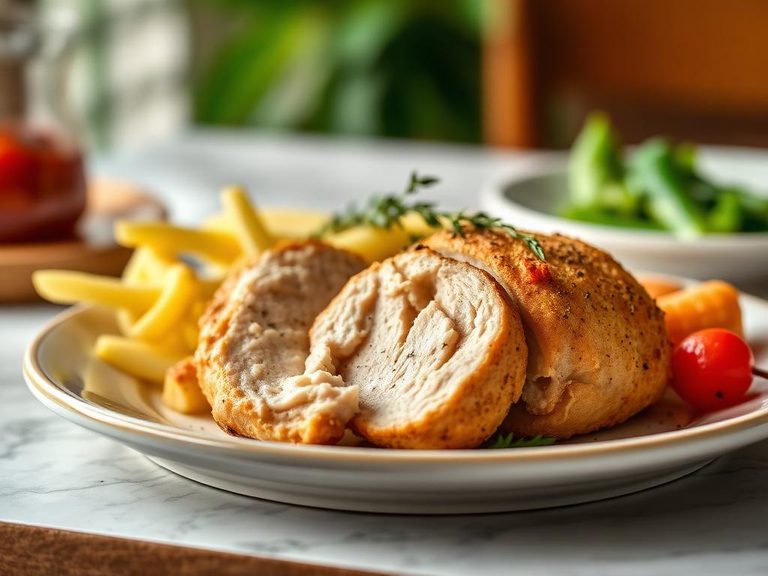

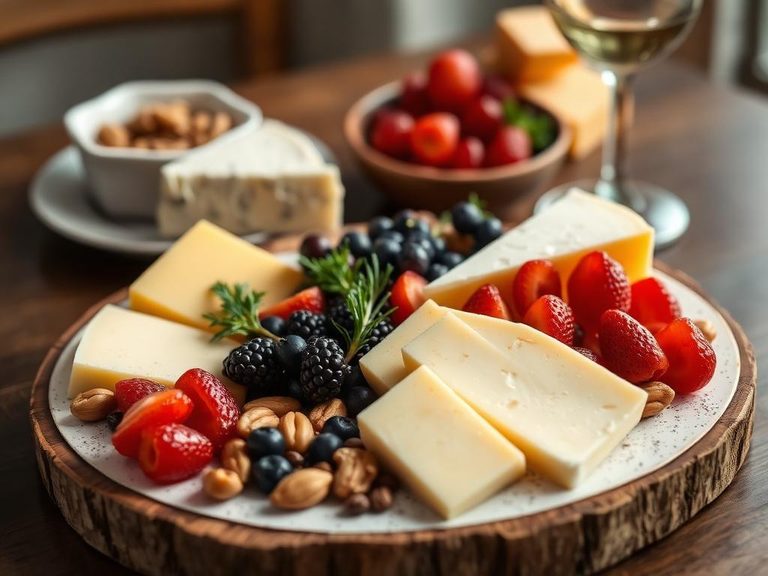
🌍 Where it's eaten
💡 Did you know?
The holes in Swiss cheese are formed by carbon dioxide bubbles released by bacteria during fermentation; larger holes indicate a longer aging process and a more complex flavor.
Full nutrition (scales with serving)
| Water | 37.6 g |
| Energy | 393 kcal |
| Energy | 1640 kj |
| Nitrogen | 4.2 g |
| Protein | 27.0 g |
| Total lipid (fat) | 31.0 g |
| Total fat (NLEA) | 27.6 g |
| Ash | 3.0 g |
| Carbohydrate, by difference | 1.4 g |
| Sugars, Total | 0.00 g |
| Sucrose | 0.00 g |
| Glucose | 0.00 g |
| Fructose | 0.00 g |
| Lactose | 0.00 g |
| Maltose | 0.00 g |
| Galactose | 0.00 g |
| Calcium, Ca | 890 mg |
| Iron, Fe | 0.13 mg |
| Magnesium, Mg | 33.4 mg |
| Phosphorus, P | 574 mg |
| Potassium, K | 71.0 mg |
| Sodium, Na | 185 mg |
| Zinc, Zn | 4.4 mg |
| Copper, Cu | 0.05 mg |
| Manganese, Mn | 0.03 mg |
| Selenium, Se | 30.1 ug |
| Thiamin | 0.01 mg |
| Riboflavin | 0.30 mg |
| Niacin | 0.06 mg |
| Pantothenic acid | 0.35 mg |
| Vitamin B-6 | 0.07 mg |
| Folate, total | 9.0 ug |
| Choline, total | 13.8 mg |
| Choline, free | 3.3 mg |
| Choline, from phosphocholine | 0.10 mg |
| Choline, from phosphotidyl choline | 6.0 mg |
| Choline, from glycerophosphocholine | 0.00 mg |
| Choline, from sphingomyelin | 4.4 mg |
| Betaine | 0.10 mg |
| Vitamin B-12 | 3.0 ug |
| Vitamin A, RAE | 292 ug |
| Retinol | 287 ug |
| Carotene, beta | 60.0 ug |
| Carotene, alpha | 1.0 ug |
| Cryptoxanthin, beta | 2.0 ug |
| Lycopene | 1.0 ug |
| Lutein + zeaxanthin | 8.0 ug |
| Vitamin E (alpha-tocopherol) | 0.60 mg |
| Tocopherol, beta | 0.02 mg |
| Tocopherol, gamma | 0.08 mg |
| Tocopherol, delta | 0.00 mg |
| Tocotrienol, alpha | 0.13 mg |
| Tocotrienol, beta | 0.00 mg |
| Tocotrienol, gamma | 0.00 mg |
| Tocotrienol, delta | 0.00 mg |
| Vitamin D (D2 + D3), International Units | 0.00 iu |
| Vitamin D (D2 + D3) | 0.00 ug |
| Vitamin D2 (ergocalciferol) | 0.00 ug |
| Vitamin D3 (cholecalciferol) | 0.00 ug |
| Vitamin K (phylloquinone) | 1.4 ug |
| Vitamin K (Dihydrophylloquinone) | 0.00 ug |
| Vitamin K (Menaquinone-4) | 6.3 ug |
| Fatty acids, total saturated | 18.2 g |
| SFA 4:0 | 0.68 g |
| SFA 6:0 | 0.54 g |
| SFA 8:0 | 0.33 g |
| SFA 10:0 | 0.77 g |
| SFA 11:0 | 0.00 g |
| SFA 12:0 | 0.87 g |
| SFA 14:0 | 2.9 g |
| SFA 15:0 | 0.30 g |
| SFA 16:0 | 8.3 g |
| SFA 17:0 | 0.19 g |
| SFA 18:0 | 3.2 g |
| SFA 20:0 | 0.04 g |
| SFA 22:0 | 0.01 g |
| SFA 24:0 | 0.01 g |
| Fatty acids, total monounsaturated | 7.3 g |
| MUFA 14:1 c | 0.30 g |
| MUFA 15:1 | 0.00 g |
| MUFA 16:1 c | 0.46 g |
| MUFA 17:1 | 0.06 g |
| MUFA 17:1 c | 0.06 g |
| MUFA 18:1 c | 6.4 g |
| MUFA 20:1 | 0.06 g |
| MUFA 20:1 c | 0.06 g |
| MUFA 22:1 c | 0.00 g |
| MUFA 24:1 c | 0.00 g |
| Fatty acids, total polyunsaturated | 1.1 g |
| PUFA 18:2 c | 0.89 g |
| PUFA 18:2 n-6 c,c | 0.73 g |
| PUFA 18:2 CLAs | 0.16 g |
| PUFA 18:3 c | 0.13 g |
| PUFA 18:3 n-3 c,c,c (ALA) | 0.13 g |
| PUFA 18:3 n-6 c,c,c | 0.00 g |
| PUFA 18:3i | 0.00 g |
| PUFA 18:4 | 0.00 g |
| PUFA 20:2 c | 0.01 g |
| PUFA 20:2 n-6 c,c | 0.01 g |
| PUFA 20:3 c | 0.04 g |
| PUFA 20:3 n-3 | 0.00 g |
| PUFA 20:3 n-6 | 0.03 g |
| PUFA 20:3 n-9 | 0.00 g |
| PUFA 20:4 | 0.05 g |
| PUFA 20:4c | 0.05 g |
| PUFA 20:5c | 0.01 g |
| PUFA 20:5 n-3 (EPA) | 0.01 g |
| PUFA 22:2 | 0.00 g |
| PUFA 22:5 c | 0.02 g |
| PUFA 22:4 | 0.01 g |
| PUFA 22:5 n-3 (DPA) | 0.02 g |
| PUFA 22:6 c | 0.00 g |
| PUFA 22:6 n-3 (DHA) | 0.00 g |
| Fatty acids, total trans | 0.99 g |
| Fatty acids, total trans-monoenoic | 0.80 g |
| TFA 16:1 t | 0.10 g |
| TFA 18:1 t | 0.70 g |
| TFA 22:1 t | 0.00 g |
| Fatty acids, total trans-dienoic | 0.19 g |
| TFA 18:2 t not further defined | 0.19 g |
| Cholesterol | 93.0 mg |
FAQ
What makes Swiss cheese different from other cheeses?
Swiss cheese is distinguished by its large, round holes (eyes) formed by carbon dioxide bubbles from bacterial fermentation, a mild nutty flavor, and a firm, sliceable texture. It is traditionally made with cow's milk and aged for several months, resulting in a lower moisture content compared to softer cheeses.
Is Swiss cheese good for weight loss?
Swiss cheese can be part of a weight-loss diet due to its high protein content, which promotes satiety, and very low carbohydrate content. However, it is calorie-dense (393 kcal per 100g) and high in fat, so portion control is essential—stick to 1-2 ounce servings to avoid excess calorie intake.
How should Swiss cheese be stored?
Store Swiss cheese in the refrigerator, wrapped in wax paper or cheese paper, then loosely in a plastic bag to allow it to breathe while preventing moisture loss. It can last 3-4 weeks when properly stored; avoid plastic wrap directly on the cheese to prevent mold growth.